
Mahogany China Vitrine
A mahogany china vitrine holds treasured porcelain behind glass, combining warm timber with clear display space to elevate any room.
Mahogany China Vitrine
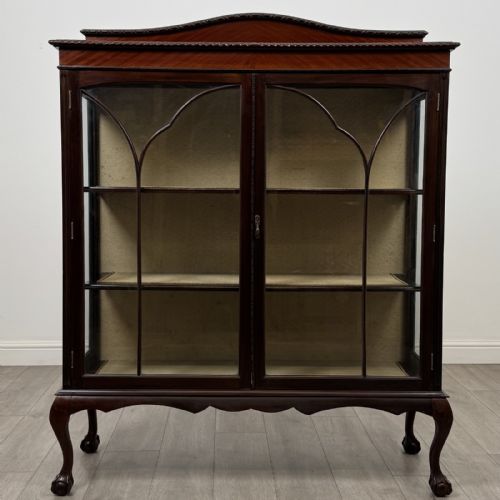
A mahogany china vitrine serves primarily to exhibit ceramics and collectibles safely while adding elegance to an interior. Buyers encounter these pieces largely from the Victorian and Edwardian eras, spanning the nineteenth and early twentieth centuries.
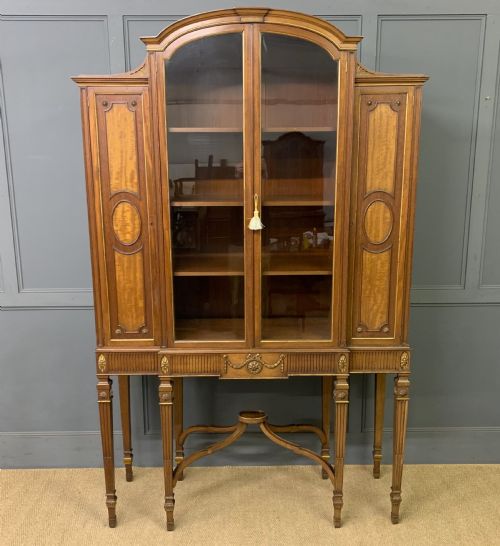
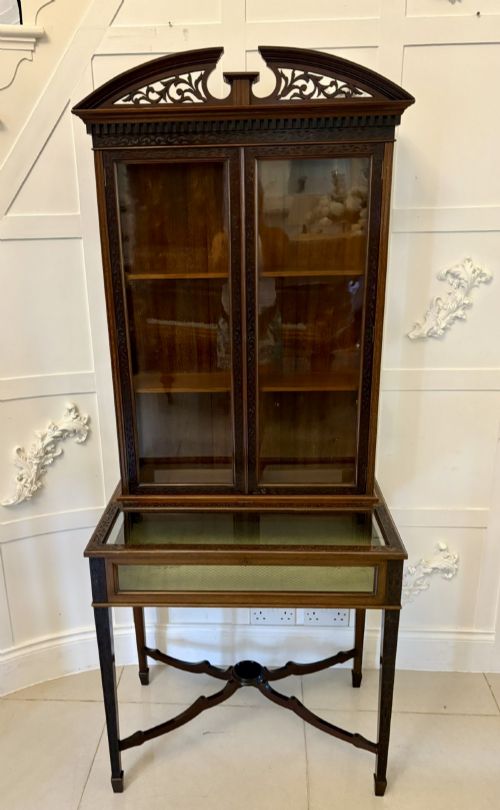
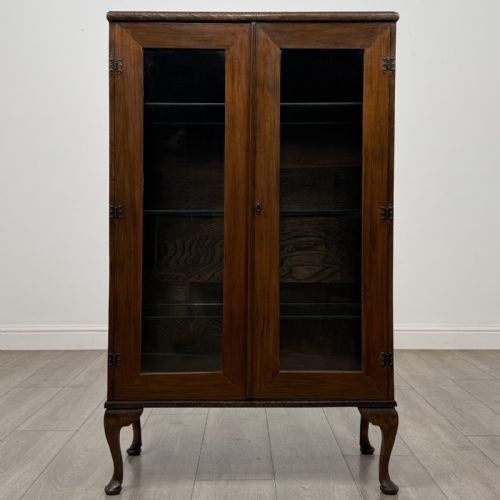
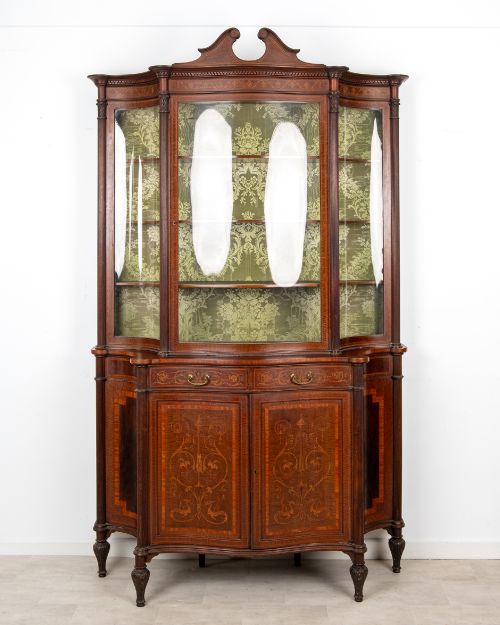
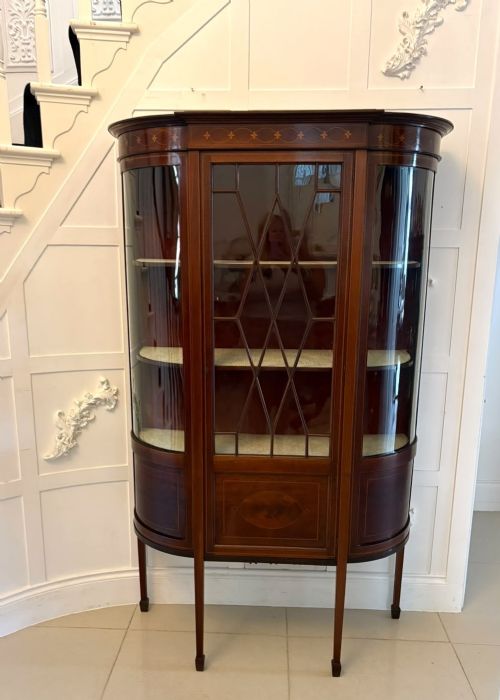
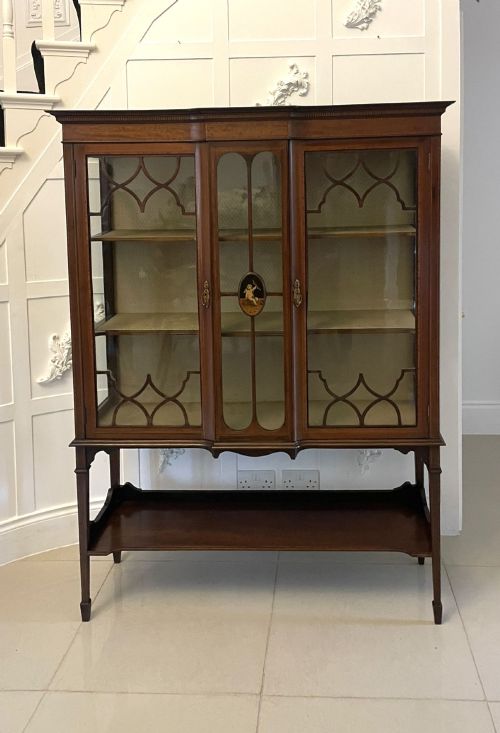
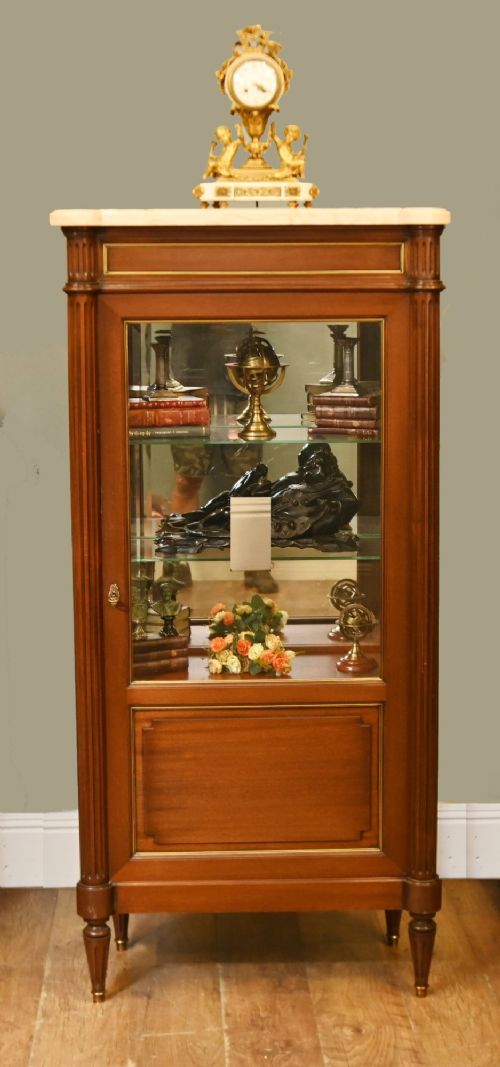
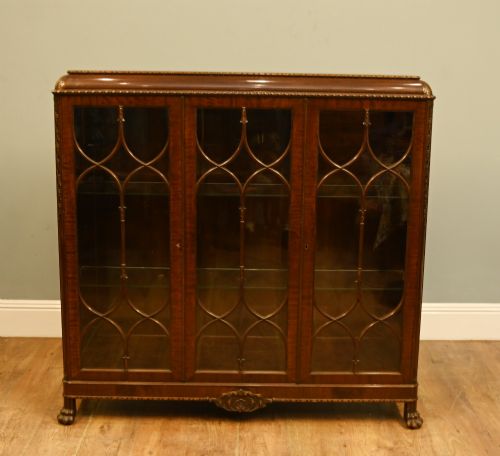
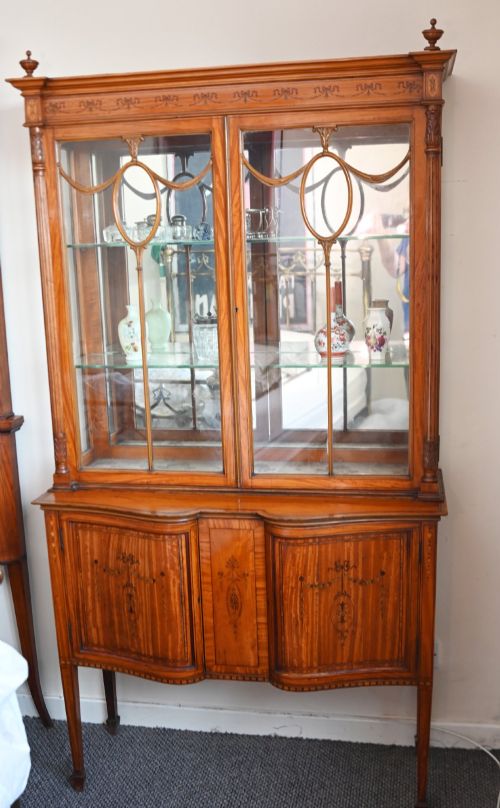
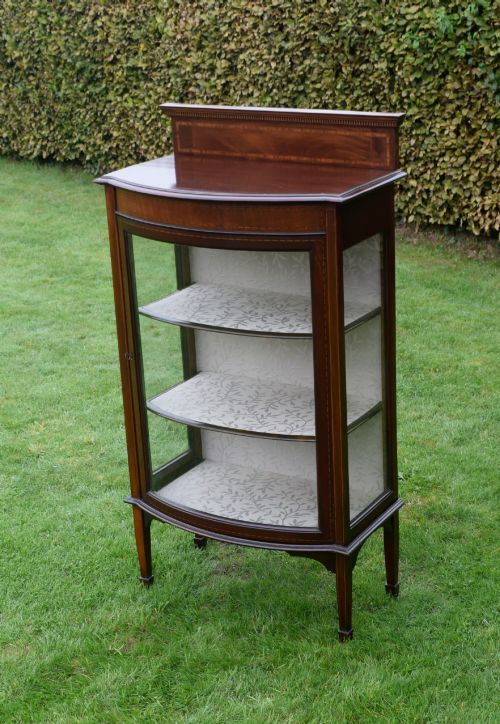
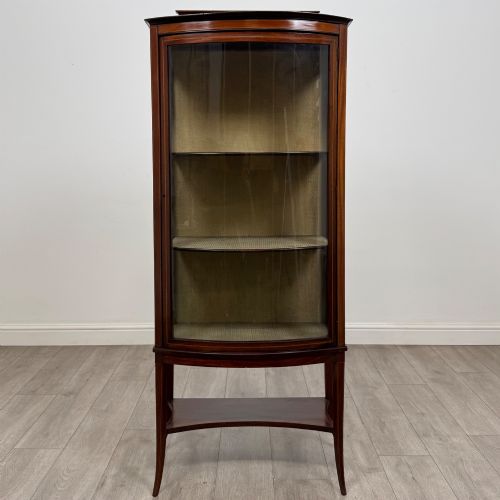
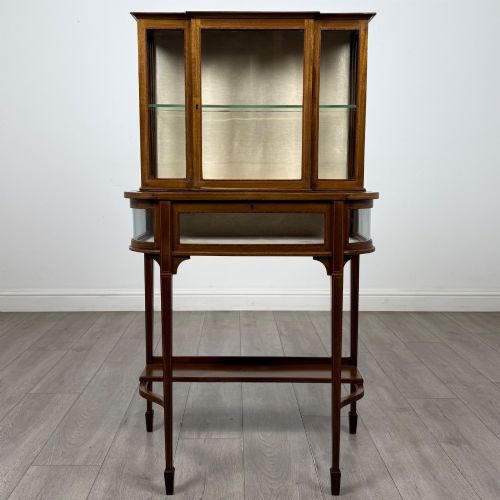
Forms range widely on this page, including tall breakfront bookcases, bow-ended cabinets, corner units, and compact two-part display pieces. Makers often drew inspiration from Sheraton, Chippendale, Queen Anne, and French styles when constructing them.
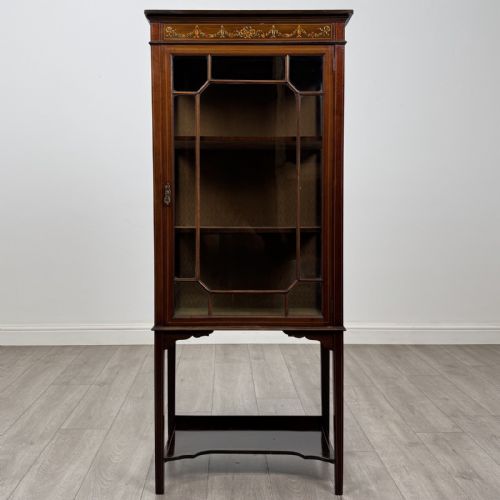
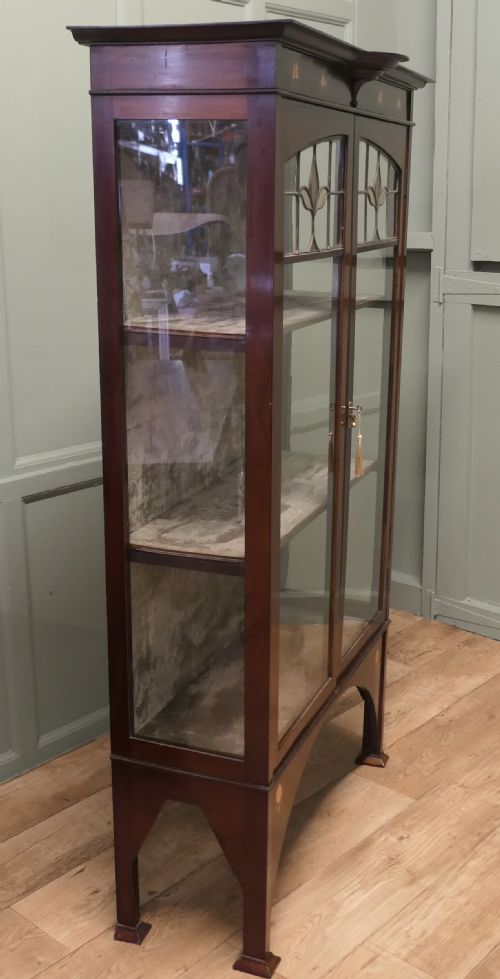
The timber framework typically utilises solid mahogany or mahogany veneers, frequently enhanced with contrasting satinwood inlay, marquetry, or painted decoration. Glazed doors protect the interior shelves while offering maximum visibility from the room.
How they were made
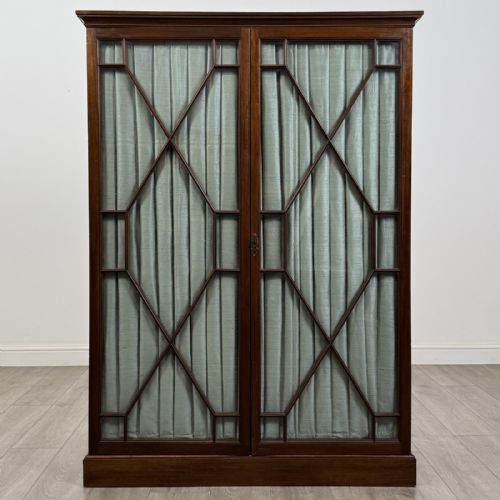
Cabinet makers relied on dense mahogany as the structural foundation, shaping the timber into slender uprights, curved cornices, and serpentine fronts. Glass panes were fitted into timber frames or astragal bars to enclose the display area securely.
Decorative surface treatments frequently involved satinwood inlay, floral marquetry, and fine stringing. Certain models incorporated mirrored backs and fabric linings to reflect light and highlight the displayed porcelain.
Brass hardware functioned as hinges and locks, while specialised finishes such as Vernis Martin appeared on French-influenced pieces. Carved wooden details and painted motifs added further ornamentation to select examples.
Some Edwardian cabinet doors feature exceptionally pretty bow fronts designed to catch the afternoon light.
What varies in quality
The distinction between standard and superior pieces rests largely on the crispness of the cabinetwork and the intricacy of the decorative details. Cabinets featuring hand-cut marquetry, delicate satinwood inlay, and painted decoration demand closer inspection for precision.
Structural complexity also dictates the tier of the piece, moving from simple single-door cupboards to elaborate breakfront bookcases and serpentine vitrines. The integration of original glass, brass fittings, and painted back panels elevates the overall execution.
Jas Shoolbred·Edwards and Roberts·Maple and Co·Shapland and Petter
The Mahogany China Vitrine Glossary
- Astragal glazed
- Glass panels divided into smaller panes by narrow timber mouldings. This technique creates a traditional grid pattern across the cabinet doors.
- Marquetry
- Decorative veneer work arranged in pictorial or geometric patterns using various coloured woods. Craftsmen cut pieces precisely to fit into a prepared background.
- Vernis Martin
- A simulated Japanese lacquer finish developed in France, known for its lustrous sheen and painted scenes. It appears on select continental display furniture.
- Breakfront
- A piece of furniture where the central section projects forward from the flanking sides. This architectural feature adds depth and visual weight.
- Satinwood inlay
- Contrasting pale yellow timber inserted into the darker mahogany surface to form delicate borders. It provides a bright visual accent on Edwardian cabinets.
Mahogany China Vitrine: Frequently Asked Questions
Where should I place a vitrine?
These cabinets suit drawing rooms, dining spaces, or hallways where natural light can pass through the glass doors. Positioning them away from direct sunlight protects both the timber finish and the displayed porcelain.
Corner models help utilise awkward angles in smaller rooms, while larger breakfront and two-part cabinets anchor a primary wall as a focal point.
How do I care for mahogany timber?
Regular dusting with a soft, dry cloth prevents particulate accumulation on the polished surfaces and glass panes. Avoid silicone-based sprays, opting instead for traditional beeswax applied sparingly to nourish the wood.
Maintaining stable room humidity prevents the mahogany and its delicate inlay from warping or splitting over time.
How do I distinguish Victorian from Edwardian pieces?
Victorian cabinets from the nineteenth century generally exhibit heavier proportions, darker timber tones, and more substantial carved ornamentation. They often favour robust revival styles like Chippendale and classic Victorian framework.
Edwardian examples tend to feel lighter and brighter, frequently incorporating Sheraton Revival satinwood inlay, painted floral decoration, and slender tapering legs.
What is the purpose of a mirror back?
Mirrored interior backs reflect ambient room light through the displayed china and glass, brightening dark corners. This feature increases the visibility of items placed on the shelves.
It also creates an illusion of greater depth within the cabinet, making the collection appear more prominent.