




Mahogany Cased Instrument
A mahogany cased instrument brings precision engineering and rich timber together in a single portable box designed for science, travel, or the desk.
Mahogany Cased Instrument
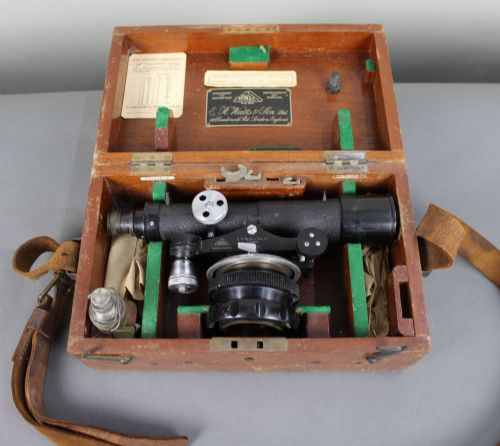
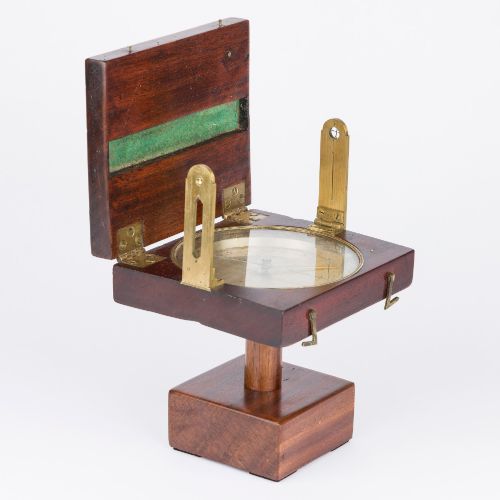
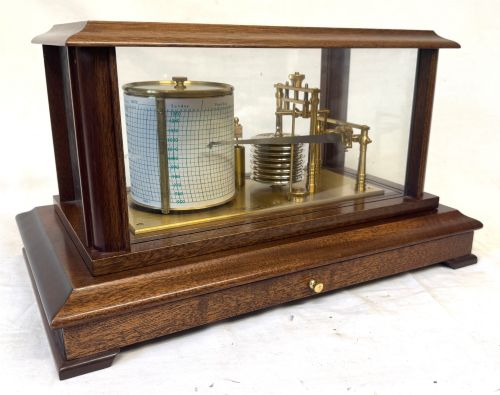
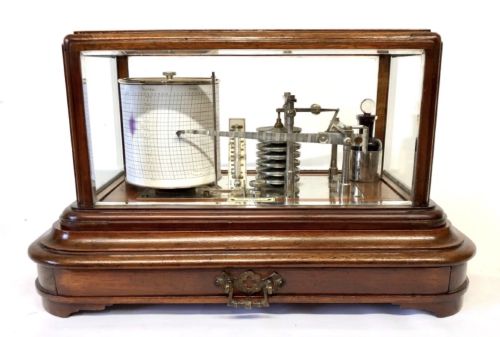
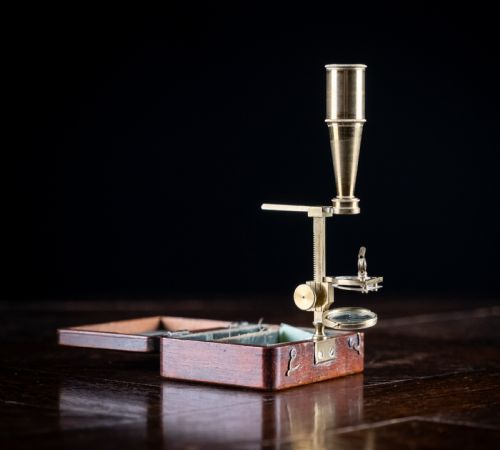
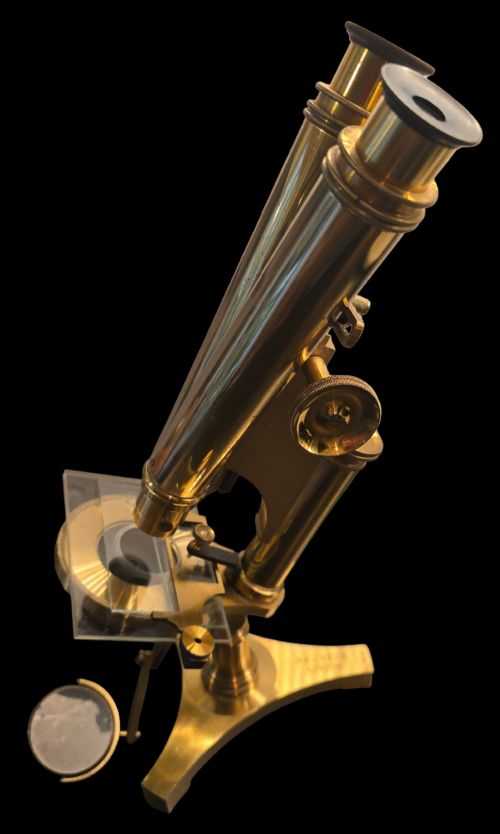
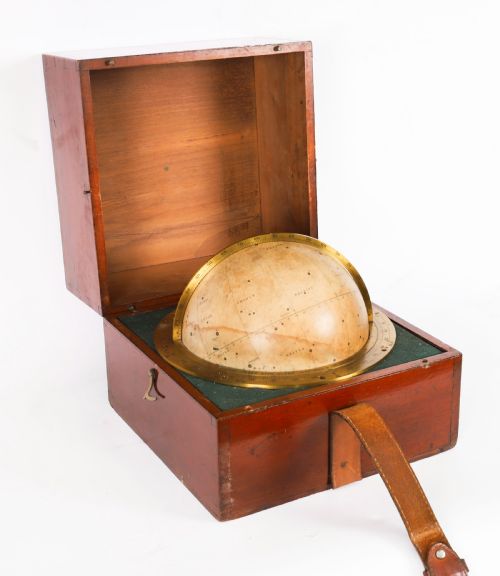
A mahogany cased instrument encompasses scientific equipment, medical kits, and precision tools housed in fitted wooden boxes spanning the Georgian, Victorian, and Edwardian eras. Buyers searching for a mahogany cased instrument most frequently encounter barographs, microscopes, surveying compasses, and technical drawing sets.
The objects serve varied functions from marine navigation and meteorological recording to surgery and cartography. Each piece relies on its fitted housing to protect delicate brass and glass components during transport or storage.
Materials and construction
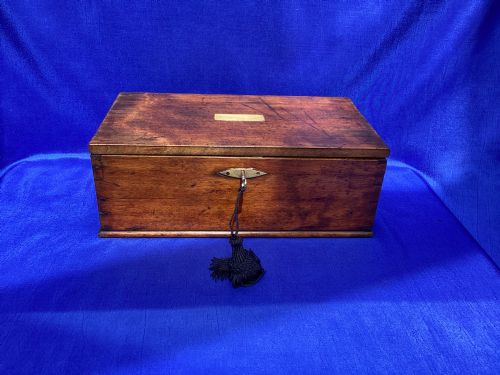
Makers utilised dense, durable mahogany to build sturdy protective boxes and cabinets, often incorporating brass hinges, corner brackets, and fastening hooks. Interiors frequently feature velvet, paper, or leather linings shaped to hold delicate instruments securely in place.
Internal mechanisms combine turned brass, steel, and glass, whilst paper trade labels or instructions are often pasted inside the lid. Exterior timber surfaces receive a polished finish that highlights the grain of the wood.
Listings feature scientific instruments spanning the eighteenth, nineteenth, and early twentieth centuries, housed in mahogany, brass, and glass.
Judging quality and execution
Quality rests on the precision of the internal mechanism and the refinement of the timber box housing it. Finer examples display crisp maker signatures, complex movements like barograph drum mechanisms, and dovetailed box construction.
The presence of original paper paperwork, matching components, and specialised accessories elevates an object. Poorer quality appears in plain, utilitarian boxes with missing interior fittings or replacement parts lacking the original maker's standard.
G Davis of Leeds·Holtzapffel and Co·L Casella and Co·R and J Beck·Hughes and Son·John Millikin·George Adams·Alexander Wright·Negretti and Zambra·Short and Mason·R Fuess·Stanley London·Cox of Plymouth Dock·Down Brothers·Cary
The Mahogany Cased Instrument Glossary
- Barograph
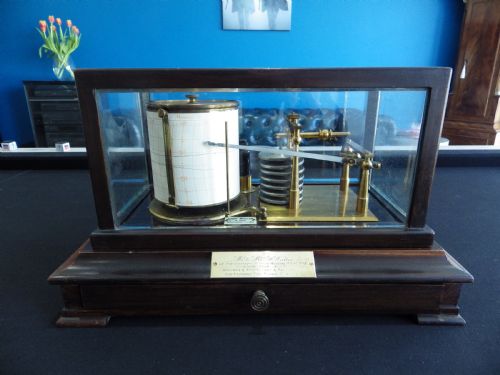
- A self-recording aneroid barometer that charts atmospheric pressure onto a revolving paper drum. These instruments combine mechanical clockwork with paper charts.
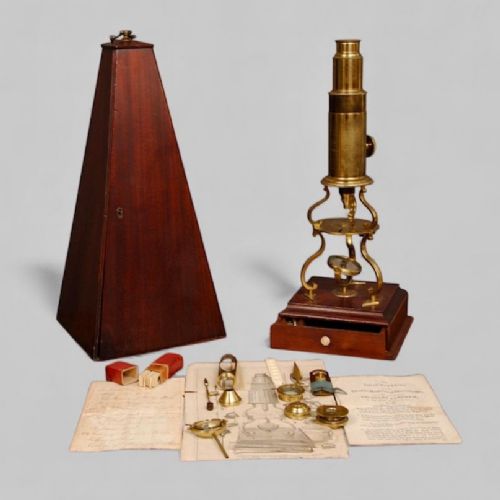
- Culpeper microscope
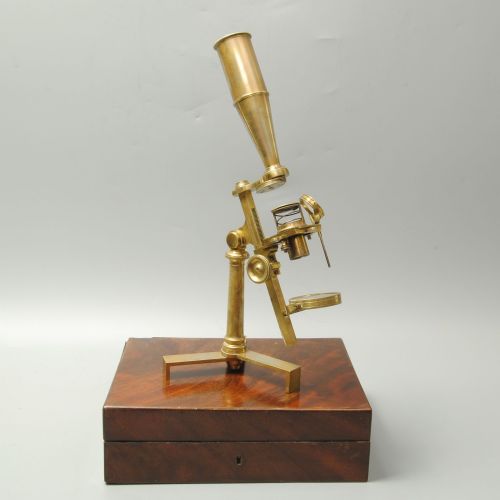
- An early form of compound microscope supported by three metal pillars resting on a wooden base. The design typifies eighteenth-century optical equipment.
- Fortin stick barometer
- A mercury barometer featuring an adjustable cistern floor to set the mercury level precisely. This design allows accurate readings for scientific observation.
- Drawing set
- A fitted collection of compasses, ruling pens, and dividers used by draughtsmen and cartographers. Instruments are typically secured in velvet or leather lined slots.
Mahogany Cased Instrument: Frequently Asked Questions
What is a barograph?
A barograph is a meteorological device that records air pressure continuously onto a rotating drum using a mechanical arm and ink nib.
Enclosed in a glass and mahogany case, it tracks barometric changes over the course of a week.
How do I date my instrument?
Dating relies on maker signatures, engraved patent dates, and style changes in the mahogany case construction.
Trade labels pasted inside the lid or stamps on the brass components often provide specific workshop locations and operational years.
Were these items meant for travel?
Many examples served explorers, surveyors, and naval officers who required reliable tools in the field.
Sturdy wooden boxes with brass carrying handles and secure latches protected sensitive optics and needles during transit.
How should I clean the mahogany case?
Maintenance requires gentle dusting with a dry, soft cloth to protect the polished wood surface.
Harsh chemical polishes or modern detergents should be avoided to preserve original patina and paper trade labels.