




Mahogany Cane Seat Chairs
Mahogany cane seat chairs bring warmth and woven texture to domestic seating across Georgian, Regency, Victorian, and Edwardian periods.
Mahogany Cane Seat Chairs
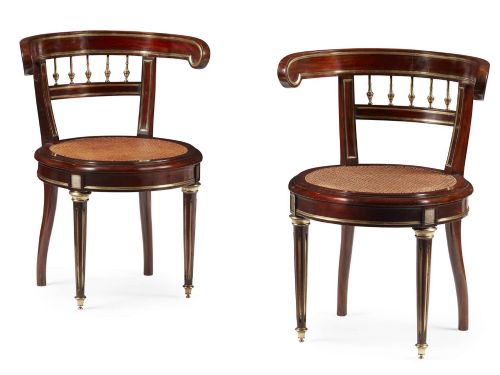
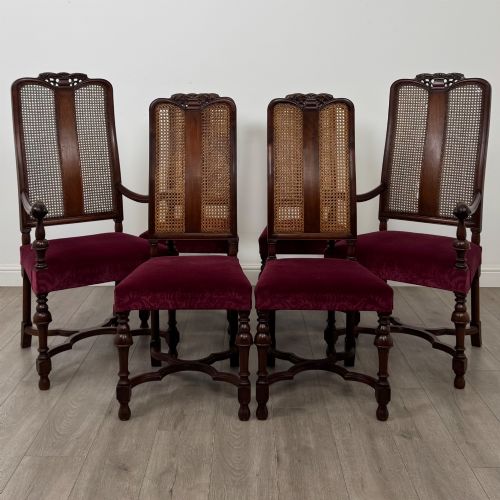
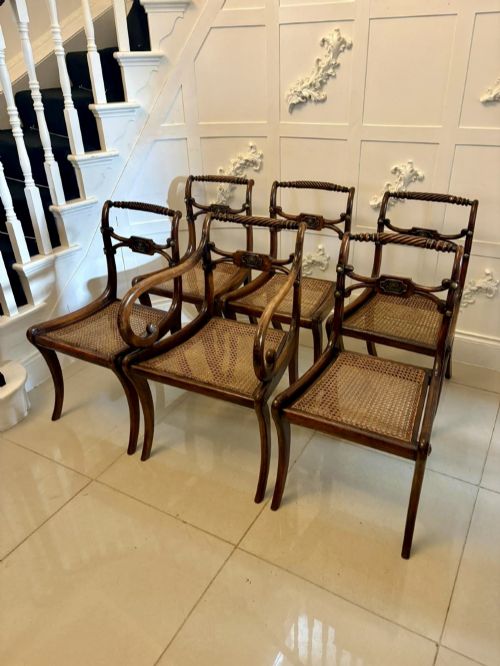
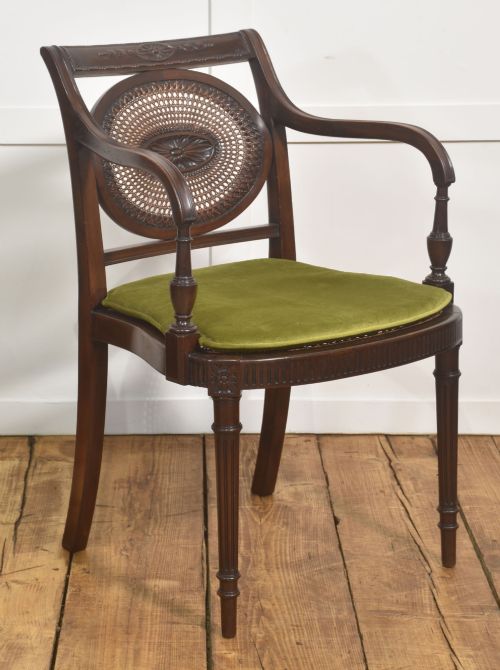
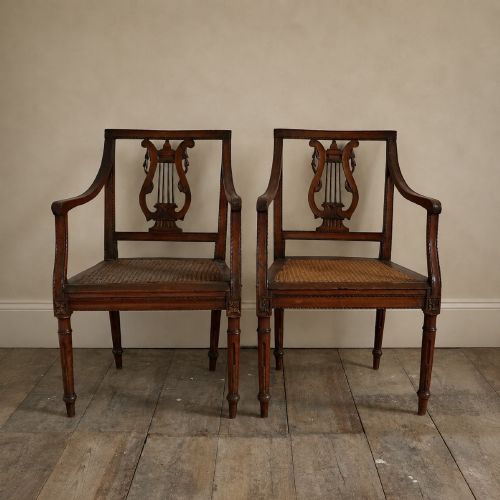
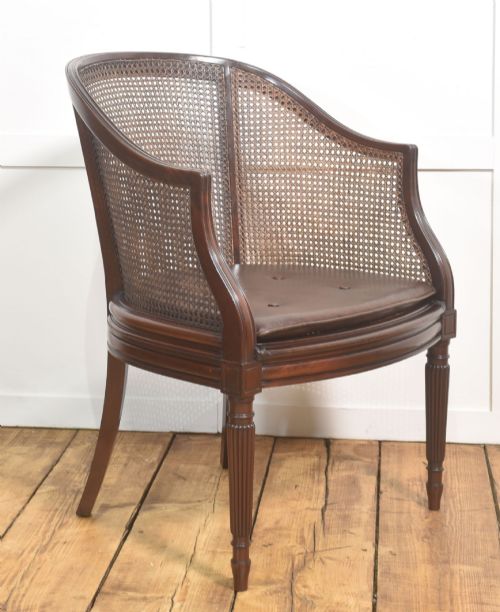
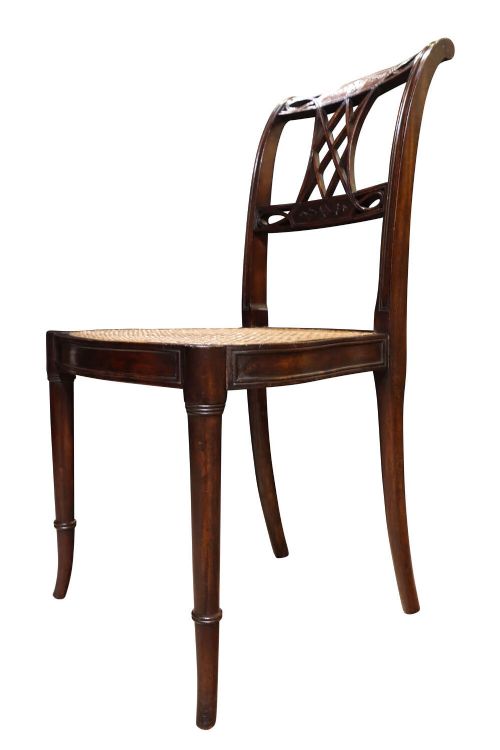
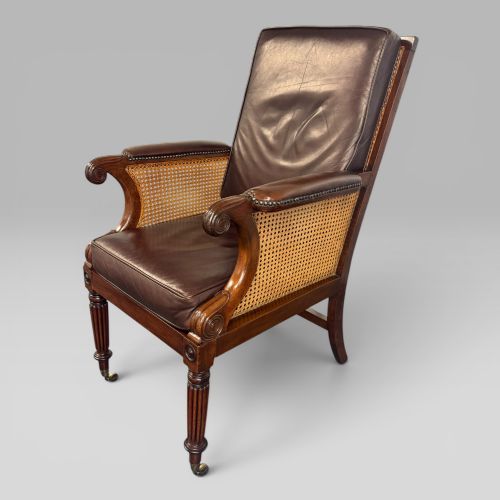
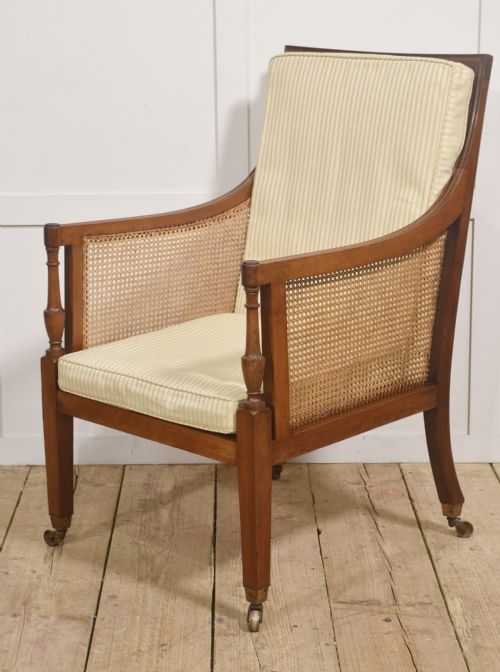
Mahogany cane seat chairs appear in forms ranging from dining chairs and side chairs to library armchairs, bergères, and children's high chairs. The domestic interior meets these pieces as single bedroom chairs, pairs, or matched sets of dining chairs.
The historical span covers Georgian and Regency designs, extending through Victorian and Edwardian revivals up to the 1920s. Dining sets and library armchairs dominate the selections, alongside smaller parlour and bedroom variants.
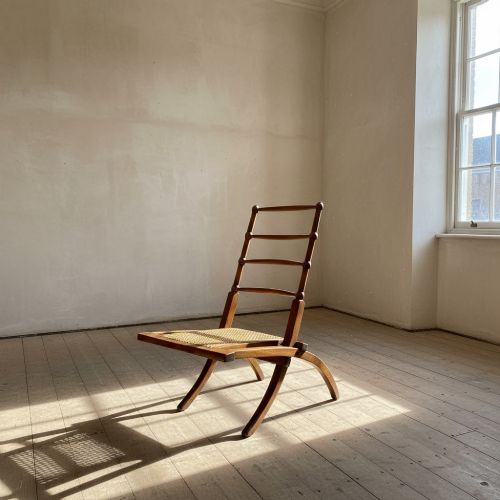
Makers and workshops constructed these seats for diverse household roles, producing robust dining furniture alongside reclining plantation chairs and folding library steps chairs.
Materials and construction
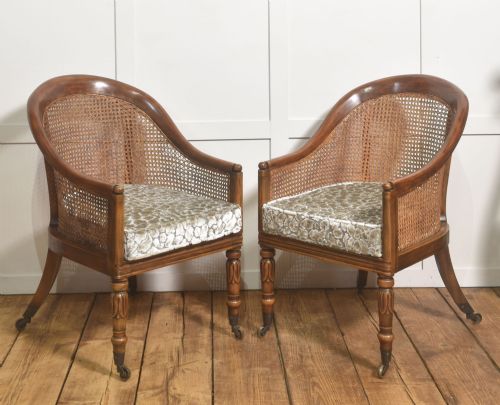
Workshops shaped solid mahogany into frames, combining the timber with woven rattan cane to form resilient seats and backs. Secondary materials such as brass accents, leather, velvet, and fabric appear on specific library bergères and upholstered components.
Joinery techniques united turned legs, sabre legs, lyre backs, and carved top rails with tightly pierced cane work. Frames range from austere classical outlines to elaborate Carolean and Sheraton revival details.
Mahogany Cane Seat Chairs Retail Price Guide 2026
Typical asking prices for mahogany cane seat chairs among the pieces listed under this phrase on Sellingantiques today, from the lower quarter to the upper quarter. They describe what is for sale here now, not the wider market.
Listings span Georgian, Regency, Victorian, Edwardian, and 1920s periods, using mahogany, rattan cane, brass, and velvet.
Quality variations
The refinement of the timber carving and the precision of the frame proportions dictate the calibre of the seating. Generous library proportions and well-drawn curves distinguish superior reading armchairs from standard dining models.
The integrity and tightness of the original or restored woven cane panels separate masterwork pieces from simpler utility seating.
The Mahogany Cane Seat Chairs Glossary
- Bergère
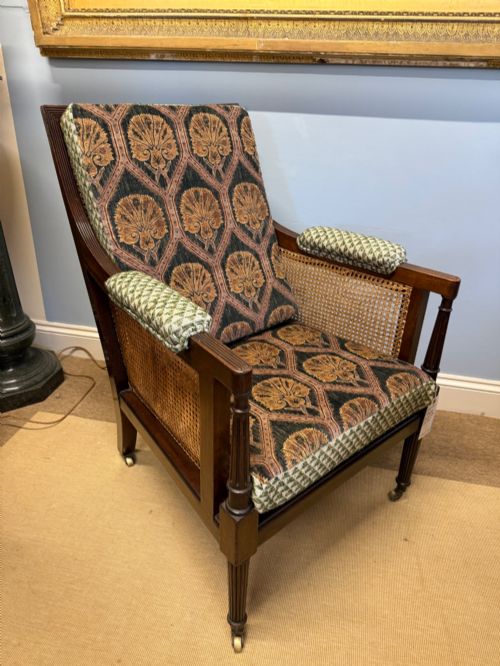
- An enclosed upholstered armchair with a wooden frame and cane sides and back. These seats often include loose squab cushions.
- Carver
- An armchair designed to match a set of single dining chairs, traditionally placed at the head of a table. These pieces share the decorative motifs of the surrounding chairs.
- Sabre leg
- A concave curving leg that tapers toward the foot, common in Regency chair design. This form provides structural strength while maintaining a light silhouette.
- Klismos chair
- A classical chair type characterised by sweeping concave back rails and curved saber legs. This ancient Greek form experienced revivals during the nineteenth century.
Mahogany Cane Seat Chairs: Frequently Asked Questions
How do I date a mahogany cane seat chair?
Dating relies on stylistic markers such as sabre legs, carved rail details, and the overall proportions associated with Georgian, Regency, Victorian, and Edwardian periods. Construction methods and wood patination provide further chronological context.
Comparing individual design elements against known period pattern books helps narrow the decade of manufacture.
Were these chairs used for dining or reading?
These pieces served multiple functions across the home, including formal dining sets, library armchairs, bedroom chairs, and children's high chairs. Library bergères offered deep seating for study spaces.
Dining chairs were built as singles and carvers to furnish large household tables.
How should I care for cane seats?
Cane requires moderate humidity to prevent the natural rattan fibres from becoming brittle and snapping. Light dusting and occasional damp wiping keep the woven surfaces supple.
Placing chairs away from direct heat sources protects the timber frames and the tension of the cane work.