

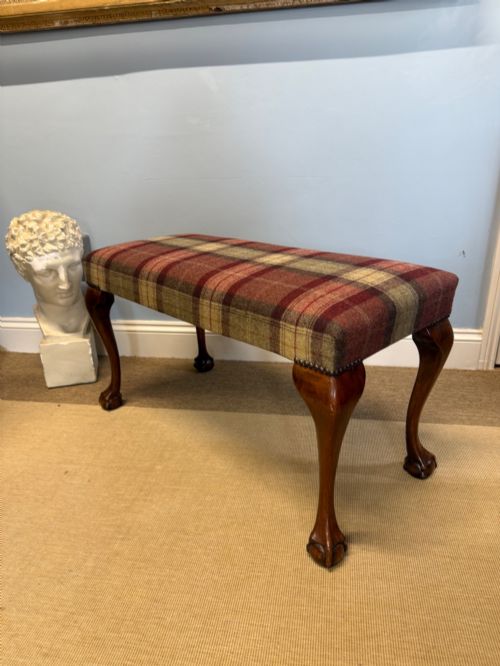
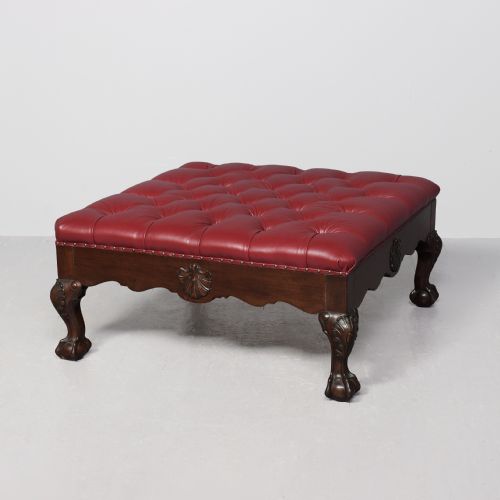
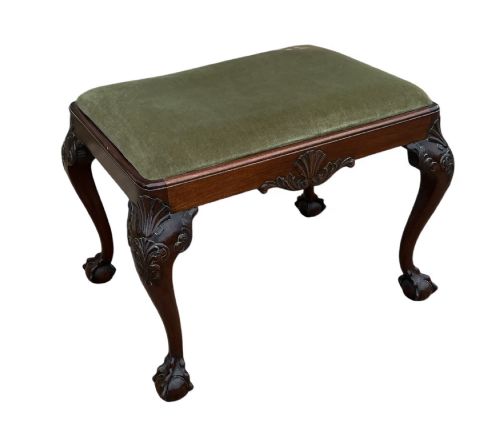
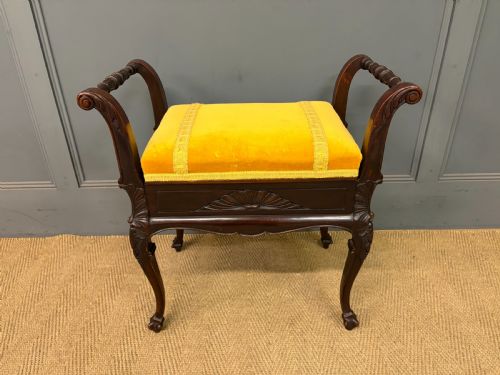
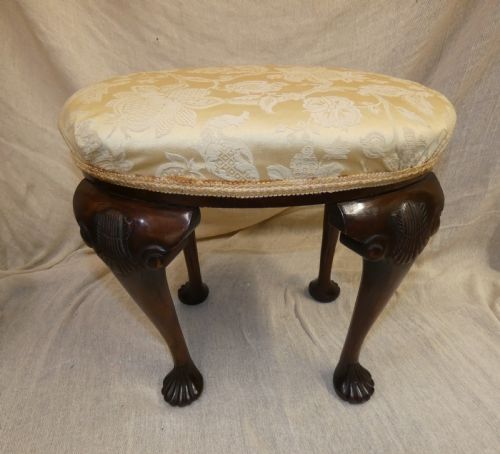
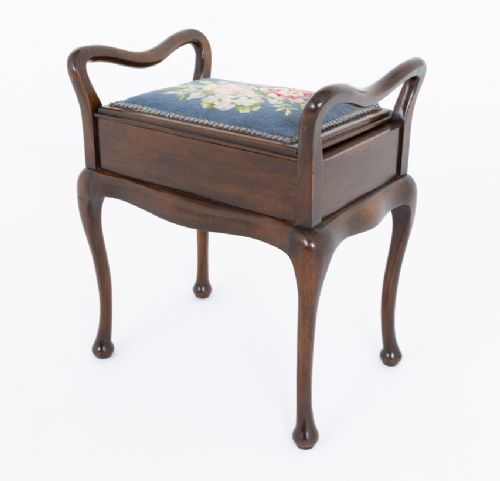
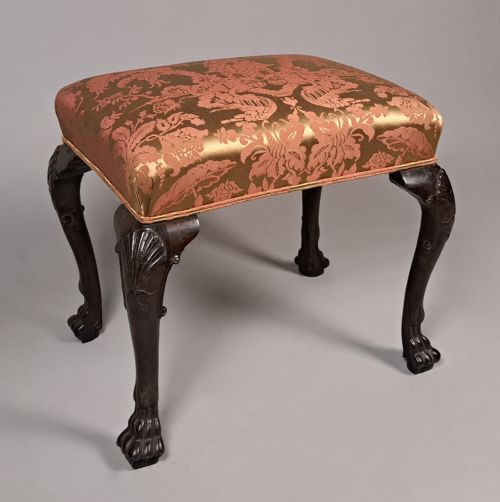

Mahogany Cabriole Stool
These mahogany cabriole stool examples combine timber frames with scrolled legs, offering functional seating that spans multiple centuries and revival styles.
Mahogany Cabriole Stool
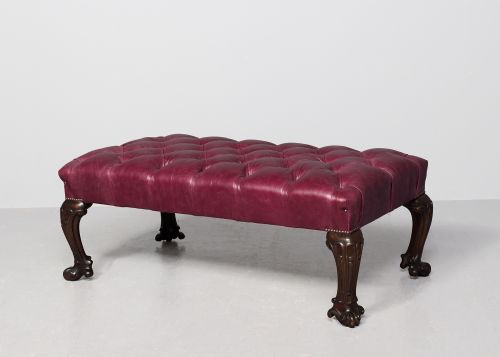
A mahogany cabriole stool brings together a solid timber frame and curving legs that terminate in various foot types. When searching for a mahogany cabriole stool, buyers encounter diverse iterations ranging from eighteenth-century Georgian originals to early twentieth-century revival pieces.
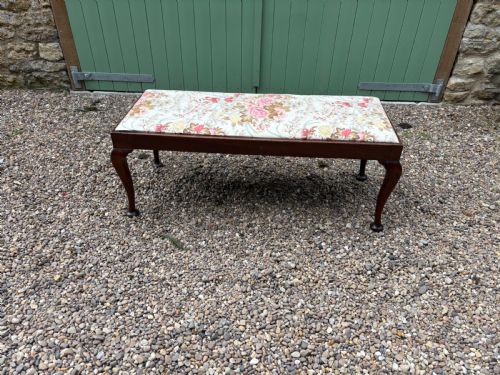
The selection encompasses standard footstools, long benches, dressing stools, and piano stools intended for duets or solo performers. Many pieces originate from the Victorian era or follow Chippendale and Queen Anne revival aesthetics.
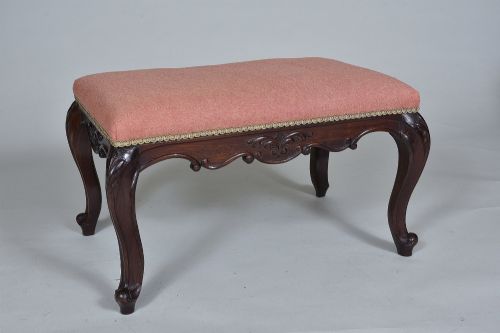
Proportions vary from small embroidery stools to large centre stools and window seats. Construction dates stretch across the Georgian, Victorian, and Edwardian periods up to the 1930s.
Materials and construction
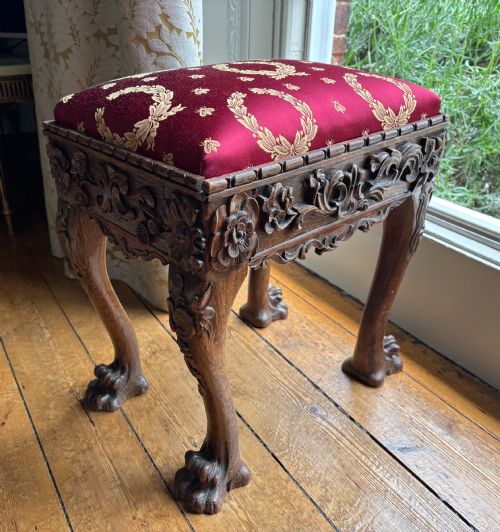
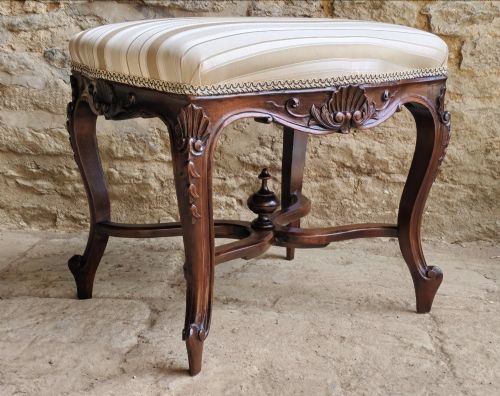
Makers fashioned the structural frames predominantly from solid mahogany, shaping the legs into distinct cabriole profiles often finished with carved details. Joinery techniques secure the curved legs firmly to the seat rails, supporting the weight placed upon the furniture.
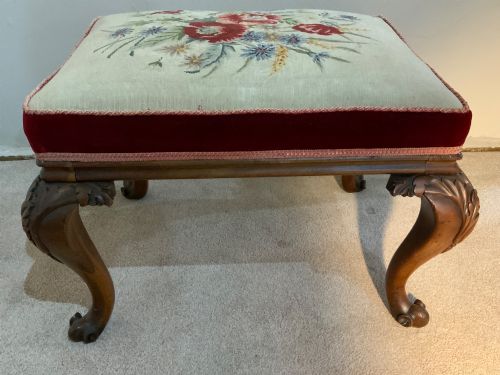
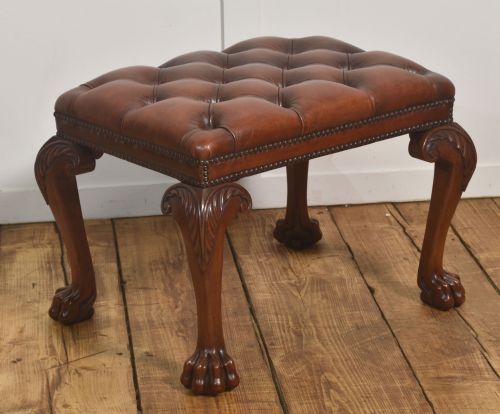
Upholstery materials applied to the seating pads include leather, red and burgundy hide, velvet, wool, and textile covers. Needlepoint and tapestry finishes frequently appear, occasionally featuring historic William Morris fabrics or buttoned detailing.
Mahogany Cabriole Stool Retail Price Guide 2026
Typical asking prices for mahogany cabriole stool among the pieces listed under this phrase on Sellingantiques today, from the lower quarter to the upper quarter. They describe what is for sale here now, not the wider market.
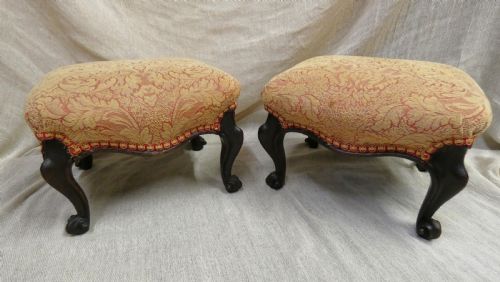
Needlepoint footstools preserve hours of past hand-stitching, offering a direct tactile connection to Victorian hands at work.
Standards of craftsmanship
Quality reveals itself in the crispness of the wood carving along the cabriole legs and frame edges. Master craftsmen achieved fluid, balanced curves where lesser makers produced stiffer, heavier profiles.
The choice of upholstery materials and the tightness of the padding distinguish standard utility pieces from high-end commissions. Original textiles and hand-worked needlepoint add distinct character compared to later replacement covers.
The Mahogany Cabriole Stool Glossary
- Cabriole leg
- A furniture leg that curves outward at the knee and tapers inward toward the foot, mimicking animal limbs. This form became a defining feature of eighteenth-century and revival seating.
- Duet stool
- An extended seating bench designed to accommodate two pianists side by side at a keyboard. These pieces often feature longer rectangular proportions.
- Needlepoint
- Hand-stitched textile work utilising yarn on canvas mesh to cover stool seats. Historic examples display intricate floral or geometric patterns.
- Serpentine shape
- A furniture edge or seat rail curved in a wave-like line with a convex centre flanked by concave sides. This contour adds visual movement to the wooden frame.
- Window seat
- A long, narrow bench constructed specifically for placement in front of domestic windows. These forms frequently incorporate upholstered tops and decorative frame carving.
Mahogany Cabriole Stool: Frequently Asked Questions
How do I date a mahogany stool?
Dating relies on examining the timber species, tool marks, joinery methods, and stylistic cues present in the mahogany frame. Georgian pieces display different carving depths and secondary woods compared to Victorian or early twentieth-century revivals.
The upholstery substrate and webbing also provide clues, though many pieces have been re-covered during their lifespan to suit modern interiors.
What is a cabriole leg?
A cabriole leg is a curved support that swells outward at the knee and tapers inward toward the ankle, ending in a pad, claw, or scroll foot. This design derives from ancient Chinese furniture and gained widespread popularity in European cabinet making.
Craftsmen carved these shapes from solid mahogany to provide both structural strength and flowing aesthetic lines on chairs and stools.
Where were these stools used?
These stools served multiple functions across the home, acting as footrests beside armchairs, dressing table seating in bedrooms, or piano benches in music rooms. Longer versions functioned as window seats or centre pieces in grand reception rooms.
Their compact footprints allowed owners to move them easily between rooms depending on daily household requirements.
Are piano stools adjustable?
Some piano stools feature mechanical systems allowing the seat height to change, while others remain fixed in position like standard benches. Duet piano stools typically provide wider stationary seating surfaces for two musicians.
Makers built these variations to accommodate different keyboard setups and player preferences during the nineteenth and early twentieth centuries.