


Mahogany Cabinet Shelf Back
These mahogany cabinet shelf back pieces are practical display units and storage items that add traditional British timber warmth to a room.
Mahogany Cabinet Shelf Back
A mahogany cabinet shelf back combines enclosed timber storage with raised upper tiers for display, commonly appearing across the nineteenth century. These forms span Victorian chiffoniers, Regency side cabinets, and Edwardian display furniture.
The version most frequently met on this page is the Victorian or Regency chiffonier, which pairs a lower cupboard base with an elevated shelf back. Alongside these, buyers find bookcases, side cabinets, and corner display units featuring similar tiered upper structures.
How they were made
Cabinetmakers constructed these pieces primarily from solid mahogany and flame mahogany veneer, often accentuating the timber grain with polished finishes. Structural integrity relied on traditional joinery methods suited to heavy hardwoods.
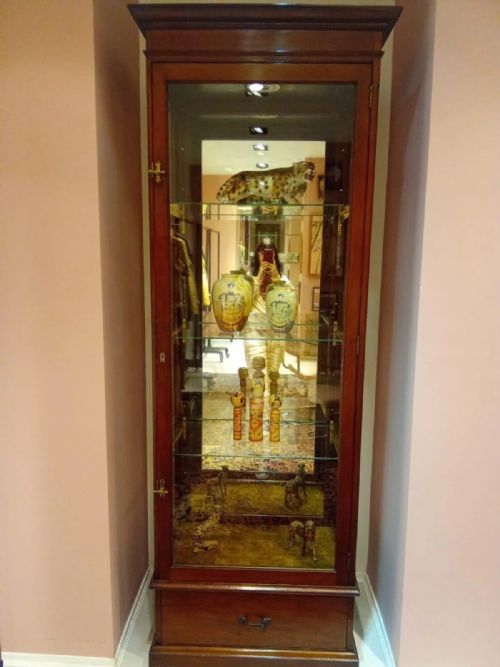
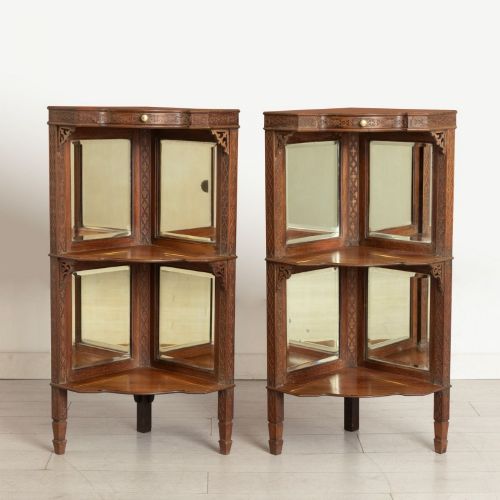
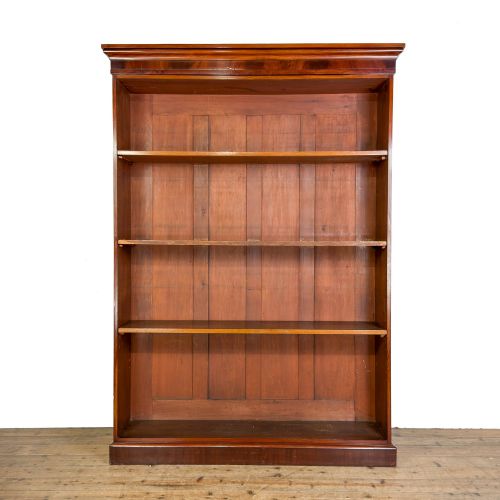
Makers integrated functional elements such as brass fittings, glass doors, and inset mirror glass panels within the upper shelf backs. These reflective and transparent components enhanced light distribution within display cabinets and open bookcases.
Some Victorian chiffoniers managed to squeeze both a hidden writing drawer and a towering mirror back into a remarkably polite footprint.
What varies in quality
Quality differences lie in the selection of timber veneers and the finesse of structural proportions, where finer examples display striking flame mahogany grain patterns. The integration of the upper shelf back relative to the lower cabinet demonstrates the maker's architectural precision.
The inclusion of specialised components like adjustable glass shelving, inlaid details, and writing drawers elevates specific pieces above standard utility furniture. Original brass hardware and well-preserved mirror glass further distinguish the upper tier execution.
Edwards & Roberts
The Mahogany Cabinet Shelf Back Glossary
- Chiffonier
- A low sideboard or cabinet with a raised shelf back, typically containing enclosed storage beneath. This form developed during the Regency period and remained popular through the Victorian era.
- Flame mahogany veneer
- A decorative wood veneer sliced from timber where the grain creates a distinctive undulating, flame-like pattern. It is applied to primary surfaces for visual depth.
- Shelf back
- An elevated tiered structure mounted to the top of a cabinet or sideboard, used for displaying porcelain or decorative objects. It often incorporates mirrors or multiple tiers.
- Side cabinet
- A versatile enclosed storage piece designed to stand against a wall in a dining room or parlour. These items frequently incorporate drawers alongside lower cupboard doors.
Mahogany Cabinet Shelf Back: Frequently Asked Questions
What is a mahogany cabinet shelf back?
A mahogany cabinet shelf back is a piece of furniture featuring a lower enclosed cabinet combined with an elevated upper tier of shelves. These units served various functional roles in nineteenth-century interiors.
They provide both concealed storage and open display space for books, ceramics, or decorative objects. The upper shelf back often includes mirrors or intricate woodwork.
How were chiffoniers used originally?
Chiffoniers served as versatile storage and display furniture in Victorian and Regency reception rooms. The lower cupboards held tableware, linens, or documents.
The upper shelf back allowed owners to display prized ornaments and porcelain. Some examples even incorporated writing drawers for correspondence.
How do I identify Regency pieces?
Regency pieces often display classical proportions, restrained mahogany veneers, and precise brass inlays. The styling reflects early nineteenth-century neoclassical influences.
Cabinet makers during this period focused on architectural clarity and refined timber selection. Chiffoniers and side cabinets from this era tend to be compact and balanced.
Where should I place these cabinets?
These cabinets suit dining rooms, living spaces, or hallways where wall space permits a low profile unit. Their upper shelves draw the eye upward, making them effective focal points.
Positioning them away from direct sunlight protects the mahogany finish and veneer. Ensure the floor level is even to keep the doors and drawers operating smoothly.