

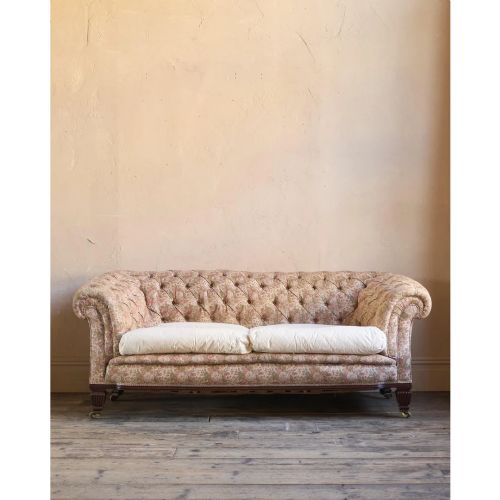
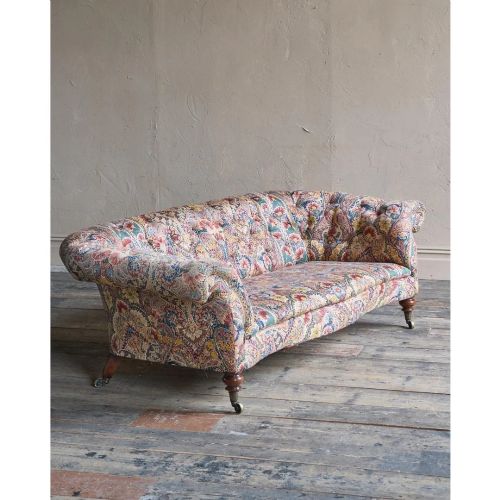
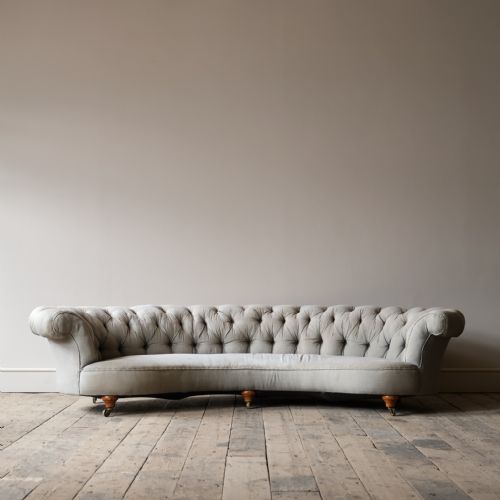
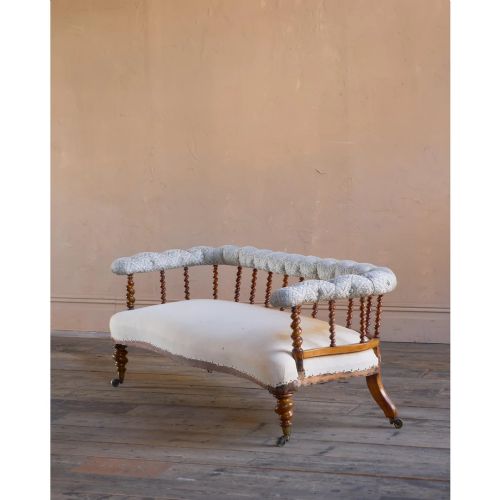


Mahogany Button Back Settee
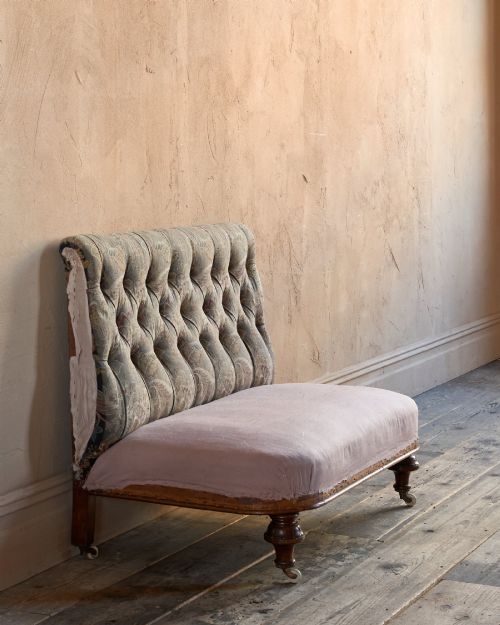
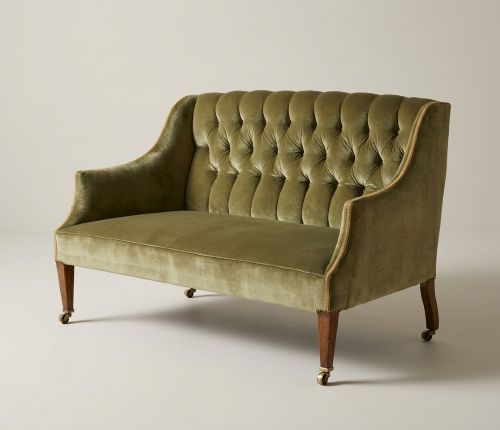
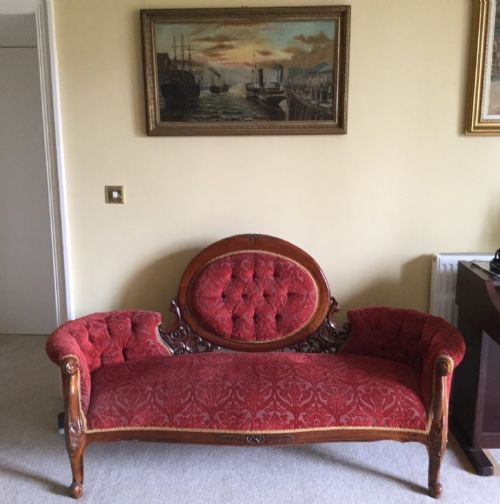
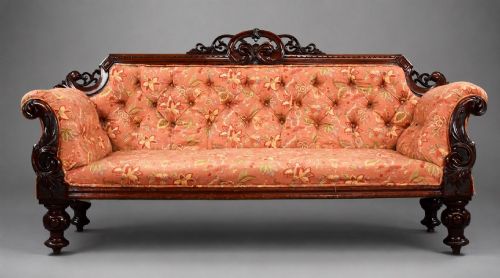
A mahogany button back settee brings deep-buttoned comfort and rich timber framing together, offering a stately focal point for a period drawing room.
Mahogany Button Back Settee
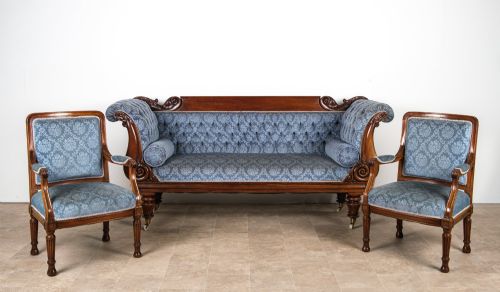
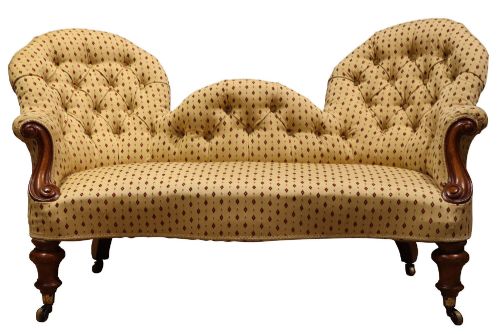
A mahogany button back settee is a upholstered seat framed in rich timber, appearing most frequently in Victorian and 19th-century styles across these listings. Buyers encounter forms ranging from double ended sofas and spoon-back settees to traditional chesterfields and salon suites.
The timber frames utilise solid mahogany, often shaped with carved showwood contours or serpentine fronts. These seating pieces span the Regency period through to the late 19th century, reflecting the evolving domestic tastes of those eras.
How they were made
Maker workshops constructed the structural frames from solid mahogany, frequently incorporating brass castors and sprung settee bases for resilience. Skilled artisans shaped the exposed showwood frames with intricate carving and inlay.
Upholstery techniques involved deep buttoning across the backrests, securing the padding with heavy thread into fabric, velvet, damask, hessian or hand dyed leather. Showwood frames were polished to reveal the deep grain of the mahogany.
Mahogany Button Back Settee Retail Price Guide 2026
Typical asking prices for mahogany button back settee among the pieces listed under this phrase on Sellingantiques today, from the lower quarter to the upper quarter. They describe what is for sale here now, not the wider market.
Some nineteenth-century makers evidently believed a sofa simply cannot have too many scrolls, resulting in frames that curve at every conceivable angle.
What varies in quality
Quality rests in the crispness of the mahogany carving and the integrity of the showwood frame. Superior examples display fluent lines in the showwood timber and precise joinery that withstands the pressure of sprung bases.
The depth and symmetry of the buttoning dictate the standard of the upholstery work. Finer pieces maintain taut, resilient buttoned surfaces across leather or fabric without slackness in the padding.
Howard & Sons·C. Hindley & Sons·Holland & Sons·Hampton & Sons of Pall Mall·Gillows
The Mahogany Button Back Settee Glossary
- Button back
- A method of upholstery where buttons are pulled deep into the padding in a diamond pattern. This creates distinct tuents that secure the internal stuffing.
- Showwood
- The exposed timber frame of a upholstered piece that remains visible around the upholstery. In these pieces, this timber is typically solid mahogany.
- Chesterfield
- A traditional style of sofa characterised by arms and back of the same height. They frequently feature deep buttoning and leather upholstery.
- Double end
- A settee design with raised scrolls or backs at both ends rather than a single headrest. This allows a user to recline against either side.
Mahogany Button Back Settee: Frequently Asked Questions
How do I date a mahogany button back settee?
Dating relies upon the stylistic markers of the timber frame, such as Regency neoclassical lines or Victorian serpentine curves. Cabinetmakers shifted from the lighter proportions of the early nineteenth century to heavier, carved showwood frames by the later Victorian decades.
Material choices and upholstery methods also assist in establishing an era. Examining the underframe and timber finish reveals the working methods of the specific period.
What materials were used for the upholstery?
Original coverings recorded in the evidence include hand dyed leather, velvet, damask fabric, and standard upholstery fabric. Hessian and brass components often support the internal sprung bases beneath these outer layers.
Deep buttoning was secured through these textiles into dense padding. The choice of material often reflects the formal reception rooms these settees originally occupied.
Are these settees comfortable for daily use?
Many examples incorporate sprung settee bases designed to provide genuine seating support. The upright posture encouraged by buttoned backrests suited formal nineteenth century parlours.
Modern comfort depends on the condition of the internal springs and webbing. Many pieces retain their original springing or have been professionally restored with matching support systems.