

Mahogany Butlers Tray
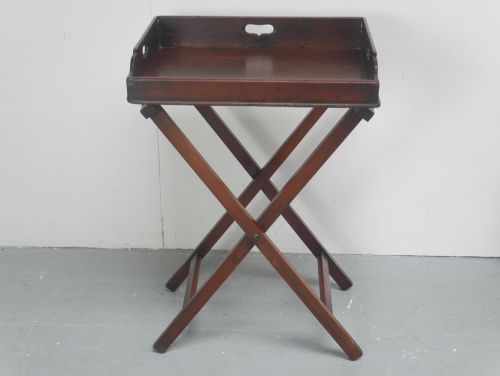
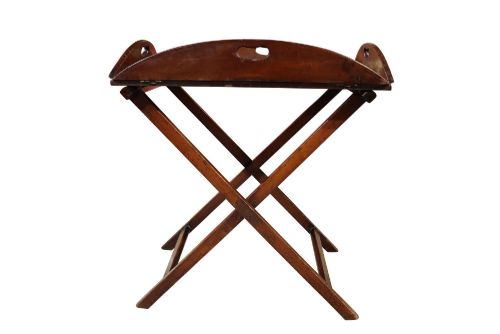
Mahogany butlers tray pieces are portable timber serving surfaces resting on folding stands, bringing centuries of adaptable English hosting tradition into modern rooms.
Mahogany Butlers Tray
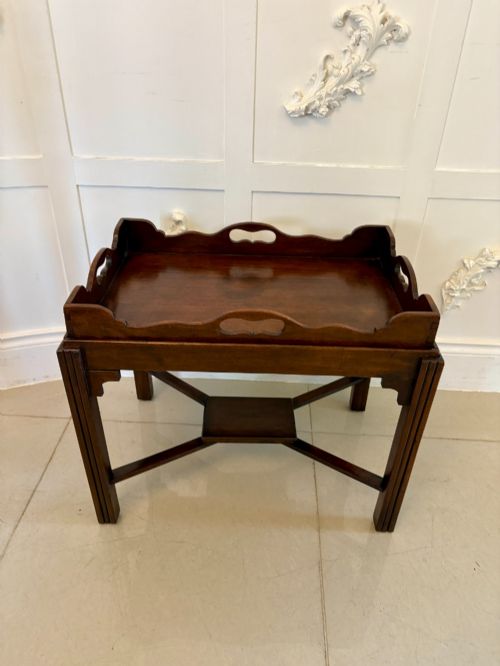
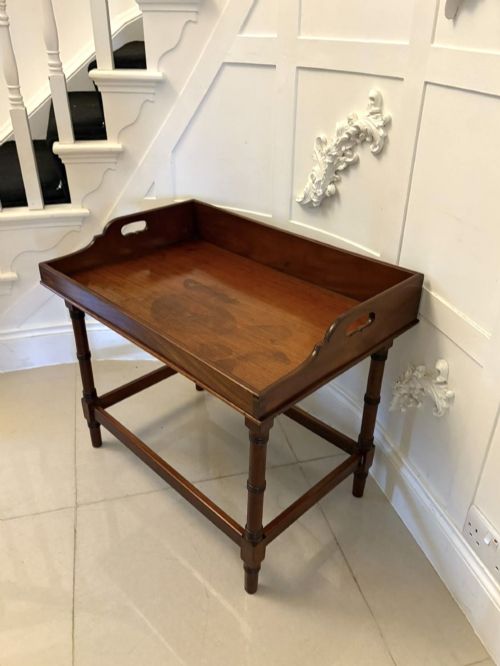
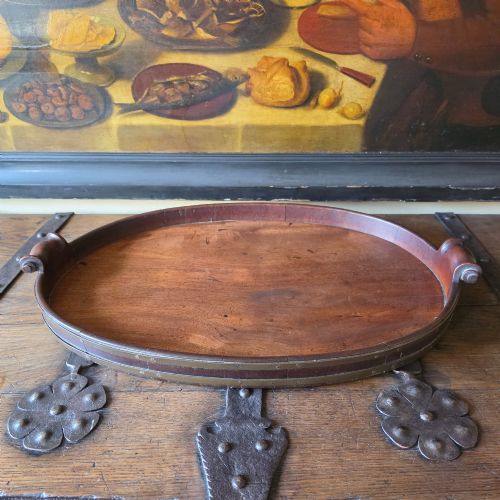
A mahogany butlers tray functions primarily as a removable timber platter designed to lift straight off its folding stand for carrying. You will frequently encounter rectangular or oval trays from the Georgian, Victorian, and Edwardian periods.
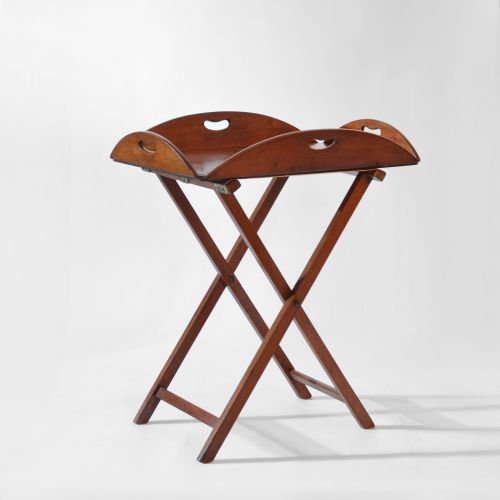
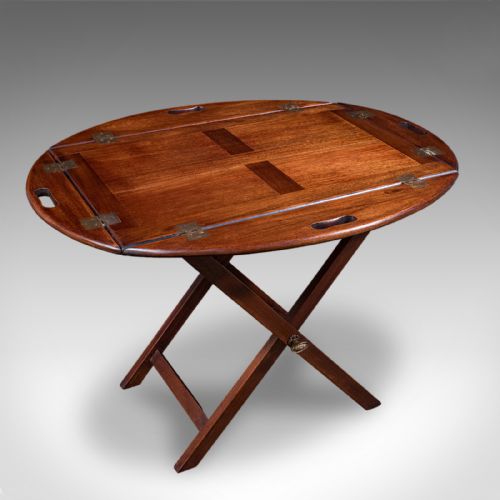
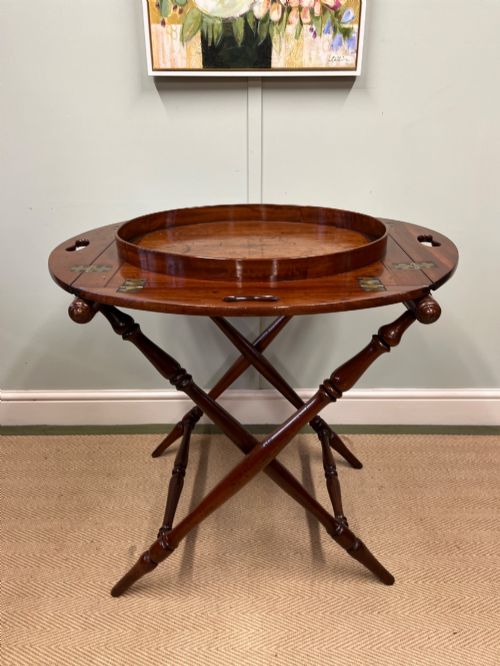
Many examples sit on folding X-frame or four-legged stands, transforming a portable server into a stable occasional table. Some versions feature hinged drop-flaps on the sides to enlarge the usable surface when open.
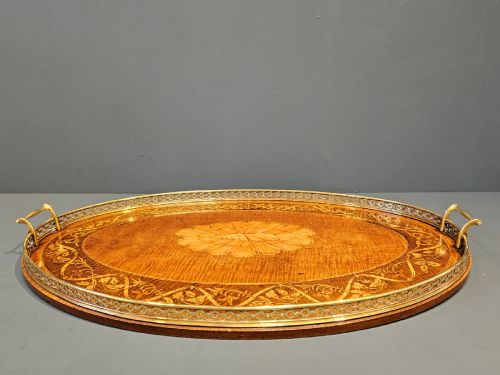
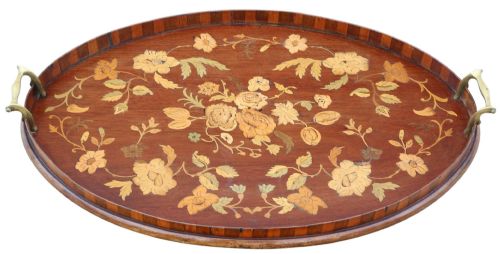
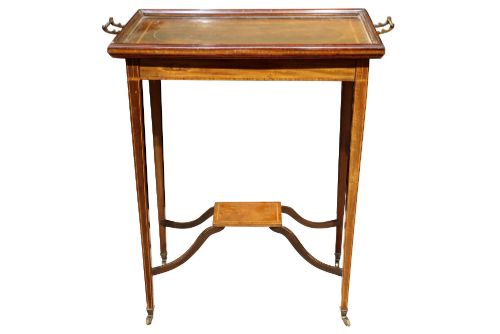
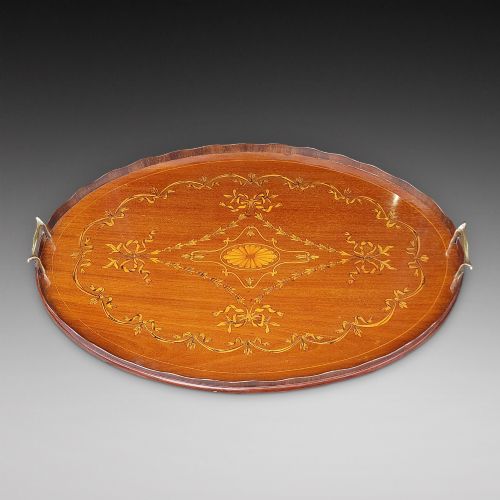
The selections span from plain utilitarian serving boards to highly decorative Edwardian marquetry inlaid pieces and George III tray top lamp tables. Simpler 19th-century utility trays appear alongside sophisticated folding variants.
Materials and construction
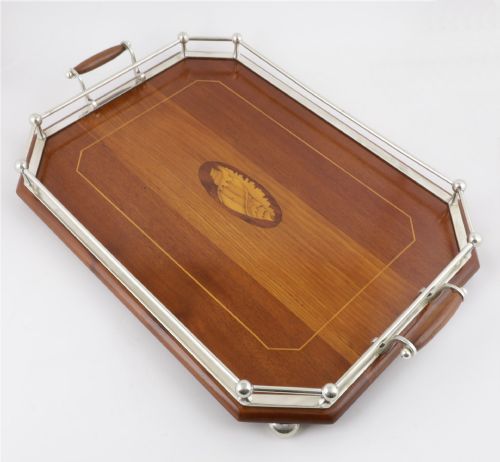
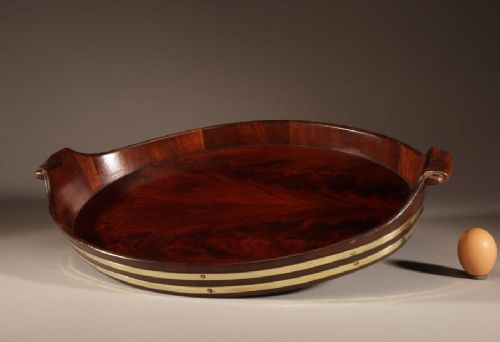
Makers relied heavily on solid mahogany and mahogany veneers, prized for stability and deep colour. Brass handles, hinges, and bound corners often reinforce joints and edges on high-use serving surfaces.
Decorative details include satinwood inlay and marquetry depicting floral or geometric motifs across the timber field. Certain pieces incorporate coopered wooden construction or fabric webbing beneath the structure.
Listings span from the 18th century through the Georgian, Victorian, and Edwardian eras, utilising mahogany, satinwood inlay, and brass.
Judging execution and finish
Quality rests on the depth of timber grain, the crispness of inlay work, and the structural integrity of folding joints. Hand-cut dovetails and solid brass hardware indicate superior workshop production.
Superior trays display balanced proportions, clean edges, and well-fitted hinges that allow flaps to drop smoothly without binding against the stand.
The Mahogany Butlers Tray Glossary
- Drop-flap
- A hinged side section that folds down to save space or lifts horizontally to extend the table surface. These hinged leaves allow the tray to change shape according to domestic needs.
- Stand
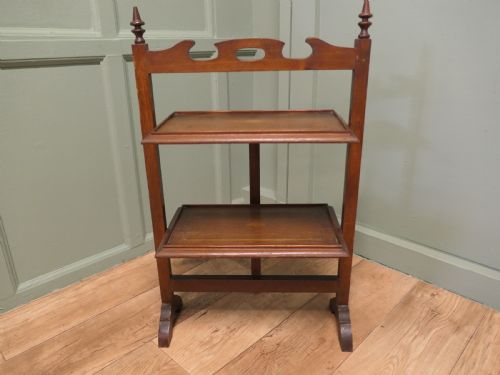
- A collapsible or rigid timber frame designed to support the removable tray at serving height. Most folding stands use intersecting wooden legs for easy storage.
- Marquetry
- Decorative patterns created by fitting thin pieces of contrasting wood veneer into a background timber. This technique adds pictorial detail to the centre of the tray.
- Gallery
- A raised timber rim surrounding the edge of the tray to prevent items from sliding off during transport. Galleries can be pierced with handgrips or shaped from solid wood.
- Coopered
- Constructed from vertical staves of wood bound together with metal bands, similar to barrel-making. This method creates curved tray walls.
Mahogany Butlers Tray: Frequently Asked Questions
How do I use a butlers tray today?
Place the removable tray on its folding stand to create an instant side table or cocktail station in a living room. Lift the tray off the base whenever you need to carry drinks or afternoon tea to guests.
Fold the stand flat and store the tray against a wall when floor space is required. The versatile design moves easily between dining, entertaining, and display roles.
Were these trays always placed on stands?
Many trays were manufactured specifically as portable platters intended for carrying by hand from kitchens to drawing rooms. Folding stands were often paired with trays to elevate them into convenient serving tables.
Over time, trays and stands became closely associated as complete furniture suites. Surviving examples frequently combine original or period-matched folding bases with the upper board.
How do I distinguish Georgian from Edwardian trays?
Georgian trays from the 18th century tend to feature restrained mahogany construction with minimal decoration and solid brass carrying handles. Their lines focus on sturdy utility and classic proportions.
Edwardian examples from the early 20th century frequently incorporate elaborate satinwood inlay, marquetry, and kidney-shaped forms. These later pieces prioritise decorative display alongside practical hosting.
What is the difference between a serving tray and a tray table?
A serving tray lacks a permanent base and relies entirely on human hands or a separate folding stand for support. Trays designed purely for carrying often feature inset brass drop handles.
A tray table permanently integrates the surface with a fixed or folding underframe. Many antique forms blur this distinction by pairing a removable tray with a matching collapsible stand.