





Mahogany Bureau with Shelves
A mahogany bureau with shelves combines a fitted writing compartment with open or enclosed upper storage, offering a practical workspace that anchors a room.
Mahogany Bureau with Shelves
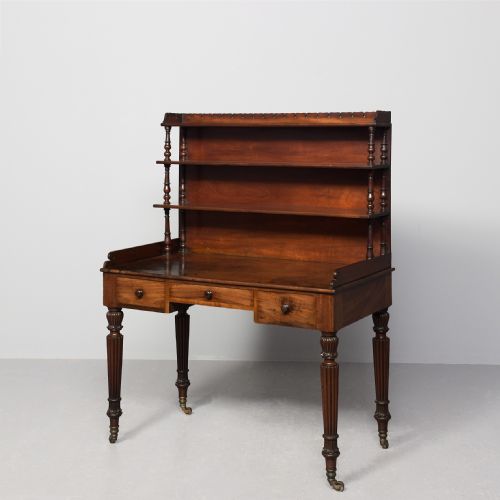
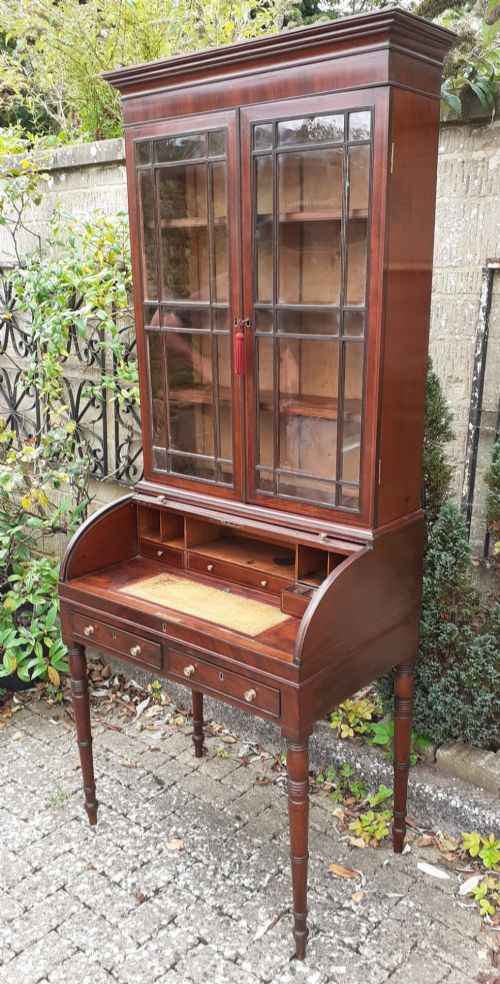
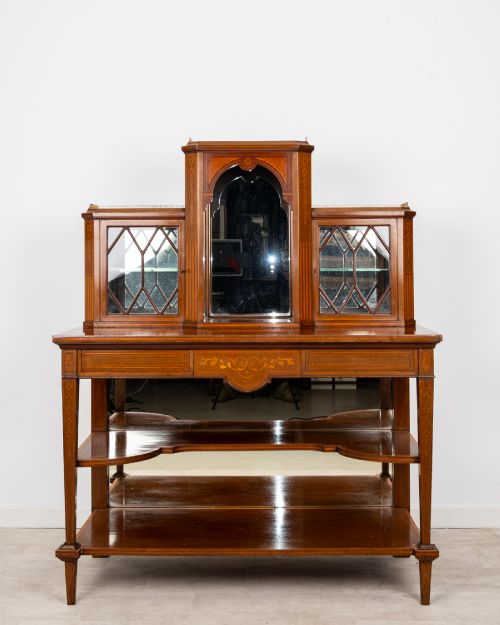
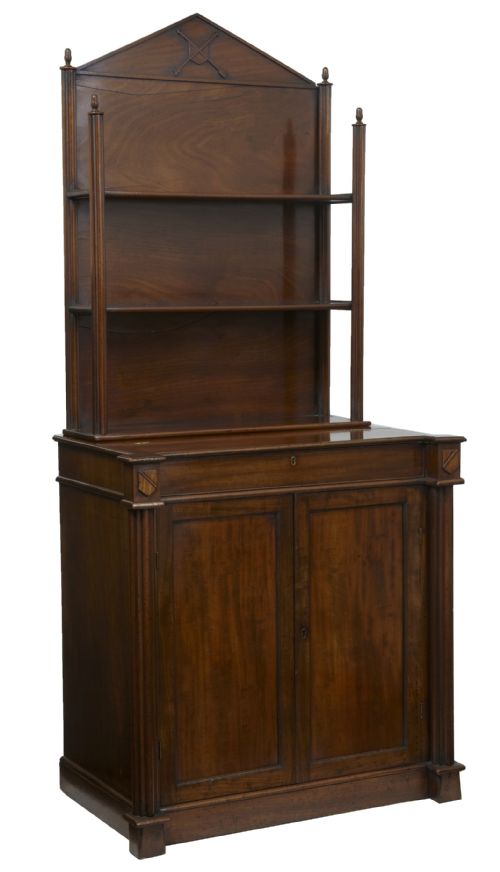
A mahogany bureau with shelves brings together a writing surface and upper storage, spanning forms such as bureau bookcases, writing cabinets, and desks with shelved tops. Buyers searching for a mahogany bureau with shelves will encounter pieces from the Georgian, Victorian, and Edwardian periods, alongside nineteenth-century examples.
The dominant forms on this page include bureau cabinets, writing desks with shelved structures, and chests of drawers combined with open shelves. These pieces originate from distinct eras, ranging from early nineteenth-century workshops to late Edwardian furniture makers.
Makers such as James Mein of Kelso and Tudor & Burrey of Shrewsbury represent the named cabinet-makers appearing in the inventory. Their works demonstrate the regional diversity and traditional craftsmanship inherent in these hybrid storage and writing items.
Materials and construction methods
Constructed primarily from mahogany, these pieces often incorporate secondary timbers and decorative veneers such as satinwood and satin walnut. Structural integrity relies on traditional joinery techniques suited to housing both heavy book collections and delicate writing drawers.
Surface details frequently include brass hardware, leather writing inserts, and glazed or mirrored doors on the upper shelving sections. Inlaid decoration appears on Edwardian and nineteenth-century variants, adding contrast to the rich dark timber.
Mahogany Bureau with Shelves Retail Price Guide 2026
Typical asking prices for mahogany bureau with shelves among the pieces listed under this phrase on Sellingantiques today, from the lower quarter to the upper quarter. They describe what is for sale here now, not the wider market.
Listings span the Georgian, Victorian, and Edwardian periods, featuring mahogany, satinwood, brass, and glass across various desk and bookcase forms.
Assessing quality and execution
Quality in a mahogany bureau with shelves is determined by the selection of timber figures, the precision of decorative inlay, and the integration of the upper shelving with the lower desk unit. Superior examples display harmonious proportions where the upper bookcase or shelves complement the bureau base without feeling heavy.
The sophistication of the internal fittings, such as secret compartments, pigeonholes, and small drawers within the writing drop-front, separates standard production from finer cabinet-making. Original brasses, intact glazing bars, and well-executed secondary woodwork also distinguish the better items in the range.
James Mein of Kelso·Tudor & Burrey Shrewsbury
The Mahogany Bureau with Shelves Glossary
- Bureau
- A writing desk featuring a sloping flap that opens to reveal a fitted interior of pigeonholes and small drawers. This form provides a concealed workspace that can be closed when not in use.
- Escritoire
- A writing cabinet or desk designed for correspondence and paperwork. The term often describes tall cabinet forms with drop-front writing surfaces.
- Bonheur du jour
- A light ladies writing desk featuring a small set of drawers, shelves, or a cabinet on top of the writing surface. This delicate form gained popularity during the late nineteenth and Edwardian eras.
- Inlay
- A decorative technique where contrasting woods or materials are inserted into recesses carved into the primary timber. Satinwood and lighter veneers are commonly utilised for this purpose on mahogany surfaces.
- Pigeonhole
- A small, open compartment within a desk interior designed for sorting letters and papers. These compartments are often arranged in tiers inside the writing flap of a bureau.
Mahogany Bureau with Shelves: Frequently Asked Questions
How do I date a mahogany writing cabinet?
Dating relies on observing the secondary woods, the style of hardware, and the presence of decorative inlays such as satinwood. Georgian examples usually display heavier proportions and simpler lines, while Edwardian pieces often incorporate lighter framing and delicate stringing.
Construction marks and the style of the internal pigeonholes also offer clues to the era of manufacture, distinguishing nineteenth-century work from earlier periods.
Were these pieces used primarily for books or paperwork?
These hybrid pieces were designed to handle both household administration and the storage of personal libraries. The upper shelves or glazed bookcases accommodated leather-bound volumes, while the desk compartment provided a private area for writing letters.
This dual function made them central pieces of furniture in nineteenth-century studies, parlours, and drawing rooms.
What maintenance do mahogany desks require?
Mahogany furniture benefits from stable indoor humidity and protection from direct sunlight to prevent the timber from fading or drying out. Regular dusting with a soft cloth keeps the surface clean without requiring heavy polishes.
Leather writing inserts require specific care to avoid cracking, and brass hardware should be cleaned gently without abrasive compounds.