



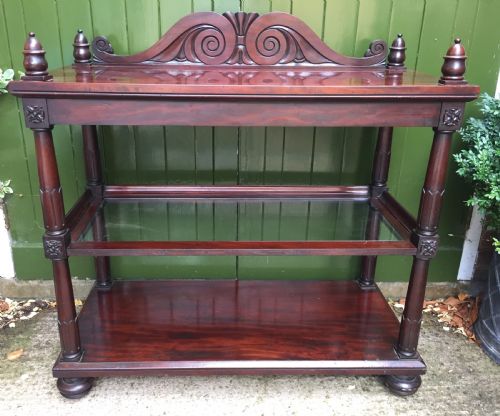


Mahogany Buffet Unit
A mahogany buffet unit brings dark, figured timber and practical tiered storage into a dining room or hallway.
Mahogany Buffet Unit
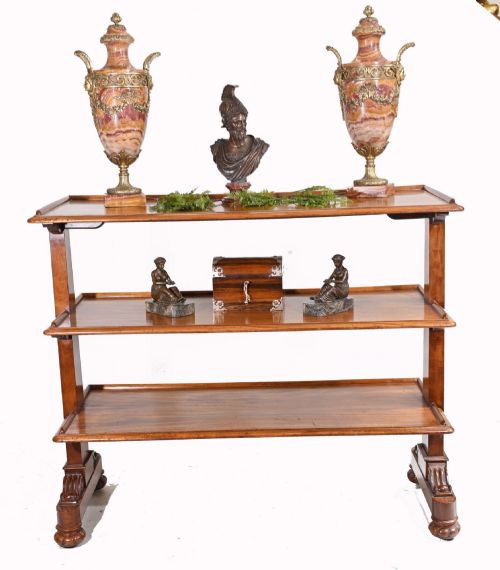
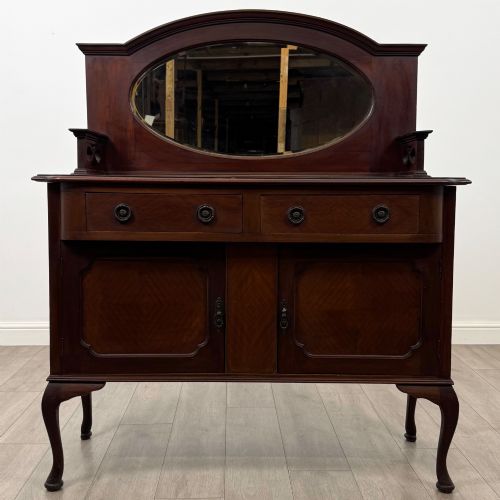
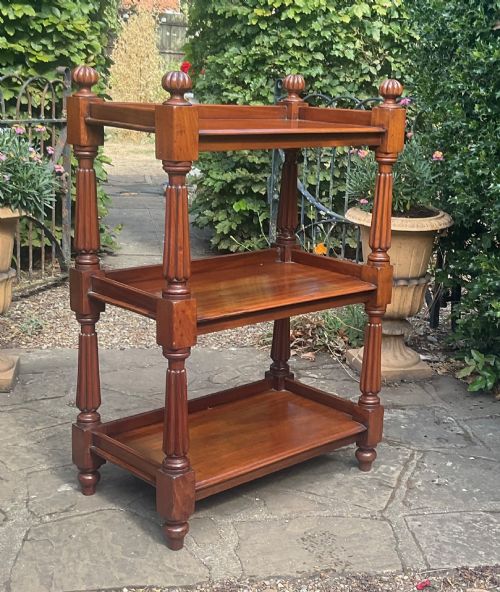
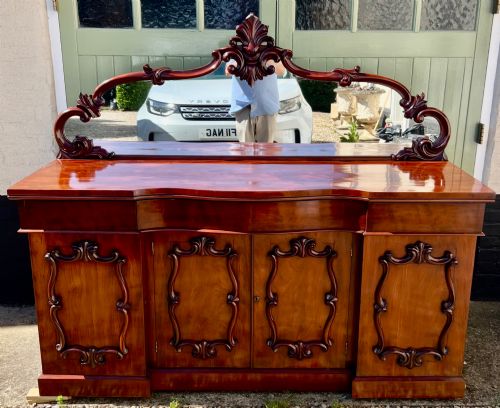
A mahogany buffet unit is a sturdy dining room or hallway piece designed for serving food and displaying silver or glassware. When searching for a mahogany buffet unit, buyers encounter tiered etageres, low sideboards, and side cabinets dating from the early nineteenth century through to the Edwardian period.
The versions most commonly met on this page are three-tier etageres and Victorian sideboards equipped with mirror backs or original castors. These pieces draw upon George IV, Arts and Crafts, and Art Nouveau design traditions while retaining a utilitarian domestic purpose.
How they were made
Cabinet makers constructed these pieces using dense mahogany timbers, often enhanced with contrasting wood inlay to accent panels and borders. Structural stability relied on solid framing, while functional additions such as brass fittings and copper details provided secure handles and hinges.
Many items incorporate glass panels within doors or feature integrated mirror backs that reflect light into smaller reception rooms. Workshops mounted certain three-tier buffet tables on original castors to allow smooth repositioning across heavy carpets.
Mahogany Buffet Unit Retail Price Guide 2026
Typical asking prices for mahogany buffet unit among the pieces listed under this phrase on Sellingantiques today, from the lower quarter to the upper quarter. They describe what is for sale here now, not the wider market.
The furniture spans sideboards, etageres, and side cabinets mounted on original castors.
What varies in quality
Quality separates standard utilitarian storage from exceptional cabinet work through the crispness of the wood inlay and the selection of figured mahogany boards. Finer pieces display balanced proportions and thoughtful decorative carving associated with named workshops rather than mass production.
Shapland & Petter
The Mahogany Buffet Unit Glossary
- Etagere
- A set of open shelves supported by columns, used for displaying small ornaments and tableware. These pieces often feature three distinct tiers.
- Castor
- A small wheel fitted to the legs of furniture to permit easy movement across floors. Original brass versions remain particularly desirable.
- Inlay
- A decorative technique where contrasting strips of wood are fitted into recesses flush with the surface. This method creates geometric patterns along cabinet doors and borders.
- Sideboard
- A large dining room cabinet designed for storing cutlery, linen, and serving dishes. They frequently incorporate drawers and enclosed cupboards beneath a flat top.
Mahogany Buffet Unit: Frequently Asked Questions
What is a mahogany buffet unit?
A mahogany buffet unit is a sturdy wooden storage and display piece primarily used in dining rooms for holding tableware and serving food. These items range from open three-tier etageres to enclosed sideboards with mirror backs.
They reflect various nineteenth and early twentieth-century design movements, combining functional shelving with decorative timber grain and brass hardware.
How do I date a mahogany buffet?
Dating these pieces involves examining the timber selection, construction methods, and prevailing decorative styles visible in the handles, mirror frames, and legs. Early nineteenth-century examples often display simpler lines, while later Victorian and Edwardian pieces incorporate elaborate inlay or mirror backs.
Hardware such as brass castors and locks also provides reliable chronological clues for attribution.
Were these units used in dining rooms?
Dining rooms were the primary home for these cabinets, where they served as practical surfaces for preparing meals and displaying silver or glassware. Lower cupboards and drawers held linens and cutlery close to the dining table.
Smaller etagere variants also appeared in drawing rooms for displaying decorative ceramics and books.
How do I care for mahogany furniture?
Maintaining mahogany requires placing the cabinet away from direct sunlight and heat sources to prevent the wood from drying out and splitting. Regular dusting with a soft, dry cloth preserves the polished surface without building up residue.
A light application of traditional wax helps nourish the timber grain over time.