
Mahogany Bow Front Drawers
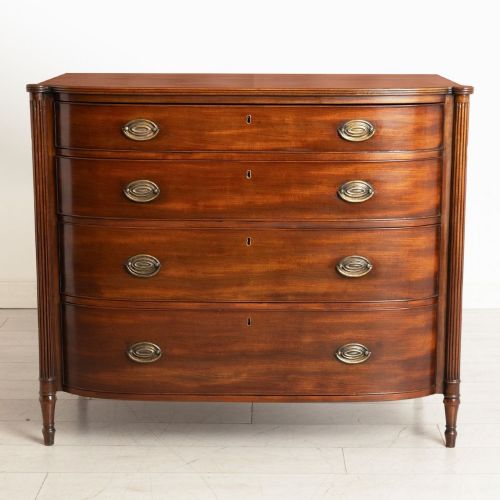
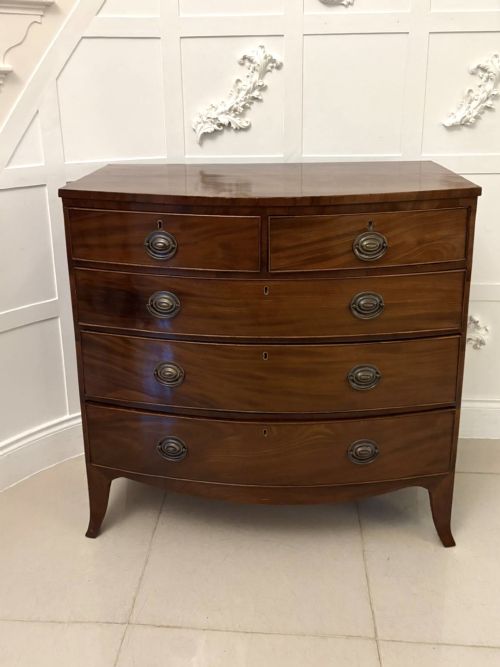
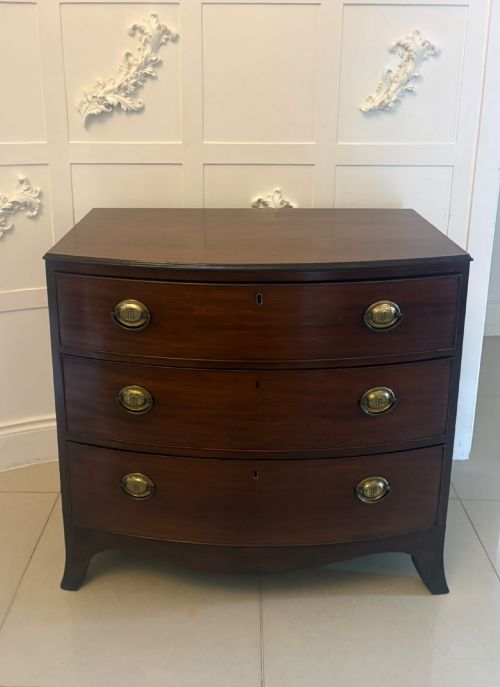
When you select mahogany bow front drawers, you acquire a classic storage piece defined by its gracefully curved projecting front.
Mahogany Bow Front Drawers
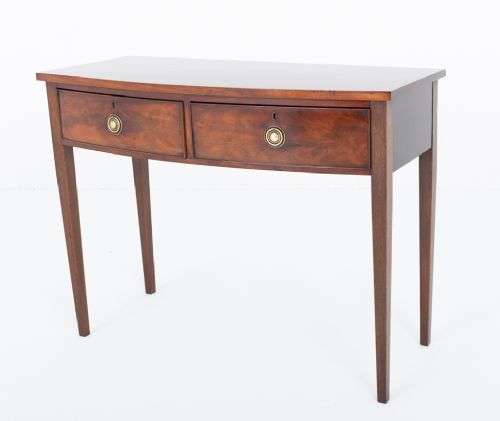
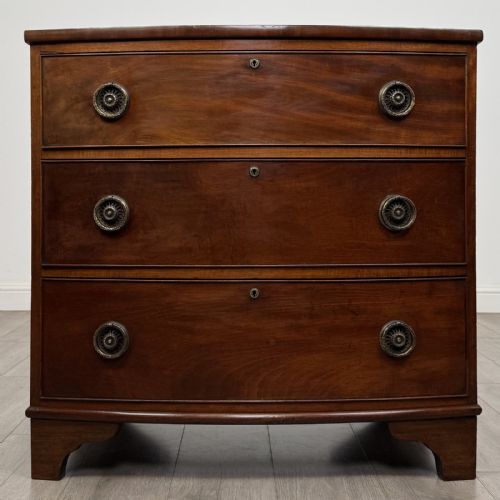
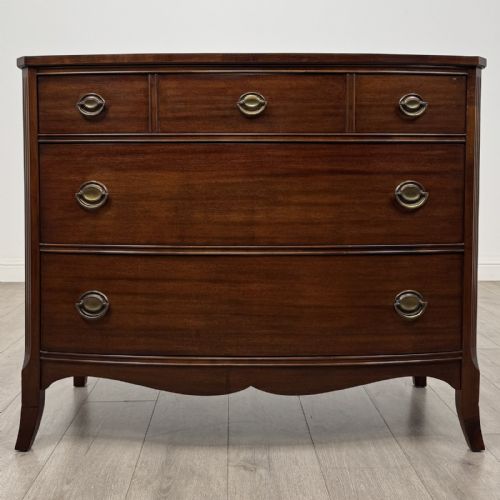
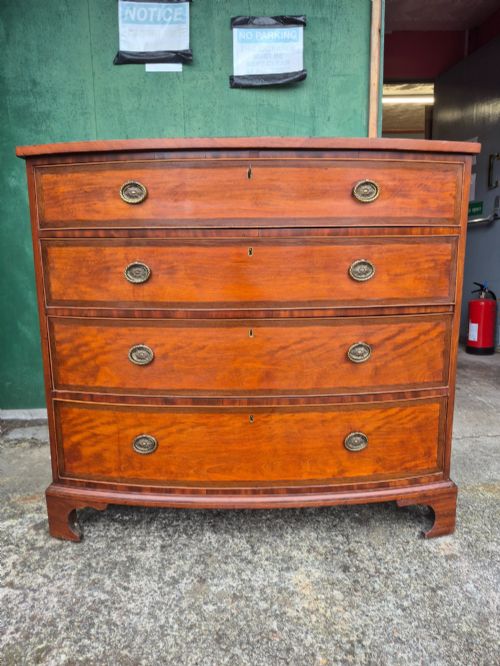
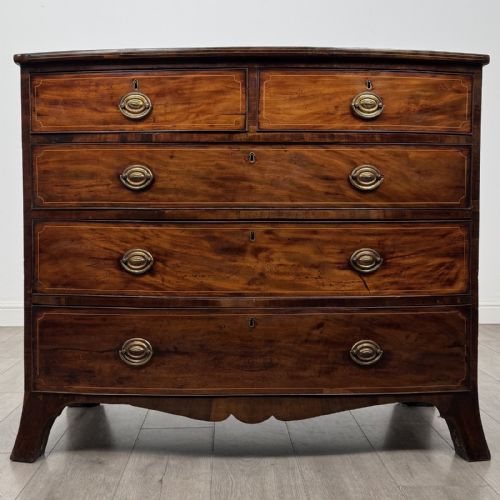
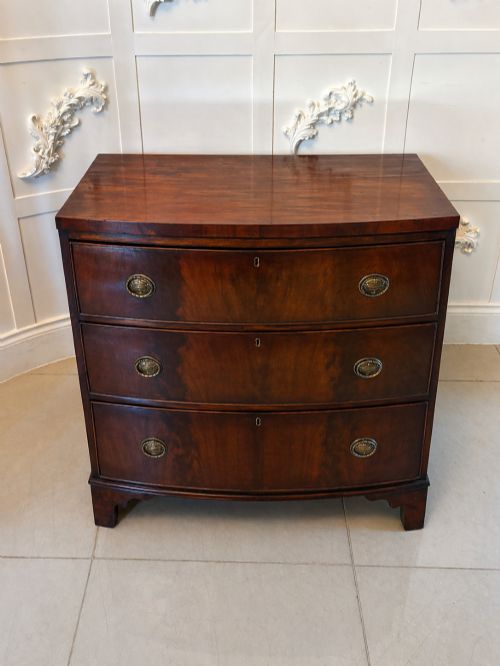
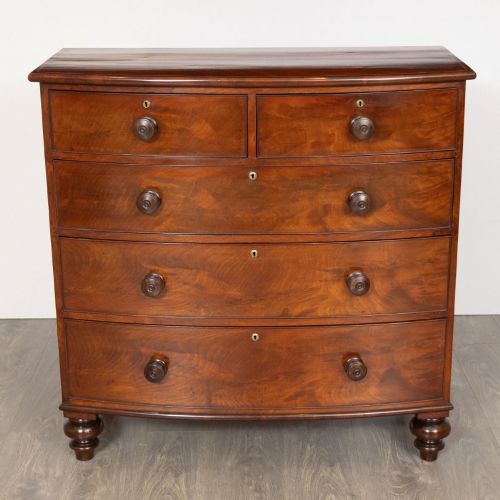
Mahogany bow front drawers primarily take the form of chests, ranging from compact Georgian and Regency examples to later Victorian and Edwardian pieces. These items serve as practical domestic storage while providing a strong visual focal point through their curved facades.
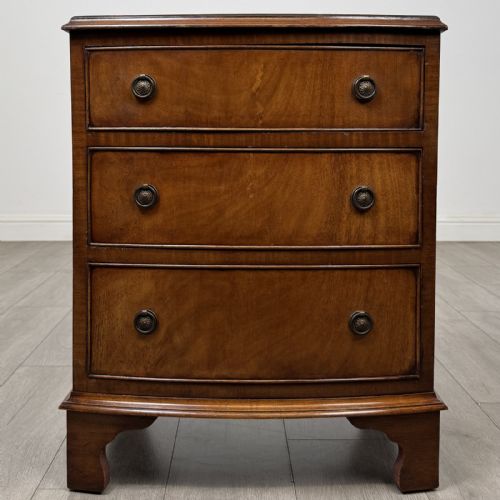
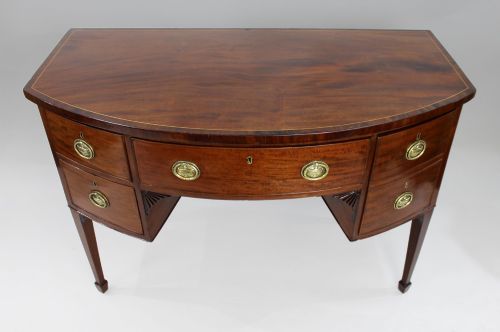
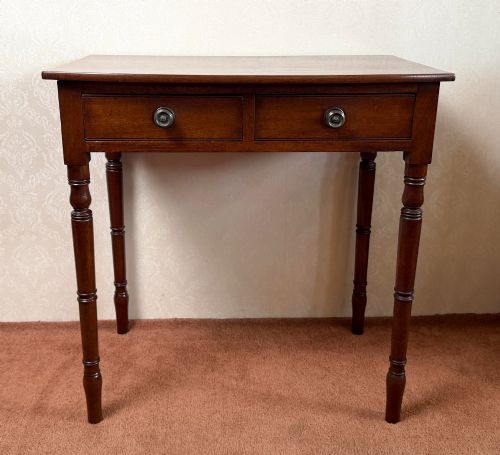
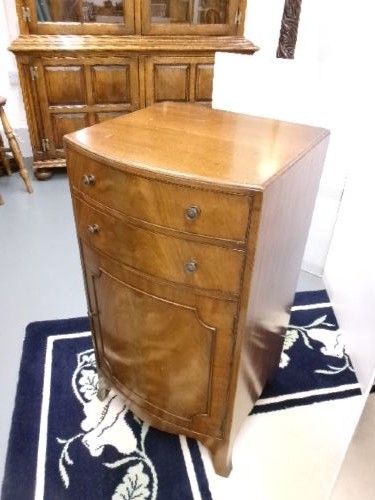
The inventory on this page draws heavily from the Georgian, Regency, and Victorian periods, showcasing how cabinet makers adapted the convex curve over generations. Buyers regularly encounter standard bedroom chests alongside smaller bedside variations and occasional side tables sharing the signature rounded outline.
Assessing quality and craftsmanship
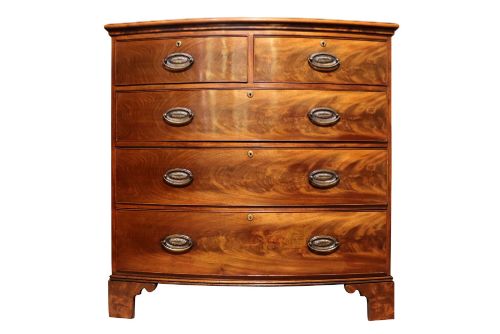
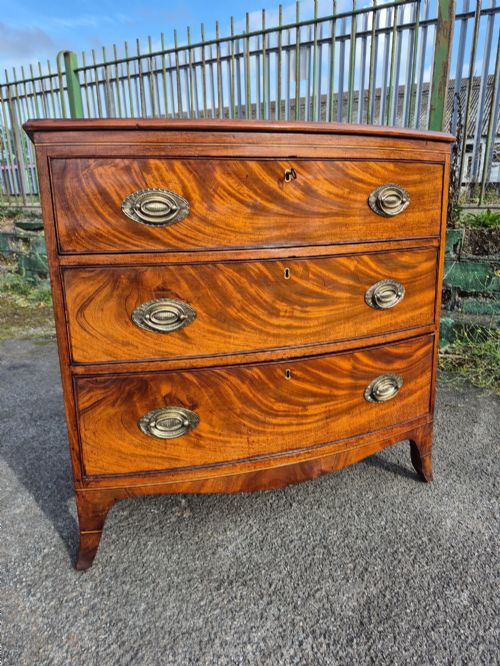
The standard of a piece rests heavily on the selection of the wood grain, with figured mahogany and symmetrical satinwood crossbanding separating superior examples from plain builds. Graduated drawer proportions and well-executed cockbeading around the drawer edges further indicate careful workshop production.
Structural refinement shows in the smoothness of the drawer action and the retention of original backboards, brass hardware, and feet. Pieces that maintain their proportional harmony and crisp curved lines without excessive timber shrinkage represent the higher tiers of surviving stock.
Certain Welsh regional chests on record include a hidden secret drawer, reminding us that cabinet makers enjoyed slipping secret compartments past unsuspecting owners.
The Mahogany Bow Front Drawers Glossary
- Bow front
- A convex, outwardly curved front profile typical of these chests and sideboards, designed to soften room angles and increase interior space.
- Flame mahogany
- A distinct timber veneer cut from the fork of the mahogany tree, displaying an undulating, flame-like pattern across the drawer fronts.
- Crossbanding
- A narrow strip of veneer laid perpendicularly to the surrounding grain along the borders of a drawer, often utilising contrasting satinwood.
- Graduated drawers
- A series of drawers decreasing in depth from bottom to top, creating balanced visual proportions on the chest facade.
- Cockbeading
- A small, rounded projecting moulding applied around the edges of drawer openings to frame the drawer fronts and conceal joints.
Mahogany Bow Front Drawers: Frequently Asked Questions
Where should I place these in my home?
These chests fit well in bedrooms, hallways, or living spaces where their curved profile prevents harsh sharp corners in tight circulation areas. Their traditional proportions also allow them to function effectively as serving surfaces in dining rooms or as statement storage pieces against plain walls.
Because the design projects outward in the centre, ensure you measure the clearance space carefully relative to adjacent doors or furniture. Pairing a chest with a matching dressing mirror or placing a small version beside a bed creates a balanced arrangement.
How do I identify a Georgian piece?
Georgian and George III examples typically exhibit hand-cut dovetails, oak or pine drawer linings, and older timber patination with a warm wax finish. The proportions often feel slightly more restrained, frequently utilising bracket feet or neat apron bases.
Later Victorian and Edwardian interpretations tend to feature heavier carcases, machine-derived secondary elements, or plinth bases rather than delicate legs. Examining the interior construction and the type of secondary wood helps distinguish an eighteenth-century origin from a nineteenth-century revival.
What is satinwood banding?
Satinwood banding is a decorative inlay technique where a contrasting, pale yellow-toned exotic timber border frames the darker mahogany drawer fronts. This detail adds visual brightness and geometric definition to the curved surface.
Commonly found on Regency and late Georgian items, this contrasting veneer highlights the precision of the cabinet maker's joinery. The presence of such bandinng usually points to a higher grade of workshop production.
Can I use a small chest as a bedside table?
Compact and miniature variants function exceptionally well as bedside tables, offering practical surface space and enclosed drawer storage next to a bed. Their reduced dimensions suit modern room scales while maintaining traditional character.
When selecting a piece for this purpose, check the height relative to your mattress level to ensure comfortable daily access. Many period workshops produced smaller bedroom chests and bedside cabinets specifically for this versatile scale of use.