





Mahogany Book Case
A mahogany book case brings architectural warmth to a room, offering sturdy shelves and glazed or open display for a working library.
Mahogany Book Case
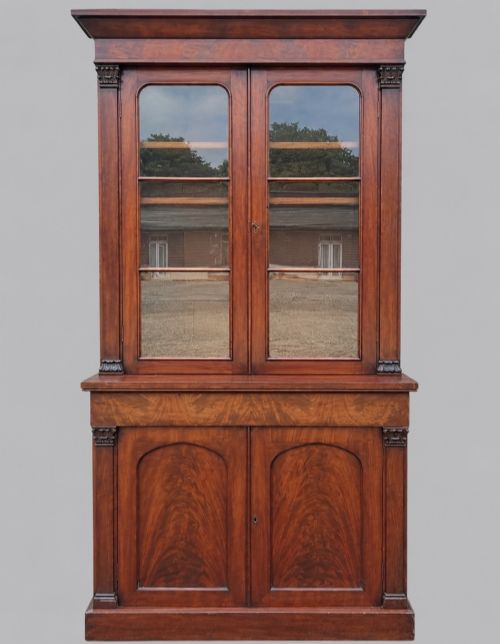
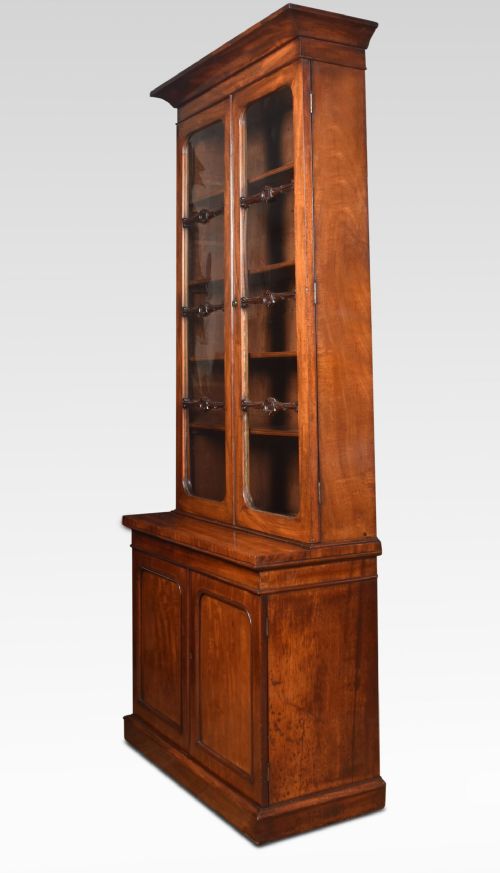
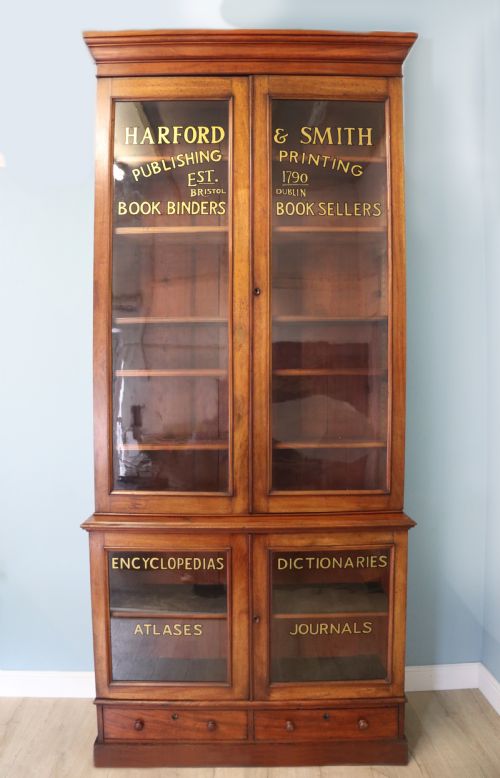
A mahogany book case is a substantial timber cabinet designed to hold and protect bound volumes, appearing in forms ranging from open Victorian shelves to large two-section library pieces. Buyers seeking this phrase encounter tall cabinet formats with glazed doors, narrow two-door cupboards, and lower enclosed storage bases.
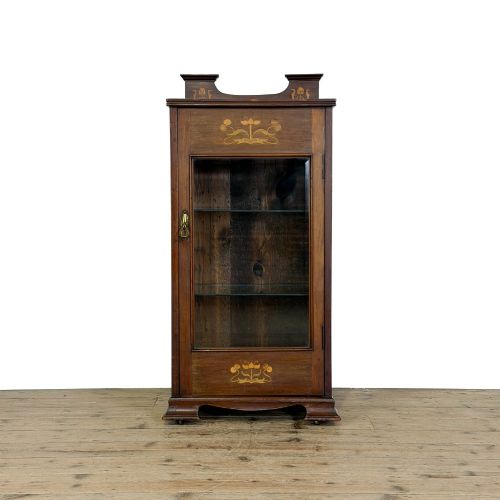
The selections span the nineteenth and twentieth centuries, predominantly featuring Victorian and Edwardian examples alongside specific dates such as eighteen seventy, eighteen ninety, and nineteen twenty. Pieces vary from simpler open designs with adjustable shelves to refined display cabinets featuring satinwood inlay and architectural pediments.
How they were made
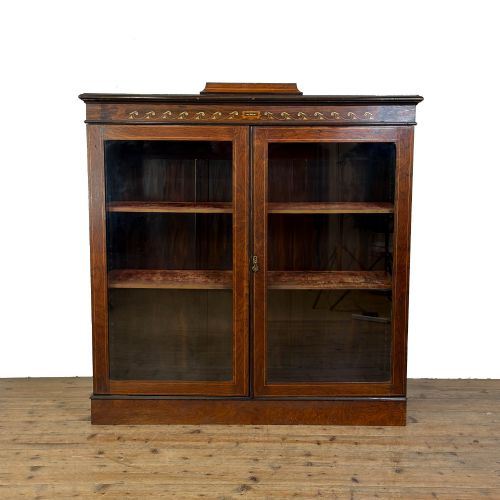
Cabinet makers utilised dense mahogany timbers for structural longevity, often pairing the rich reddish-brown wood with lighter satinwood inlay to create decorative contrast on drawer fronts and cornices. Glazing bars held individual panes of glass in doors designed to keep dust from valuable books.
Hardware such as brass hinges and escutcheons secured doors and allowed panels to swing smoothly, while internal shelving was frequently built to be adjustable. Exterior ornamentation included architectural details like swan neck pediments and subtle astral glazing patterns.
Mahogany Book Case Retail Price Guide 2026
Typical asking prices for mahogany book case among the pieces listed under this phrase on Sellingantiques today, from the lower quarter to the upper quarter. They describe what is for sale here now, not the wider market.
Many Edwardian display cabinets doubling as bookcases still carry the faint, comforting aroma of old paper and beeswax polish.
What varies in quality
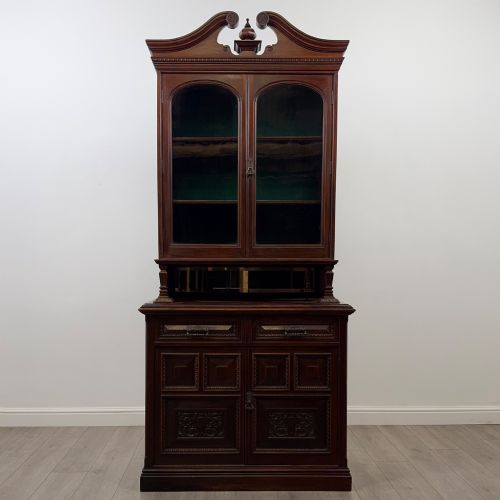
Quality rests in the harmony of the timber selection and the precision of the joinery, where finely figured mahogany grain and crisp wood inlay distinguish superior examples from plain utilitarian boxes. The elegance of architectural touches, such as a well-proportioned swan neck pediment or delicate astral glazing bars, elevates the presence of the cabinet.
Structural division also dictates standard, as two-section break-down bookcase cabinets require careful carpentry to ensure the upper and lower halves align seamlessly. The integration of solid brass fittings and cleanly adjustable shelf mechanisms marks the distinction between standard workshop production and finer cabinet work.
The Mahogany Book Case Glossary
- Swan neck pediment
- A broken scroll top with an upward-curving swan neck shape, often finishing in a central finial or floral patera. This classical architectural detail crowns taller Victorian library cabinets.
- Astral glazing
- A framework of slender wooden bars dividing glass panes into geometric or curved patterns within a cabinet door. This technique allows a clear view of books while securing the glass.
- Satinwood inlay
- A contrasting light-coloured exotic wood set flush into the darker mahogany surface to create decorative lines or motifs. Edwardian makers utilised this method frequently on panels and friezes.
- Adjustable shelves
- Movable timber boards supported by internal ratchets, pegs, or sliding brackets. This adaptation allowed owners to alter shelf heights for varying book sizes.
Mahogany Book Case: Frequently Asked Questions
What is an open bookcase?
An open bookcase is a timber shelving unit without doors, designed for easy access to frequently used volumes. These pieces rely on clean side panels and sturdy fixed or adjustable shelves to support heavy text blocks.
Victorian examples often incorporated architectural cornices and sturdy mahogany framing to lend presence to an otherwise simple form.
How do glazed doors protect books?
Glazed doors fitted with glass panes create a closed environment that shields delicate paper bindings from household dust, direct sunlight, and moisture. This enclosure was essential for valuable libraries.
Cabinet makers used timber framing and delicate glazing bars to hold the glass securely while maintaining visibility of the spines inside.
How do I spot Edwardian inlay?
Edwardian inlay appears as pale, fine-grained satinwood strips or botanical motifs set directly into recessed channels on the dark mahogany surface. Artisans used this technique to brighten the face of narrow bookcases and display cabinets.
The contrasting woods are smoothed flush with the surrounding timber to create a seamless decorative band.