


Mahogany Biedermeier Chest
These mahogany Biedermeier chest pieces combine restrained continental forms with striking grain patterns, offering practical storage with distinct character.
Mahogany Biedermeier Chest
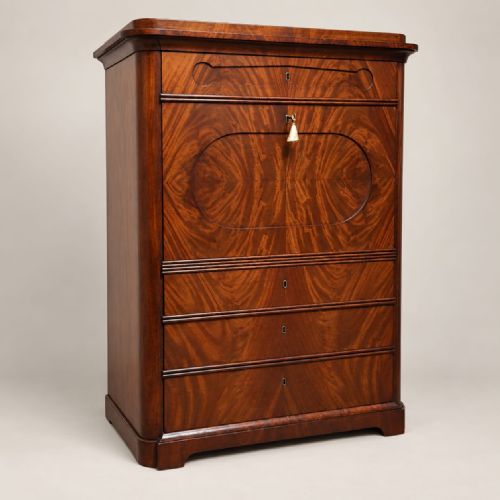
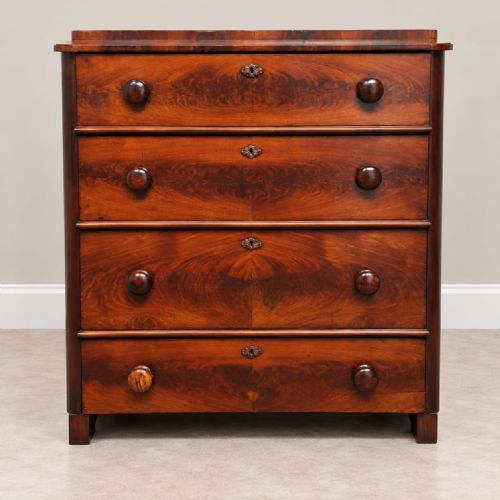
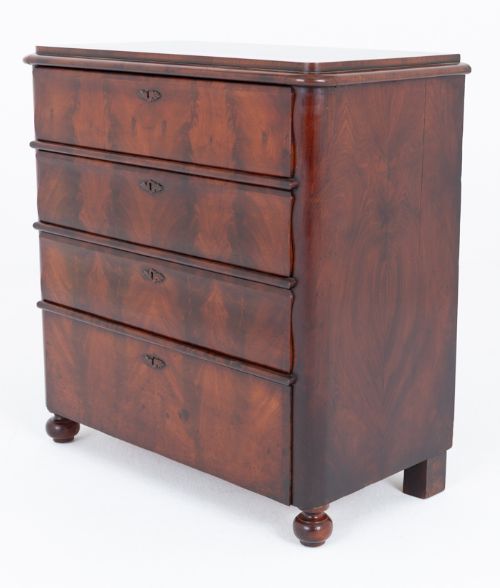
A mahogany Biedermeier chest brings together clean architectural lines and rich wood figuring from the nineteenth century. Buyers examine these pieces for their understated facades and functional drawer configurations.
The selections here span standard drawer chests, secretaire commodes with drop fronts, and taller cabinet combinations. Swedish, Danish, and French regional variations appear frequently alongside Victorian interpretations.
Most examples rely on generous proportions and stacked drawer arrangements designed for domestic storage. Pieces range from dwarf heights up to five-drawer vertical formats.
How They Were Made
Cabinet makers constructed carcass frames primarily from pine or secondary woods, applying carefully sliced mahogany and flame mahogany veneer across visible surfaces. This technique allowed workshops to display dramatic timber figuring across wide drawer fronts.
Selected pieces incorporate contrasting white marble tops or subtle brass mounts to accent the polished wood surfaces. Joinery methods relied on sturdy nineteenth-century framing to support heavy solid timber and veneer layers.
Listings feature periods spanning the Georgian era through to the late nineteenth century, utilising mahogany, flame mahogany veneer, pine, and marble.
What Varies in Quality
The visual impact of a piece depends heavily on the symmetry and book-matching of the flame mahogany veneer. Superior examples maintain continuous grain patterns that flow smoothly across multiple drawers.
Construction fidelity dictates structural longevity, particularly in the alignment of deep drawer mechanisms and the integrity of drop-front secretaire compartments. Original marble slabs and intact brass detailing elevate the finish of individual commodes.
The Mahogany Biedermeier Chest Glossary
- Biedermeier
- A Central European design style spanning the nineteenth century that prioritises clean lines, utility, and beautiful wood grain over heavy ornamentation. This aesthetic governs the construction of the chests found here.
- Secretaire a abattant
- A tall cabinet or chest featuring a hinged writing flap that drops down to reveal a fitted desk interior. Several items on this page utilise this dual-purpose format.
- Commode
- A low chest of drawers or cabinet designed for domestic storage, often topped with marble in continental variations. The term frequently overlaps with standard drawer chests in the archive.
- Flame mahogany veneer
- Thin slices of timber cut from wood where branches meet the trunk, producing a rippling, flame-like grain pattern. Workshops applied these sheets over solid secondary woods to create dramatic facades.
Mahogany Biedermeier Chest: Frequently Asked Questions
How do I date a mahogany Biedermeier chest?
Dating relies on construction traits, secondary woods like pine, and stylistic markers recorded across the nineteenth century. Cabinet methods shifted between early regional workshops and later Victorian iterations.
Examining drawer linings, backboards, and veneer thickness helps narrow down the decade of manufacture. Pieces from the earlier nineteenth century often display more dramatic flame figuring than later examples.
What is a secretaire chest?
A secretaire chest combines standard drawer storage with a fold-down writing surface concealing small pigeonholes and internal drawers. This format offered practical desk space within a compact bedroom cabinet.
Such dual-purpose furniture was common across continental European workshops during the Biedermeier period. The drop front maintains the clean horizontal lines of the chest when closed.
Where were these chests made?
Production centred across Northern and Central Europe, with notable output from Swedish, Danish, and German workshops. French regional interpretations also appear alongside British Victorian pieces influenced by the style.
Local timber availability and regional aesthetic preferences shaped the subtle differences in cornice moulding and foot design. Swedish pieces frequently showcase particularly pale or distinct mahogany selections.
How do I care for mahogany veneer?
Protect antique veneer by maintaining stable room humidity and avoiding direct sunlight that can bleach the wood. Regular dusting with a soft, dry cloth preserves the polished finish.
Harsh chemical polishes should be avoided in favour of traditional beeswax formulations suitable for nineteenth-century surfaces. Gentle handling prevents accidental damage to thin decorative timber layers.