



Mahogany Bathroom Furniture
Mahogany bathroom furniture brings rich timber warmth and practical utility to the washroom, spanning washstands, towel rails, and wall cabinets from the Victorian and Edwardian eras.
Mahogany Bathroom Furniture
When you search for mahogany bathroom furniture, you encounter practical items designed for personal hygiene and grooming during the nineteenth and early twentieth centuries. These pieces encompass washstands, towel rails, and wall cabinets originating from Victorian, Edwardian, and 1910 periods.
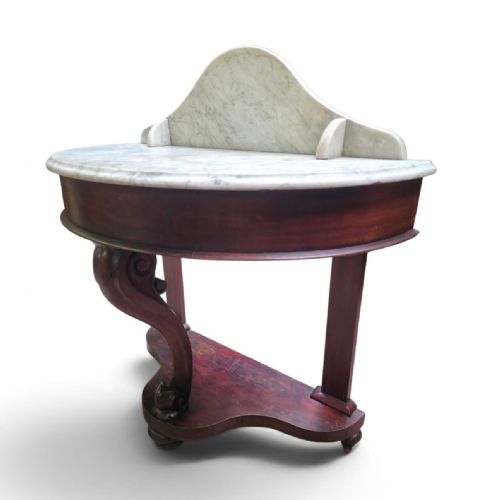
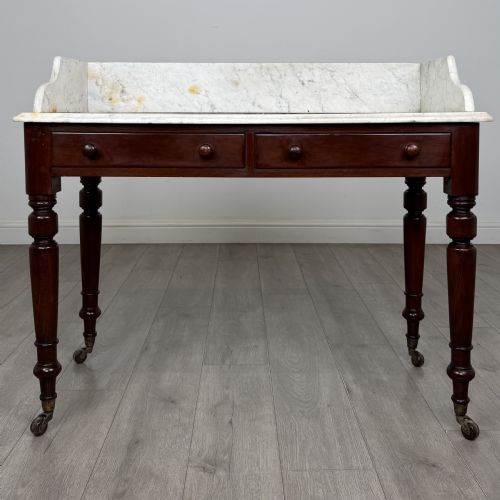
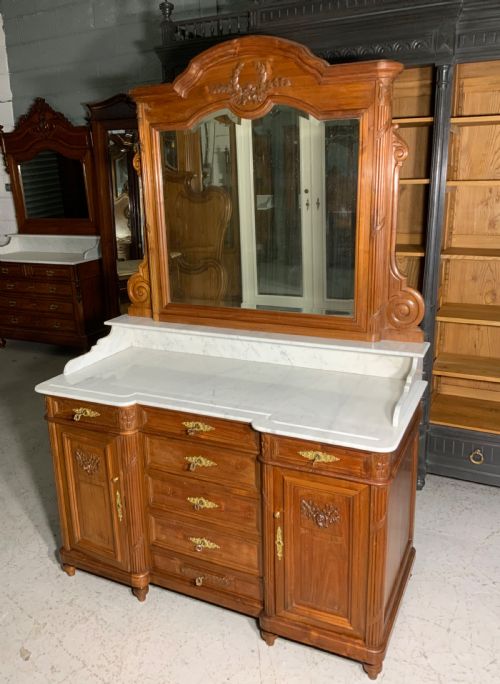
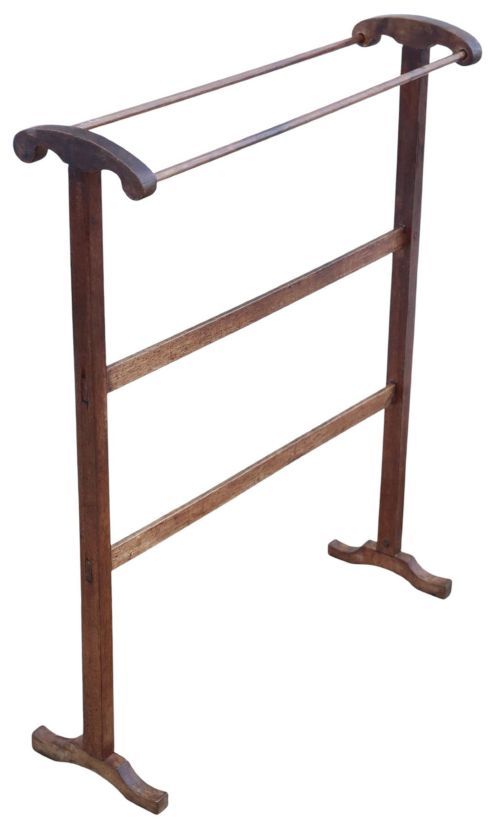
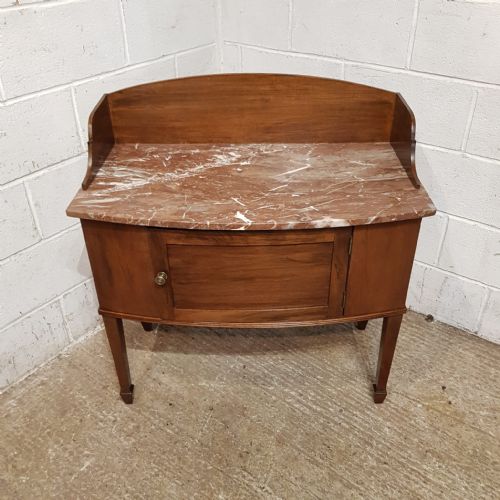
The version you are most likely to meet on this page is the washstand, often featuring a marble top and ceramic tiles. Towel rails in standing multi-bar configurations also appear frequently, alongside occasional wall-hanging shaving mirrors and cabinets.
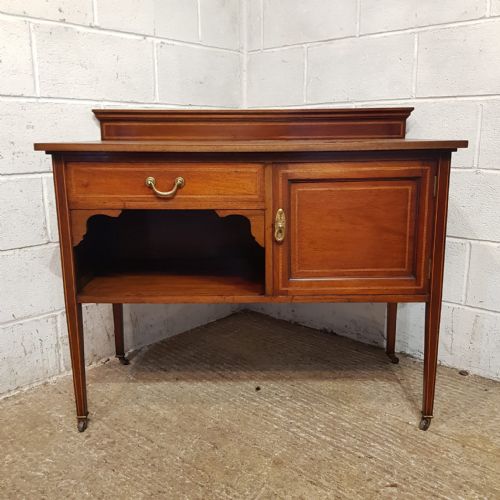
Makers from these eras utilised solid mahogany and mahogany veneers, frequently combining the timber with contrasting boxwood inlay or pairing it with white marble surfaces. Stylistic influences range from the Aesthetic Movement to French Rococo Revival.
How they were made
Cabinet makers constructed these pieces primarily from solid mahogany and mahogany veneers, employing traditional joinery methods suited to domestic furnishings. Timber selection prioritized rich grain patterns and deep reddish-brown tones.
Heavy marble tops and ceramic tiles were integrated into washstands to provide durable, water-resistant surfaces for washing routines. Brass hardware, such as pivoting mirror fixings or hanging hooks, completed the functional construction.
Mahogany Bathroom Furniture Retail Price Guide 2026
Typical asking prices for mahogany bathroom furniture among the pieces listed under this phrase on Sellingantiques today, from the lower quarter to the upper quarter. They describe what is for sale here now, not the wider market.
Listings feature items spanning the Victorian and Edwardian periods, alongside specific dates from 1880 to 1910.
What varies in quality
The distinction between standard examples and superior items rests on timber selection and decorative detail. Better pieces incorporate finely figured mahogany veneers, delicate boxwood stringing, or shaped bow fronts.
Quality also shows in the choice of auxiliary materials, such as thick slab marble with pronounced natural veining and substantial brass fittings. The integration of ceramic tiles with pictorial or geometric transfer prints elevates the decorative ambition of a washstand.
The Mahogany Bathroom Furniture Glossary
- Washstand
- A piece of furniture designed to hold a basin and jug for washing, frequently fitted with a marble top and a low tiled splashback. These items formed the centrepiece of bedroom and dressing room hygiene before plumbed bathrooms became universal.
- Towel rail
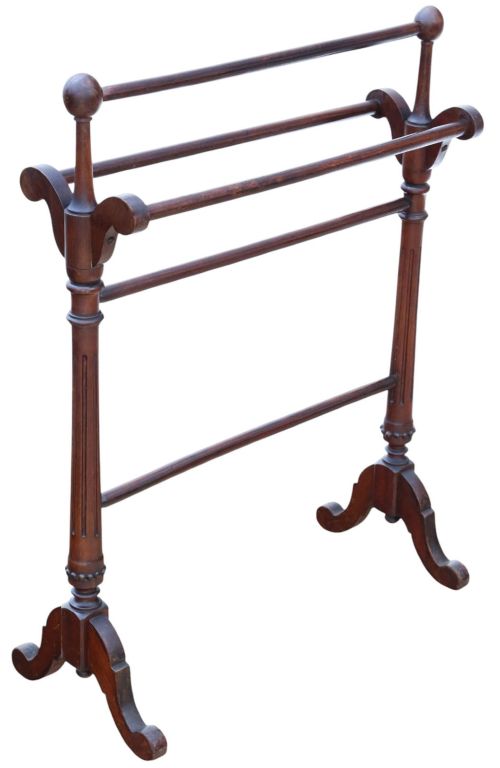
- A freestanding wooden frame featuring one or more horizontal bars for hanging textiles. Victorian and Edwardian examples often utilise multiple rails supported by turned uprights and sturdy side legs.
- Marble top
- A polished slab of stone fitted to the upper surface of a washstand to resist water damage. White and grey varieties dominate, offering a cool, impervious counter for basins and toiletries.
- Aesthetic movement
- A late nineteenth-century design style emphasising visual beauty over narrative content, often visible in clean lines and disciplined ornamentation. Pieces in this idiom eschew heavy historicism in favour of refined proportion.
Mahogany Bathroom Furniture: Frequently Asked Questions
What pieces count as bathroom furniture?
The category includes washstands equipped with marble tops, freestanding towel rails with multiple bars, and wall-mounted shaving cabinets with shelves. These items served washing and grooming functions before fitted plumbing was standard.
Most surviving pieces date from the Victorian and Edwardian periods, reflecting the domestic hygiene habits of the nineteenth and early twentieth centuries.
How do I care for a marble top?
Marble surfaces require regular cleaning with a damp cloth and mild, non-acidic soap to protect the polished finish from staining. Avoid harsh chemical cleaners or abrasive pads that can dull the stone.
Coasters and trays help prevent water rings and cosmetic spills from penetrating the porous surface over time.
Are these pieces suitable for modern bathrooms?
Washstands adapt well to modern spaces when utilised as sink vanities or console tables in cloakrooms and large bathrooms. Towel rails provide functional hanging space for linens without requiring wall fixtures.
Care should be taken to protect antique timber finishes from excessive moisture and direct water splashes in contemporary steam-heavy environments.
How do I tell Victorian from Edwardian pieces?
Victorian items tend to feature heavier proportions, darker timber finishes, and occasionally elaborate flourishes like French Rococo Revival curves or Aesthetic Movement simplicity. Bow-fronted marble washstands are characteristic of this period.
Edwardian pieces often display lighter construction, simpler geometric lines, and sometimes boxwood inlay or inlaid mahogany five-bar towel rails reflecting the turn of the century.