
Mahogany Armoire
A mahogany armoire offers substantial bedroom storage in dense timber, spanning Georgian grandeur to Edwardian practicality.
Mahogany Armoire
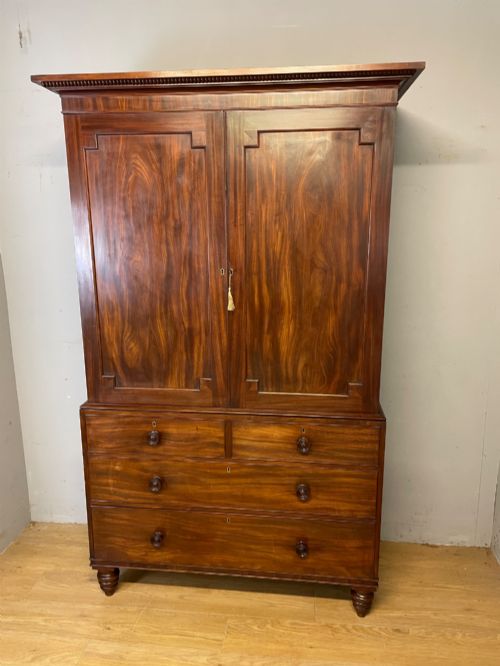
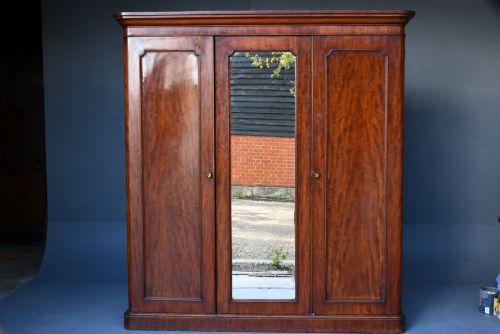
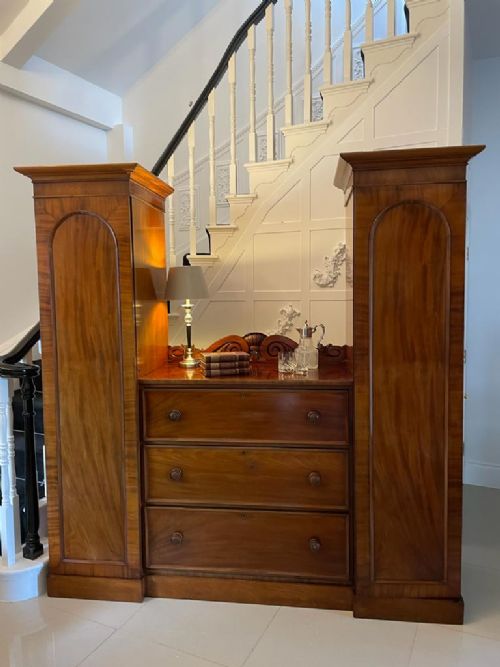
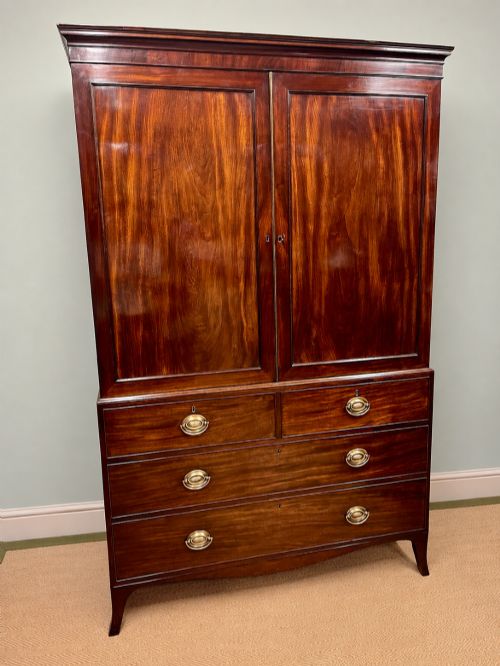
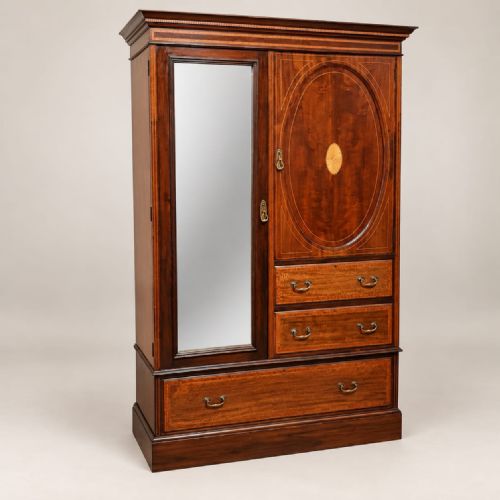
A mahogany armoire functions as a principal bedroom storage piece, appearing across Georgian, Victorian, and Edwardian periods as well as Regency and William IV eras. Buyers encounter these forms catalogued variously as wardrobes, linen presses, compactums, and bedroom suites.
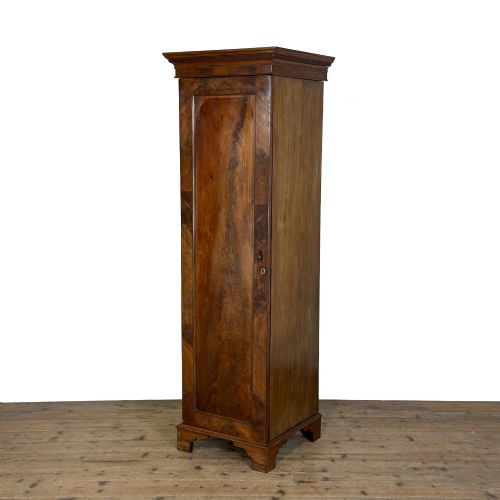
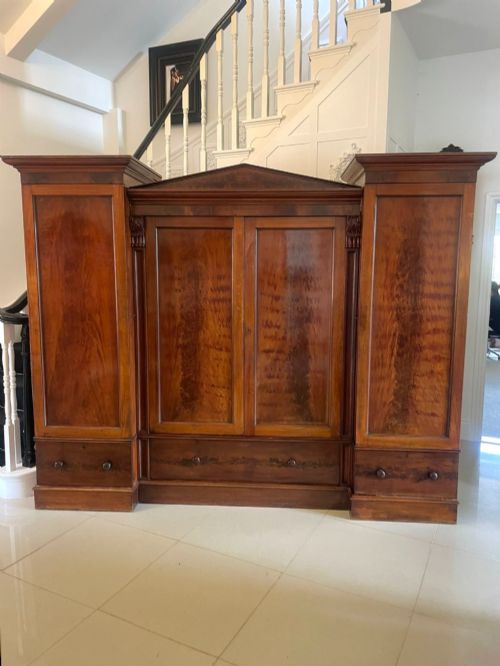
The pieces on this page emerge in configurations ranging from single door hall cupboards to expansive triple and quadruple door wardrobes. Many incorporate lower drawer banks or internal linen slides behind panelled doors.
Origins span English country houses and London workshops, alongside occasional French revival interpretations. Georgian and Regency examples favour architectural proportions, whilst Victorian and Edwardian iterations provide broader internal capacity.
Materials and construction
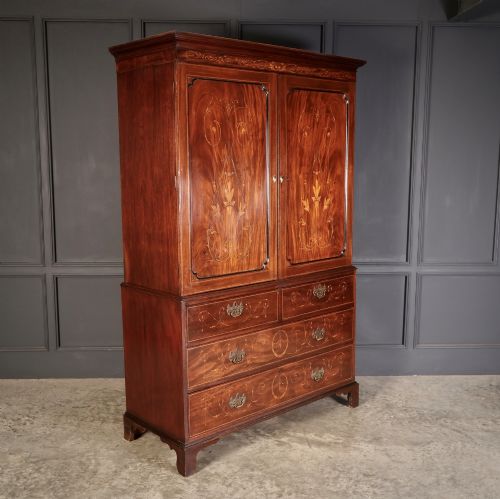
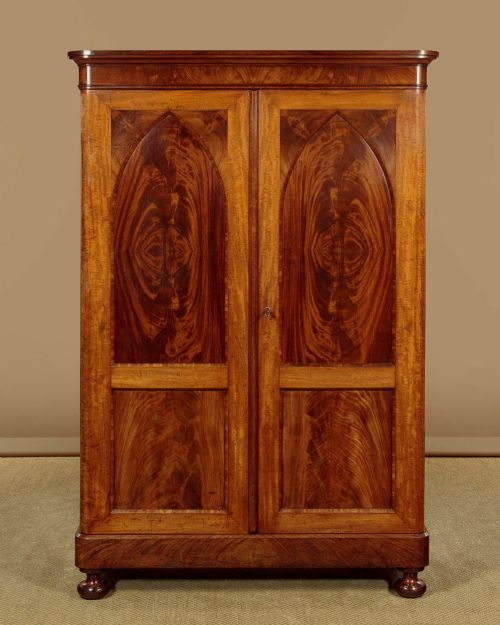
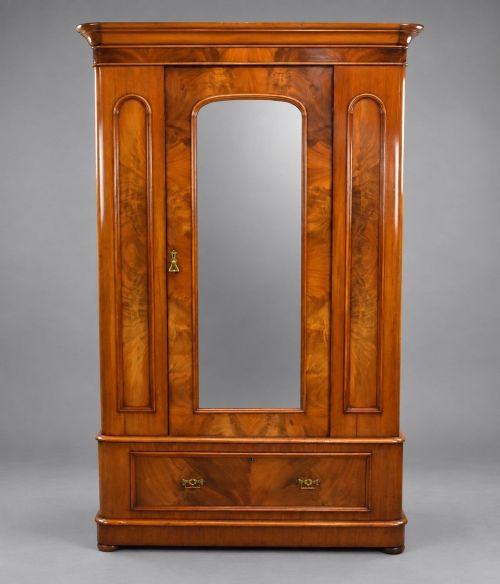
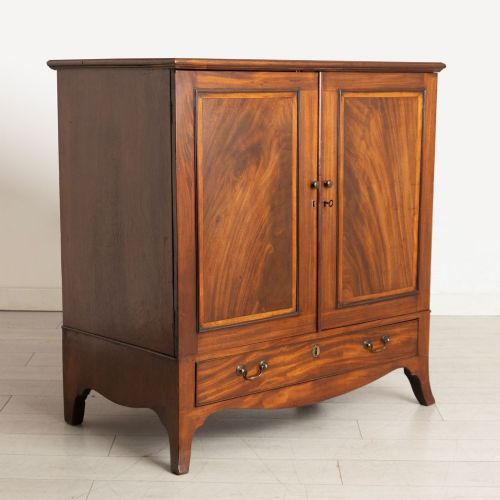
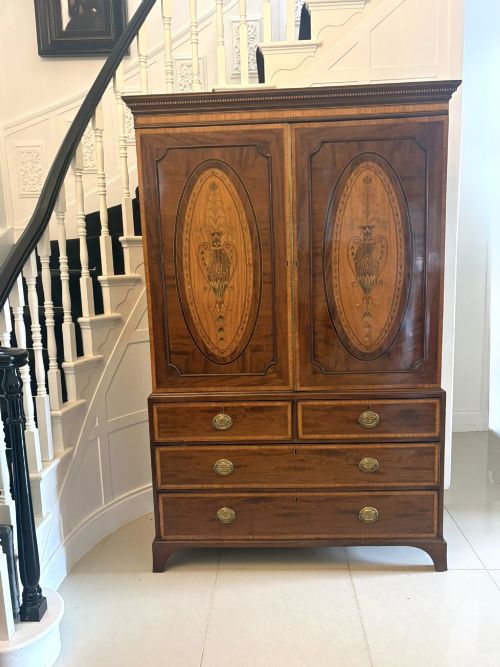
Cabinet makers utilised solid mahogany and applied flame mahogany veneers over secondary timbers such as oak and pine. Satinwood stringing and brass hardware frequently accent the primary surfaces.
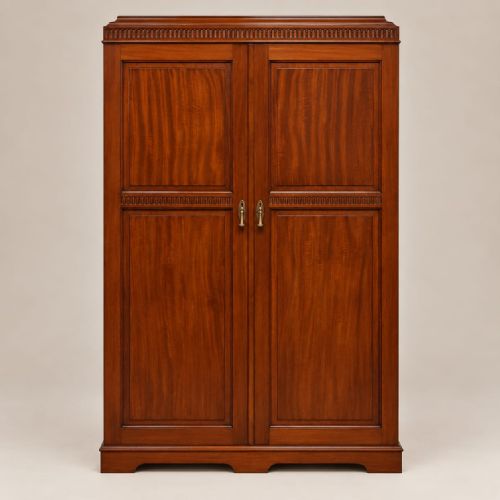
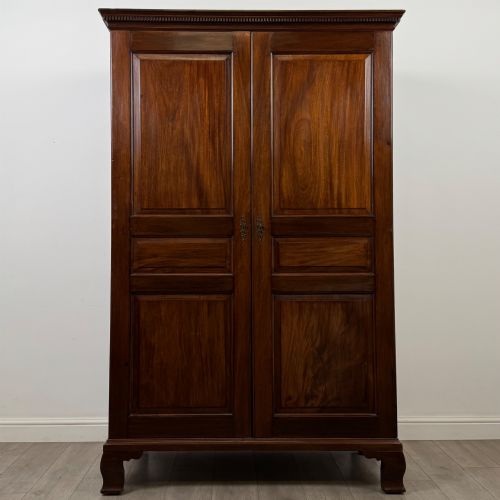
Structural integrity relies on traditional joinery, incorporating bracket feet, dental cornices, and panelled doors. Cabinet makers selected figured timber specifically for prominent display panels on doors and drawer fronts.
Listings feature mahogany armoires spanning the Georgian, Regency, Victorian, and Edwardian periods, constructed with solid mahogany, flame mahogany veneer, brass, and glass.
Distinctions in craftsmanship
Quality rests upon the selection of timber grain, where symmetrical flame mahogany veneers and thoughtful figuration elevate a piece far above plain stock. The depth of the colour and the crispness of carved details, such as blind fretwork cornices, set the finest examples apart.
Internal joinery and secondary wood selection reveal the original maker's intent, distinguishing bespoke workshop commissions from standard commercial production. Well-executed proportions and integrated architectural details signal superior construction.
Edwards and Roberts·Gillows·S and H Jewell
The Mahogany Armoire Glossary
- Linen press
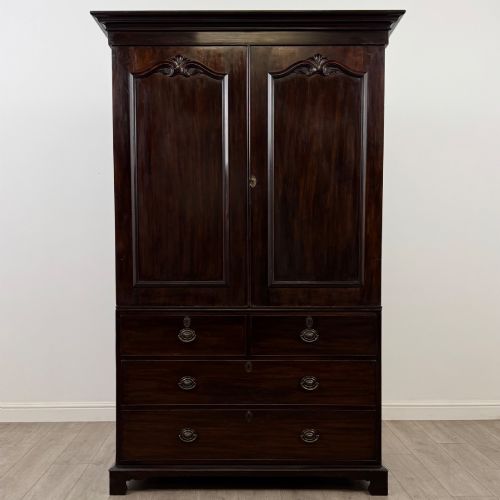
- A two-part storage piece featuring sliding trays enclosed by upper doors above a chest of drawers. This form evolved to store household textiles flat before hanging wardrobes became standard.
- Compactum
- A multi-functional wardrobe combining hanging space, shelves, and internal drawers within a single architectural unit. These pieces maximise storage capacity through clever internal partitioning.
- Flame mahogany veneer
- A distinct timber slice cut from the fork of the mahogany tree to create a rolling, flame-like pattern. Cabinet makers applied these veneers to primary display surfaces for decorative impact.
- Dentil cornice
- A classical architectural moulding composed of small, evenly spaced rectangular blocks projecting beneath the roofline. This detail frequently caps Georgian and Regency pieces.
- Blind fretwork
- Carved geometric or interlaced ornament applied to a flat solid background without piercing right through the timber. Makers utilised this technique to enrich cornices and friezes.
Mahogany Armoire: Frequently Asked Questions
What is a linen press?
A linen press is a tall storage cabinet designed with sliding trays behind upper doors and a chest of drawers beneath. They were traditionally used to store folded household linens and garments before full-length hanging wardrobes became common.
These pieces divide into two main sections for easier transport and placement in large bedrooms. The upper cupboard contains pull-out shelves whilst the lower section provides deep drawer storage.
How do I distinguish Georgian from Victorian pieces?
Georgian pieces generally display restrained classical proportions, bracket feet, and dental cornices with an emphasis on architectural symmetry. Timber surfaces often exhibit a warm, mellow patina developed over centuries of polish.
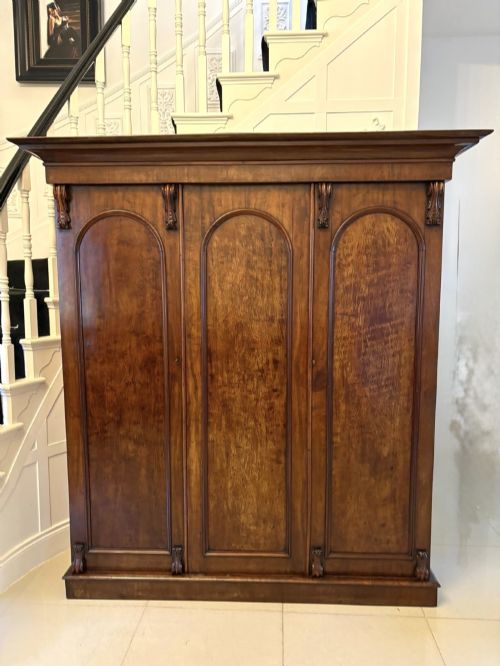
Victorian wardrobes tend to be heavier and larger, frequently housing three or four doors with elaborate figured mahogany panels. They often incorporate arched door panels and bolder plinth bases.
Can these wardrobes be dismantled for transport?
Many large period wardrobes and presses separate into modular components such as the cornice, upper doors, internal carcase, and base drawers. This modular construction was essential for moving heavy furniture through historic doorways.
Buyers should examine the assembly method, as some nineteenth-century examples utilise wedge pins or internal bolts whilst others remain fixed solid. Professional installation is often recommended for larger multi-door combinations.
Where should I place an armoire?
An armoire requires a wall with sufficient depth and ceiling clearance to accommodate its architectural proportions and heavy doors. Bedrooms and large hallways offer ideal settings for functional storage.
Keep these timber pieces away from direct heat sources and strong sunlight to protect the mahogany veneer and polish. Maintaining stable room humidity prevents timber movement in large panelled doors.