




Mahogany and Satinwood Wardrobe
A mahogany and satinwood wardrobe brings architectural presence and fine timber to a bedroom, combining spacious hanging room with fitted interior drawers.
Mahogany and Satinwood Wardrobe
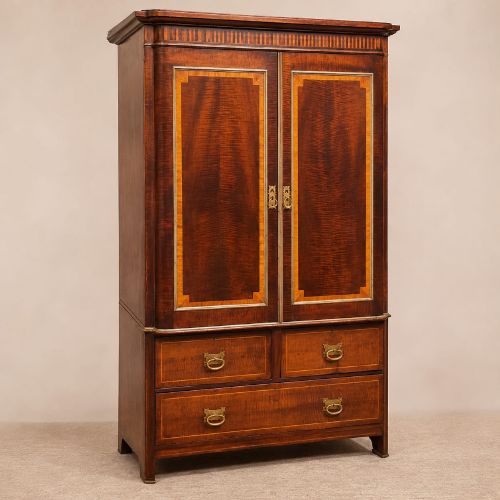
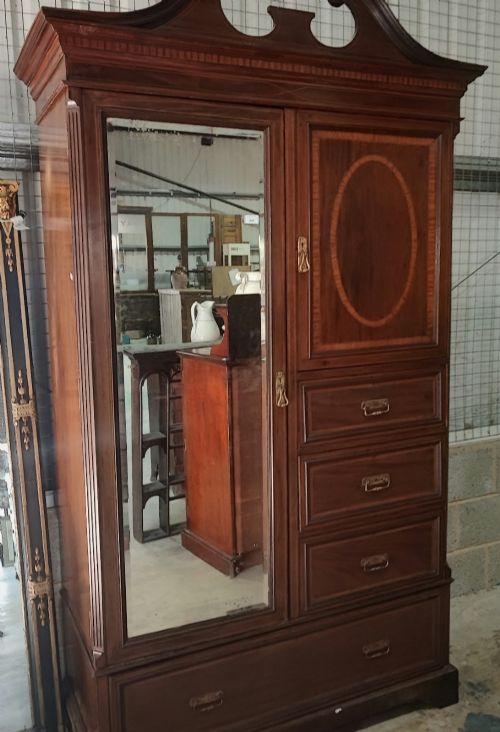
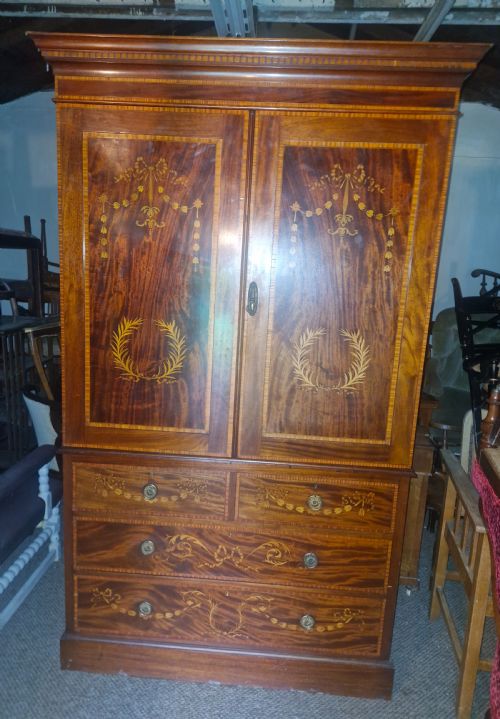
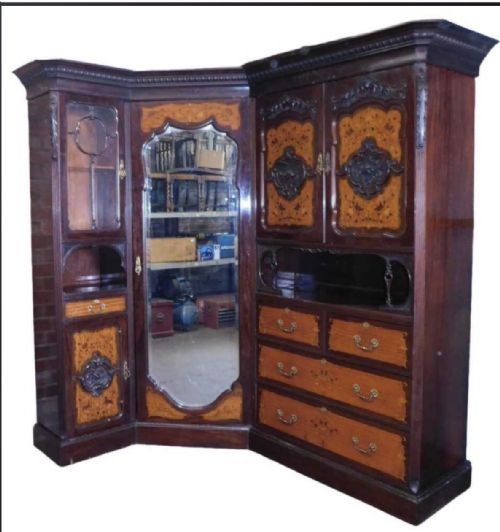
A mahogany and satinwood wardrobe is a substantial piece of bedroom furniture designed for storing garments and linens, typically encountered in large single, double, triple, or breakfront formats. The selection spans the Georgian, Victorian, and Edwardian periods, showcasing the enduring popularity of combining rich dark mahogany with pale golden satinwood inlay.
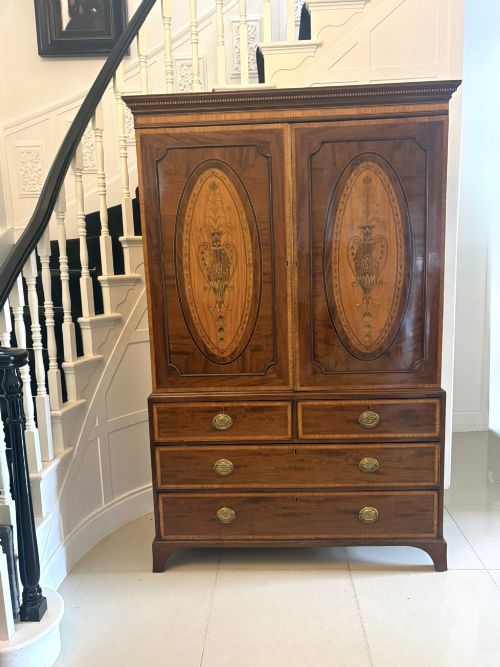
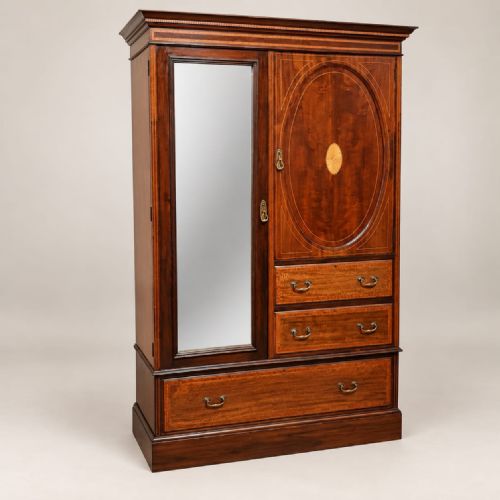
Makers utilised various forms within this category, including traditional linen presses, housekeepers cupboards, compactums with multifaceted internal fittings, and combination wardrobes. These larger pieces often incorporate mirrored glass doors, panelled sections, and decorative cornices such as swan-neck pediments.
Sheraton Revival and George III styles dominate the aesthetic lineage of these pieces, reflecting classical proportions and refined banding. Buyers frequently meet Edwardian iterations featuring delicate boxwood stringing alongside substantial Victorian and late eighteenth-century examples.
How they were made
Cabinet makers built these wardrobes using solid and veneered mahogany as the primary structural body, applied over secondary timbers to ensure stability across large door panels and sides. Satinwood served as a contrasting timber, cut into fine veneers for geometric stringing, oval medallions, and banding.
Brass hardware, including hanging hooks, drop handles, and locking escutcheons, was fitted to secure the heavy doors and internal linen slides. Mirror glass was integrated into central wardrobe doors as plate glass production advanced during the nineteenth century.
Mahogany and Satinwood Wardrobe Retail Price Guide 2026
Typical asking prices for mahogany and satinwood wardrobe among the pieces listed under this phrase on Sellingantiques today, from the lower quarter to the upper quarter. They describe what is for sale here now, not the wider market.
Several wardrobes retain their original deep linen slides, built back when gentlemen required dozens of stiffly folded collars.
What varies in quality
The sophistication of the timber selection dictates the visual hierarchy, with figured mahogany and finely matched satinwood banding marking the upper echelon of cabinet making. Elaborate marquetry work and secondary decorative details like boxwood stringing require precise hand execution that separates standard production from exceptional execution.
Internal configuration also separates the pieces, as compactums and fitted linen presses with numerous original sliding trays, drawers, and compartments demand greater joinery skill than basic hanging cupboards. The structural integrity of large cornices, such as swan-neck pediments, and the original quality of the brass fittings further distinguish finer examples.
Edwards and Roberts·Druce & Co·Maples & Co
The Mahogany and Satinwood Wardrobe Glossary
- Compactum
- A multi-compartment wardrobe designed for comprehensive storage, featuring a combination of hanging space, drawers, and shelves within a single unit. These pieces often incorporate central cupboard sections flanked by full-length doors.
- Linen Press
- A dual-purpose piece featuring upper sliding trays enclosed by doors, positioned above a chest of drawers base. They evolved into modern wardrobes as hanging clothes replaced folded linens.
- Bandings
- Thin strips of contrasting wood veneer applied around the edges of drawer fronts, doors, or panels to create a decorative border. Satinwood banding on a mahogany ground is characteristic of Sheraton Revival design.
- Swan-neck pediment
- A broken scroll pediment topping tall case furniture, curving upward and outward to terminate in scrolls flanking a central finial or plinth. It adds significant height and architectural dignity to Georgian and revival pieces.
- Stringing
- Narrow inlay lines of light wood, such as boxwood, set into grooves cut into a darker wood surface like mahogany. It defines panels and outlines structural borders with linear precision.
Mahogany and Satinwood Wardrobe: Frequently Asked Questions
How do I fit a large wardrobe in a modern bedroom?
Most of these large pieces are built to dismantle into modular sections, including the cornice, base, and sides, which allows for transport and assembly in rooms with standard ceiling heights.
Professional installation ensures that heavy doors hang true and internal sliding trays or hanging rails align correctly within the frame.
What is the difference between a wardrobe and a linen press?
A traditional linen press was originally designed to store folded garments on sliding trays behind upper doors, sitting above a chest of drawers base. Wardrobes focus primarily on vertical hanging space for coats and dresses behind full-length doors.
Many transitional pieces combine both functions by offering hanging space alongside internal drawers and shelves.
How do I care for mahogany and satinwood surfaces?
Timber surfaces require protection from direct sunlight and dramatic changes in humidity to prevent the veneer from lifting or splitting. Regular dusting with a dry, soft cloth maintains the natural lustre of the polished wood without building up heavy wax residues.
Polished brass hardware should be cleaned gently without abrasive agents that might damage the surrounding wood veneer.
How can I tell a Georgian piece from a Sheraton Revival piece?
Georgian pieces date from the eighteenth and early nineteenth centuries, exhibiting authentic period construction methods, hand-cut dovetails, and naturally aged timber patination. Sheraton Revival pieces were manufactured later, typically in the late nineteenth or early twentieth century, using earlier classical design motifs.
Closer inspection of internal secondary timbers and backboards helps reveal the true manufacturing era of the wardrobe.