



Mahogany and Satinwood Box
These mahogany and satinwood box pieces combine rich contrasting timbers with careful inlay work, offering both practical storage and traditional display.
Mahogany and Satinwood Box
A mahogany and satinwood box brings together deep reddish-brown timber and pale golden wood to create striking contrast on small furniture and tabletop items. Buyers seeking this combination will encounter tea caddies, work boxes, and decorative containers originating from the Georgian, Victorian, and Edwardian eras.
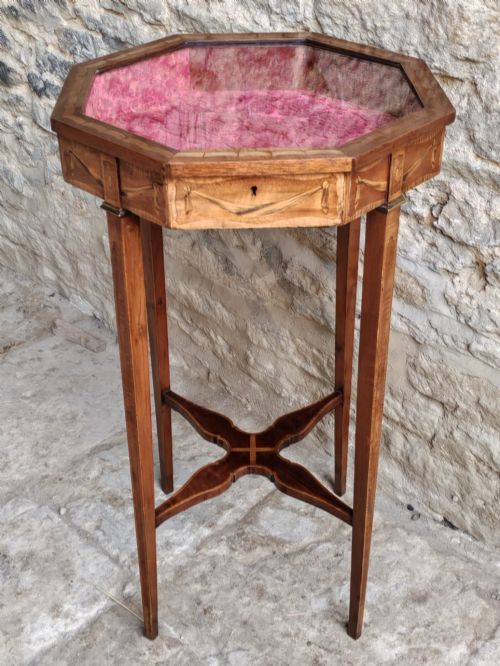
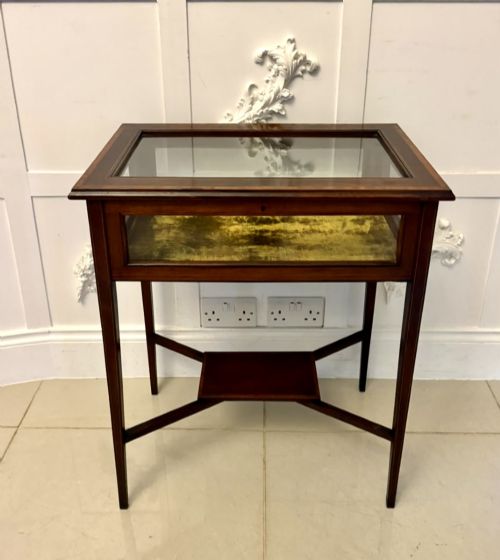
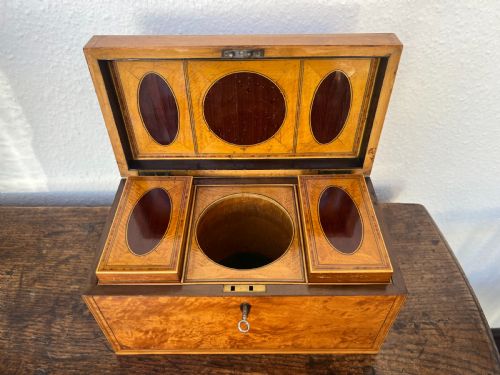
The selection ranges from George III tea caddies to Edwardian bijouterie display tables and work boxes. Most examples rely on Sheraton Revival influences, displaying symmetrical stringing and shell inlays that highlight the natural grain of both timbers.
Smaller tabletop boxes for snuff or tea sit alongside larger items such as toilet mirrors and sewing tables. Each piece serves to organise small valuables while providing a decorative focal point within a room.
How they were made
Cabinetmakers constructed these pieces using solid mahogany foundations overlaid or bordered with satinwood veneers. Additional contrasting details utilise boxwood and fruitwood stringing to frame panels and lids.
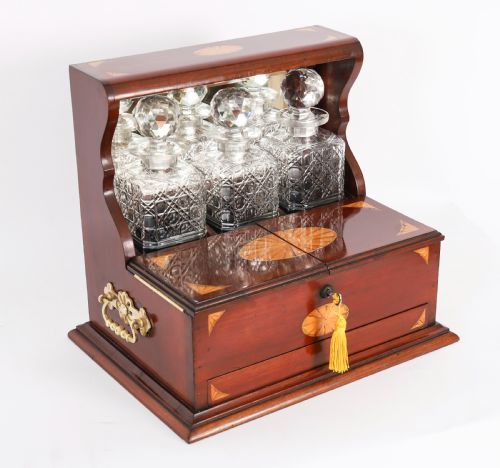
Brass handles, hinges, and glass components appear where function requires, supporting cut crystal decanters in tantalus items or protecting display spaces in vitrines.
Mahogany and Satinwood Box Retail Price Guide 2026
Typical asking prices for mahogany and satinwood box among the pieces listed under this phrase on Sellingantiques today, from the lower quarter to the upper quarter. They describe what is for sale here now, not the wider market.
Georgian snuff boxes prove that historical habits required exceptionally tiny, intricate containers.
What varies in quality
The standard of a piece rests largely on the precision of its inlay and the choice of timber cuts. Finer examples display tight grain matching and crisp execution of stringing without gaps.
Proportion and structural integrity distinguish superior items, particularly where complex forms like octagonal caddies or tiered tables are concerned. Original brassware and intact glass elements further elevate the overall standard.
The Mahogany and Satinwood Box Glossary
- Satinwood
- A hard, durable timber with a characteristic golden-yellow sheen and satiny lustre. It is frequently employed for contrasting veneers and inlay bands.
- Mahogany
- A stable, reddish-brown tropical hardwood prized for its rich colour and resistance to warping. It forms the primary structural body for most boxes and tables.
- Stringing
- Thin lines of contrasting wood inlay used to edge panels and borders. This decorative technique defines the geometric patterns seen on Sheraton Revival pieces.
- Teapoy
- A small stand or large caddy designed to hold tea canisters. These pieces often feature interior compartments for storing tea leaves securely.
- Bijouterie table
- A glass-topped display table intended for showing small ornaments and curiosities. They are commonly raised on slender legs with inlaid details.
Mahogany and Satinwood Box: Frequently Asked Questions
What is a teapoy box?
A teapoy is a container or small stand originally built to store dry tea leaves safely away from damp air. They often feature internal lidded compartments for different varieties of tea.
During the Georgian and Regency periods, tea was an expensive commodity, making these locked boxes both functional and status-driven items in the home.
How do I use a work box today?
Work boxes and sewing tables provide compartmentalised storage suitable for modern craft supplies, jewellery, or desk accessories. Their internal trays help keep small items sorted.
Placed on desks or side tables, they offer concealed storage while maintaining a decorative surface appearance.
What distinguishes Edwardian satinwood pieces?
Edwardian items frequently draw on Sheraton Revival styles, incorporating lighter frames and delicate shell or floral inlays. These pieces tend to be brighter in palette than their earlier Georgian counterparts.
They often take the form of display tables, vitrines, and lightweight occasional furniture intended for drawing rooms.
How do I care for inlaid wood?
Inlaid wooden surfaces require protection from direct sunlight and drastic changes in humidity to prevent the delicate veneers from lifting. Regular dusting with a soft, dry cloth preserves the finish.
Applying occasional appropriate wax feeds the timber and maintains the natural lustre of both the mahogany and satinwood.