

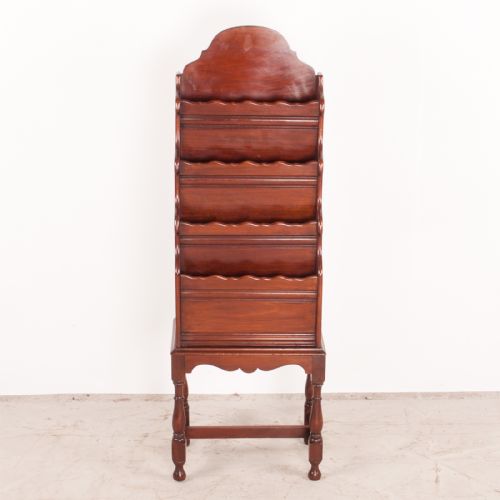


Magazine Rack Bookcase
A magazine rack bookcase combines upright shelving for volumes with dedicated slots for periodicals, bringing compact utility to the study or sitting room.
Magazine Rack Bookcase
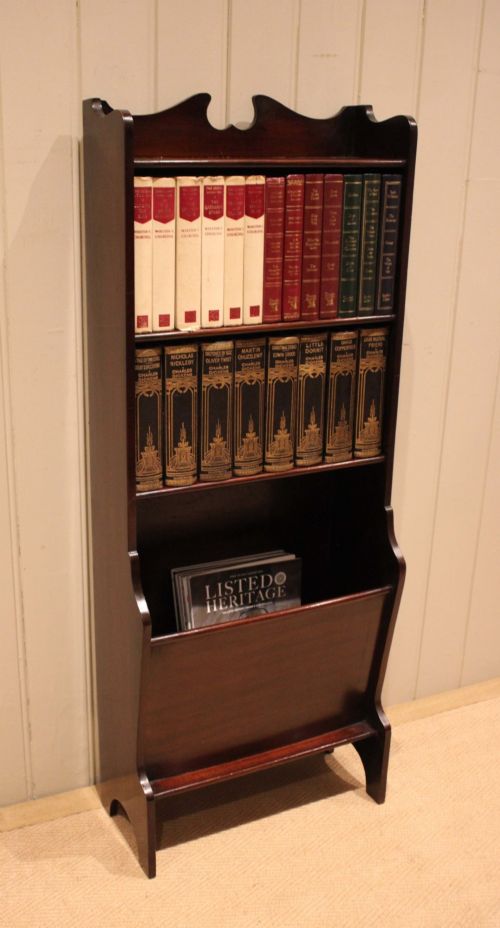
A magazine rack bookcase brings together open shelving for bound volumes and partitioned sections for periodicals, keeping daily reading material close at hand. These hybrid pieces appear across several periods, from the late nineteenth century through to the art deco era, adapting domestic storage for the modern library or sitting room.
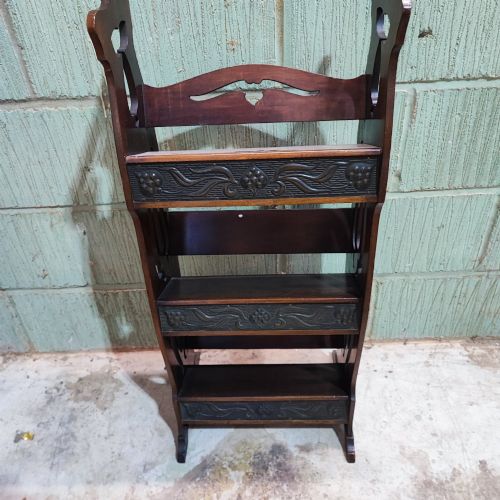
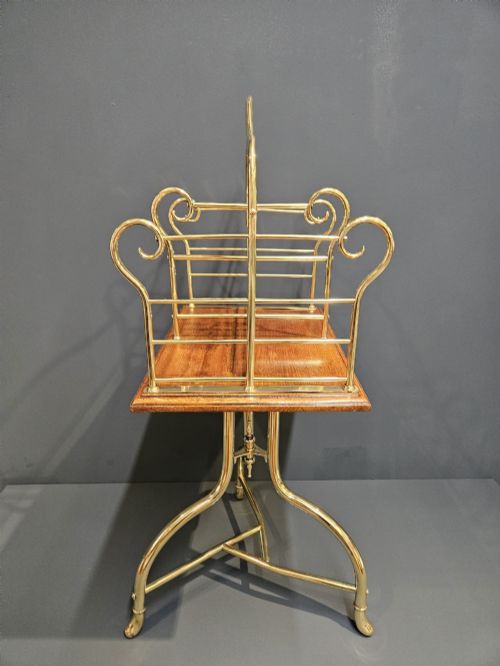
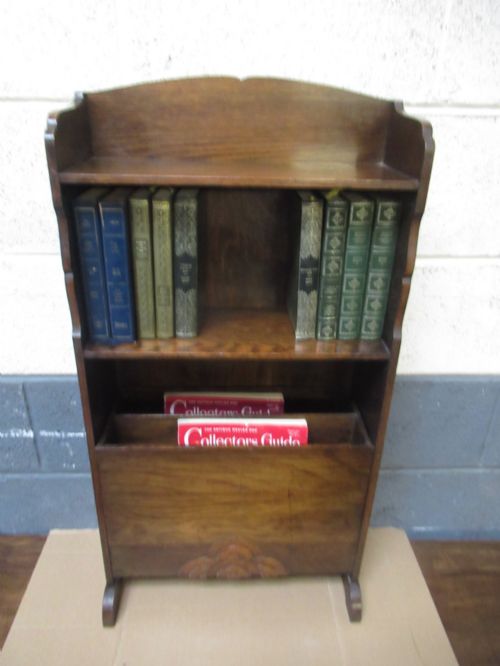
The Edwardian period supplies inlaid mahogany bookstands and library troughs, while earlier decades contribute arts and crafts oak furniture and Italian rococo gilt pieces. Buyers encounter various forms on this page, ranging from small mahogany bookcases with integrated racks to two-tier golden oak book troughs and revolving brass-mounted stands.
How they were made
Cabinetmakers constructed these pieces primarily from solid timber and selected veneers, employing mahogany, oak, and satinwood across the various periods. Carpenters utilised dovetail joints for drawers and mortise and tenon construction for structural frames, ensuring stability under the weight of books and magazines.
Surface decoration ranges from delicate marquetry inlay on Edwardian mahogany stands to painted finishes on Georgian revival library pieces and gilded wood on rococo troughs. Brass fittings such as castors, handles, and revolving mechanisms provide both functional movement and structural reinforcement.
Magazine Rack Bookcase Retail Price Guide 2026
Typical asking prices for magazine rack bookcase among the pieces listed under this phrase on Sellingantiques today, from the lower quarter to the upper quarter. They describe what is for sale here now, not the wider market.
Early twentieth-century readers evidently required quick access to their periodicals, prompting makers to bolt rotating brass stands directly beneath mahogany book troughs.
What varies in quality
The refinement of the timber selection largely determines the standing of a piece, with figured flame mahogany and quarter-sawn golden oak occupying the upper tier of construction. Cabinetmakers who matched veneer grains across multiple sections and incorporated precise inlay demonstrated superior craftsmanship compared to those producing plain utility items.
Hardware and joinery integrity also separate standard examples from finer works, evident in the smooth rotation of revolving models and the crisp execution of carved details on arts and crafts or rococo forms. The retention of original brass elements and polished patination preserves the visual harmony intended by the original maker.
The Magazine Rack Bookcase Glossary
- Book trough
- An open-topped shelving unit designed to hold books vertically or at a slight slant for easy title viewing.
- Marquetry
- Decorative patterns formed by fitting together thin slices of various woods and other materials onto a structural surface.
- Revolving bookcase
- A freestanding tiered bookstand mounted on a concealed pivot mechanism allowing rotation for access from any angle.
- Flame mahogany
- A distinct veneer figure created by slicing through wood taken from the branch junction of a mahogany tree.
- Quarter-sawn oak
- Timber milled perpendicular to the growth rings, producing a durable board with prominent medullary ray figuring.
Magazine Rack Bookcase: Frequently Asked Questions
What is a magazine rack bookcase?
A magazine rack bookcase is a dual-purpose furniture form that combines traditional shelving for bound volumes with dedicated partitions for periodicals and newspapers.
Cabinetmakers designed these items to keep daily reading material organised and accessible within studies, libraries, and sitting rooms without occupying excessive floor space.
How do I date an Edwardian bookstand?
Edwardian bookstands typically date from the period between nineteen hundred and nineteen ten, identifiable by lighter mahogany timbers and delicate satinwood stringing.
Makers working in this era frequently drew inspiration from earlier Georgian aesthetics while incorporating practical partitions for contemporary magazines.
Where should I place a revolving bookcase?
Revolving bookcases suit corners or open spaces where the pivot mechanism allows users to access volumes from all four sides without repositioning the heavy timber frame.
Their compact footprint makes them particularly useful beside armchairs or desks where shelf access needs to remain effortless.
What distinguishes arts and crafts shelving?
Arts and crafts shelving showcases plain oak timbers with visible construction methods, prioritising honest utility and simple proportions over heavy surface ornament.
These pieces often feature two tiers and open front slopes designed to display books plainly in domestic settings.