


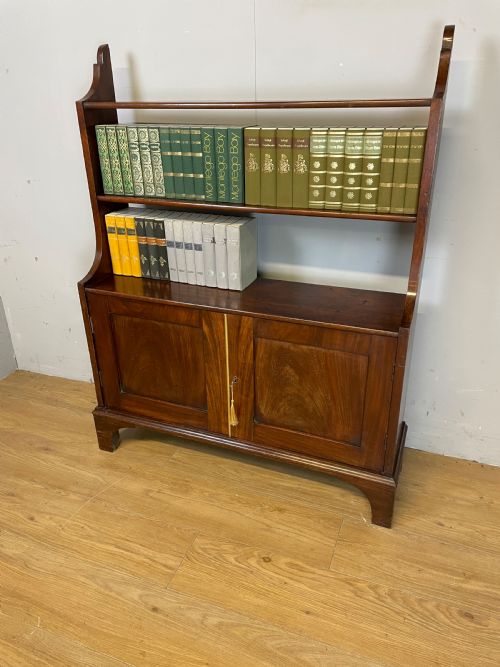


Low Waterfall Bookshelf
A low waterfall bookshelf offers graduated tiers for display, combining practical storage with the elegant stepped profile characteristic of nineteenth-century cabinet work.
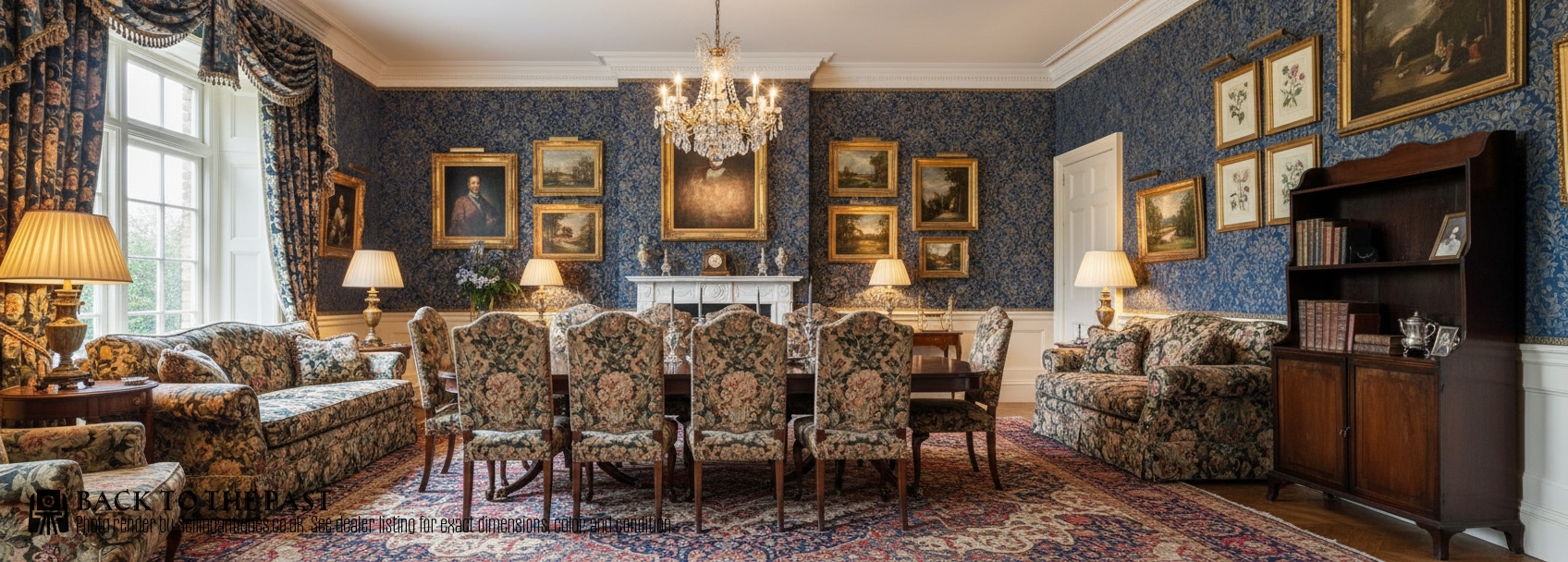
Low Waterfall Bookshelf
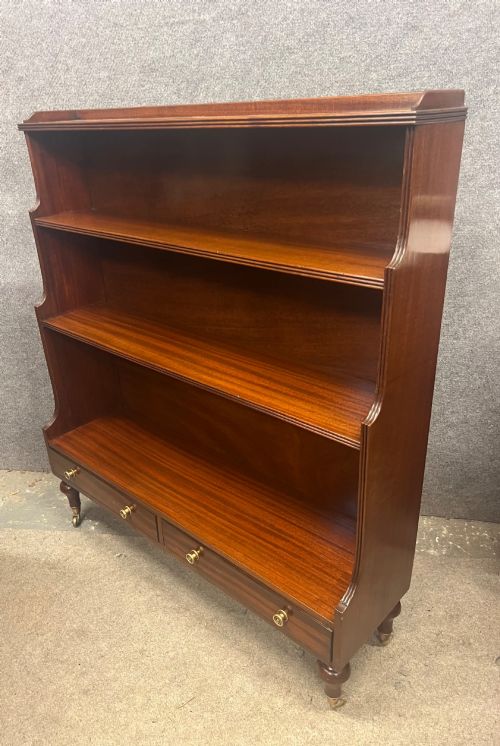
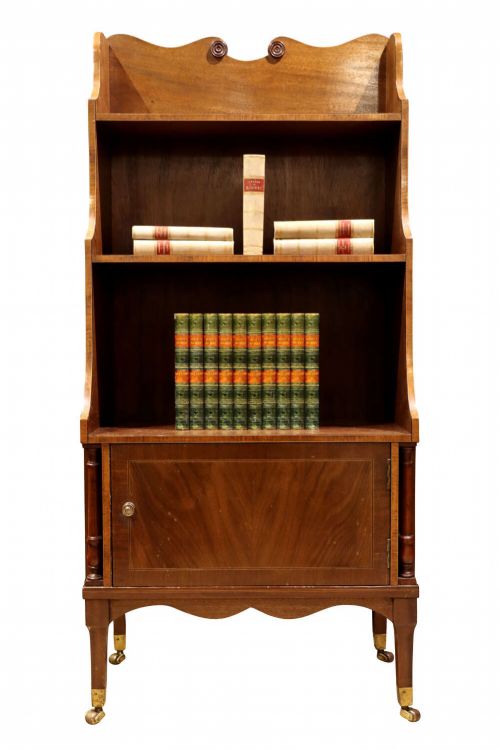
A low waterfall bookshelf provides open stepped shelving designed to hold books and display objects within easy reach. These pieces typically present a compact footprint, making them suitable for placing beneath windows or alongside seating.
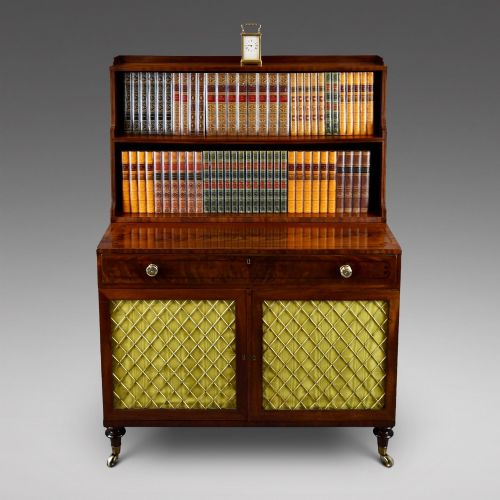
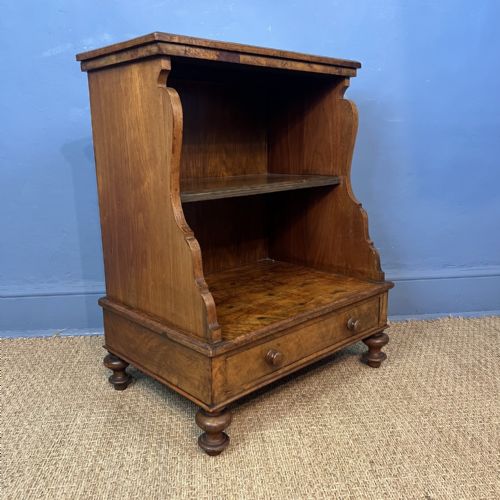
The versions most commonly met on this page span the nineteenth century and subsequent revival periods, executed in forms ranging from freestanding open bookcases to dual-purpose bedside cabinets. Makers constructed these items primarily in mahogany, rosewood, and oak, often incorporating brass details or wood veneer.
The term low waterfall bookshelf covers a variety of stylistic interpretations, from strict Georgian and Regency origins to later Victorian and Edwardian revivals. Buyers encounter single units as well as matched pairs, reflecting the diverse domestic requirements of their original settings.
Construction and materials
Makers utilised dense timbers such as mahogany, rosewood, and walnut to achieve the sturdy uprights and graduated shelves required for a low waterfall bookshelf. Grain selection played a prominent role in the aesthetic, with burr walnut and flame mahogany deployed on prominent surfaces to create visual depth.
Structural reinforcement often included brass elements, ranging from decorative inlay to functional castors fitted beneath freestanding models. Joinery techniques relied on traditional cabinet-making methods to support the stepped progression of shelves without sacrificing stability.
Listings feature woods such as mahogany, rosewood, burr walnut, and oak across nineteenth-century and revival periods.
Judging quality in low waterfall bookshelves
Quality in a low waterfall bookshelf rests upon the selection of timber and the precision of the graduated shelving tiers. Superior examples display thoughtful grain matching across the stepped shelves and well-executed secondary details such as brass inlay or fitted brass castors.
The harmony of proportions separates accomplished cabinet work from standard production. Well-balanced vertical supports and refined edge mouldings indicate a higher standard of craftsmanship in both original period pieces and later revivals.
The Low Waterfall Bookshelf Glossary
- Waterfall bookcase
- A piece of furniture featuring multiple open shelves that step back progressively from bottom to top, resembling the tiered descent of a waterfall.
- Flame mahogany
- A distinct grain pattern derived from the branch junctions of the mahogany tree, prized for its fiery, swirling appearance on cabinet fronts and shelves.
- Brass castors
- Small wheel attachments fitted to the feet of heavier furniture to permit smooth movement across floors.
- Burr walnut
- Timber harvested from walnut tree growths, valued for its complex, swirling knot formations that create highly decorative veneered surfaces.
Low Waterfall Bookshelf: Frequently Asked Questions
What is a low waterfall bookshelf?
A low waterfall bookshelf is a compact, stepped shelving unit designed to display books and decorative objects at an accessible height.
These pieces typically feature receding tiers that create a distinctive profile, originating in the nineteenth century and appearing across various revival styles.
How were these bookcases used originally?
Original owners utilised these stepped shelves in studies, libraries, and living spaces to keep frequently read volumes close at hand.
The low profile allowed them to sit comfortably beneath windows or against panelled walls without obstructing natural light or views.
How do I style a waterfall bookshelf?
Living with a low waterfall bookshelf involves balancing books laid flat or upright with small decorative objects on the graduated shelves.
The receding tiers naturally draw the eye upward, making them well-suited for displaying collections of ceramics, small sculptures, and bound volumes.
How do I tell original periods apart?
Distinguishing periods relies on examining timber selection, construction methods, and stylistic details such as brass inlay or turned supports.
Earlier nineteenth-century pieces demonstrate different joinery approaches and wood preparations compared to later Edwardian or twentieth-century revival interpretations.