
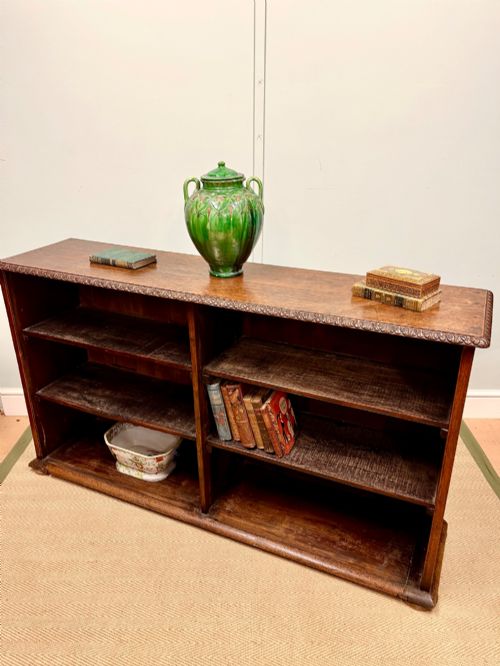
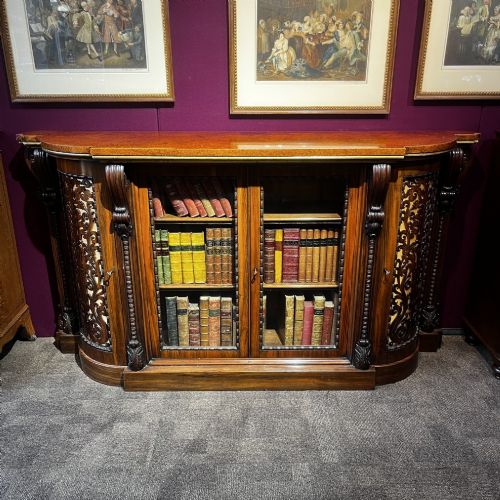


Low Timber Bookcase
A low timber bookcase holds your volumes at hand while keeping sightlines clear across the room.
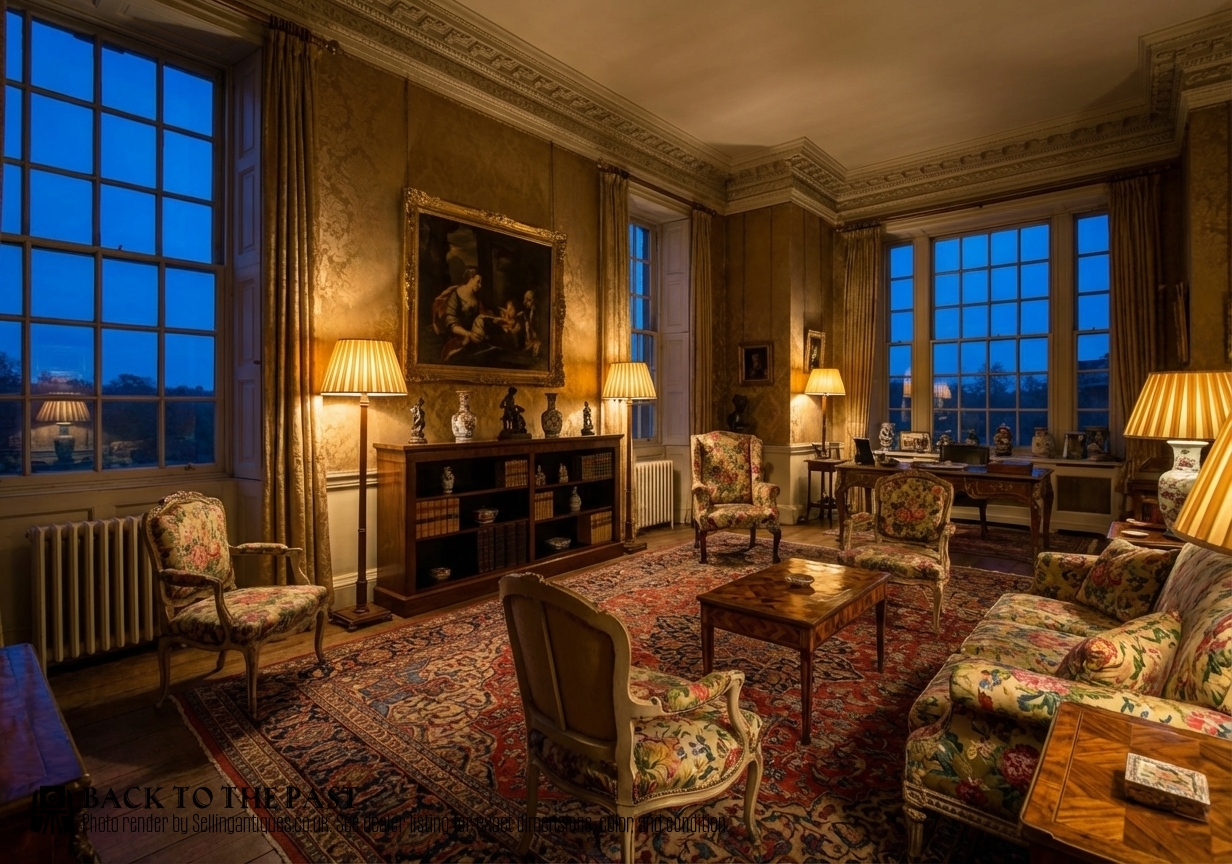
Low Timber Bookcase
A low timber bookcase provides accessible shelving at a convenient height, sitting comfortably beneath picture rails and windows. The pieces gathered here under the search phrase low timber bookcase span the nineteenth and early twentieth centuries, encompassing Victorian, Edwardian, and Regency periods.
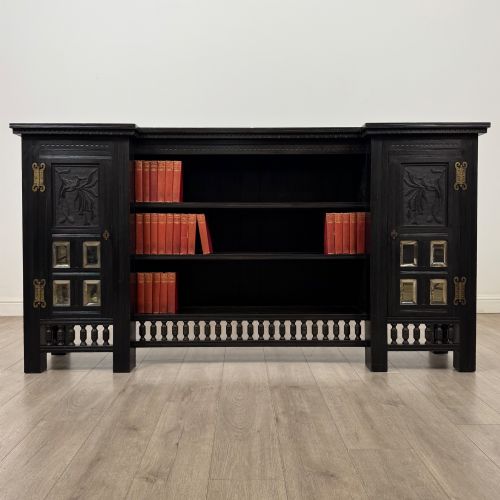
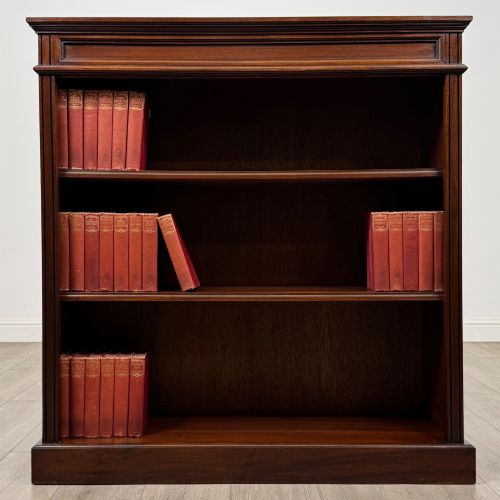
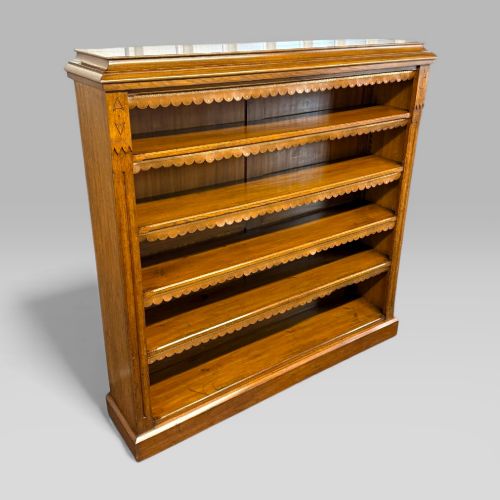
Most examples you encounter on this page take the form of open bookcases or low side cabinets designed for domestic libraries and parlours. Forms range from simple upright open shelves to breakfront configurations and freestanding waterfall display units.
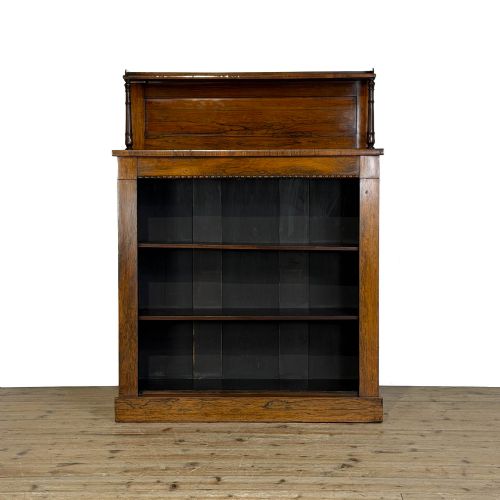
Origins and materials vary widely across the selection, reflecting the tastes of country houses and urban drawing rooms alike. Woods such as mahogany, oak, rosewood, and teak predominate, sometimes enriched by rarer timbers like goncalo alves and amboyna.
How they were made
Cabinet makers constructed these low timber bookcases using dense hardwoods selected for strength and figure, including mahogany, oak, and rosewood. Joinery relied on traditional methods suited to supporting heavy text blocks without sagging.
Surface ornamentation involved timber selection rather than heavy embellishment, utilising the natural grain of exotic veneers like goncalo alves and amboyna. Where carving appears, it picks out architectural details or creates textured panels in teak, elm, and oak.
What varies in quality
Quality reveals itself in the choice of cabinet timber and the precision of the underlying construction. Higher-grade examples employ finely figured veneers or solid hardwoods that remain stable across changing seasons.
Proportion and restraint distinguish the finer pieces from simpler utility furniture. The treatment of mouldings, shelves, and backboards shows whether a maker prioritized enduring elegance or rapid production.
The Low Timber Bookcase Glossary
- Breakfront
- A cabinet design where the central section projects forward from the flanking wings. This configuration adds architectural depth and shadow to low bookcases.
- Waterfall bookcase
- A set of open shelves that step back progressively from bottom to top, creating a profile reminiscent of cascading water. The form gained popularity in the Edwardian era for lighter display purposes.
- Goncalo Alves
- A dense exotic hardwood with distinctive contrasting brown and blonde figuring, often utilised in Regency and Victorian cabinet work. It provides a striking surface pattern without requiring complex inlay.
- Open bookcase
- A shelving unit without doors, allowing direct access to book spines. This form dominates nineteenth-century domestic interiors for everyday reading libraries.
Low Timber Bookcase: Frequently Asked Questions
Where should I place a low timber bookcase?
These lower bookcases sit comfortably beneath windows or against plain walls without obstructing natural light or artwork.
Their reduced height keeps ceilings feeling high and maintains an open flow of space through the room.
How do I care for antique timber finishes?
Protect the wood by keeping bookcases away from direct sunlight and sudden radiator heat shifts.
Apply a traditional wax polish occasionally to nourish the grain and maintain a soft sheen on the timber.
What is the difference between open and closed bookcases?
Open bookcases provide immediate access to volumes and display bindings as part of the room's colour palette.
Cabinets with doors offer enclosed storage that protects sensitive papers and bindings from dust and light exposure.
How do I distinguish Regency from Victorian pieces?
Regency pieces often display classical architectural proportions and striking exotic veneers like goncalo alves.
Victorian examples tend toward heavier timbers, bolder mouldings, and sometimes carved decorative elements suited to larger domestic interiors.