
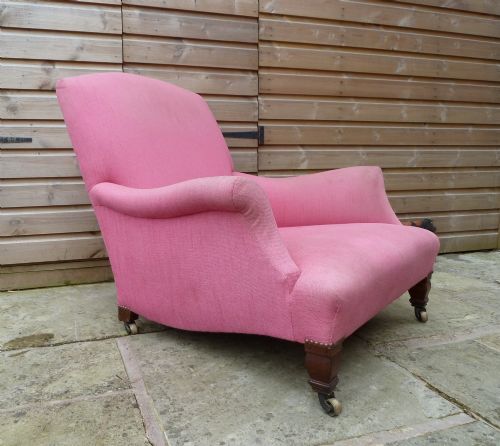
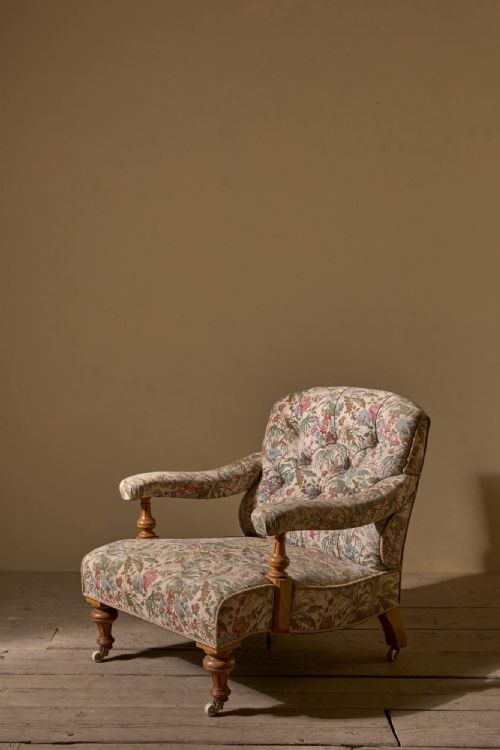
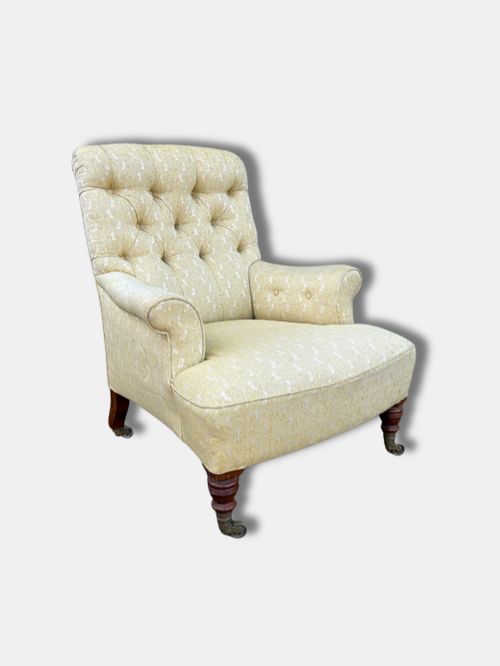
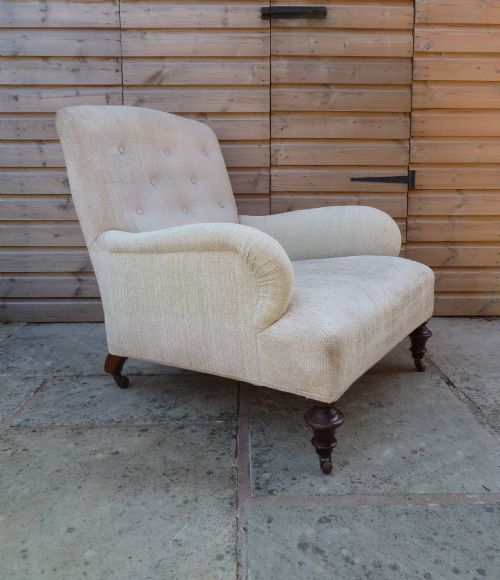
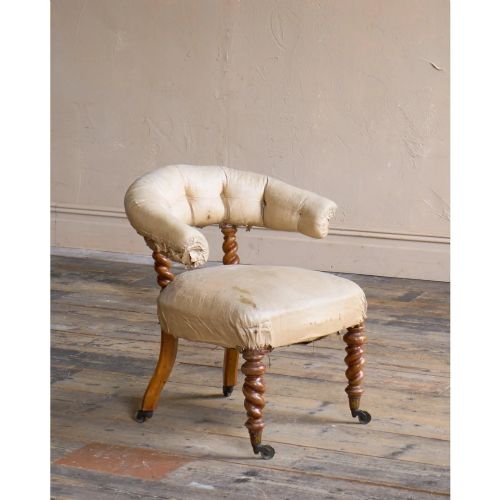
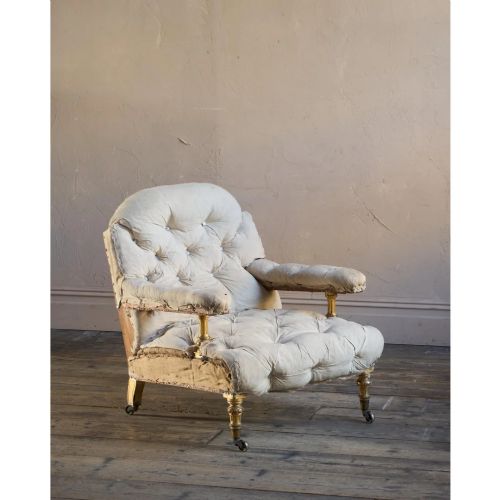
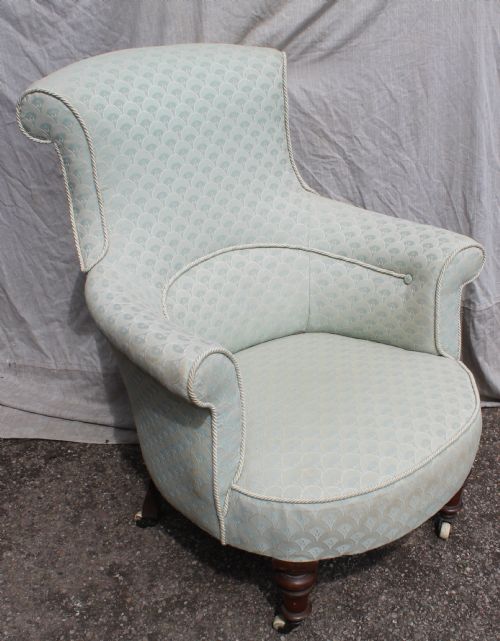
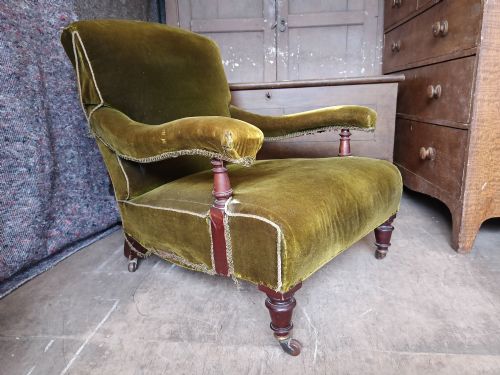
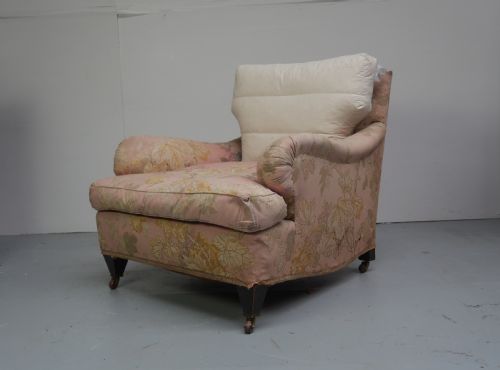
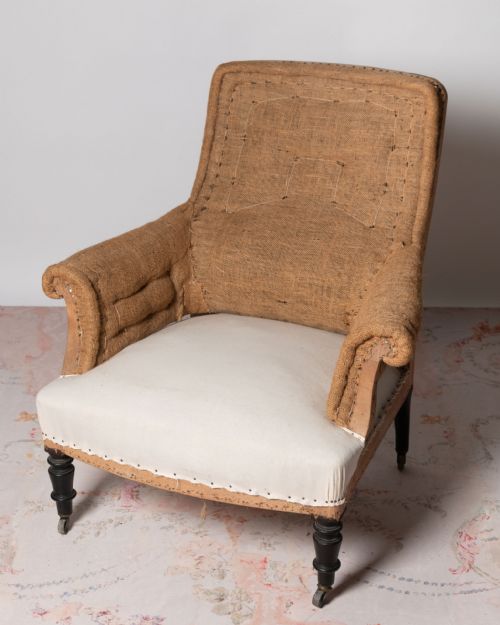
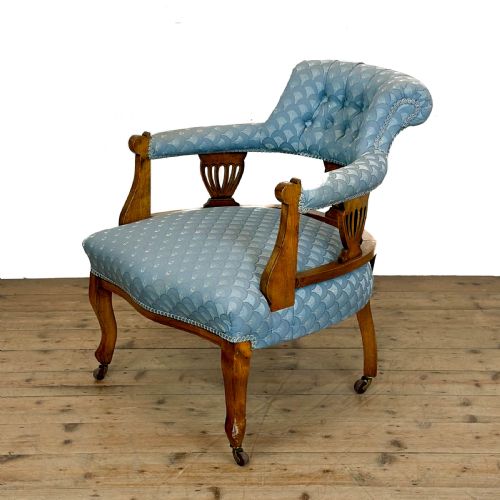

Low Reading Chair
A low reading chair offers deep-seated comfort and low proportions, designed for long hours of study or repose by the hearth.
Low Reading Chair
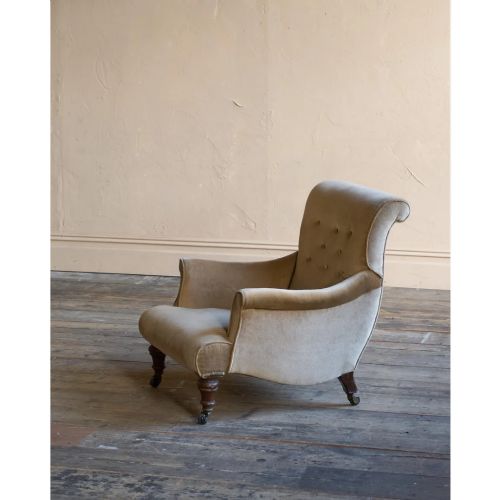
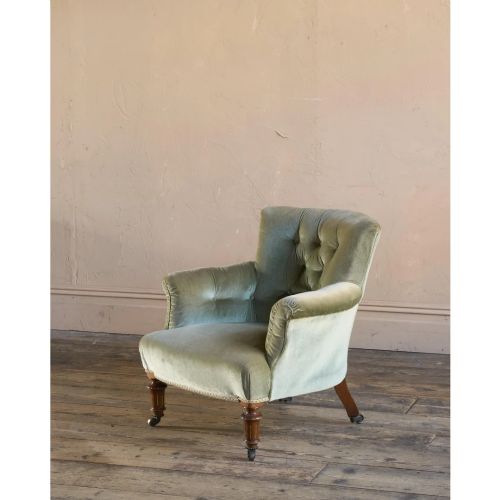
A low reading chair provides an inviting seat low to the ground, designed to keep the occupant comfortable and well-supported during extended periods of sitting. These pieces frequently appear in forms such as open armchairs, club chairs, and slipper chairs originating across the nineteenth and early twentieth centuries.
The selection on this page centres heavily on nineteenth-century and Edwardian pieces, ranging from English country house seating to refined Victorian library chairs. Many examples follow the distinctive low-slung, sprung architecture associated with prominent makers like Howard and Sons.
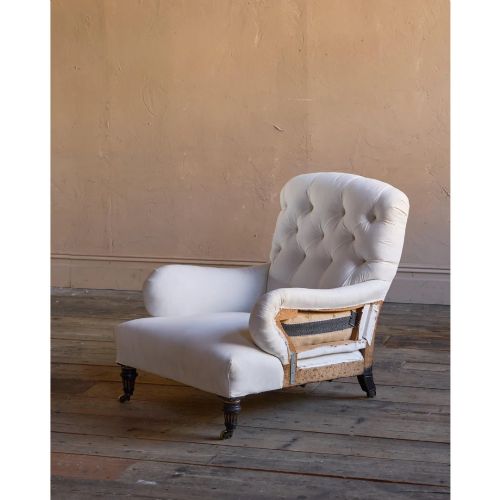
Buyers encounter various stylistic influences within this category, including Aesthetic Movement legs, button backs, and walnut or mahogany frames. These designs prioritise relaxed ergonomics, often featuring deep seats and upholstered frames covered in fabric, velvet, calico, or ticking.
How they were made
The framework of a low reading chair typically relies on sturdy hardwoods such as mahogany and walnut, providing a robust structural skeleton beneath the upholstery. Cabinetmakers shaped these woods into turned or carved legs, sometimes incorporating brass castors or claw and ball feet.
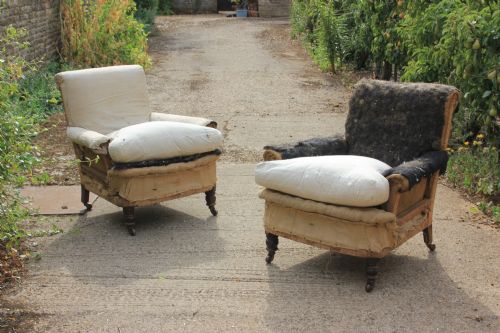
Upholstery techniques form the core of construction, employing deep springing systems paired with horsehair or similar stuffing beneath outer layers of fabric, velvet, calico, or ticking. Makers secured these materials with careful tacking and stitching to ensure enduring resilience.
Makers finished exposed wooden elements with hand-polished surfaces, while structural joints relied on traditional mortise and tenon construction. Ebonised finishes and carved details appeared on select frames to suit contemporary interior tastes.
Periods represented span from the nineteenth century through the Edwardian era into the nineteen-thirties.
What varies in quality
The integrity of the internal springing and stuffing dictates the comfort and longevity of a low reading chair. Superior examples retain their original tension and supportive layering, whereas lesser pieces suffer from collapsed seats or degraded interior materials.
Refinement in frame construction and timber selection separates standard seating from exceptional work. Finely turned hardwood legs, crisp carving, and substantial mahogany or walnut frames indicate superior workshop standards.
The authenticity of maker stamps and the retention of original upholstery textiles or traditional ticking add considerable distinction. Pieces bearing clear workshop attributions or well-preserved historical fabrics demonstrate higher collectible merit.
Howard and Sons·Gillows·C Hindley and Sons·Hampton and Sons
The Low Reading Chair Glossary
- Club chair
- A deep-seated, upholstered armchair designed for maximum comfort and relaxation.
- Slipper chair
- A low-framed upholstered chair originally designed for bedrooms, standing close to the floor.
- Calico
- A plain-woven cotton fabric frequently utilised as an inner upholstery layer before final covering.
- Ebonised
- Wood treated with a dark finish to imitate the appearance of expensive ebony.
- Ticking
- A durable cotton or linen textile traditionally used to enclose internal upholstery stuffings.
Low Reading Chair: Frequently Asked Questions
Where were these chairs used?
These seats found places primarily in libraries, studies, and drawing rooms of large country houses and urban residences.
Their low stature kept occupants close to the warmth of the fireplace while offering ergonomic support.
How do I care for antique upholstery?
Gentle surface cleaning and protection from direct sunlight preserve the integrity of historical fabrics and internal stuffing.
Professional conservation helps maintain structural stability without disturbing original materials.
How are different periods identified?
Stylistic details such as ebonised legs, button backs, and specific framing techniques point toward Victorian or Edwardian origins.
Maker stamps and timber choices also provide reliable clues to a piece's manufacturing era.