


Low Pine Drawers
Low pine drawers combine utilitarian storage with warm timber character, offering sturdy low-profile surfaces for everyday living.
Low Pine Drawers
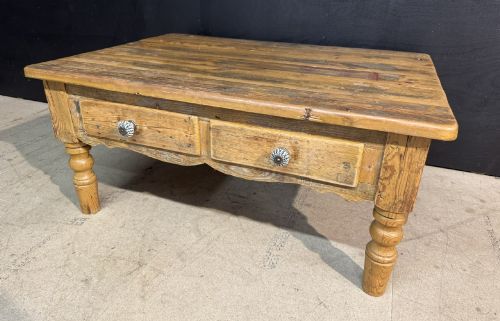
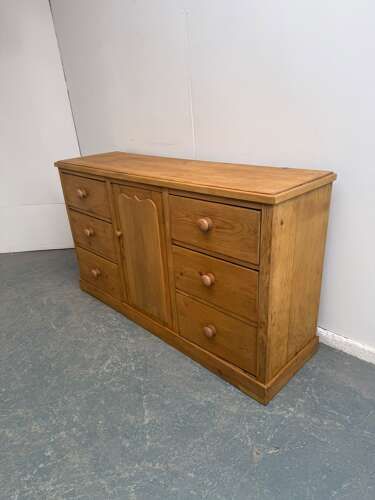
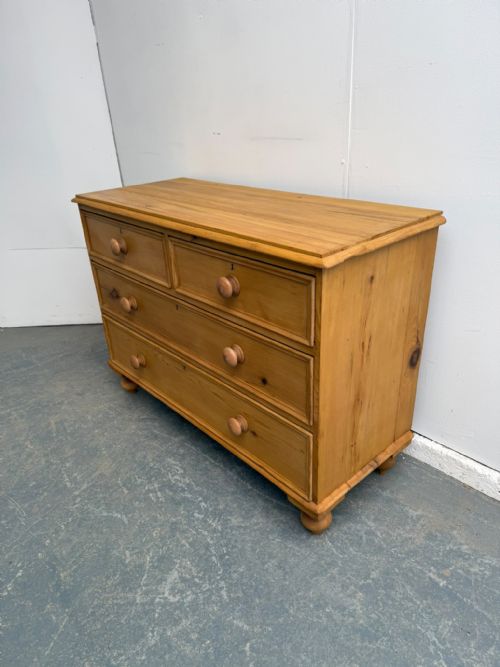
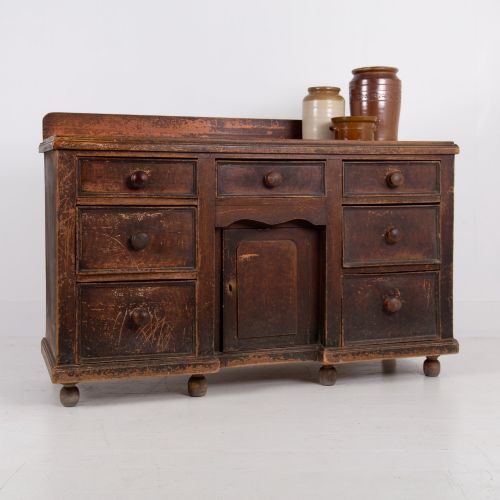
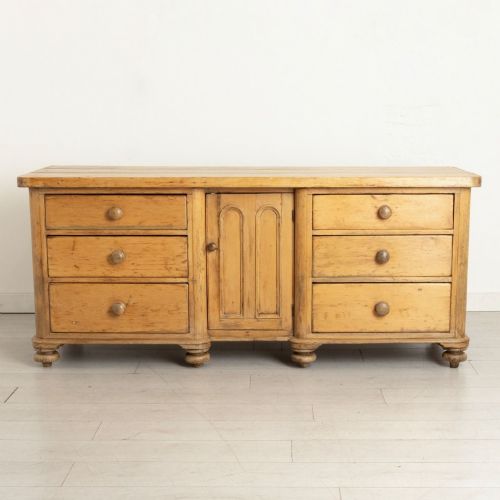
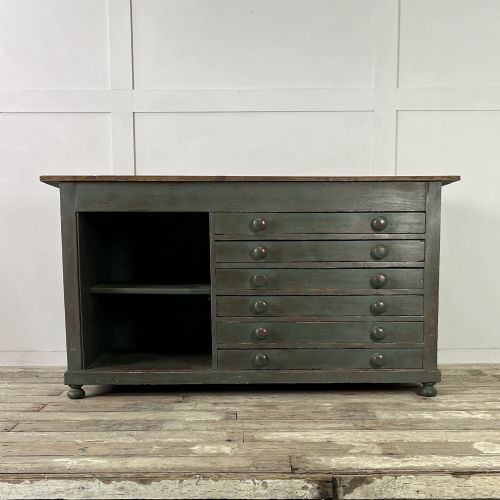
Low pine drawers appear across several distinct historical periods, most frequently emerging from the Victorian era alongside Georgian and Edwardian examples. These pieces typically take the form of compact chests of drawers, low occasional coffee tables featuring storage, or kitchen dresser bases designed for practical domestic use.
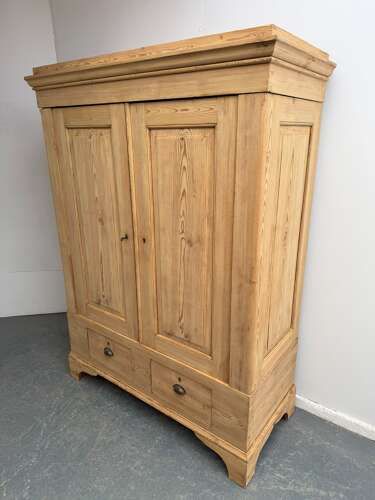
The selection ranges from rustic farmhouse styles to English country utility pieces. Buyers frequently encounter low wide proportions, varying from shallow configurations to substantial multi-drawer formats finished in original paint, dark wax, or stripped solid pine.
Assessing Quality
Quality in these pieces depends on the integrity of the original timber and the retention of authentic surface finishes, whether early wax or original paint. Superior examples display balanced proportions, sound structural joinery, and minimal alteration over time.
The presence of maker attribution, such as work associated with Gillows, elevates specific pieces above standard vernacular furniture. Construction details, original hardware, and uncompromised drawer movement further distinguish finer examples from simpler provincial work.
Some chests retain drapers' labels, hinting at long-forgotten haberdashery tasks in provincial shops.
Gillows
The Low Pine Drawers Glossary
- Waxed
- Timber treated with protective wax to nourish the wood and produce a soft sheen. This finish highlights the natural grain of the pine.
- Dresser Base
- The lower section of a kitchen dresser, usually featuring cupboards and drawers below a solid top surface. These serve as versatile sideboards.
- Chiffonier
- A compact sideboard or cabinet developed in the nineteenth century, often equipped with drawers and lower doors for discrete storage.
- Potboard
- An open lower shelf fitted beneath a dresser base, traditionally used for storing pots and heavy kitchen utensils.
- Primitive
- Furniture constructed with basic tools and straightforward techniques, often showing regional characteristics and honest utility.
Low Pine Drawers: Frequently Asked Questions
What periods do low pine drawers come from?
These items span the eighteenth, nineteenth, and early twentieth centuries, with a strong representation from the Victorian period. Examples also date through Georgian and Edwardian eras.
Craftsmanship reflects the prevailing utilitarian standards of each respective period, using solid pine and regional construction methods.
How were low pine drawers originally used?
They served as practical storage furniture in domestic settings, functioning as bedroom chests, kitchen storage bases, or occasional tables with integrated drawers.
Their sturdy build suited daily household demands in country houses, farmhouses, and modest urban dwellings alike.
How do I care for waxed pine furniture?
Maintain waxed surfaces by applying a traditional beeswax polish periodically and buffing with a soft cloth to preserve the protective barrier.
Keep the timber away from direct heat sources and strong moisture to prevent warping or finish degradation.
Can I paint or wax a stripped pine piece?
Many pieces are sold prepared for waxing or painting, allowing owners to adapt the finish to their interior scheme.
Applying traditional breathable paints or quality natural waxes preserves the porous nature of the historical pine.