
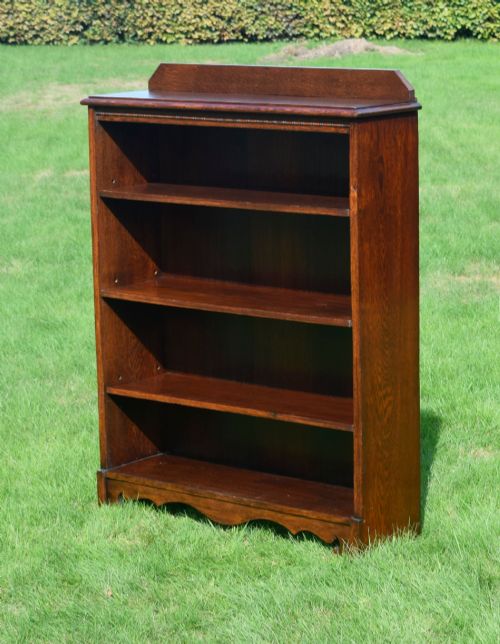
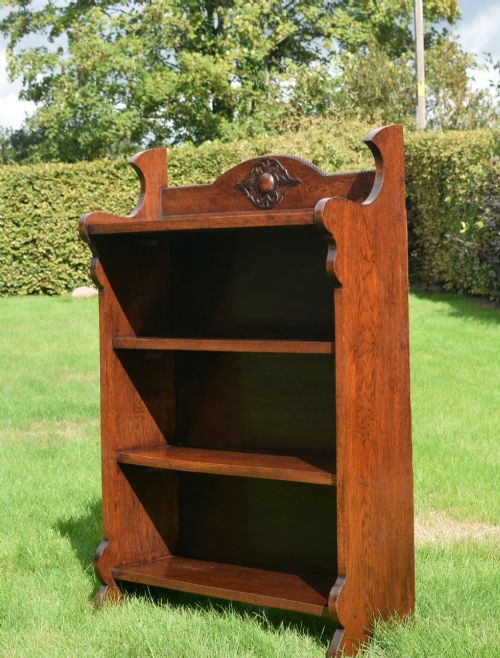
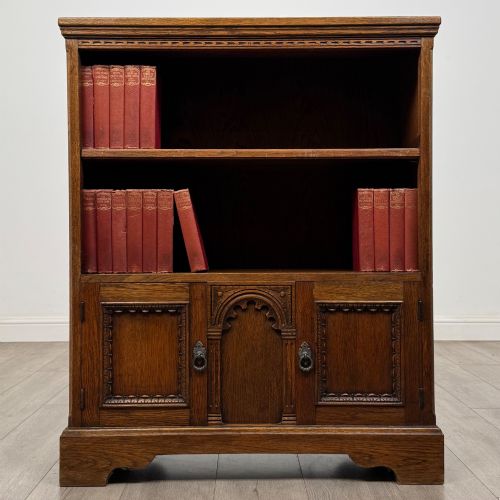
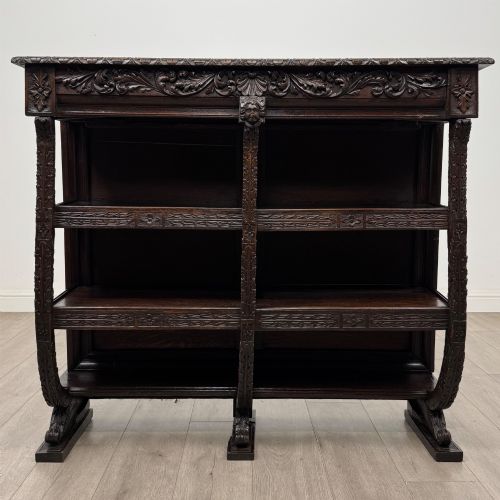
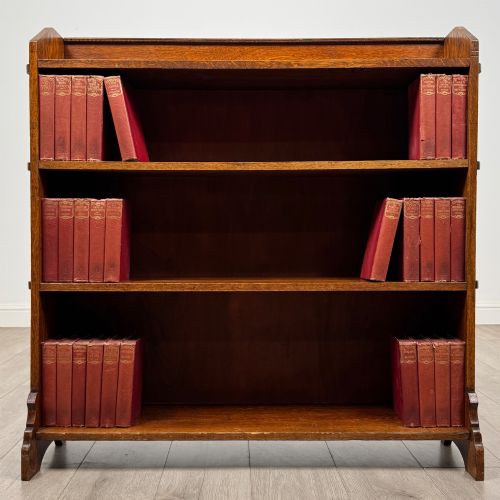
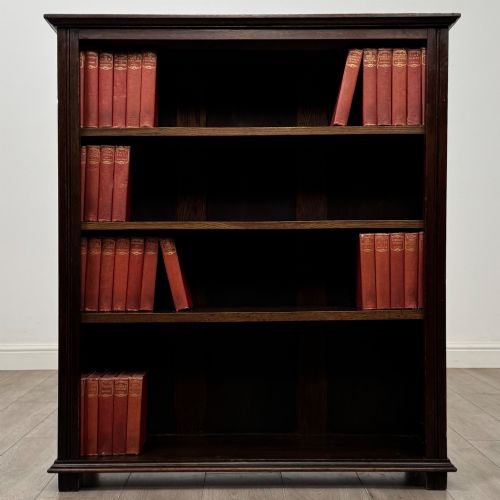
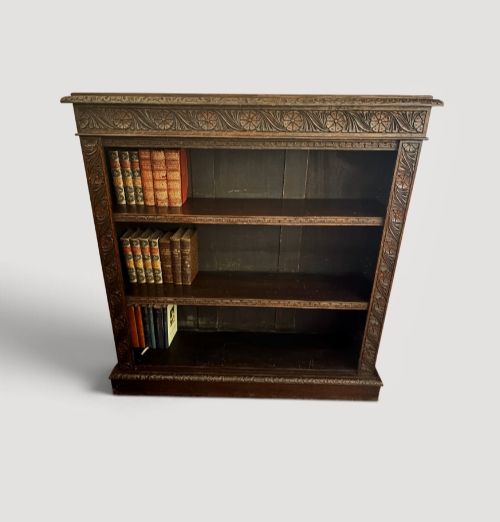
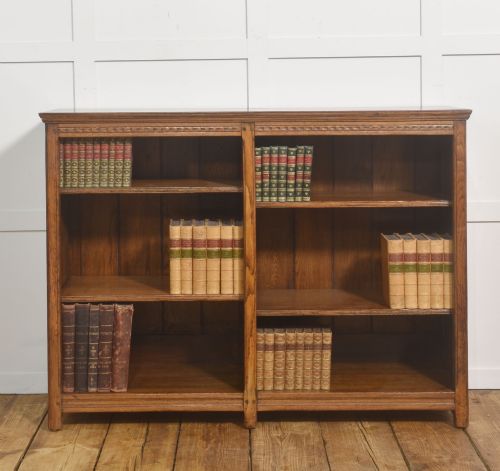
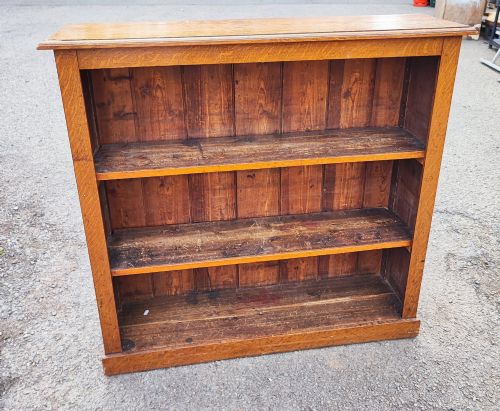
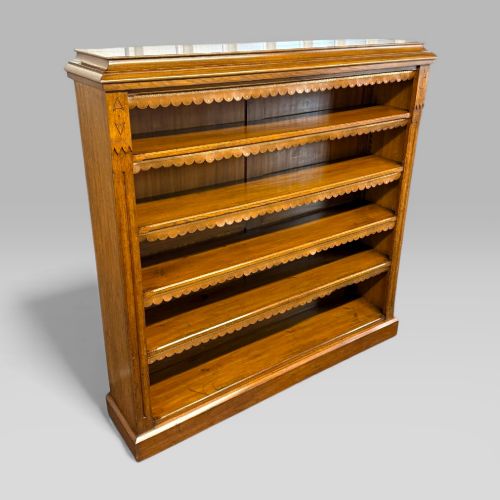
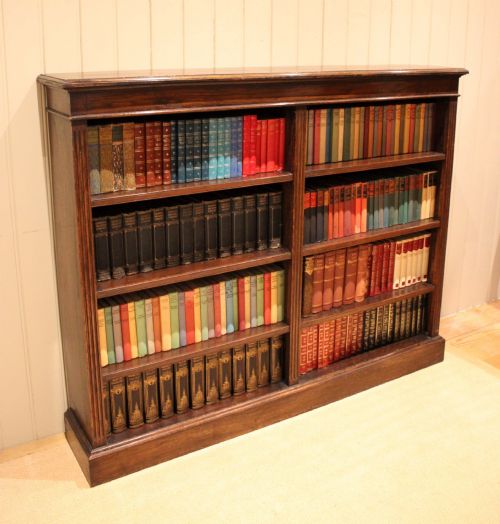
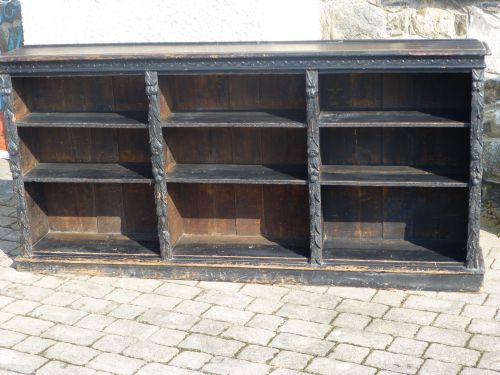
Low Oak Shelving Unit
A low oak shelving unit provides accessible storage for everyday volumes, combining sturdy utility with the warm grain of period timber.
Low Oak Shelving Unit
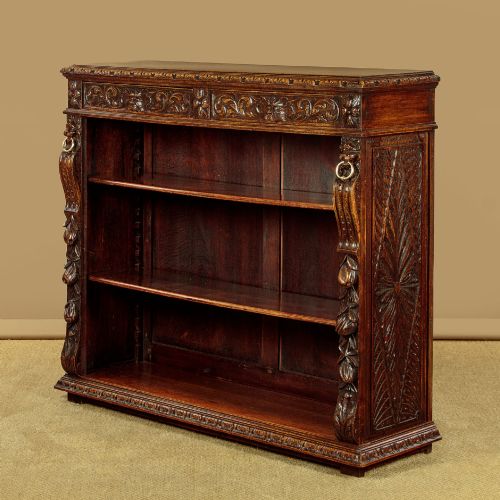
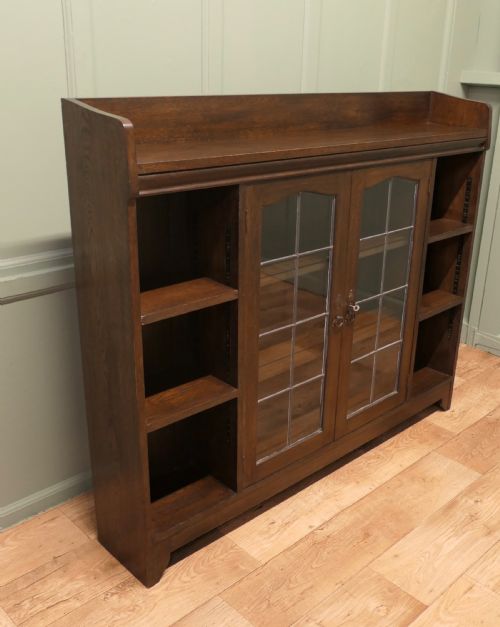
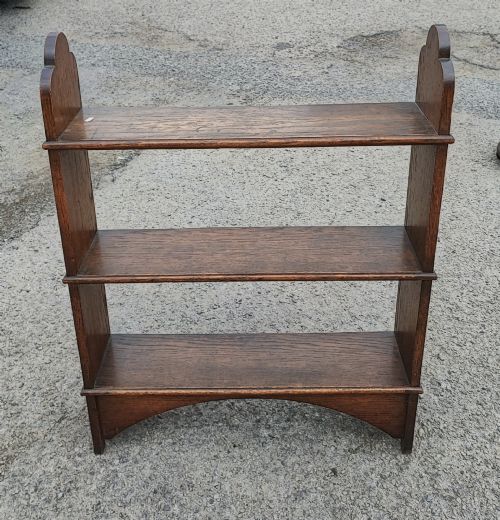
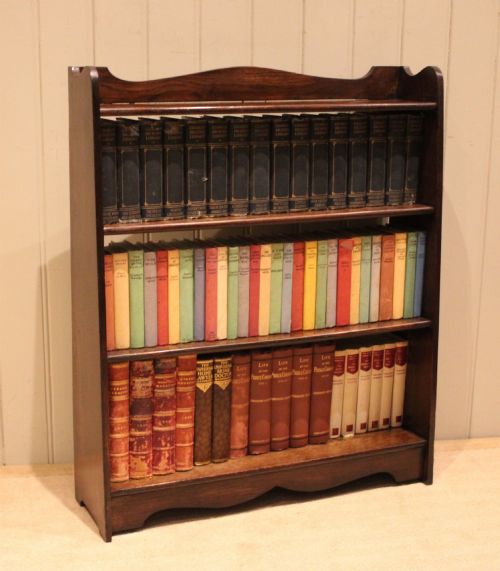
When you search for a low oak shelving unit, you find open bookcases, dwarf display cabinets, and library storage designed to sit below eye level. These pieces predominantly date from the Victorian, Edwardian, and Art Deco periods, spanning the nineteenth and early twentieth centuries.
Stylistic influences vary widely across the selection, drawing upon Arts and Crafts simplicity, Gothic Revival carving, Jacobean revival motifs, and the clean geometric lines of Art Deco. Makers such as Heal's and Betty Joel occasionally appear, anchoring the functional forms in recognised design movements.
How they were made
These items rely principally on solid oak and timber, selected for its dense grain and durability, sometimes enriched by contrasting ebonised details or pollard oak veneers. Metal brass hinges, screws, and shelf supports provide functional reinforcement to the wooden frames.
Construction techniques combine traditional joinery with practical adaptations, seen in beaded edges, carved panels, and adjustable shelf mechanisms that allowed owners to customise interior spaces. Glass doors occasionally feature in cabinet variations, while leather top inserts appear on specific twentieth-century writing or display pieces.
Some Victorian dwarf bookcases hide watchful green men carved into the woodwork to guard your reading.
What varies in quality
The distinction between standard utility items and finer examples rests upon the depth of the carving, the selection of figured timber grain, and the sophistication of the joinery. Pieces associated with progressive design workshops display greater attention to proportion and proportioned architectural detailing.
Interior engineering also dictates worth, particularly the presence of smooth, reliable height-adjustable shelf mechanisms and well-fitted backboards rather than crude, fixed partitions. The integrity of the original polish and the preservation of distinct period styles further elevate the standing of individual items.
Betty Joel
The Low Oak Shelving Unit Glossary
- Breakfront
- A cabinet design where the central section projects forward from the flanking wings. This architectural arrangement creates depth and visual interest in larger library pieces.
- Dwarf bookcase
- A low shelving unit designed to sit beneath window sills or picture rails. It keeps heavy volumes within easy reach without dominating room height.
- Pollard oak
- Timber taken from trees that have been pollarded, producing a knotted, highly figured grain pattern. Cabinetmakers prized this material for decorative drawer fronts and panel inserts.
- Adjustable shelves
- Internal boards supported by movable pegs, ratchets, or metal tracks. This system allows owners to alter shelf heights for different book sizes.
- Green man
- A sculptural architectural ornament depicting a human face entwined with foliage. It symbolises rebirth and appears frequently in revivalist furniture carving.
Low Oak Shelving Unit: Frequently Asked Questions
What is a low oak shelving unit?
A low oak shelving unit is a waist-high piece of furniture designed primarily to hold books and display objects while keeping wall space open above. These items utilise sturdy oak timbers and typically feature open fronts or short doors.
Originating across the Victorian, Edwardian, and Art Deco eras, they serve as practical room dividers or perimeter storage in domestic libraries and living rooms.
How do I date an oak bookcase?
Dating relies upon observing the decorative style, construction methods, and hardware associated with specific periods like the Arts and Crafts movement or Art Deco. Victorian examples often display heavier Gothic carving, whereas Edwardian pieces lean towards simpler golden oak finishes.
Examine the backboards, joint types, and shelf adjustment mechanisms to confirm whether a piece belongs to the nineteenth or twentieth century.
Are shelves usually adjustable in these?
Many period examples incorporate adjustable shelves supported by wooden ratchets, brass pins, or metal tracks. This flexibility allowed historical owners to reconfigure the interior space for varied volumes.
Catalogues from the early twentieth century frequently promoted this adaptability as a key selling point for growing home libraries.
Where should I place a low bookcase?
Low bookcases suit placement beneath windows, along hallways, or backing onto seating furniture where tall cabinets would block light. Their modest height also provides a surface for lamps, plants, and decorative objects.
Ensure the timber is kept away from direct heat sources and strong sunlight to protect the polish and prevent warping.