


Low Oak Chest
A low oak chest brings sturdy timber and practical storage into a room without dominating the wall space.
Low Oak Chest
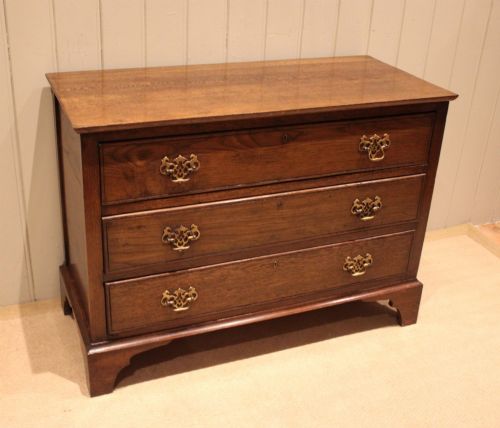
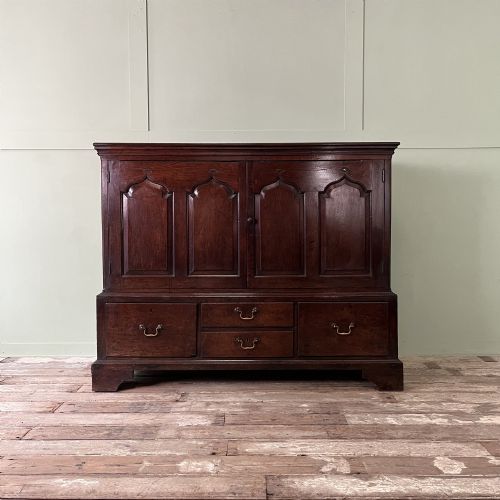
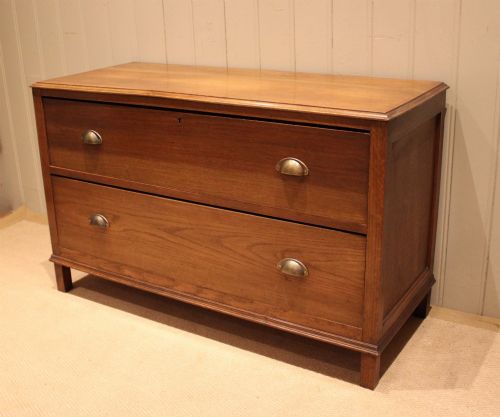
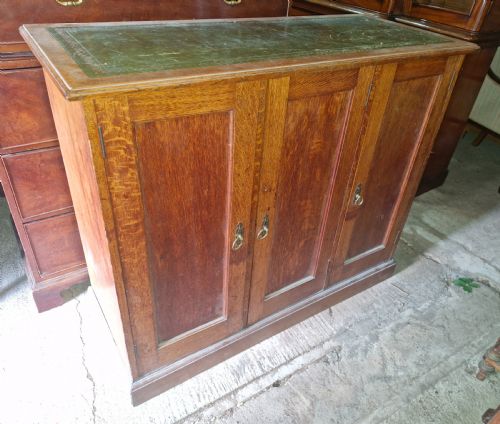
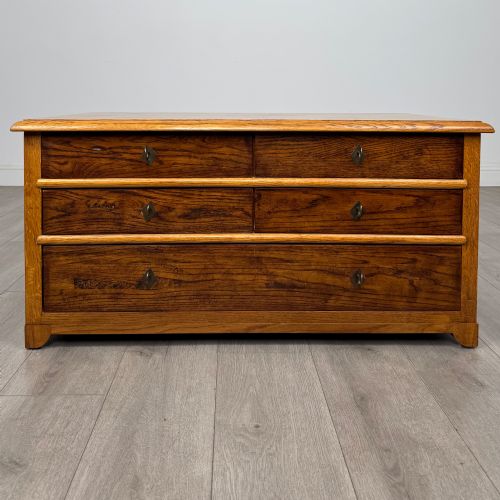
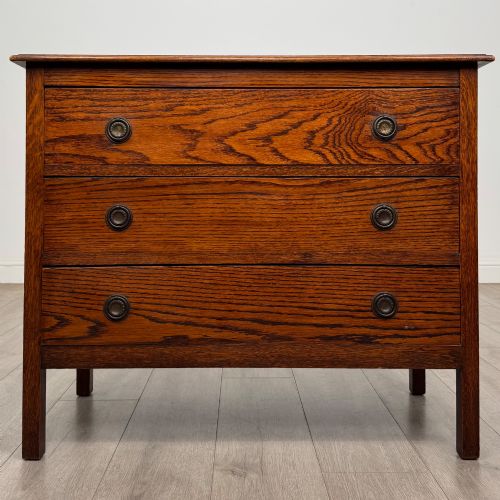
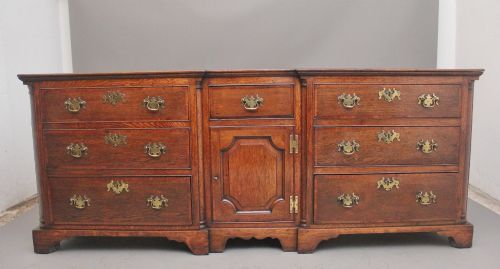
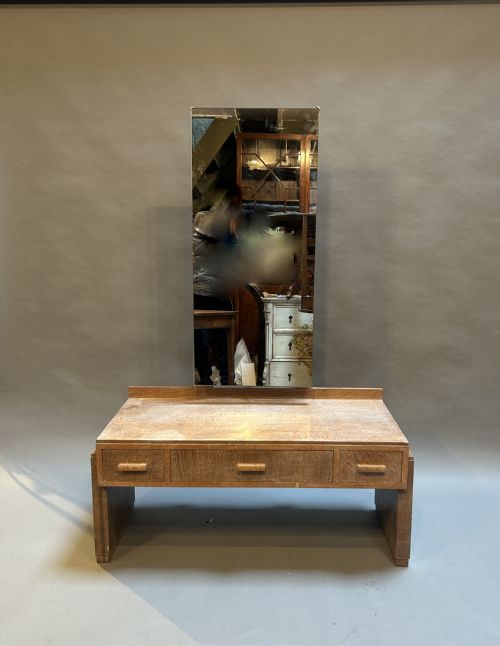
A low oak chest serves as a compact storage unit, frequently encountered as chests of drawers, dresser bases, and low press cupboards spanning the seventeenth century through to the Edwardian period and nineteen-thirty. These pieces provide deep drawer capacity or cupboard space while maintaining a reduced vertical profile.
The selection ranges from seventeenth-century Welsh cupboards and eighteenth-century mule chests to twentieth-century workshop pieces in a Georgian style. Pieces originate from English and Welsh traditions, encompassing vernacular country furniture alongside branded examples from prominent makers.
Materials and construction
Constructed primarily from solid oak, these pieces frequently incorporate brass for handles, escutcheons, and drawer pulls, alongside iron hinges and locks. Secondary woods such as pine appear in internal drawer linings and backboards.
Joinery methods rely on traditional framing, panel construction, and hand-cut dovetails for drawers. Surfaces display natural grain patterns, sometimes enhanced through carving, liming, or simple painted finishes on dresser bases.
Listings feature oak combined with brass, iron, mahogany, and glass across periods from the seventeenth century to nineteen-thirty.
Judging quality in oak furniture
Quality rests in the selection of the timber, where quarter-sawn oak displaying prominent medullary rays indicates superior board selection. The crispness of hand-carving and the precision of dovetail joints distinguish workshop execution.
Originality of brass hardware, locks, and feet elevates a piece, as does the retention of a mature surface patina developed through decades of domestic use.
Heals of London·Gillows·Waring and Gillow
The Low Oak Chest Glossary
- Mule chest
- A traditional blanket box or chest fitted with one or more drawers beneath the main storage compartment. This form bridges the gap between a standard chest and a chest of drawers.
- Lowboy
- A small oak table featuring drawers, commonly utilised as a dressing table or side table in eighteenth-century interiors. It stands on relatively short legs.
- Press cupboard
- A large storage item comprising a cupboard section, often enclosed by doors, positioned above or beside drawer units. These pieces provide substantial linen storage.
- Dresser base
- The lower section of a kitchen or dining room dresser, equipped with surface boards and a combination of drawers and cupboards. They lack the upper shelving tier.
- Limed oak
- A finish developed in the early twentieth century where a white or pale pigment is worked into the open pores of oak. This treatment creates a lighter, modern appearance.
Low Oak Chest: Frequently Asked Questions
What is a low oak chest?
A low oak chest is a solid timber storage item designed with a reduced height, encompassing chests of drawers, blanket boxes, and dresser bases. These units maximise floor utility while keeping ceilings visually clear.
They appear across multiple periods, from seventeenth-century vernacular pieces to twentieth-century modern designs, utilising durable oak construction throughout.
How do I date an oak chest?
Dating relies on examining construction techniques, such as hand-cut dovetails, iron hardware, and timber preparation methods. Early pieces display pegged joints and hand-riven boards.
Later Edwardian and nineteen-thirty examples incorporate machine-sawn elements, branded drawer labels, and distinct stylistic revivals like Georgian or Art Deco influences.
Where should I place a low chest?
These units suit bedrooms, hallways, and living rooms where standard tall wardrobes or high tallboys would overwhelm the space. Their reduced height allows surface display of mirrors or artwork.
Placing them away from direct heat sources protects the timber from splitting while preserving the natural wax or polish finish.
How do I care for antique oak?
Maintenance involves applying quality beeswax occasionally to nourish the timber and maintain the protective surface sheen. Avoid synthetic cleaning sprays that damage historic finishes.
Maintaining stable indoor humidity prevents the solid oak panels from warping or shrinking across seasonal temperature shifts.