

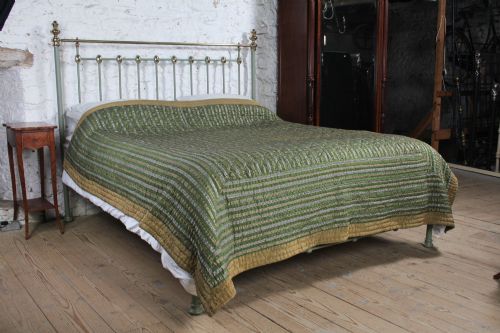


Low End King Bed
A low end king bed offers generous sleeping space while keeping the foot of the frame open and low.
Low End King Bed
A low end king bed provides a spacious sleeping area while maintaining an open, unobstructed profile at the foot. These pieces appear frequently in Victorian, Louis XVI style, and French country designs, often described as no end or low foot end frames.
The selection ranges from robust cast iron and brass Irish frames to carved wood, painted wood, and upholstered European designs. Buyers will regularly encounter nineteenth-century iron frameworks alongside French upholstered and caned variants.
These beds suit rooms where a high footboard would visually crowd the space, offering a practical balance of grand proportions and understated architecture. The format accommodates standard king and super king dimensions depending on the specific frame.
Materials and construction methods
Metal frames rely on cast iron, wrought iron, and forged iron, frequently paired with brass finials, rails, and spindles. These structural metals are shaped with classic curving rails, ribbon reed details, and geometric spindles.
Wooden and upholstered variants utilise carved wood, painted wood, oak, and cherry, often complemented by fabric upholstery and caned bergere panels. Artisans employed traditional joining techniques and gilding to finish the detailed wooden structures.
Low End King Bed Retail Price Guide 2026
Typical asking prices for low end king bed among the pieces listed under this phrase on Sellingantiques today, from the lower quarter to the upper quarter. They describe what is for sale here now, not the wider market.
Some iron beds feature ribbon reed details, proving that even heavy metal can be coaxed into looking light and cheerful.
Defining characteristics of quality
Quality rests in the precision of the shaping and the integrity of the materials, whether in the crisp casting of iron spindles or the depth of hand-carved wooden details. Superior ironwork displays clean lines and secure joints, while finer wooden beds feature thoughtful proportions and refined upholstery finishes.
The distinction also lies in the preservation of original elements, such as intact brass finials, aged paint surfaces, and authentic hardware. Pieces that retain their balanced proportions and uncompromised structural framework stand apart within the range.
The Low End King Bed Glossary
- No End
- A bed design featuring a standard headboard but lacking a high footboard, creating an open frame.
- Bergere
- A framed upholstered armchair or bed component featuring enclosed cane work on the sides or panels.
- Louis XVI Style
- A neoclassical design style characterised by straight lines, symmetry, and classical restraint.
- Spindle
- A turned or shaped slender piece of wood or metal used repetitively in a railing or headboard.
- Ribbon Reed
- A decorative moulding or metal detail carved or cast to resemble a twisted ribbon.
Low End King Bed: Frequently Asked Questions
How do I fit modern mattresses?
Historic king and super king beds often require careful measurement to ensure contemporary mattresses fit properly within the side rails. Some frames include specific bases or require custom support slats.
Checking the internal dimensions of the iron or wooden rails before selection ensures the mattress rests securely within the structure.
Are iron or wood beds better?
Iron and brass beds offer industrial strength and slender profiles, often featuring decorative spindles, brass finials, and ribbon reed shaping. They suit traditional and eclectic interiors alike.
Wooden and upholstered frames bring warmth, carved detailing, and softer fabric textures to a bedroom. The choice depends entirely on the desired aesthetic and existing room decor.
How do I clean metal frames?
Iron and brass components benefit from gentle dusting with a dry or slightly damp cloth to preserve the surface finish. Abrasive cleaners should be avoided to protect aged patinas and polished brass details.
Regular maintenance keeps the metalwork sound and maintains the distinct character of nineteenth-century frames.