


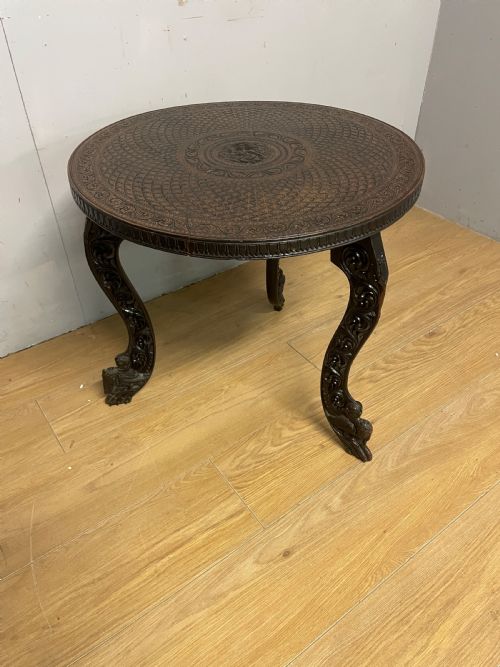

Low Circular Tea Table
A low circular tea table brings intimate proportion and centred conversation to a room, drawing on decades of period craftsmanship.
Low Circular Tea Table
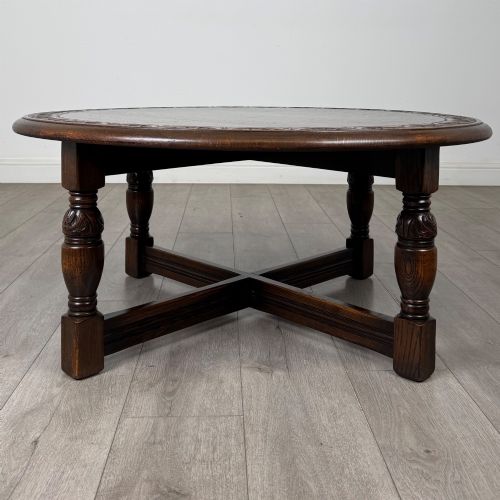
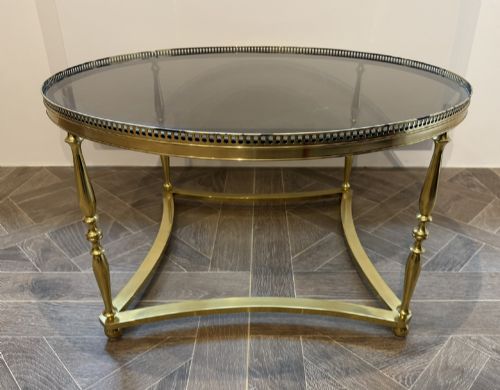
A low circular tea table brings together compact proportions and rounded forms designed to sit comfortably among seating groups. When you explore a low circular tea table, you encounter pieces that began life as occasional tables, wine tables, or standard occasional furniture adapted over time.
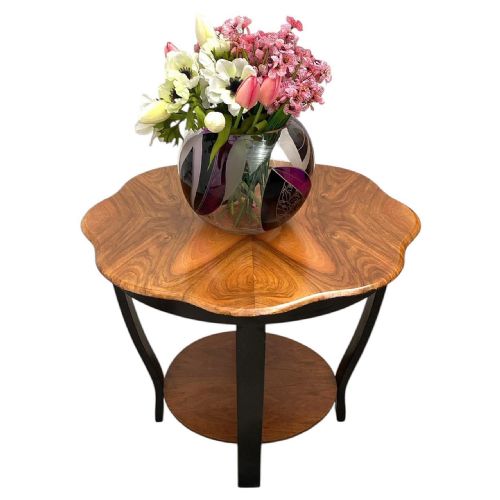
The selections span distinct periods including the Victorian era, Edwardian decades, and the 1930s Art Deco movement. Walnut and burr walnut dominate the forms, alongside oak, mahogany, and exotic hardwoods.
Makers drew on various design traditions ranging from Queen Anne revivals to Chinese export and Anglo-Indian carving. The results offer versatile surfaces suited to modern living spaces while retaining their original period character.
How they were made
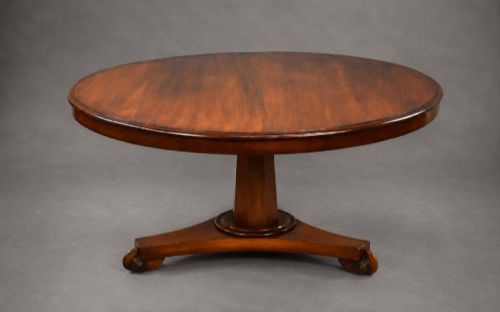
Cabinet makers utilised choice timbers such as figured walnut, burr walnut, oak, and mahogany, often applying veneers to create striking grain patterns across the circular tops. Solid hardwoods like cherry and rosewood provided sturdy framing for pedestals and legs.
Surface decoration involved intricate hand carving, polished lacquers for Chinoiserie finishes, and applied brass or metal mounts. Many pieces combine turned pedestals with tripod or platform bases to ensure stability at lower heights.
Styles represented include Art Deco, Chinese export, and Edwardian Chinoiserie.
What varies in quality
Quality rests in the selection of timber veneers and the crispness of the hand carving rather than mere age. Superior examples display balanced grain matching across the circular top and tight joinery at the pedestal or leg junctions.
Finishing techniques also separate standard items from finer works, with depth of polish and careful retention of original patination marking out superior production standards.
The Low Circular Tea Table Glossary
- Burr walnut
- A figured wood grain taken from the growth growths of a walnut tree. It produces intricate, swirling patterns highly prized by cabinet makers.
- Pie crust
- A carved, scalloped raised edge running around the perimeter of a tabletop. This decorative border resembles the pastry edge of a baked pie.
- Chinoiserie
- European decorative art imitating Chinese and East Asian artistic traditions. It frequently employs lacquered finishes and gilt motifs.
- Occasional table
- A small, versatile table designed to be moved easily and used for specific tasks around a room. These forms frequently transition into low coffee tables.
- Pedestal
- A single central support column carrying a table top. It often terminates in three or four carved feet.
Low Circular Tea Table: Frequently Asked Questions
How do I style a low circular tea table?
Pair the round shape with rectilinear sofas to break up hard angles in a room. Keep the surface styling minimal to let the timber grain remain visible.
Position the table within easy reach of seating so the historic proportions serve their original functional purpose.
Are these tables sturdy enough for daily use?
Solid hardwood and walnut construction provides robust support for everyday living. Pedestal bases distribute weight evenly across the floor.
Care should be taken with veneered surfaces by using coasters to protect the historic polish from moisture.
How do I identify an Art Deco piece?
Art Deco examples favour blonde oak, figured walnut, and streamlined geometric silhouettes. They often date from around nineteen thirty.
Ornamentation remains restrained compared to earlier Victorian or Edwardian ornate carving styles.
What is the difference between an occasional table and a coffee table?
Occasional tables were originally manufactured at standard heights for holding small items. Many have since been lowered to function as coffee tables.
Both forms share compact footprints suited to central room placement.