



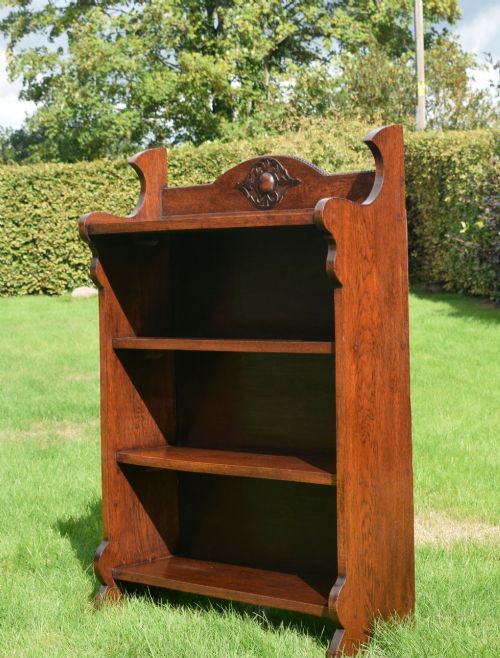
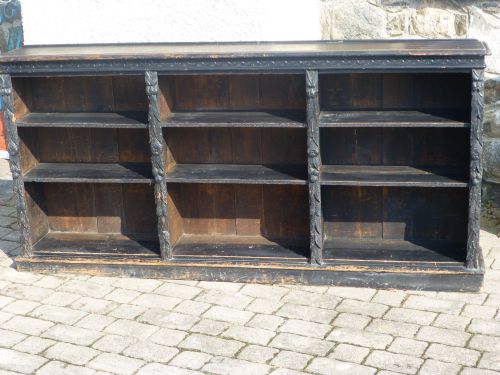
Low Carved Oak Bookcase
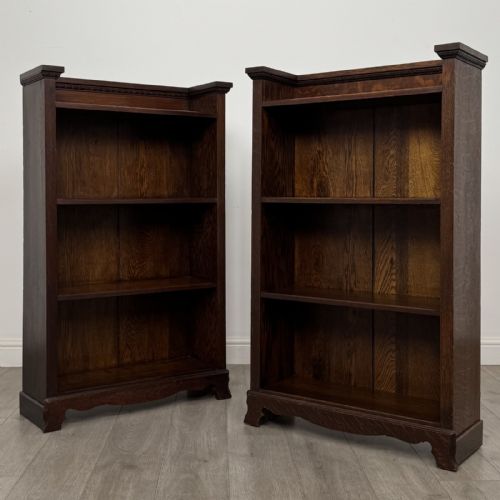
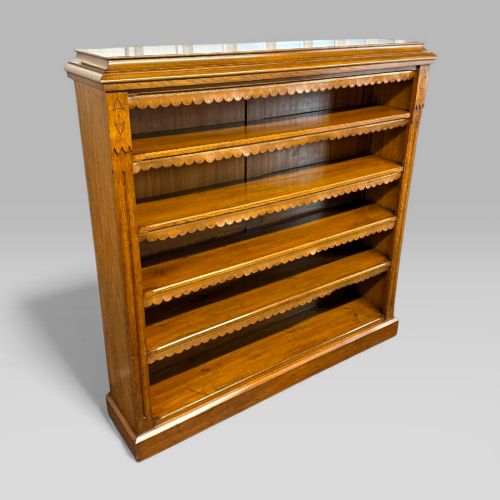
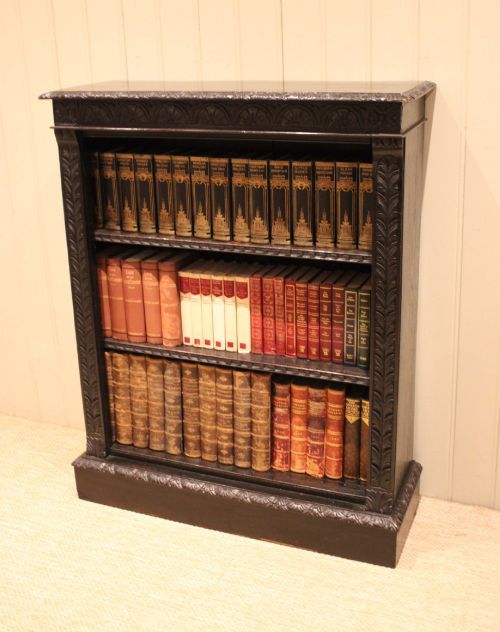
A low carved oak bookcase brings sturdy timber and practical shelving together in a compact form well suited to modern rooms.
Low Carved Oak Bookcase
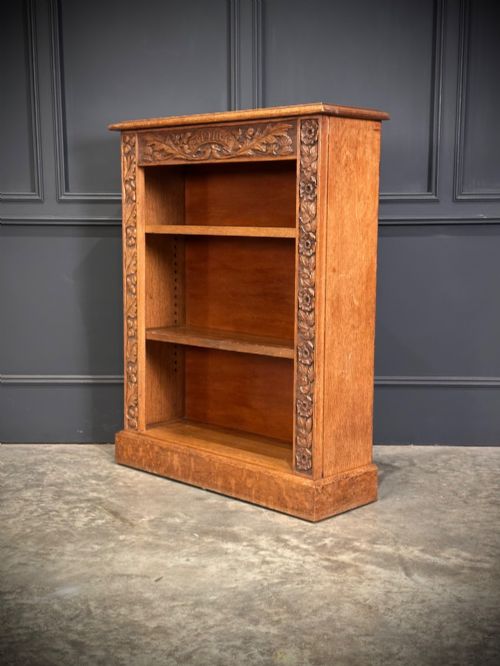
A low carved oak bookcase provides accessible storage for volumes and display pieces while keeping a modest height that fits beneath windows or along smaller walls. When you search for a low carved oak bookcase, you encounter sturdy timber constructions dating from the Victorian and Edwardian eras through to the early twentieth century.
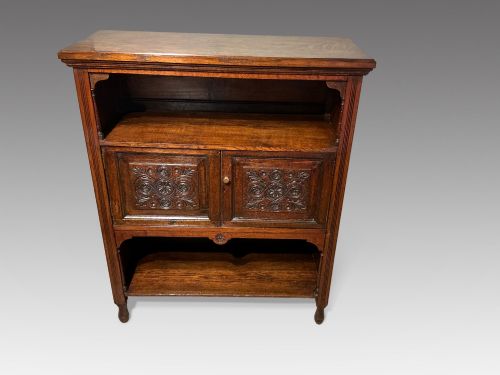
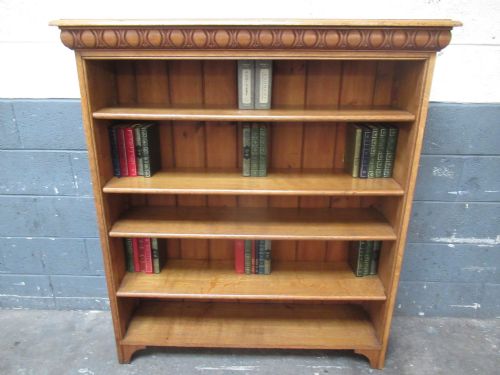
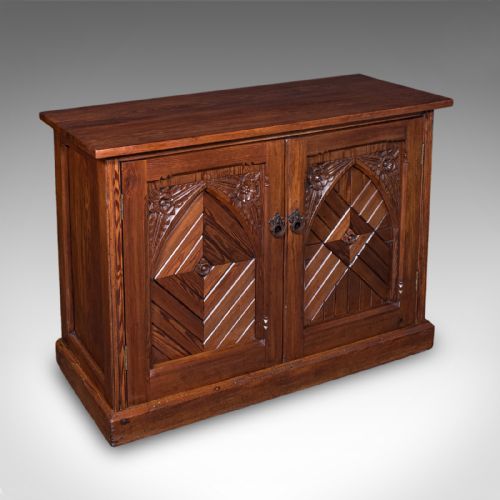
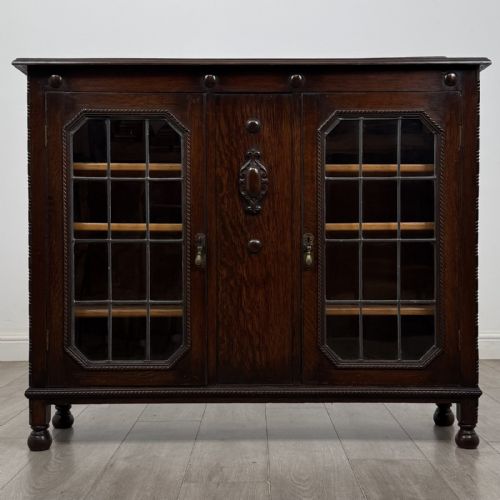
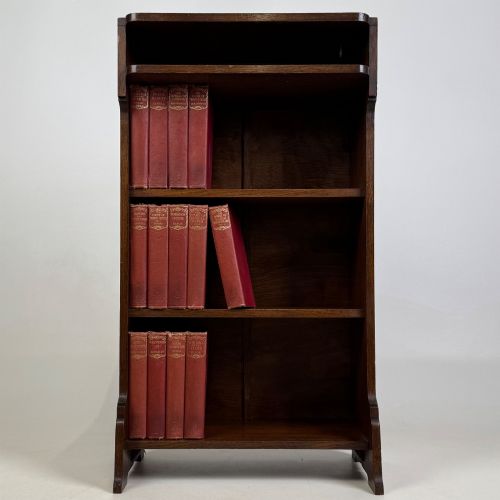
The selections on this page lean heavily towards open shelving formats, dwarf bookcases, and small cabinet combinations featuring carved cupboard doors or lower drawers. Many examples incorporate adjustable shelves, reflecting the practical demands of nineteenth and early twentieth century libraries and studies.
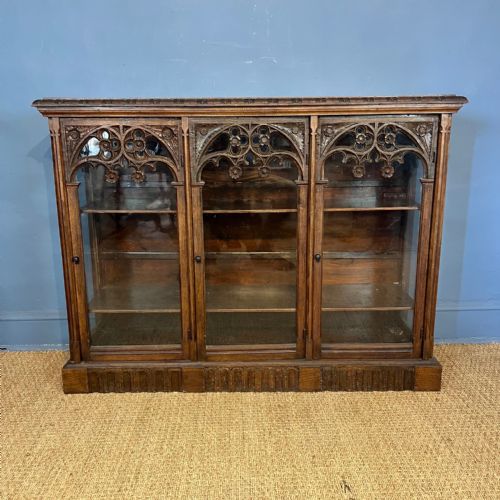
Origins span standard English domestic production alongside distinct stylistic revivals, including Gothic Revival, Jacobean Revival, and Arts and Crafts movements. The timber is predominantly solid oak, sometimes highlighted with pollard oak or ebonised details.
How they were made
Cabinet makers relied primarily on solid oak, selected for durability and distinctive grain patterns, occasionally incorporating pine for secondary elements like interior backs and shelf supports. Joinery techniques from the Victorian and Edwardian periods ensured rigid frames capable of bearing heavy loads of books without sagging.
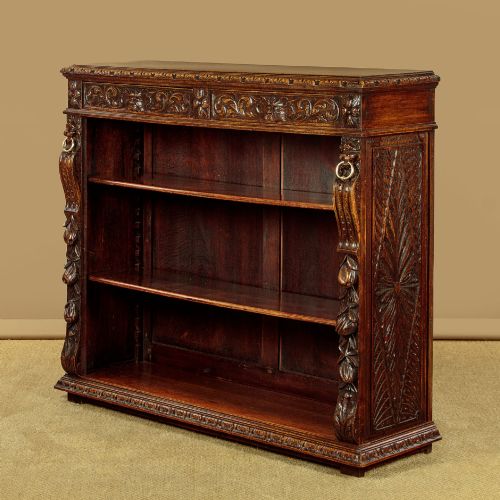
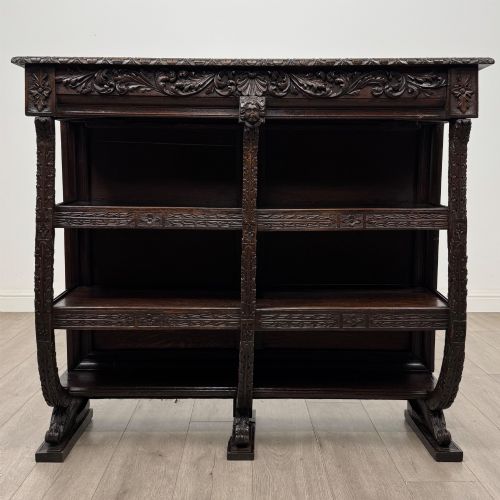
Carving was executed by hand, yielding intricate floral motifs, geometric strapwork, and occasional figural elements such as green man masks on friezes and door panels. Brass hardware, including hinges, handles, and shelf rack strips, added functional metal accents that complemented the dark or golden tones of the polished oak.
Low Carved Oak Bookcase Retail Price Guide 2026
Typical asking prices for low carved oak bookcase among the pieces listed under this phrase on Sellingantiques today, from the lower quarter to the upper quarter. They describe what is for sale here now, not the wider market.
Several pieces conceal green man carvings amongst their foliage, keeping a watchful mythical eye over your library.
What varies in quality
The standard of a low carved oak bookcase rests on the crispness and depth of the timber carving, where hand-tooled depth outperforms shallow machine stamping. Superior pieces display thoughtful grain matching across the front panels and uprights, giving a cohesive visual rhythm to the woodwork.
Mechanical provisions also separate grades, notably the inclusion of well-fitted brass adjustable shelf mechanisms rather than fixed partitions. Cabinet doors on fitted lower compartments should hang true within their frames, operating smoothly alongside tight dovetail joints in any accompanying drawers.
Bowman Brothers London·Ercol·Waring and Gillows
The Low Carved Oak Bookcase Glossary
- Dwarf bookcase
- A low shelving unit designed to sit beneath picture rails or windows. These pieces provide accessible book storage without dominating a room's vertical space.
- Green man
- A sculptural architectural ornament depicting a human face entwined with foliage. It appears frequently as a carved motif on nineteenth century revival furniture.
- Breakfront
- A piece of furniture where the central section projects forward from the flanking wings. This configuration adds architectural depth to larger bookcase designs.
- Ebonised
- Timber treated with a dark stain or chemical process to imitate ebony. This finish was favoured during the Victorian period for decorative contrast.
- Adjustable shelves
- Movable wooden boards supported by metal pins or racks. This system allows the internal height to adapt to volumes of varying sizes.
Low Carved Oak Bookcase: Frequently Asked Questions
How do I adjust the shelves?
Most period examples utilise either traditional wooden side notches or metal rack strips inserted into the interior vertical panels. You simply lift the wooden shelf clear of its supports and reposition the brass clips or rests into alternative slots at your preferred height.
Ensure both sides are level before resting the board back into position to prevent rocking. Older mechanisms may require gentle handling if the timber has settled over the decades.
Where should I place a low bookcase?
The modest height makes these units ideal for positioning beneath windows, along hallways, or against living room walls where tall cabinetry would block light or overwhelm the floor plan. They also serve effectively as room dividers in open-plan spaces when finished neatly on the back.
Keep solid oak away from direct heat sources such as radiators or fireplaces to prevent the timber from drying out and splitting over time. Allowing adequate airflow around the back panel preserves the condition of the wood.
How do I tell Victorian from Edwardian pieces?
Victorian examples, particularly those influenced by the Gothic Revival or Jacobean styles, often feature heavier, deeper hand-carving, darker wax finishes, and occasional ebonised highlights. The overall aesthetic leans towards robust ornamentation and dense timber.
Edwardian pieces generally exhibit a lighter touch, sometimes showing Arts and Crafts simplicity or brighter golden oak tones. Carving on Edwardian items tends to be more restrained, focusing on clean borders and subtle plant motifs.