



Low Breakfront Shelving
Low breakfront shelving brings architectural presence and generous display space to a room, offering a long, tiered silhouette that anchors a library or drawing room.
Low Breakfront Shelving
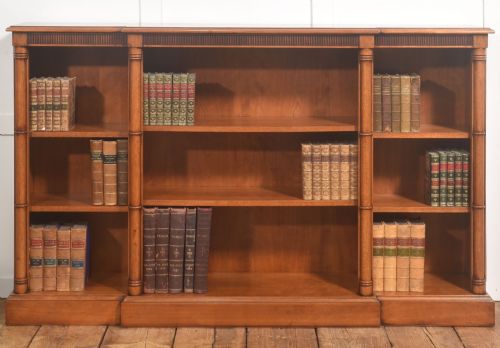
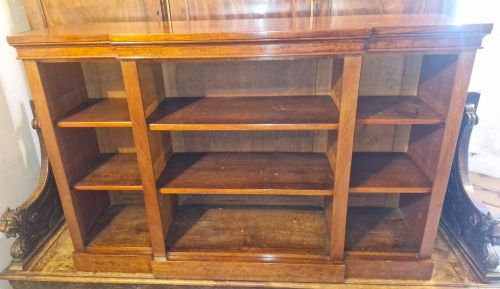
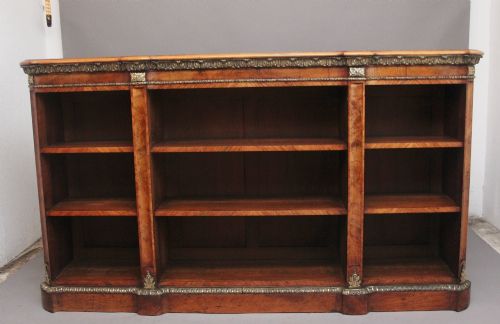
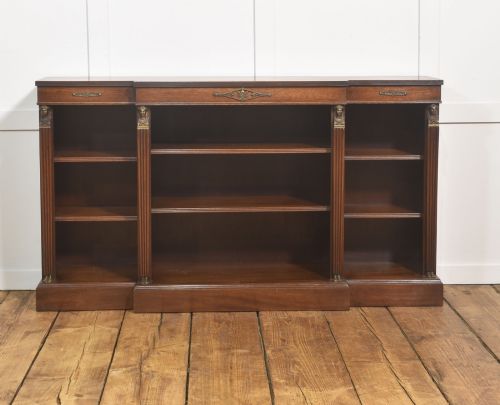
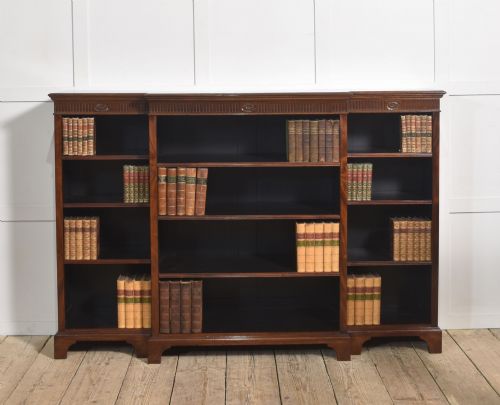
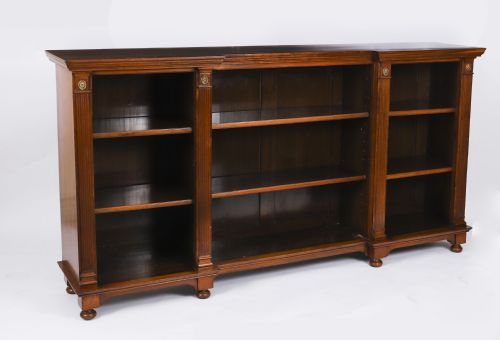
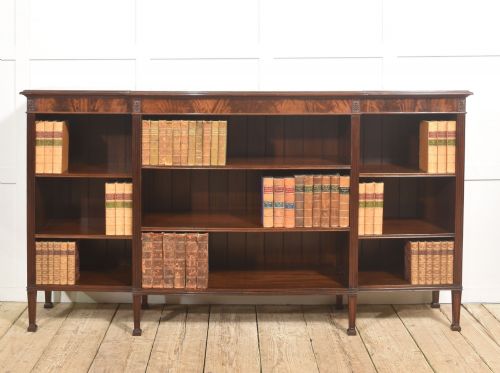
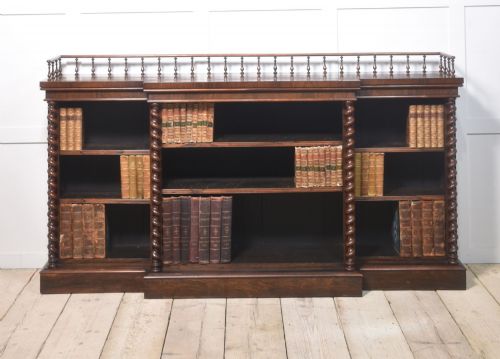
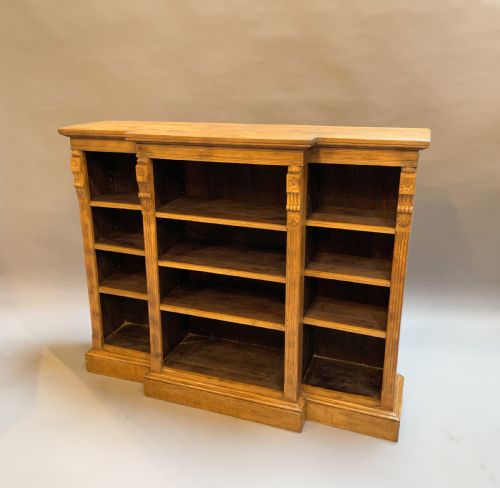
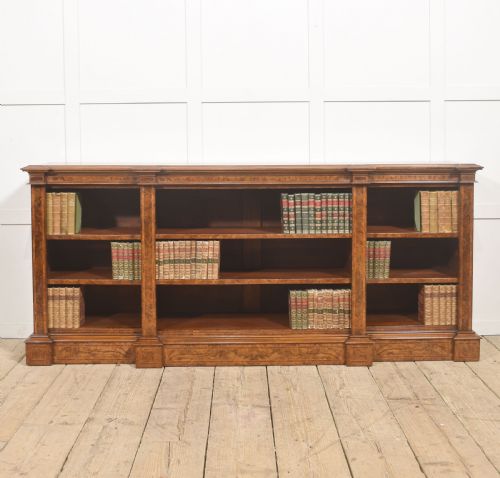
Low breakfront shelving comprises low bookcases and cabinets featuring a tripartite projecting central section flanked by recessed wings, creating a distinctive architectural rhythm along a wall. The pieces recorded here span from the Regency era through to the early twentieth century, taking the form of open bookcases, side cabinets, and floor-standing library shelving.
Mahogany and rosewood dominate the earlier and mid-nineteenth-century examples, whilst walnut, burr walnut, and oak appear frequently across Victorian and Edwardian iterations. Buyers exploring low breakfront shelving will encounter both strict period originals and later Regency style interpretations made around nineteen-ten, often built with adjustable shelves to accommodate varying volumes.
Makers such as Johnstone and Jeanes and Richard Bridgens indicate the high cabinet-making standards applied to these forms, supplemented by French Empire and Napoleon III influences that introduce brass or ormolu mounts. The format serves primarily to house books while maintaining a low profile that allows paintings or mirrors to hang comfortably above.
Materials and Construction
Makers constructed these carcasses in dense hardwoods such as mahogany, rosewood, and oak, frequently selecting figured veneers like flame mahogany or burr walnut for the primary display surfaces. These timbers provided the structural rigidity necessary to support heavy rows of books across wide spans without sagging.
Decoration relied heavily on applied brass and ormolu mounts, gilt metal details, and intricate inlay work, particularly on Victorian and Neoclassical examples. Some pieces incorporate parcel gilding and leather dummy books, demonstrating the meticulous finishing expected by nineteenth-century patrons.
One exceptional Regency bookcase includes leather dummy books designed to conceal whatever the owner preferred to keep out of sight.
Assessing Quality
Quality rests primarily in the selection of timber veneers and the crispness of the architectural breakfront moulding. Pieces featuring highly figured flame mahogany or richly grained burr walnut display a superior decorative ambition compared to plain timber carcases.
The integration of fine metalwork, such as chased ormolu mounts and heavy brass gallery details, separates standard utility shelving from high-status library furniture. Furthermore, the presence of adjustable shelving mechanisms and robust carcase construction marks the work of accomplished workshops.
Johnstone and Jeanes·Richard Bridgens
The Low Breakfront Shelving Glossary
- Breakfront
- A cabinet or bookcase whose central section projects forward from the flanking wings. This configuration breaks the linear monotony of a long wall.
- Ormolu
- Gilt bronze mounted onto furniture as an ornamental flourish. It appears frequently on nineteenth-century walnut and mahogany pieces.
- Burr walnut
- A wood harvested from walnut tree growths, producing a dense, swirling grain pattern. Cabinet-makers used it to create highly decorative surfaces.
Low Breakfront Shelving: Frequently Asked Questions
What is low breakfront shelving?
Low breakfront shelving consists of low-standing bookcases or cabinets where the central section projects outward from the recessed sides. This architectural layout creates visual depth along a room's perimeter.
Such pieces typically combine open display shelves with sturdy timber carcases, providing functional storage for libraries while maintaining a height that leaves wall space unobstructed above.
How were these bookcases used?
These pieces served primarily to house private libraries in grand homes, studies, and drawing rooms during the nineteenth and early twentieth centuries. The open shelving design allowed for easy access to frequently read volumes.
Beyond holding books, the broad top surfaces and projecting central sections offered display areas for decorative objects, clocks, and bronzes, functioning similarly to low sideboards.
How do I style low breakfront shelving?
Position these bookcases against a principal wall in a reception room where their horizontal proportions can anchor the space. They work well beneath large oil paintings or framed mirrors.
Fill the shelves with a mix of vertical book groupings and horizontal stacks, leaving small pockets of space for decorative items to prevent the heavy timber from feeling overpowering.
How can I tell the period apart?
Earlier pieces from the Regency era often utilise rich rosewood with brass inlay or parcel gilt details, reflecting classical proportions and restraint. Victorian examples tend to introduce heavier proportions, burr walnut veneers, and elaborate ormolu mounts.
Edwardian and later reproductions from nineteen-ten frequently emulate Regency styles using mahogany, though their construction details and internal fittings generally reveal a twentieth-century origin.