

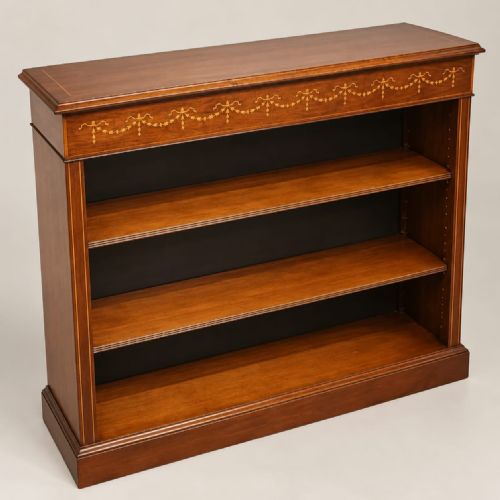
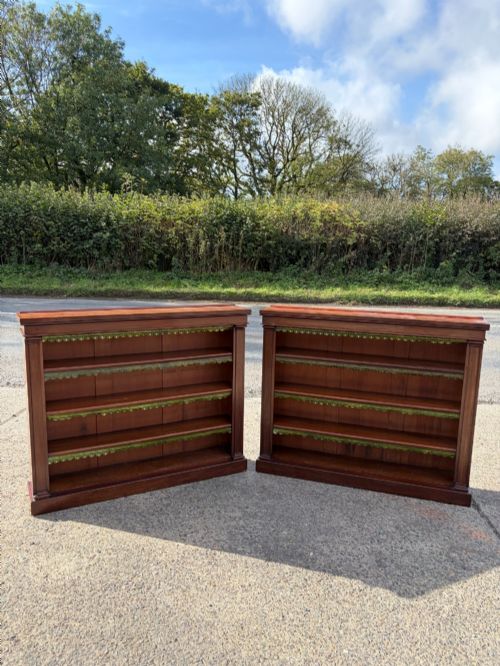
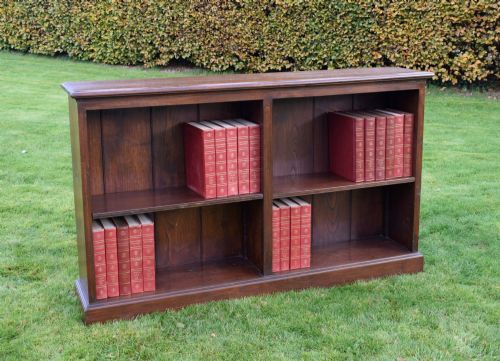

Low Bookcase Unit
A low bookcase unit keeps volumes at hand without crowding the room, offering accessible shelving in timber.
Low Bookcase Unit
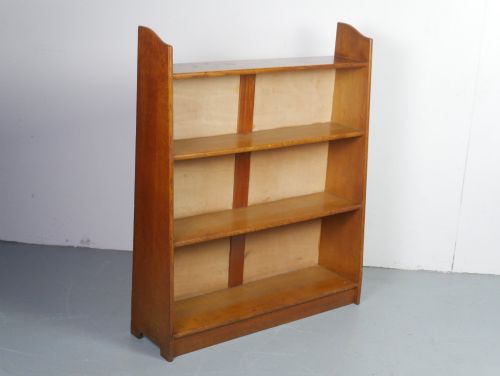
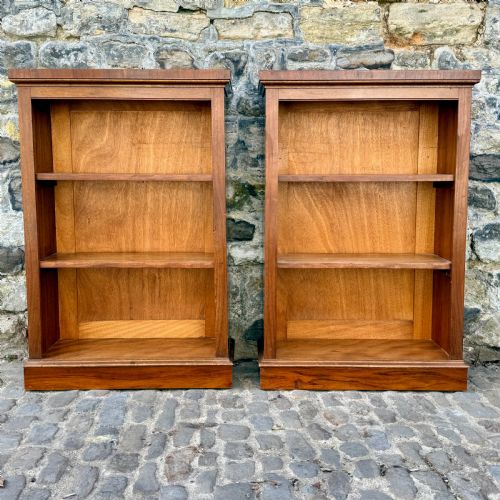
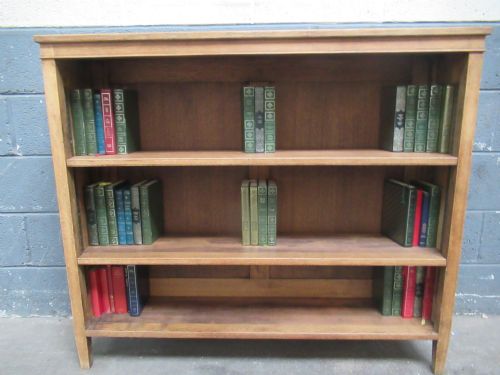
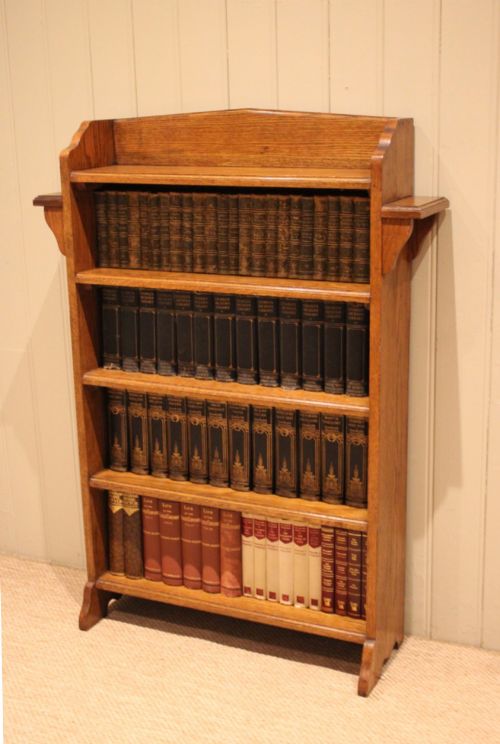
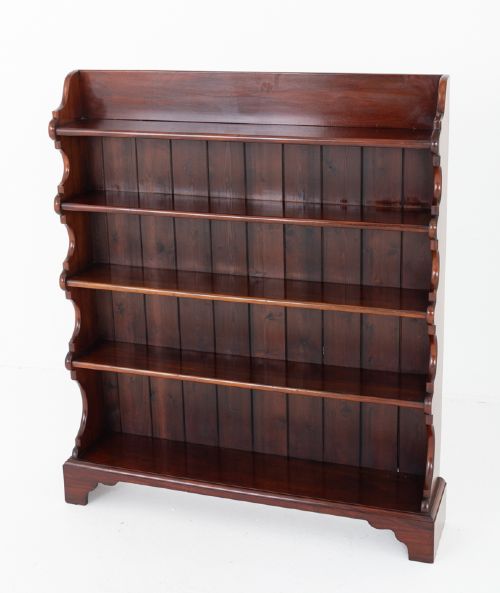
A low bookcase unit provides practical open shelving and storage at a comfortable height, frequently topped with a raised gallery or a plain surface. These pieces appear across Victorian, Edwardian, and twentieth-century periods, reflecting shifting interior demands.
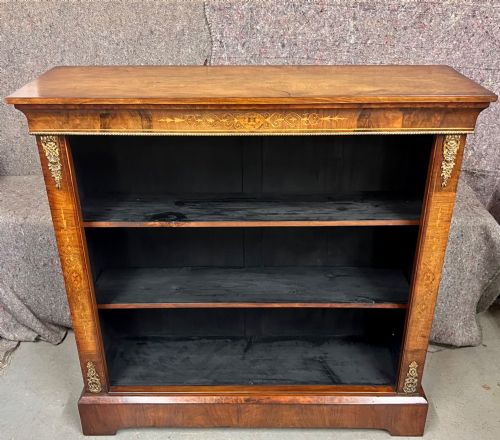
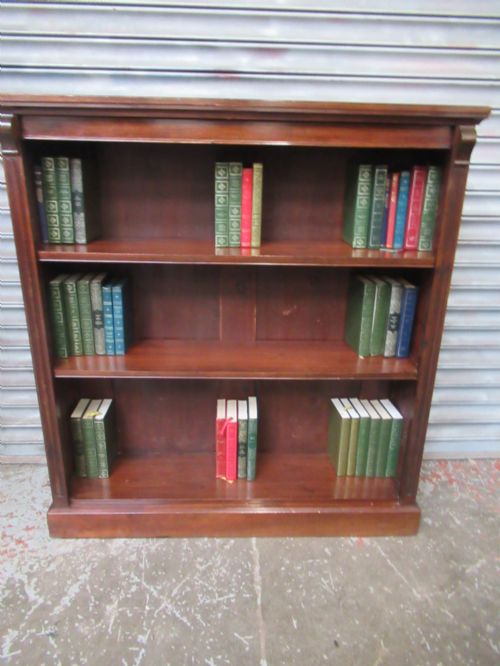
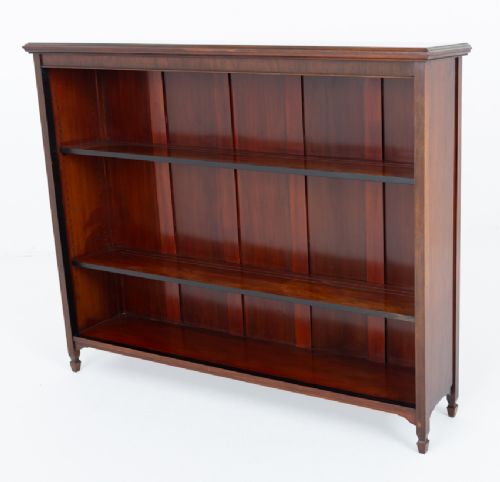
The version most commonly met on this page is the Edwardian or Victorian open bookcase in oak or mahogany. Makers often fitted these with adjustable shelves or small side compartments to suit domestic libraries.
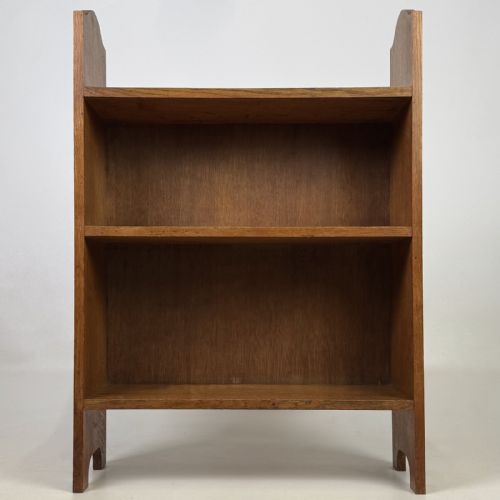
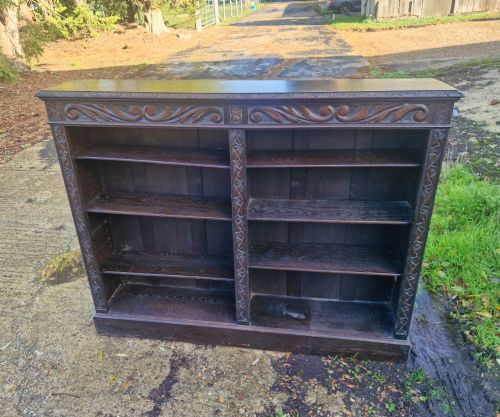
Styles range from straightforward utility forms to Arts and Crafts designs, Jacobean Revival carvings, and neoclassical lines. The common thread is a compact silhouette designed to sit beneath a window or along a low wall.
How they were made
Cabinet makers relied primarily on oak, mahogany, and walnut, frequently selecting figured timber veneers for key surfaces like panels and friezes. Glass doors and sliding panels appear on glazed variations, while brass galleries and handles add structural accents.
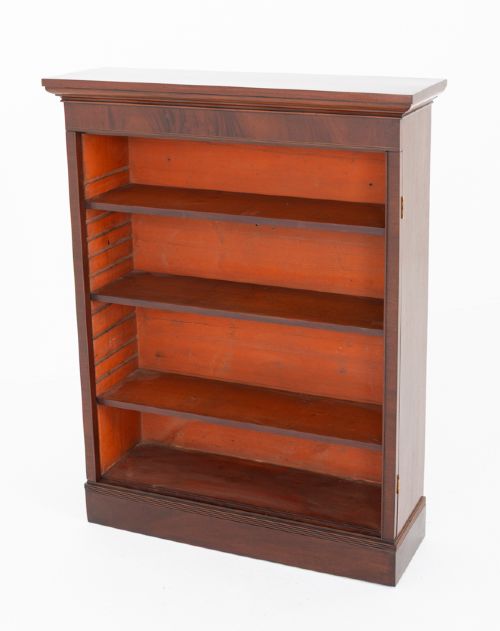
Construction methods prioritised stability through solid plinth bases, shaped sides, and dentil cornices. Joinery techniques allowed for adjustable shelving slots, accommodating volumes of varying heights within compact frames.
Low Bookcase Unit Retail Price Guide 2026
Typical asking prices for low bookcase unit among the pieces listed under this phrase on Sellingantiques today, from the lower quarter to the upper quarter. They describe what is for sale here now, not the wider market.
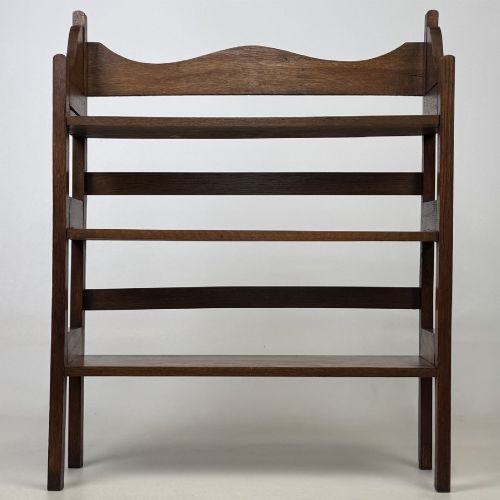
Some Edwardian oak models quietly hide a built-in magazine rack beside the main shelves, keeping periodicals neatly upright.
What varies in quality
Quality rests on the choice of timber and the precision of decorative flourishes, such as carved oak motifs, inlaid mahogany stringing, or raised galleries. Plain utilitarian pieces contrast with refined examples bearing specific stylistic flourishes from the Arts and Crafts or Aesthetic movements.
The sophistication of the internal fitting, including pegged adjustable shelf mechanisms and robust brass hardware, separates standard workshop production from finer cabinet work.
Liberty
The Low Bookcase Unit Glossary
- Open bookcase
- A bookcase lacking doors, designed for immediate access to books. This form dominates the selection.
- Raised gallery
- A low protective rail running along the top surface of the bookcase. It prevents small decorative items from sliding off.
- Dentil cornice
- A moulding decorated with a series of small square blocks resembling teeth. This architectural detail appears beneath the top edge of certain bookcases.
- Plinth base
- A heavy solid block or platform forming the lower support of the cabinet. It grounds the piece visually and structurally.
- Adjustable shelves
- Shelves that can be moved to different heights using internal slots or peg supports. This feature allows the interior to adapt to varied book sizes.
Low Bookcase Unit: Frequently Asked Questions
What is a low bookcase unit?
A low bookcase unit is a piece of furniture designed to hold books at a height well below eye level. These pieces typically feature open shelving, sometimes accompanied by sliding glass doors or a raised gallery.
They emerged strongly during the Victorian and Edwardian periods as domestic spaces shifted towards more informal, accessible libraries. Their proportions allow them to fit beneath windows or in smaller rooms without dominating the wall.
How do I date a low bookcase unit?
Dating relies on observing the timber, hardware, and stylistic traits associated with specific eras. Victorian examples often display heavier carved oak, while Edwardian pieces frequently feature inlaid mahogany or golden oak.
Twentieth-century iterations introduce simpler geometric lines and alternative configurations like angled shelves or magazine racks. Examining the construction of the shelves and the base provides further clues to the decade of manufacture.
Where should I place a low bookcase unit?
These units suit spaces where tall furniture would obstruct light or feel too imposing. Placing them beneath windows makes efficient use of low wall space while keeping natural light unobstructed.
They also function well in hallways, studies, or living rooms as display surfaces for decorative objects alongside books. The top surface provides an ideal spot for lamps, plants, or framed items.
Are the shelves adjustable?
Many of the pieces recorded here feature adjustable shelving systems. These allow the owner to change the vertical spacing between shelves to accommodate larger volumes.
Fixed shelves also appear, particularly in simpler utilitarian designs or specific period styles. Checking the interior uprights reveals whether the shelving height can be altered.