

Low Armchair with Castors
These low armchair with castors selections bring traditional Victorian and Edwardian seating into your home with practical, period-correct mobility.
Low Armchair with Castors
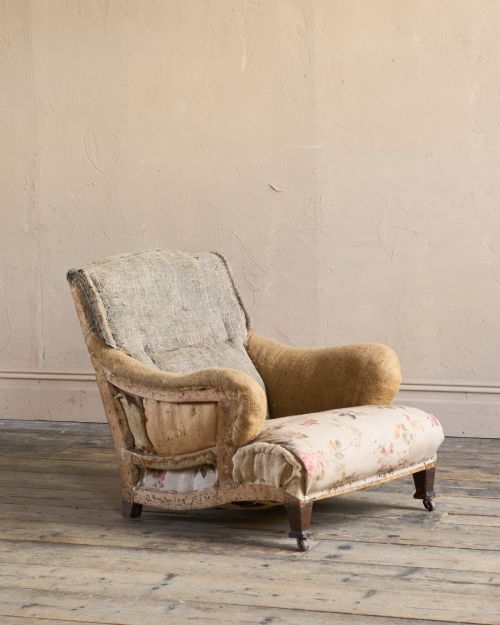
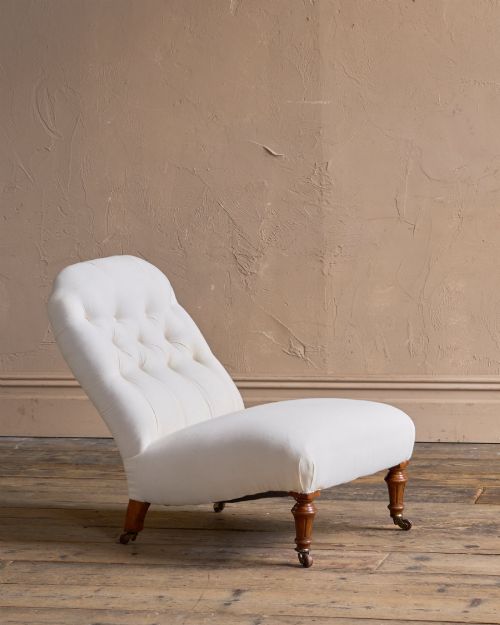
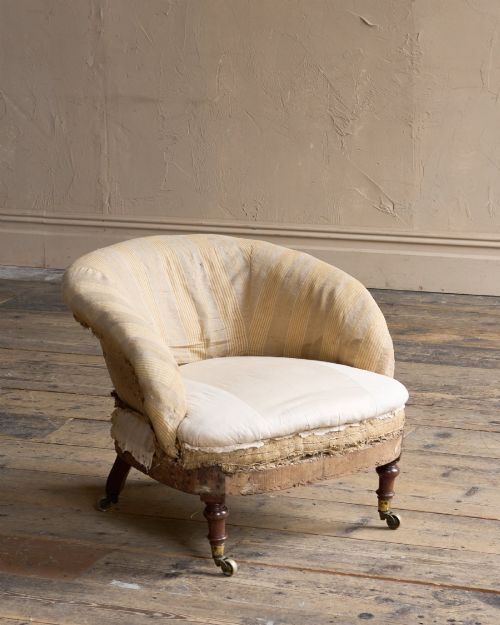
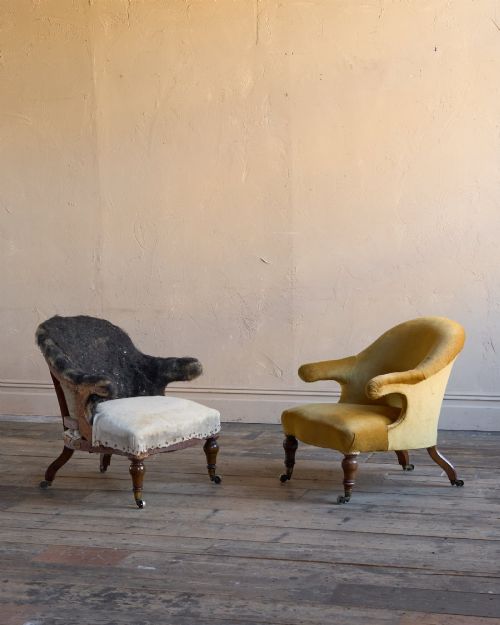
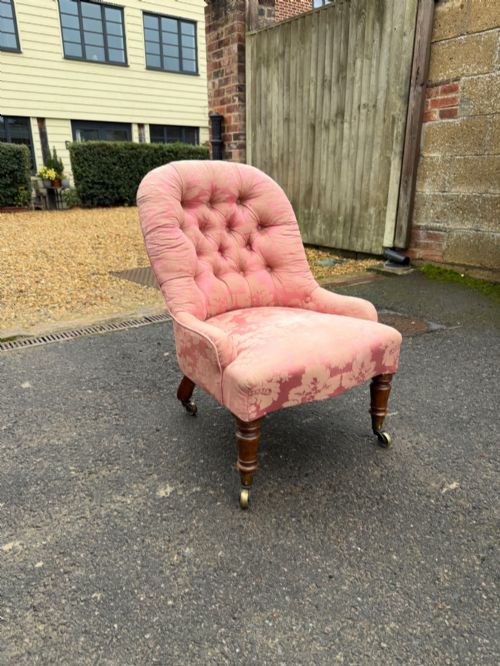
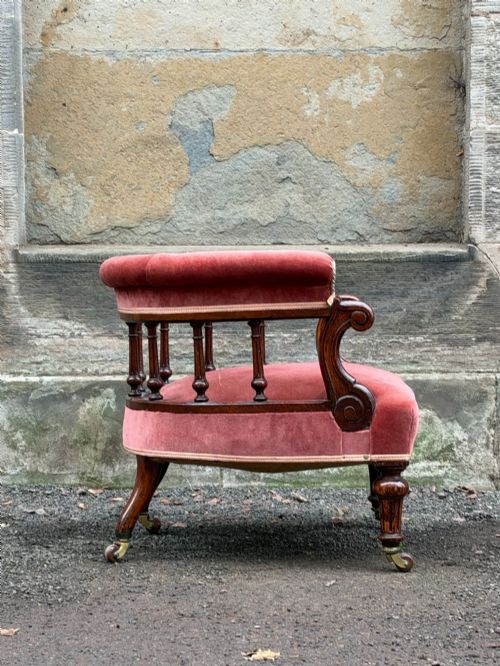
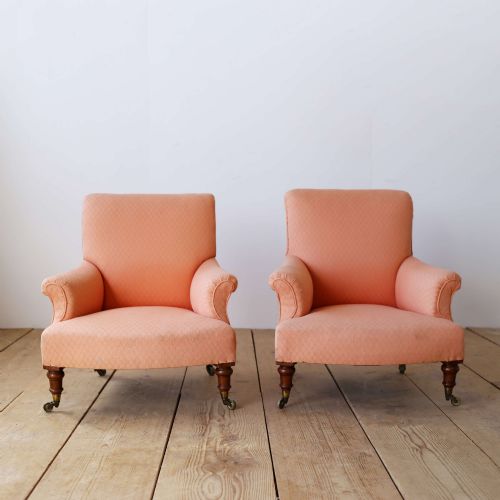
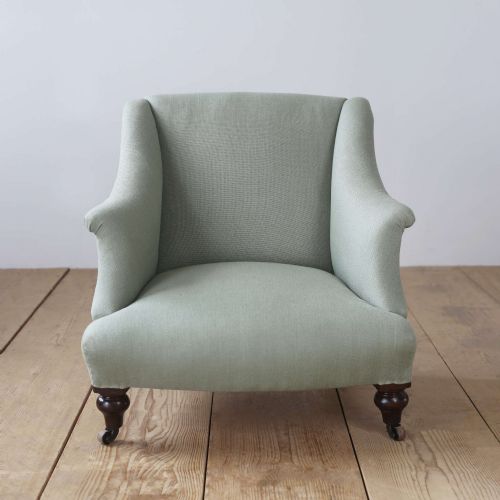
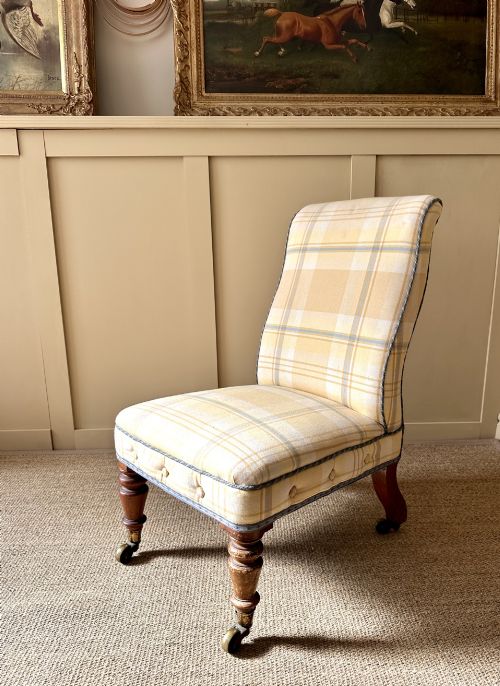
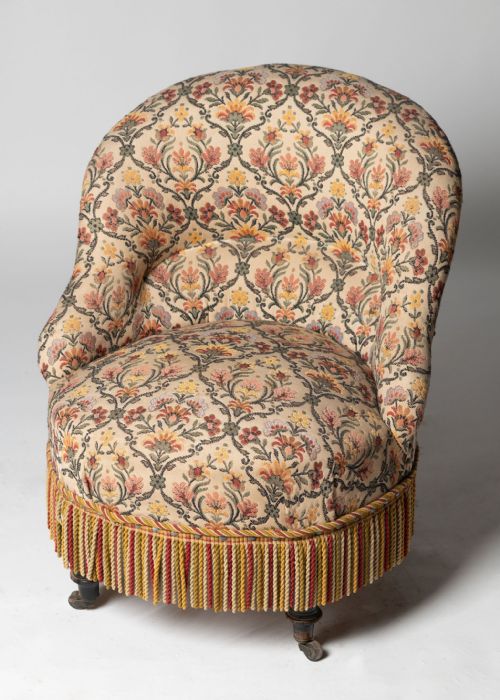
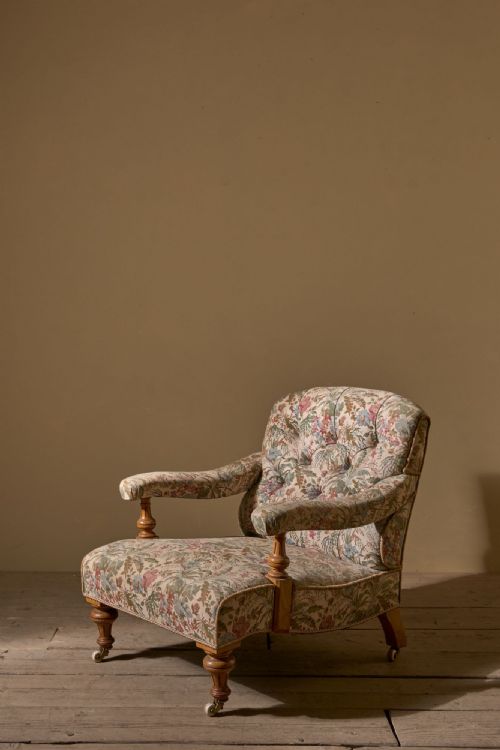
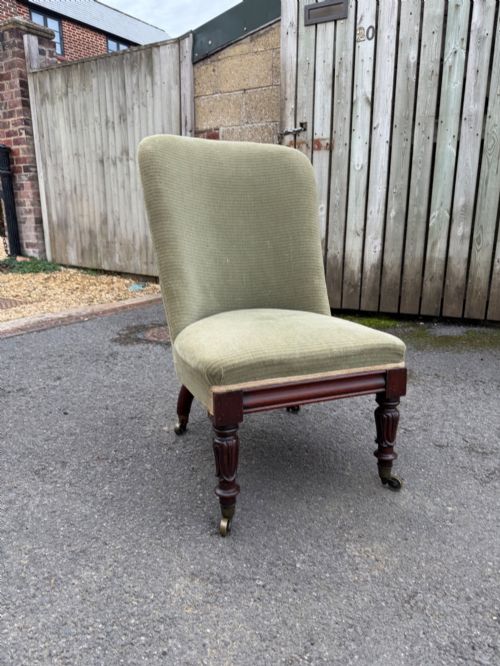
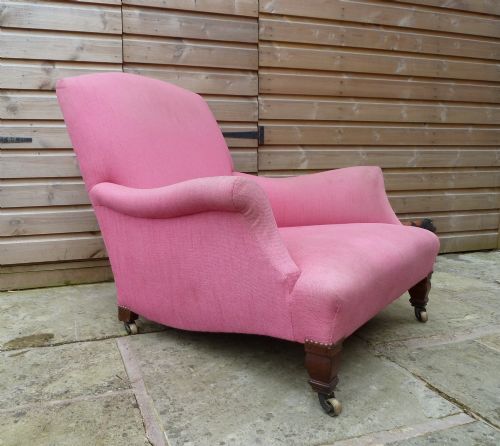
A low armchair with castors is a compact, short-statured seat designed for fireside comfort and easy movement across nineteenth-century floor coverings. You will most frequently encounter nineteenth-century Victorian and Edwardian examples on this page, taking forms such as tub backs, slipper chairs, open armchairs, and Bridgewater designs.
The evidence shows makers utilising mahogany and general wood for frames, paired with upholstery types including velvet, calico, hessian, and cotton. Aesthetic Movement legs and button backs appear among these nineteenth-century forms, alongside stamped marks from makers such as CVS and J.Mills.
These pieces bridge the gap between formal parlour seating and intimate bedroom furniture, offering a low centre of gravity. Their defining characteristic remains the combination of a shortened seat height with wheel attachments, allowing effortless repositioning.
Materials and construction
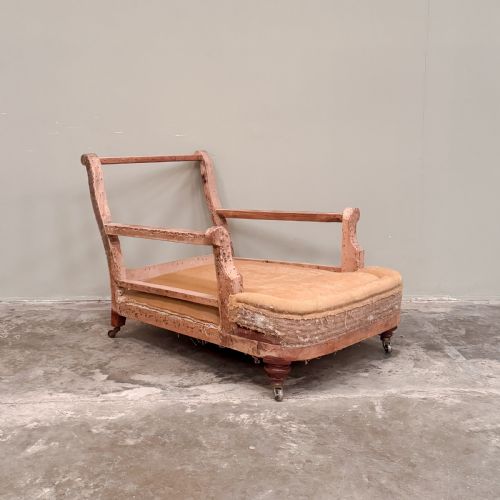
Frames are constructed from sturdy timbers like mahogany and general wood, providing a solid internal skeleton for heavy upholstery. Brass components form the castors, fitted to the feet to protect carpets and ease movement.
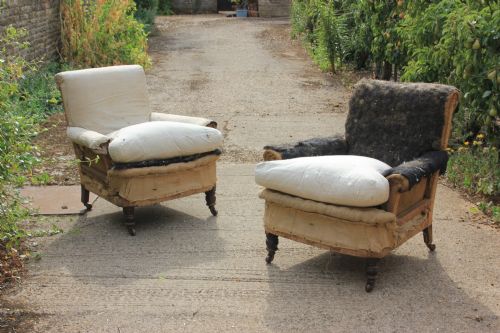
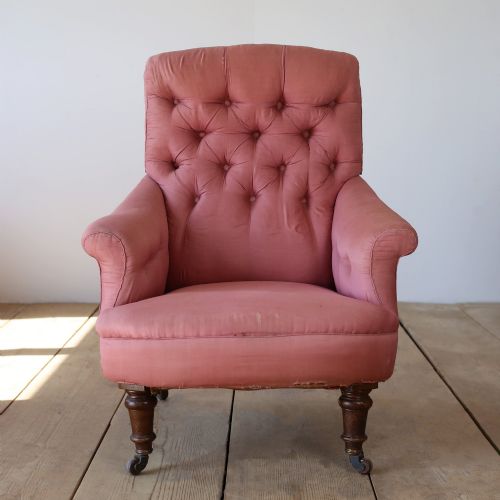
Upholstery techniques involve traditional stuffing layered beneath practical calico and hessian foundations. Outer covers utilise rich velvet and patterned cotton fabrics, sometimes finished with classic button-back tufting.
Low Armchair with Castors Retail Price Guide 2026
Typical asking prices for low armchair with castors among the pieces listed under this phrase on Sellingantiques today, from the lower quarter to the upper quarter. They describe what is for sale here now, not the wider market.
Stamped with mysterious initials, a solitary nineteenth-century chair rolls quietly forward on its original brass slippers.
Evaluating quality and authenticity
Quality rests in the integrity of the wooden frame and the precision of the joinery beneath the upholstery layers. Pieces bearing maker stamps or attribution to notable workshops carry greater historical weight than unmarked examples.
The sophistication of the stylistic details, from Aesthetic Movement leg turnings to the choice of covering fabric, distinguishes standard domestic seating from finer workshop production. Original brass castors matching the period of the frame complete a cohesive example.
Howard and Sons·J.Mills·CVS
The Low Armchair with Castors Glossary
- Castor
- A small wheel mounted on a swivel assembly attached to the feet of furniture. It allows heavy armchairs to be moved smoothly across carpets and wooden floors.
- Button back
- An upholstery style where depressions are created by sewing deep stitches into the padding and securing them with covered buttons. This technique provides both structural tension and decorative relief.
- Tub back
- An armchair design featuring a continuous curved back and arms forming a single enclosing shape. It offers a snug, supportive seat often found in nineteenth-century drawing rooms.
- Slipper chair
- A low-set bedroom chair traditionally used by ladies while dressing. The shortened legs made it easier to put on footwear.
- Calico
- A plain-woven cotton fabric used as an internal lining or under-upholstery layer. It holds the stuffing tightly in place before the final decorative fabric is applied.
Low Armchair with Castors: Frequently Asked Questions
How do I identify the period?
Period identification relies on observing timber choices, leg turnings, and upholstery styles. Nineteenth-century examples often feature mahogany frames, Aesthetic Movement details, and traditional button-backed padding.
Edwardian pieces tend to show lighter construction and specific fabric choices. Maker stamps or signatures provide definitive dating clues when present on the frame.
How were these chairs used historically?
These armchairs served as comfortable, movable seating for parlours, sitting rooms, and bedrooms. The low profile kept occupants close to the warmth of the hearth.
Castors allowed servants or residents to shift the seating arrangement for conversation or cleaning. Slipper chairs specifically aided individuals while dressing.
How should I live with these chairs?
Living with a nineteenth-century armchair involves placing it in low-traffic areas to preserve delicate fabrics like velvet and cotton. Regular dusting of the brass castors keeps the moving parts functional.
Protecting the upholstery from direct sunlight prevents fading of the textiles. The compact proportions allow these seats to fit comfortably beside modern sofas and side tables.