

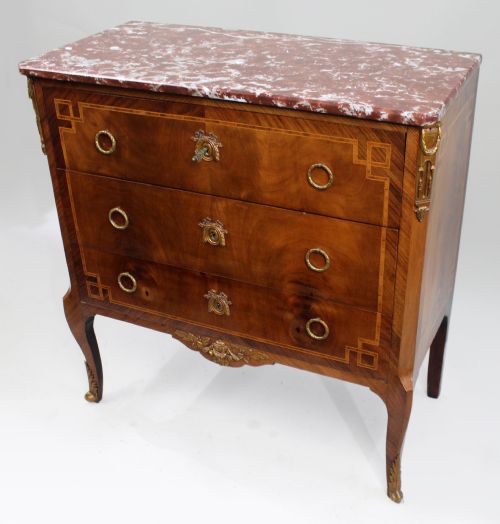
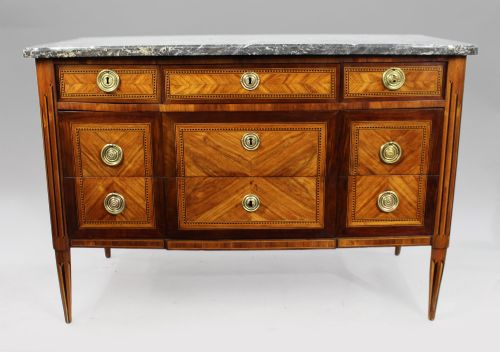
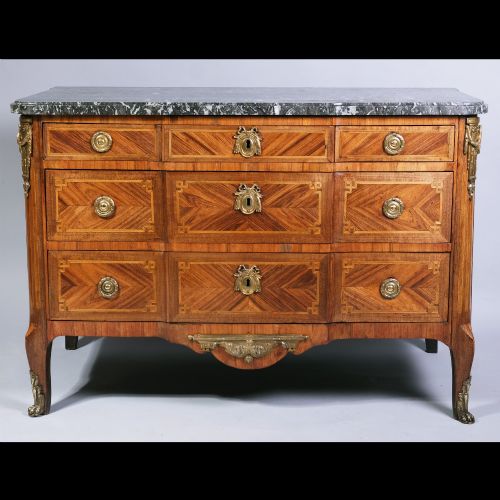
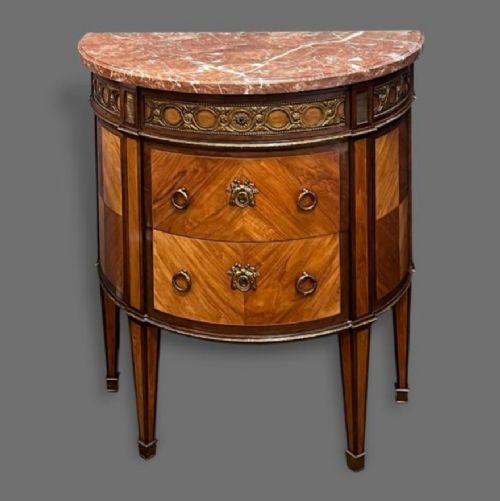


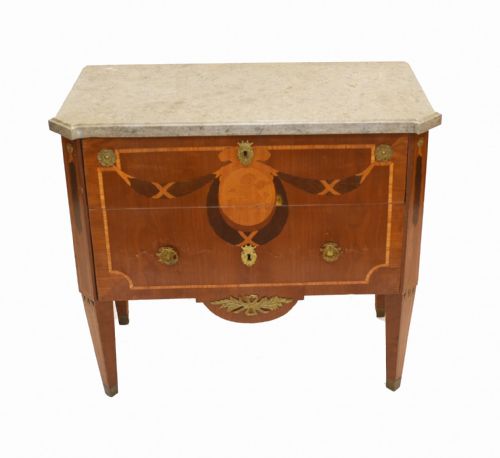
Louis XVI Walnut Commode
A louis xvi walnut commode brings architectural restraint and rich grain to a room through its structured drawer fronts and marble surfaces.
Louis XVI Walnut Commode
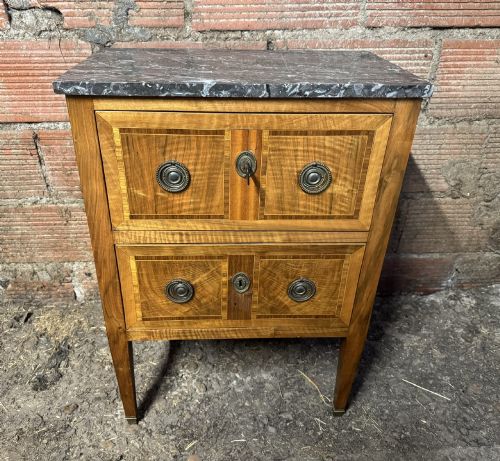
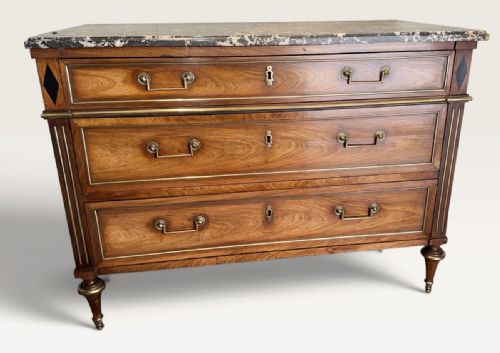
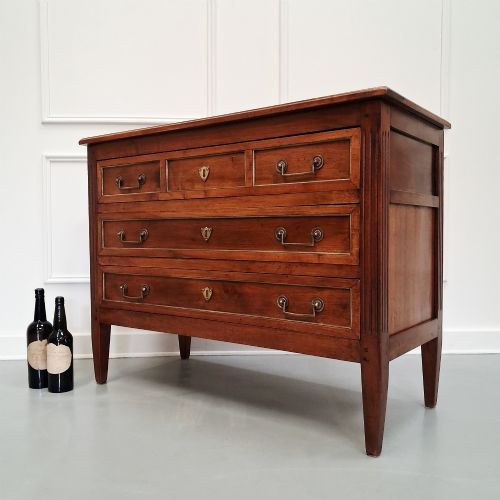
A louis xvi walnut commode is a low storage chest defined by straight tapering legs, rectangular proportions, and neoclassical symmetry. These pieces function primarily as bedroom storage or hallway display surfaces, bridging utility and formal cabinet-making.
Most examples encountered here originate from the eighteenth century or belong to later nineteenth and early twentieth-century revival periods. Forms range from full-size three-drawer chests to compact bedside cabinets and demi-lune consoles.
The regional variety spans French provincial workshops to North Italian production centres, alongside transitional designs incorporating contrasting veneers. Walnut provides the primary carcase and drawer structure across the majority of pieces.
Materials and Construction
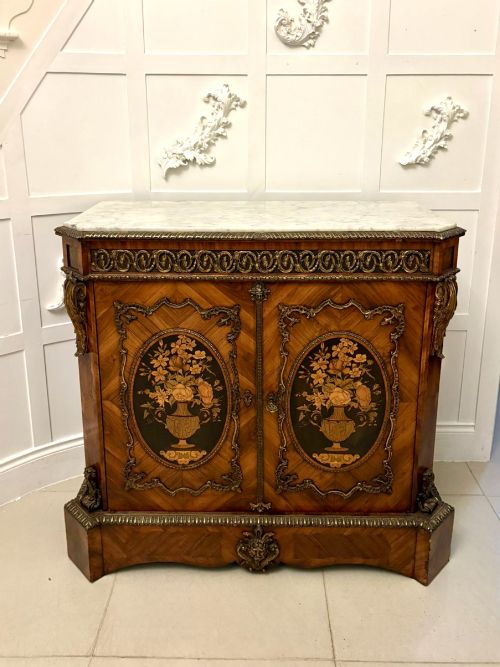
Makers built the foundational carcase from solid walnut, often applying delicate parquetry or marquetry patterns using kingwood, tulipwood, fruitwood, and satinwood. This geometric or floral veneering creates subtle tone shifts across the drawer faces and top surfaces.
Heavy marble slabs in white, rouge, or scagliola sit flush upon the upper carcase, secured by the weight of the stone and precise edge moulding. Cast brass and ormolu mounts punctuate the corners, drawer pulls, and apron centres.
Joinery relies on traditional hand-cut dovetails within the drawer construction and pegged tenons in the structural frame. Revival pieces from later periods maintain these joinery traditions while adapting to contemporary workshop machinery.
Louis XVI Walnut Commode Retail Price Guide 2026
Typical asking prices for louis xvi walnut commode among the pieces listed under this phrase on Sellingantiques today, from the lower quarter to the upper quarter. They describe what is for sale here now, not the wider market.
Several commodes hide small, shallow top drawers tucked directly beneath the marble slab for secret storage.
Judging Quality
The crispness of the bronze or brass mounts separates standard production from superior examples. Finely chased ormolu details and heavy cast drawer handles demonstrate higher workshop investment than stamped, thin metal fittings.
The integration of the marble top dictates visual balance. A slab with natural veining that matches the precise perimeter of the walnut moulding indicates a bespoke fit rather than a later replacement.
The complexity of the wood selection and veneer layout determines the piece's tier. Multi-timber parquetry displays precise alignment at the joints, whereas basic walnut boards rely solely on the timber's natural grain.
The Louis XVI Walnut Commode Glossary
- Parquetry
- A geometric mosaic of wood veneers arranged in repeating patterns. It frequently covers the drawer fronts of neoclassical case furniture.
- Ormolu
- Gilded bronze used for decorative mounts and hardware. It provides metallic contrast against dark walnut and marble surfaces.
- Demi-lune
- A half-moon shape used for console tables and small chests. This profile fits flat against a wall while projecting into the room.
- Scagliola
- A composite material made from pigmented plaster, glue, and Modena stone. Artisans use it to imitate inlaid marble on table and commode tops.
Louis XVI Walnut Commode: Frequently Asked Questions
How do I spot an eighteenth-century piece?
Look for hand-cut dovetails inside the drawer boxes and subtle variations in the walnut grain that indicate hand-planed surfaces.
Examine the backboards and interior framing for signs of period hand tools and traditional construction methods.
Are the marble tops original?
Original marble tops generally fit the exact rebate of the wooden carcase without overhang gaps. The edges often feature hand-polished bevelling consistent with the period.
Replacement marble usually sits slightly askew or utilises modern machine-cut profiling along the border.
How should I clean the walnut?
Dust the surfaces regularly with a dry, soft cloth to prevent particulate buildup on the wax finish. Avoid modern silicone sprays that penetrate open grain.
Apply a traditional beeswax polish sparingly once or twice a year to nourish the timber and maintain a soft sheen.
What is transitional design?
Transitional pieces bridge the curvaceous Louis XV style and the geometric restraint of Louis XVI. They retain slight serpentine shaping while adopting straight, tapered legs.
This crossover occurred during the late eighteenth century as cabinet-makers experimented with neoclassical symmetry.