




Louis XVI Vanity
Louis xvi vanity pieces bring French Neoclassical elegance to modern dressing spaces with carved timber and gilt finishes.
Louis XVI Vanity
A louis xvi vanity search reveals dressing tables, writing desks, and partner pieces such as dressing tables, mirrors, and stools associated with French manufacture. These items span the nineteenth century and early twentieth century, showing revival and chateau styles.
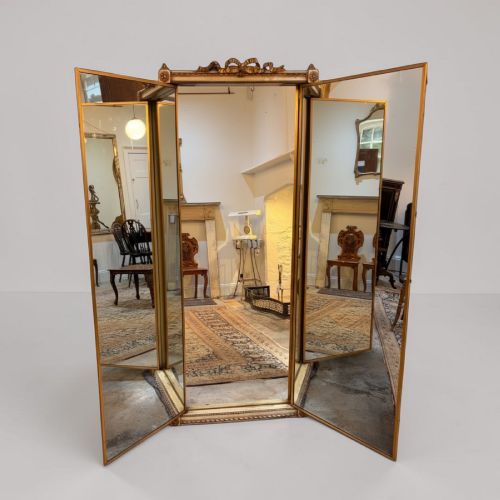
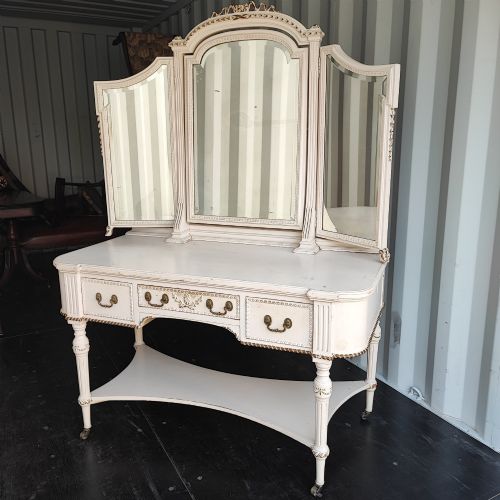
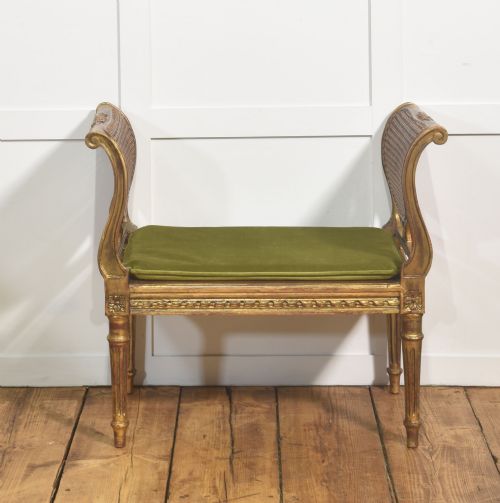
Buyers encounter painted wood, mahogany, and giltwood frames alongside seating forms like window stools, footstools, and boudoir stools. Pieces frequently incorporate dressing elements such as triple mirrors, triptych mirrors, and bonheur du jour desks.
The aesthetic relies on French Neoclassical design principles, featuring rectangular or oval proportions, carved detailing, and coordinated bedroom seating. Items range from simple upholstered projects to finished giltwood seating and fitted dressing tables.
Materials and construction methods
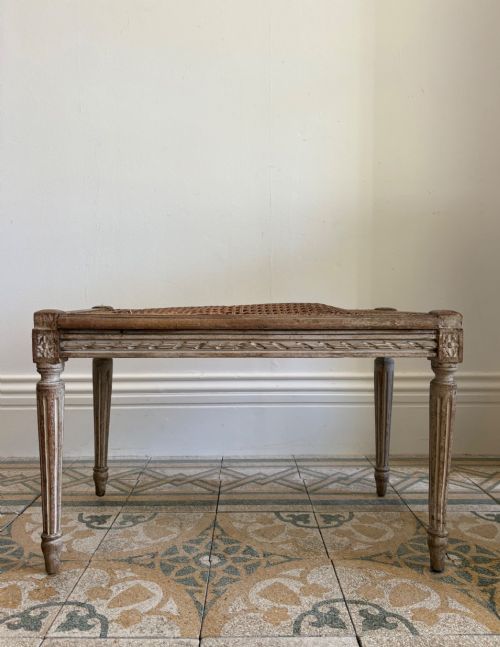
Carpenters utilised mahogany, rosewood, kingwood, and satinwood for structural timber framing, often applying white paint or gilt over gesso. Cane work appears on seating panels alongside fabric upholstery for stools and benches.
Decorative embellishments include carved wooden details, brass mounts, and vermeil silver elements on associated vessels. Glass forms the primary component for wall mirrors, oval mirrors, and folding dressing table mirrors.
Louis XVI Vanity Retail Price Guide 2026
Typical asking prices for louis xvi vanity among the pieces listed under this phrase on Sellingantiques today, from the lower quarter to the upper quarter. They describe what is for sale here now, not the wider market.
Maples of London and Paris once ensured that even your triple mirror had an international passport.
Assessing craftsmanship and finish
Quality differences emerge in the execution of carved wooden ornament and the preservation of original paint or gilt surfaces. Finer examples display crisp carving on giltwood and fitted interiors within writing desks and dressing tables.
The integrity of structural joints in seating and tables distinguishes superior survival from pieces requiring extensive restoration. Upholstery projects and secondary timber work reveal the underlying standard of period construction.
The Louis XVI Vanity Glossary
- Bonheur du jour
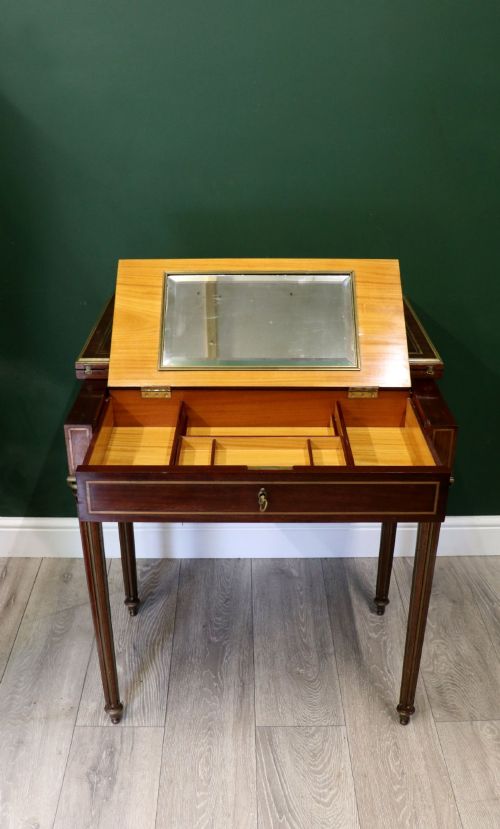
- A light lady's writing desk featuring a small cabinet or set of drawers on top. This form frequently doubles as a compact dressing station.
- Giltwood
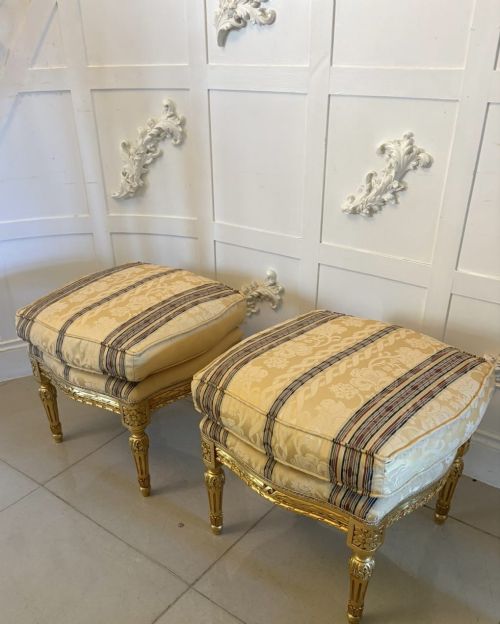
- Timber coated with a thin layer of gold leaf or gilt paste. It defines the decorative frames of mirrors and window stools in this aesthetic.
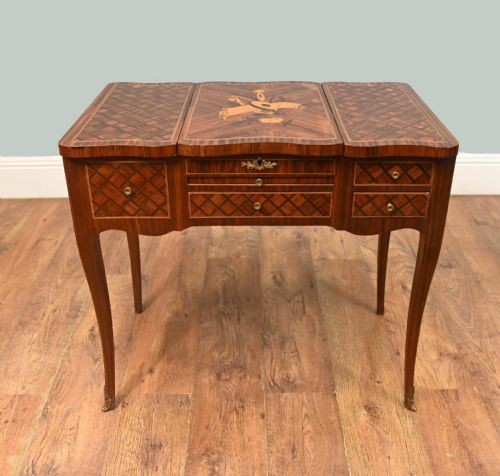
- Poudreuse
- A French dressing table equipped with folding lids and internal compartments for powder and cosmetics. It is a central form within the vanity category.
- Triptych mirror
- A three-panel mirror arrangement where the outer sections hinge inward. This configuration allows adjustable angles for personal grooming.
- Gesso
- A plaster-based material applied to wood surfaces to create a smooth base for gilding or painting. Its application quality contributes to the finish of carved frames.
Louis XVI Vanity: Frequently Asked Questions
What defines a louis xvi vanity piece?
These pieces include dressing tables, bonheur du jour desks, and matching stools characterised by French Neoclassical design. They often feature carved giltwood, painted wood finishes, and integrated mirrors.
Items date predominantly from the nineteenth century through the early decades of the twentieth century. They reflect revival movements inspired by earlier French chateau aesthetics.
How were these dressing tables used?
Owners utilised them for daily grooming, writing correspondence, and storing personal items in bedrooms or boudoirs. Folding lids and internal compartments kept cosmetics and grooming tools concealed.
Matching stools and benches provided seating designed to fit beneath the dressing table or beside a window. Triptych and triple mirrors offered adjustable angles for dressing.
How do you style them today?
Placing a dressing table or bonheur du jour in a bedroom creates a functional focal point for daily routines. Pairing the desk with an authentic window stool or boudoir stool completes the arrangement.
Wall mirrors and triptych mirrors hang above dressing surfaces or console tables to reflect light. Mixing painted wood and giltwood finishes adds texture to modern interior spaces.
How can you identify the period?
Periods are identified through timber selection, construction techniques, and decorative styles associated with nineteenth-century and early twentieth-century manufacturing. Mahogany, satinwood, and kingwood indicate specific cabinet-making traditions.
Revival pieces adopt Louis XVI vocabulary such as ribbon and bow motifs, oval mirror frames, and neoclassical symmetry. Examination of secondary woods and surface finishes helps confirm the age of the piece.