



Louis XVI Sideboard
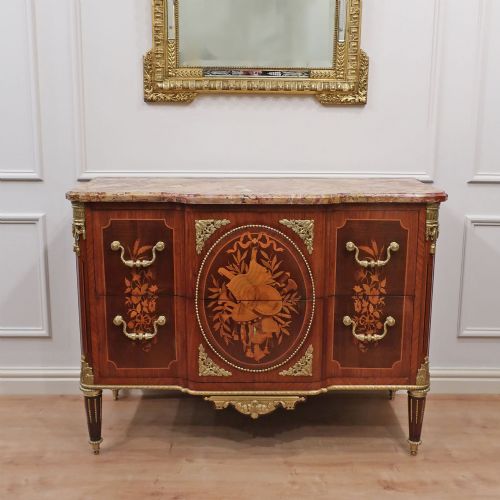
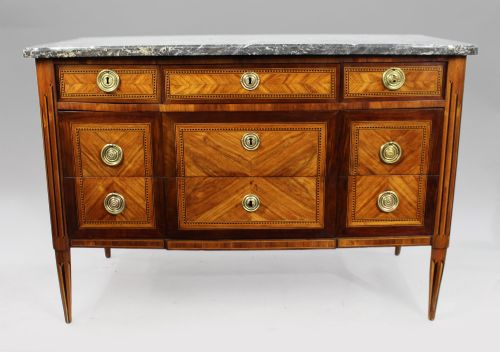
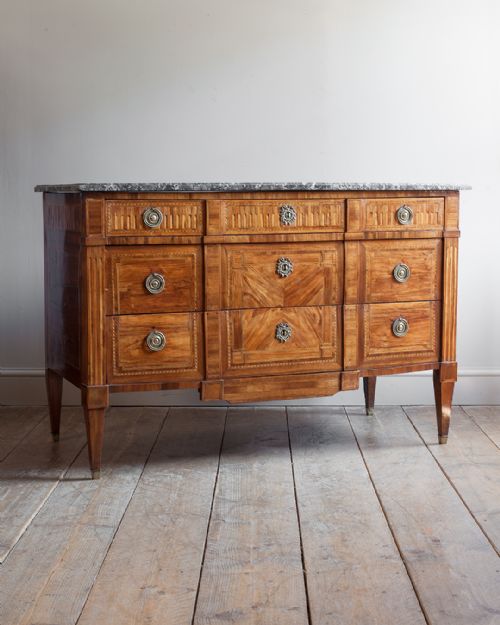
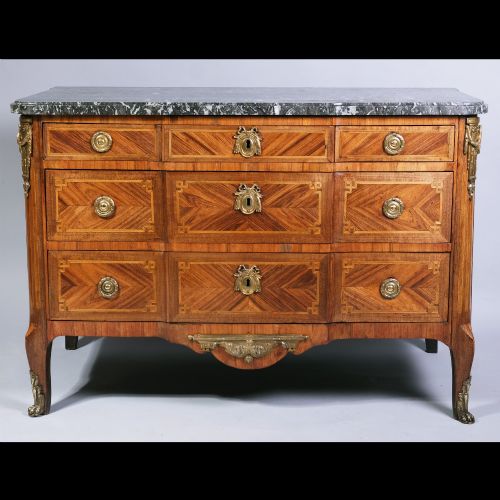
A louis xvi sideboard brings severe neoclassical proportion and rich parquetry into a room, offering both formal display space and deep storage.
Louis XVI Sideboard
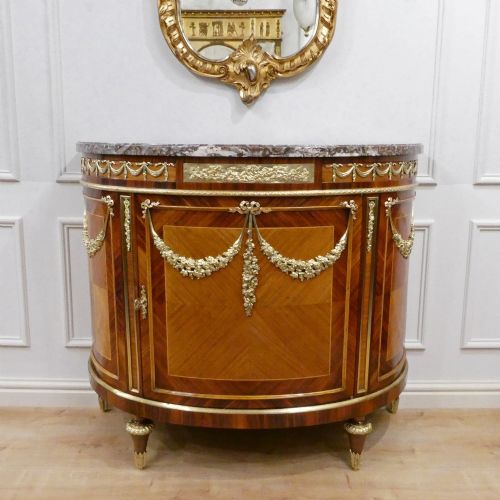
A louis xvi sideboard encompasses commodes, side cabinets, credenzas and meubles d'appui originating from France and spanning the eighteenth through early twentieth centuries. These pieces reflect the shift from curvaceous rococo forms to straight lines, symmetry and classical restraint.
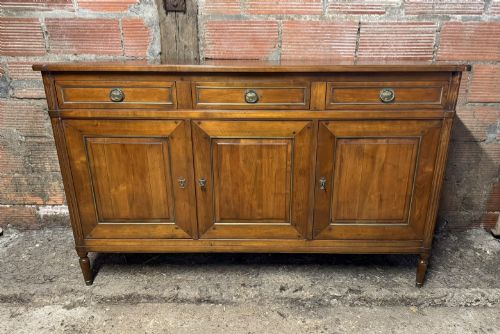
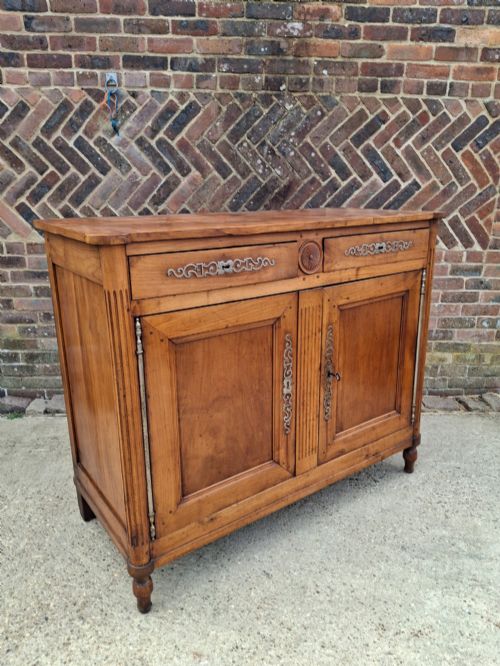
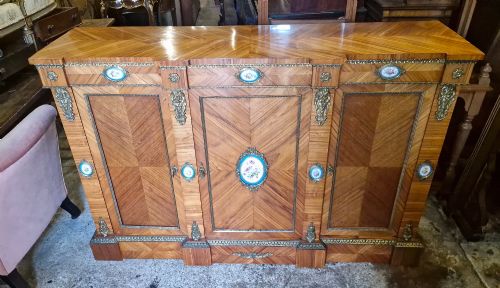
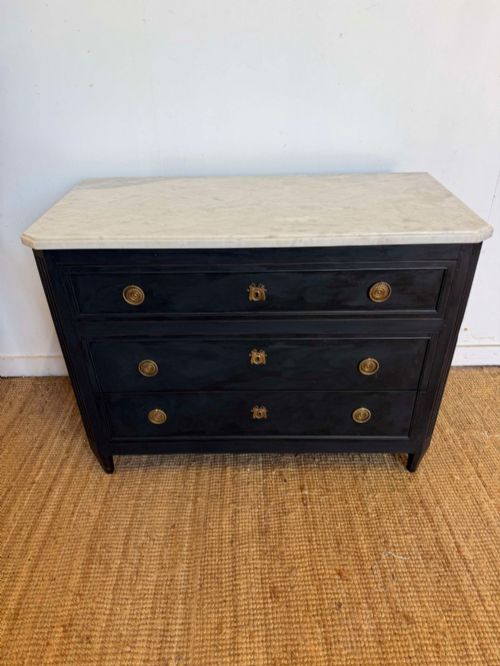
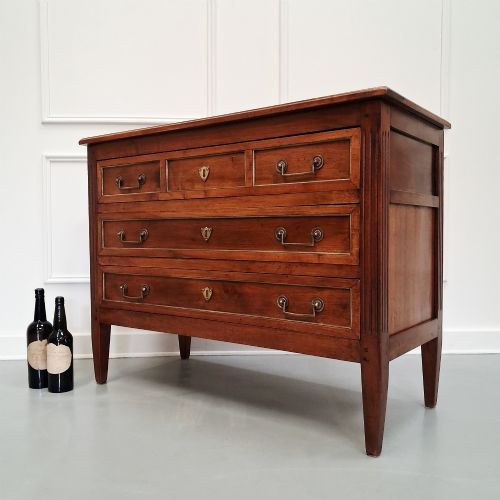
The versions most commonly met on this page include nineteenth-century revival pieces alongside authentic eighteenth-century examples. Makers of the later revival periods drew heavily on the vocabulary of the original reign, producing commodes and side cabinets with rectangular carcases and tapering fluted legs.
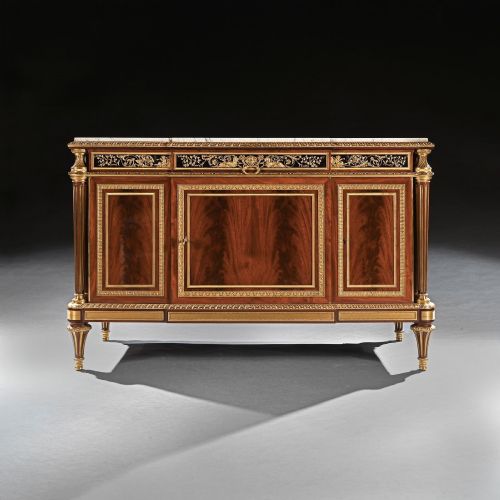
Makers utilised various formats, from serpentine and demi-lune cabinets to breakfront credenzas and marble-topped chests of drawers. Walnut, kingwood and satinwood form the primary wooden structures, often enriched with intricate marquetry and parquetry geometric patterns.
Materials and Technique
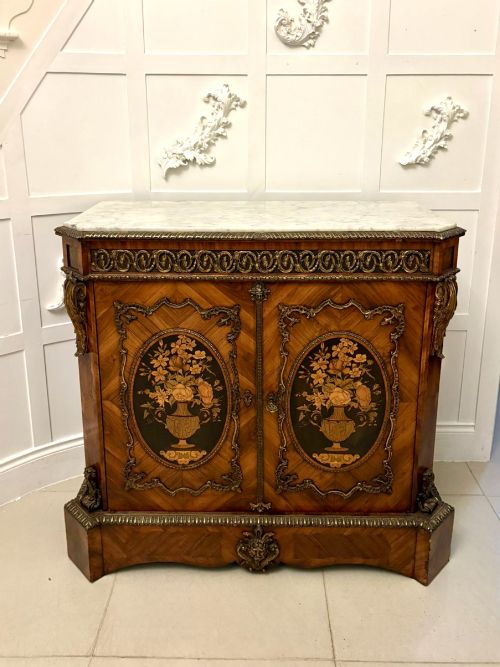
Carpenters constructed these carcases using native and exotic timbers such as walnut, kingwood and satinwood, frequently laid down as detailed marquetry and parquetry veneers. Cabinet makers applied these timber slices to form symmetrical patterns, floral motifs and geometric cubes across the drawer fronts and side panels.
Mounts of cast ormolu and gilt bronze punctuate the woodwork, framing panels and accentuating corners in the classical neoclassical manner. Heavy slabs of marble, sometimes including scagliola or pietra dura inlay, cap the summits of these cabinets.
Selected pieces incorporate porcelain plaques, notably from Sevres, set directly into the wooden cabinetry as central decorative roundels. Brass stringing and glass components further refine the construction of display cabinets and credenzas.
Louis XVI Sideboard Retail Price Guide 2026
Typical asking prices for louis xvi sideboard among the pieces listed under this phrase on Sellingantiques today, from the lower quarter to the upper quarter. They describe what is for sale here now, not the wider market.
Object forms include commodes, credenzas, meubles d'appui, and display cabinets with marquetry, parquetry, and pietra dura decoration.
Craftsmanship and Execution
Quality rests heavily on the crispness of the gilt bronze and ormolu mounts, where hand-chasing brings definition to foliage and classical motifs. Finer examples display mounts with deep relief and sharp detailing, while simpler pieces rely on softer, less articulated castings.
The precision of the veneer work separates workshop standards, with superior commodes exhibiting tight parquetry and well-matched grain alignments that endure across decades without lifting. Painted details and porcelain plaques show similar variation, moving from standard decorative additions to highly detailed artistic panels.
The integration of the marble top and the internal carcase construction dictate the overall integrity of the piece. Well-executed sideboards maintain rigid joinery and heavy, unblemished stone slabs shaped precisely to the wooden frame.
Henry Dasson·Joseph Zwiener·Jean-Henri Riesener·Paul Sormani
The Louis XVI Sideboard Glossary
- Commode
- A low chest of drawers or cabinet designed for domestic storage. These pieces typically feature multiple drawers and sit on short legs.
- Ormolu
- Gilded bronze used for decorative mounts and hardware. This technique provides a bright gold finish against dark woods.
- Marquetry
- The art of applying pieces of veneer to a structure to form decorative patterns and pictures. Craftsmen cut various coloured woods to fit together seamlessly.
- Parquetry
- Geometric mosaic woodwork used for repeating patterns like cubes and squares. It creates a structured surface across cabinet doors and drawer fronts.
- Meuble d'appui
- A supportive or side cabinet designed to stand against a wall for display. These French furnishings often feature marble tops and glazed doors.
Louis XVI Sideboard: Frequently Asked Questions
Where did these sideboards originate?
Most pieces originate from France, following the neoclassical design principles established during the reign of Louis XVI. Later nineteenth-century French workshops continued these traditions through extensive revival pieces.
Craftsmen in Paris and regional centres like Alsace produced these cabinets for wealthy residences. Their influence spread across Europe, inspiring similar neoclassical furniture forms in other countries.
How are marble tops maintained?
Marble surfaces require simple cleaning with damp cloths and mild soap to prevent staining. Avoid acidic liquids and harsh commercial cleaners that etch the stone.
Applying a neutral stone wax helps protect the polished finish over time. Handled with care, these marble slabs remain durable and retain their original sheen.
How do I distinguish eighteenth-century pieces?
Original eighteenth-century pieces display construction methods typical of the period, including hand-cut dovetails and older timber seasoning. Secondary woods inside the carcase often match regional French forestry practices of the era.
Revival pieces from the nineteenth century generally feature machine-assisted precision and nineteenth-century hardware fixings. Examining internal drawer construction and timber ageing helps clarify the exact date of manufacture.
Can these cabinets hold heavy items?
The sturdy wooden carcases and heavy marble tops provide solid support for display items like porcelain and silver. Internal shelving accommodates heavy books and dinnerware.
Ensure the cabinet stands on a level surface to prevent undue stress on the joinery. Proper placement protects both the wooden frame and the fitted marble top.