

Louis XVI Marble Commode
A louis xvi marble commode brings neoclassical symmetry and cool stone to an interior, balancing austere geometry with refined French cabinetry.
Louis XVI Marble Commode
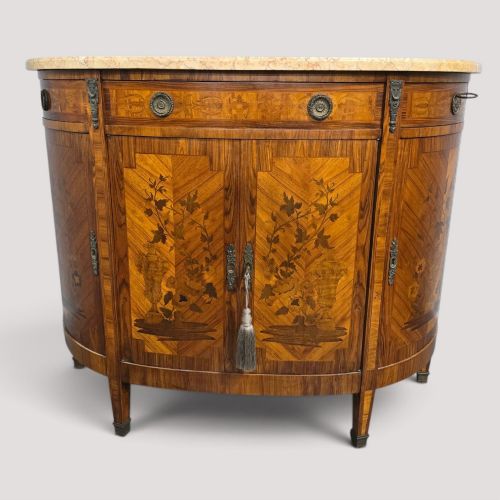
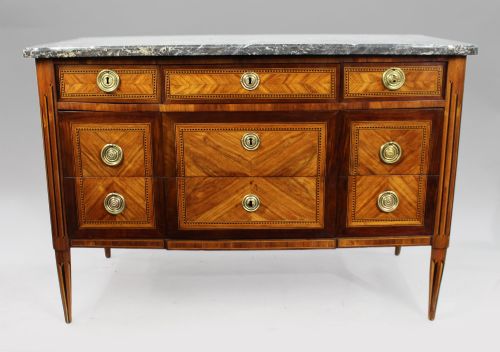
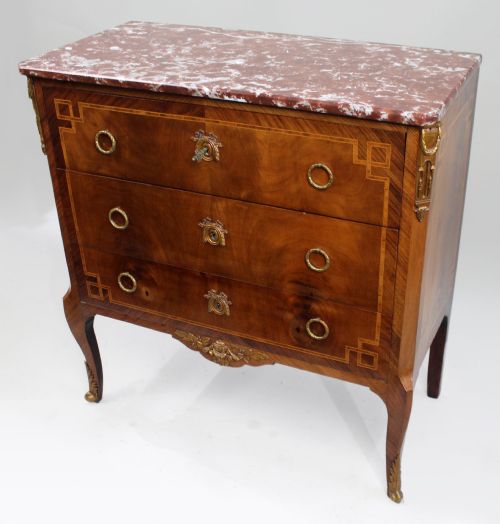
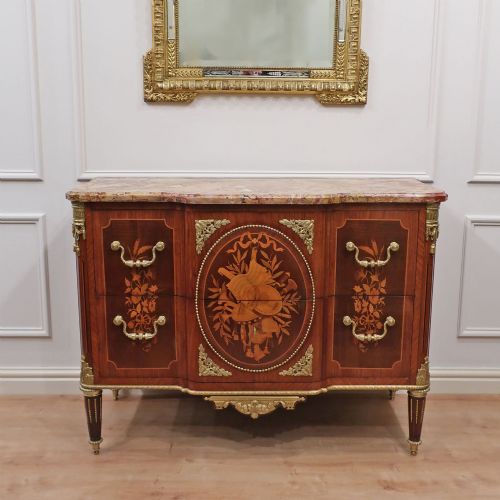
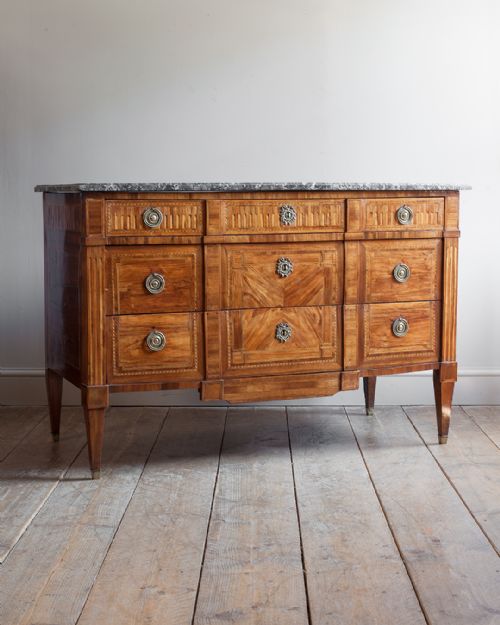
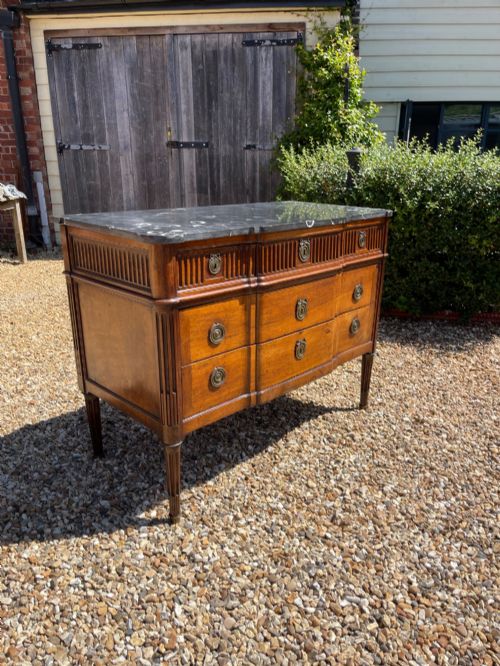
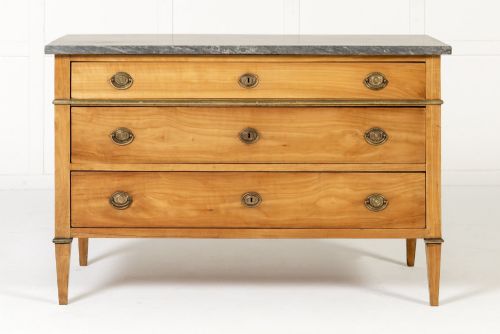
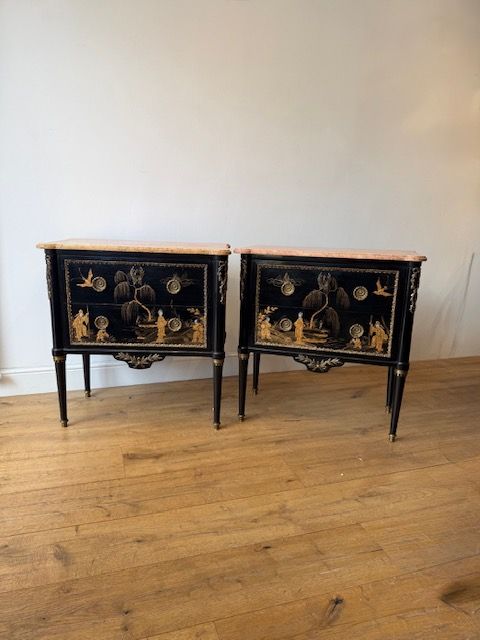
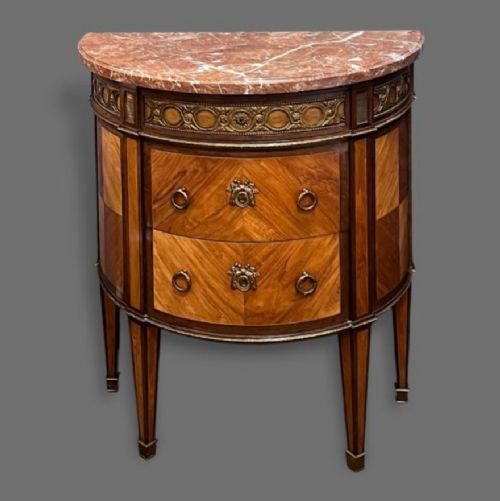
A louis xvi marble commode is a formal storage chest characterised by straight lines, fluted pilasters, and a solid marble slab set into the top surface. The primary form is a rectangular or demi-lune chest of drawers, though bedside tables and side cabinets also appear frequently.
Most pieces met on this page belong either to the eighteenth century or the nineteenth-century revival periods. Eighteenth-century examples offer period authenticity, while later nineteenth-century interpretations draw directly upon the proportions and decorative vocabulary of the original neoclassical era.
Materials and construction
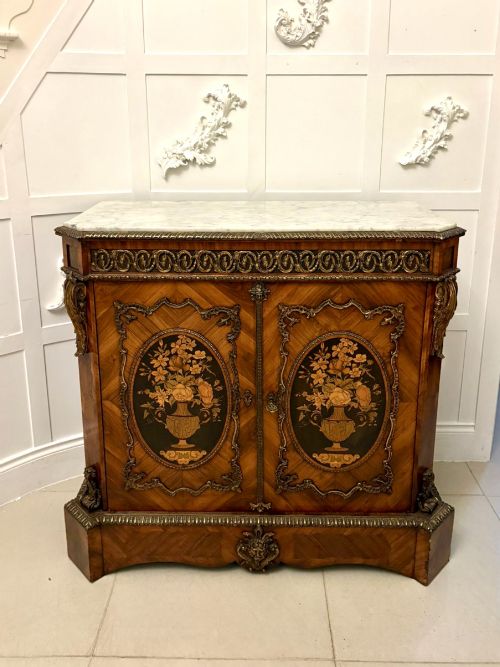
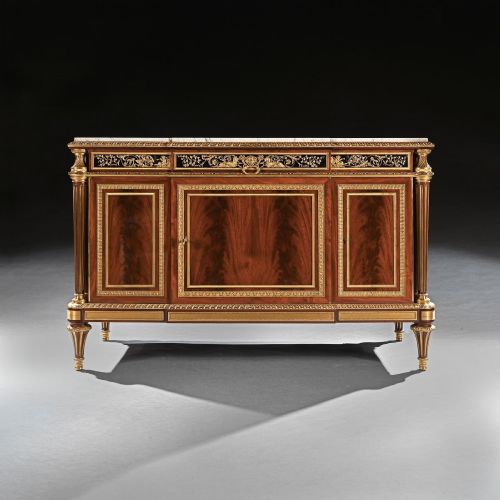
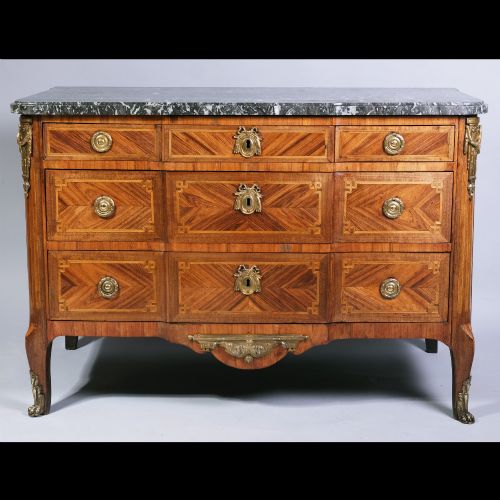
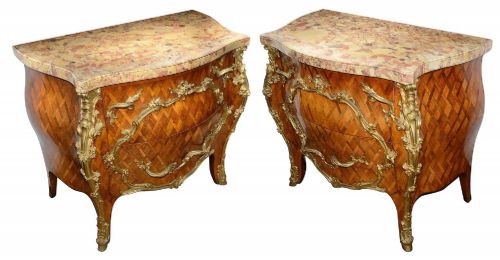
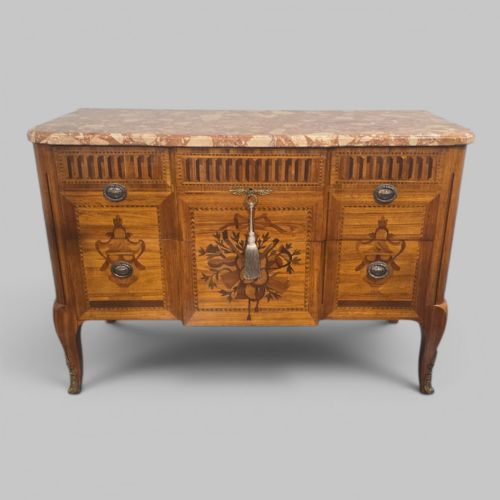
Cabinetmakers constructed carcass frames from native and exotic timbers including mahogany, walnut, kingwood, tulipwood, and satinwood, often embellishing the surfaces with intricate floral or geometric marquetry and parquetry. Heavy mounts of ormolu, gilt bronze, and brass accent the corners, handles, and apron mounts.
The characteristic stone top utilises various marbles, including rouge and grey varieties, shaped precisely to follow the contour of the wooden carcass below. Joinery relies on traditional techniques of framing and paneling to accommodate timber movement beneath the heavy stone weight.
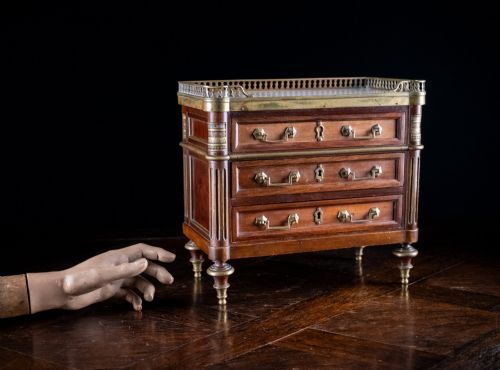
Miniature commodes served as apprentices' masterworks or salesmen's samples, proving small furniture can carry very large price tags.
Separating the grades
Quality rests heavily on the crispness of the gilt bronze or ormolu mounts and the precision of the timber inlay. Master workshops employed heavy, finely chased bronze mounts that integrate seamlessly with the carcase, whereas lower tiers feature lighter, cast metalwork with softer definition.
The selection of timber veneers and the architectural integrity of the marble top dictate the overall caliber. Original stone slabs that match the exact proportions of the chest without modification represent a higher standard than later replacements.
Henry Dasson·Weisweiler·Joseph Zwiener·Jean-Henri Riesener·Paul Sormani·Mon Krieger
The Louis XVI Marble Commode Glossary
- Ormolu
- Gilt bronze mounted onto furniture as decorative hardware and mounts. This technique involves applying a gold-mercury amalgam to bronze.
- Marquetry
- Decorative veneer applied to furniture in pictorial patterns using various coloured woods. Craftsmen cut contrasting timbers to form floral or geometric designs.
- Parquetry
- Geometric wood inlay forming repeating patterns such as cubes or chequers across a surface. It provides structural pattern without pictorial representation.
- Demi-lune
- Half-moon shape utilised for console tables and commodes designed to sit flush against a wall. This curved form softens room geometry.
- Pilaster
- A rectangular column projecting slightly from a wall or furniture carcass, often fluted in the neoclassical taste. It echoes classical architectural orders.
Louis XVI Marble Commode: Frequently Asked Questions
How do I spot a true eighteenth-century piece?
Examine the secondary woods used for drawer linings and interior framing, which should show appropriate age, hand-cut joinery, and tool marks consistent with period production.
Check the construction of the carcase and the integration of the marble top to ensure the assembly methods align with eighteenth-century French cabinetmaking traditions.
Are nineteenth-century revival commodes valuable?
Nineteenth-century revival pieces made by master Parisian cabinetmakers command significant interest for their exceptional bronze work and meticulous adherence to neoclassical design.
Many nineteenth-century pieces bear signatures or stamps from renowned workshops, elevating their status among collectors alongside authentic eighteenth-century examples.
How should I care for the marble top?
Clean the marble surface using a soft cloth and warm water, avoiding acidic household cleaners that can etch the polished stone.
Lift items gently rather than sliding them across the marble to prevent scratching the surface or disturbing any fitted joints.
Where does a demi-lune commode work best?
A demi-lune commode fits well in narrow hallway spaces or against flat corridor walls because its curved front projects less into the room.
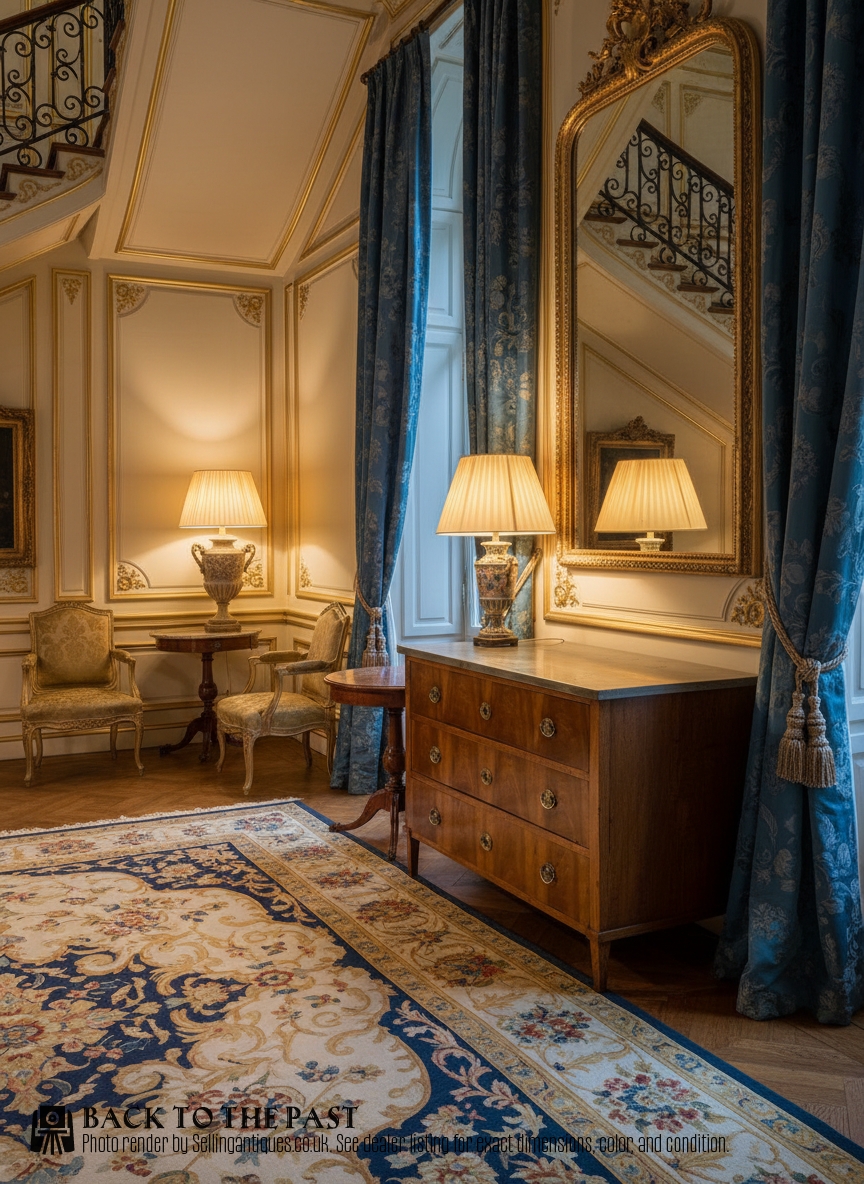
It also functions effectively as a focal point in a living room or bedroom beneath a mirror or large artwork.