

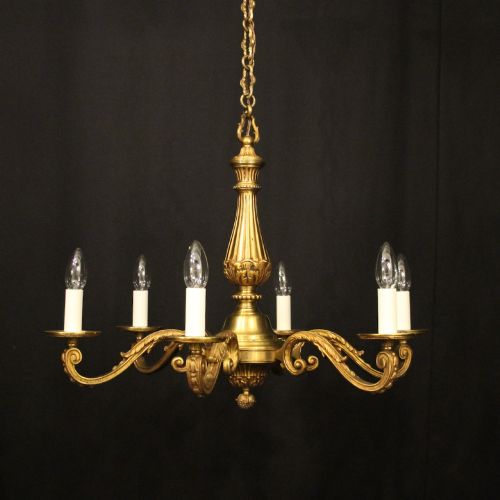
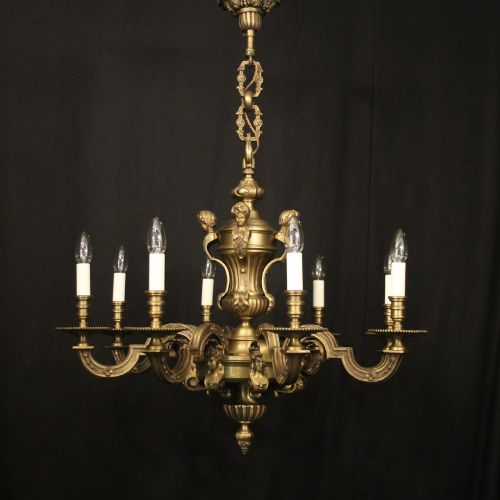
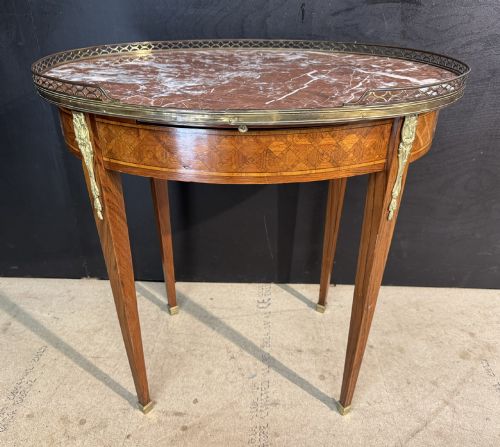
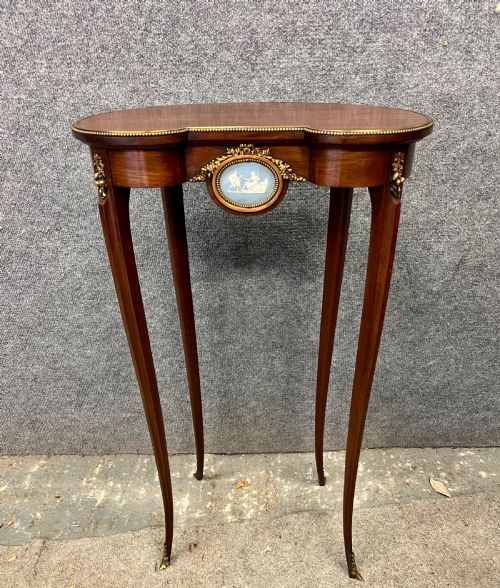



Louis XVI Lamp
A louis xvi lamp brings disciplined French neoclassical symmetry and refined metalwork into a room.
Louis XVI Lamp
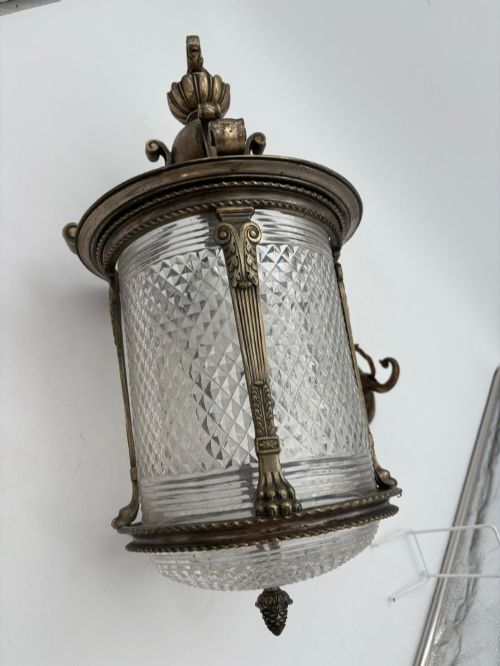
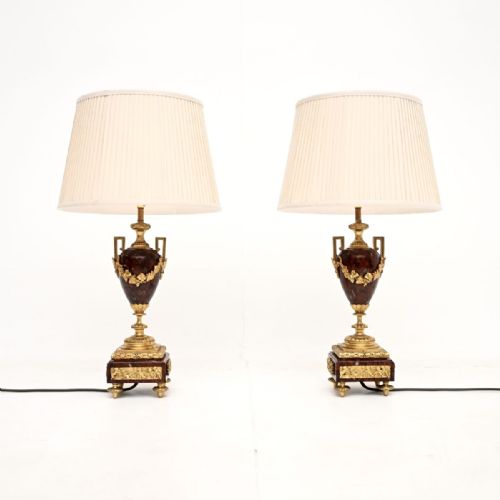
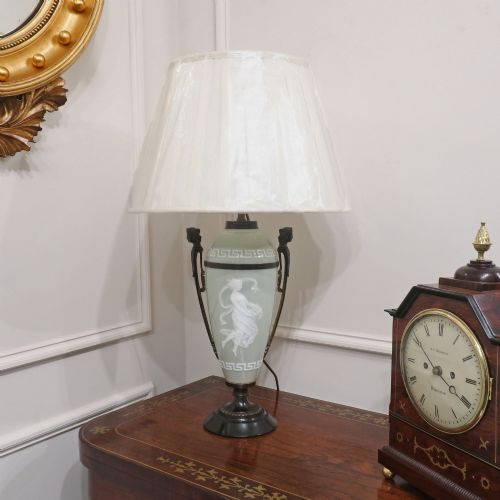
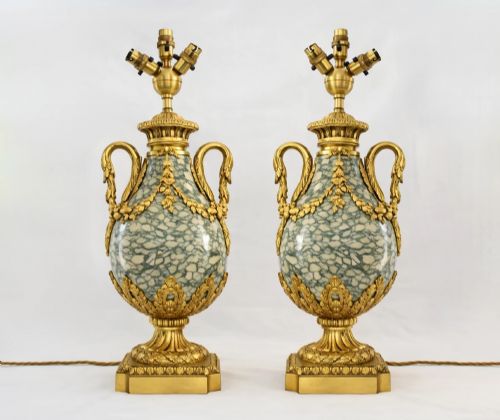
When searching for a louis xvi lamp, collectors encounter decorative lighting modelled on the restrained classical geometry of the eighteenth-century French court. These pieces frequently manifest as pairs of table lamps or converted cassolettes, combining upright mineral columns with cast metallic mounts.
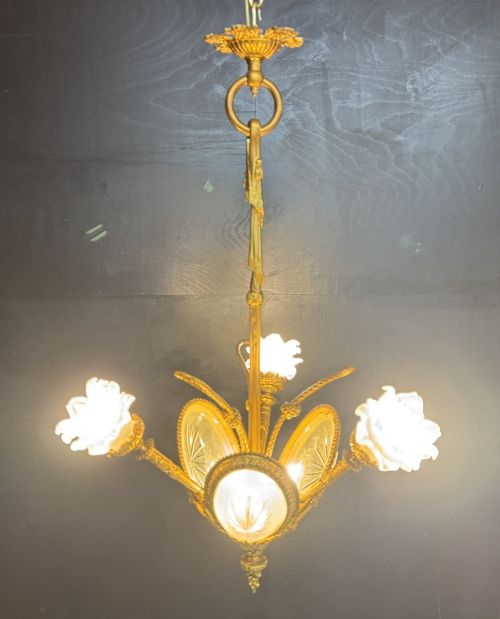
The aesthetic draws heavily on French neoclassical and Louis XVI revival vocabulary, appearing alongside related occasional tables and chandeliers. Most examples encountered date from the nineteenth century up through the early decades of the twentieth century, reflecting enduring European demand for formal French interior ornamentation.
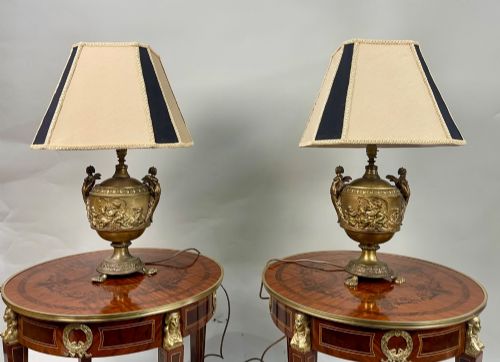
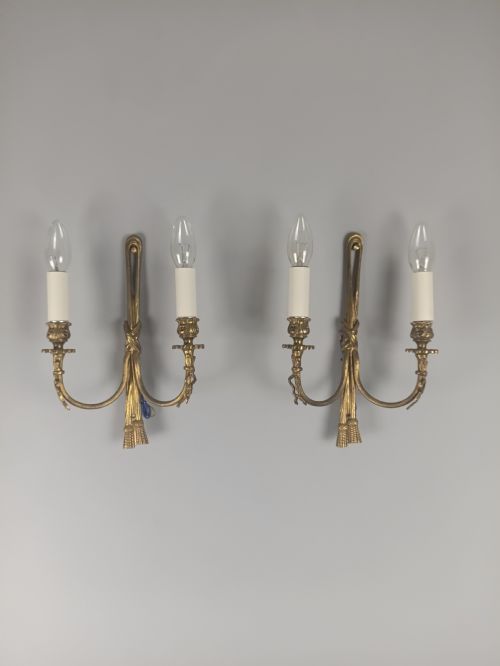
Makers and manufacturers of this period produced lighting using standard classical motifs such as ribbon ties, putti reliefs, fluted columns, and urn profiles. The resulting objects provide a balanced, architectural silhouette suited to formal reception spaces or bedside placement.
Materials and construction
Construction relies on the pairing of dense natural minerals with cast copper alloys, utilising heavy rouge or white marble bases paired with ormolu, gilt bronze, and gilt brass. Metal components are traditionally cast and chased to achieve crisp surface detail before receiving a gold-toned finish.
Makers combined these cast metal mounts with turned wooden elements in mahogany, walnut, and satinwood, occasionally incorporating porcelain or cut glass into the upper fittings. Assembly involves threaded rods and mechanical fixings to secure the stone and metal sections together firmly.
Louis XVI Lamp Retail Price Guide 2026
Typical asking prices for louis xvi lamp among the pieces listed under this phrase on Sellingantiques today, from the lower quarter to the upper quarter. They describe what is for sale here now, not the wider market.
Current selections feature items dated from the nineteenth century through the Edwardian period and the 1930s.
Assessing quality and execution
Quality in these lighting pieces rests primarily on the sharpness of the metal chasing and the density of the chosen marble or bronze components. Superior examples display deeply articulated relief work on motifs like putti or floral garlands, whereas inferior versions exhibit soft, shallow casting from worn moulds.
The weight and stability of the base material further distinguish finer workshop output from mass production. Precision in the assembly and the retention of original fire gilding or mercury gilding rather than modern paint applications separate high-grade period items from later commercial reproductions.
A Hugnet Paris
The Louis XVI Lamp Glossary
- Ormolu
- Finely chopped high-karat gold amalgamated onto a copper alloy base using mercury, producing a durable, warm metallic lustre.
- Cassolette
- A decorative ornamental vase or urn, frequently adapted during the nineteenth century to function as an electric table lamp.
- Guéridon
- A small, round occasional table supported by a central pillar or multiple legs, often topped with marble.
- Pate Sur Pate
- A ceramic decoration technique where wet white relief designs are painted onto a coloured clay body before firing.
- Bouillotte
- A small circular table featuring a raised gallery edge, traditionally fitted with a central candlestick or lamp.
Louis XVI Lamp: Frequently Asked Questions
What defines a louis xvi lamp?
A louis xvi lamp is characterised by strict neoclassical geometry, symmetrical proportions, and classical architectural details.
These pieces typically incorporate motifs like urns, ribbons, fluted columns, and restrained floral ornamentation derived from eighteenth-century French design traditions.
Are these lamps period originals?
Most items found in this category date from the nineteenth and early twentieth centuries rather than the actual eighteenth-century reign of Louis XVI.
Craftsmen during the nineteenth-century revival periods meticulously copied earlier French aesthetics using traditional casting and stonemasonry techniques.
What materials are used?
Construction centres around heavy natural stones like white or rouge marble paired with cast brass, bronze, and ormolu.
Secondary materials such as mahogany, satinwood, and occasionally porcelain or cut glass appear in matching furniture forms and structural bodies.
How do I style them?
These lamps function effectively on side tables, buffets, or bedside chests where their metallic finishes catch natural and artificial light.
Pairing them with neutral fabrics and classic wooden furniture allows the detailed bronze mounts and marble columns to serve as focal points.