


Louis XVI Bronze Clock
A louis xvi bronze clock brings neoclassical symmetry and disciplined proportion to an interior, driven by disciplined mechanics from the nineteenth century.
Louis XVI Bronze Clock
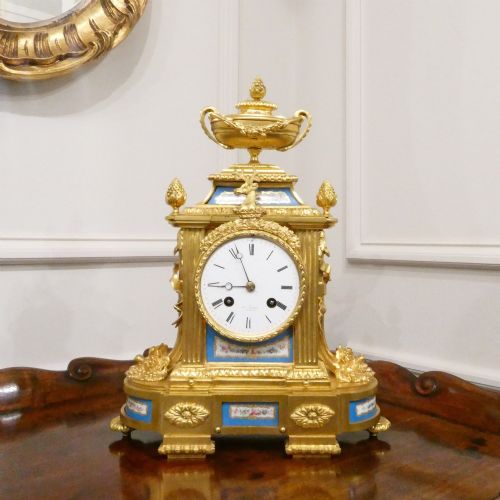
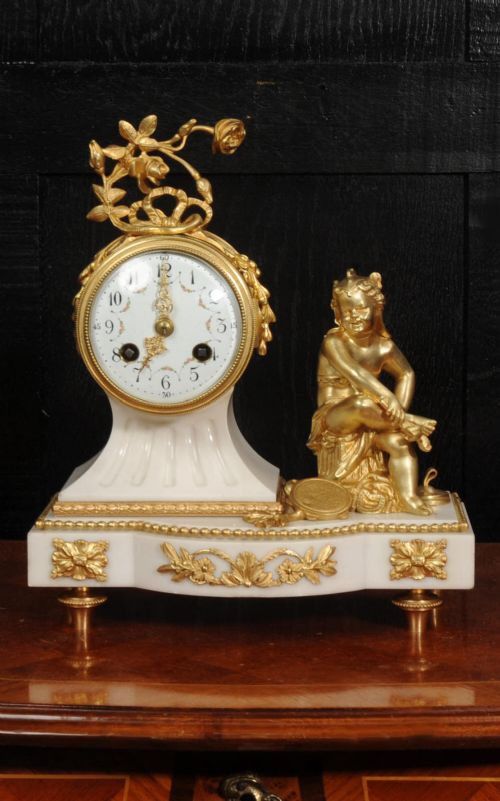
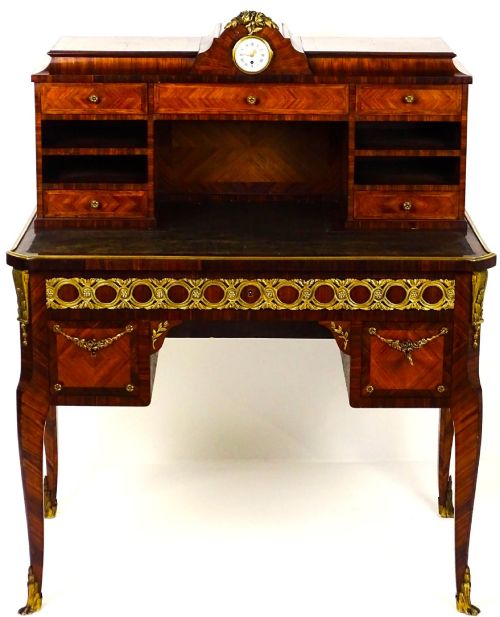
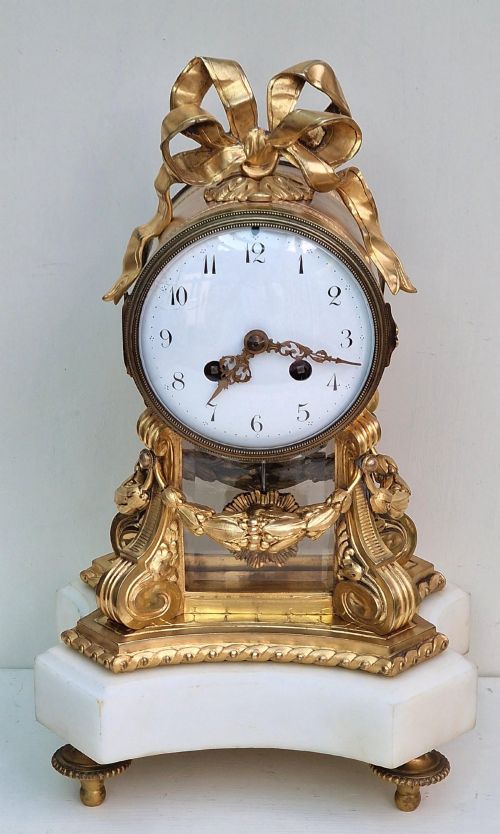
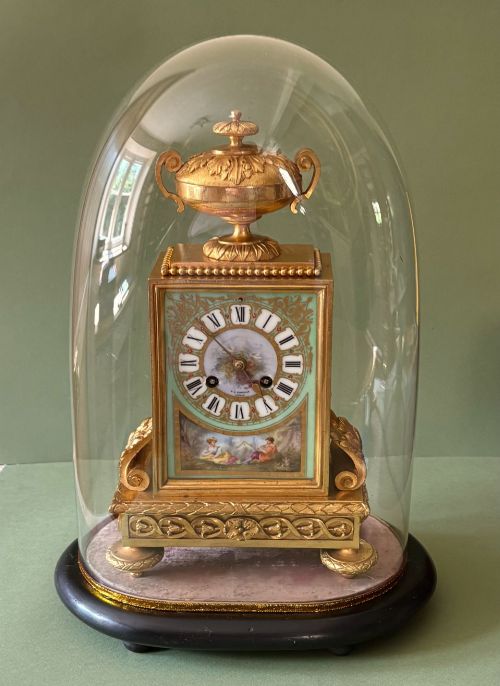
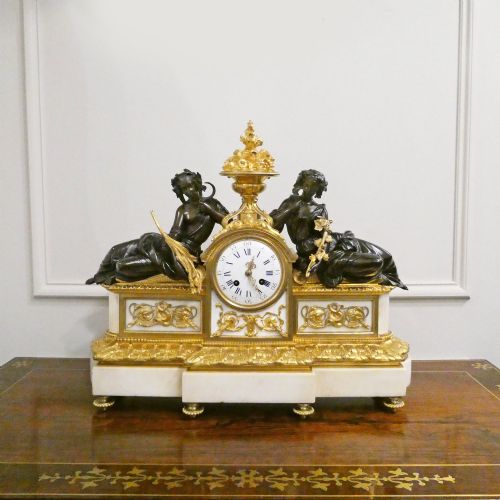
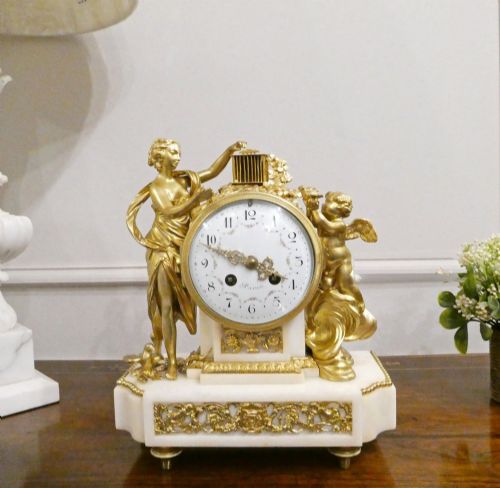
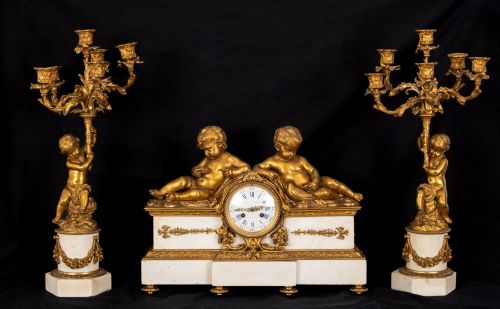
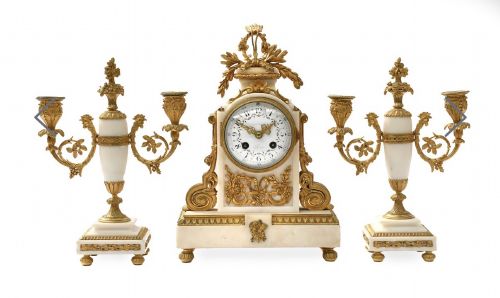
A louis xvi bronze clock takes the form of mantel timepieces, wall-mounted cartel clocks, and complete garniture sets flanked by matching candelabra. These objects combine architectural bronze cases with enamel dials, often referencing the neoclassical revival of the nineteenth century.
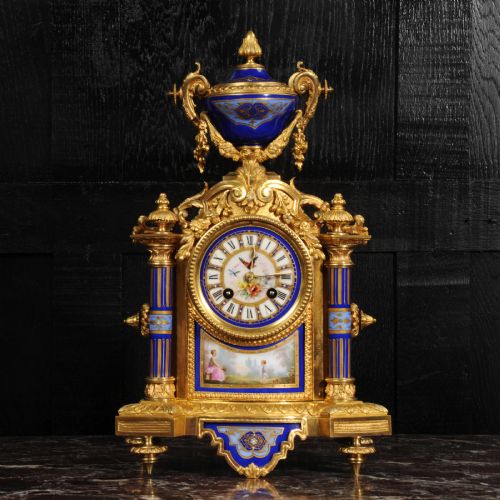
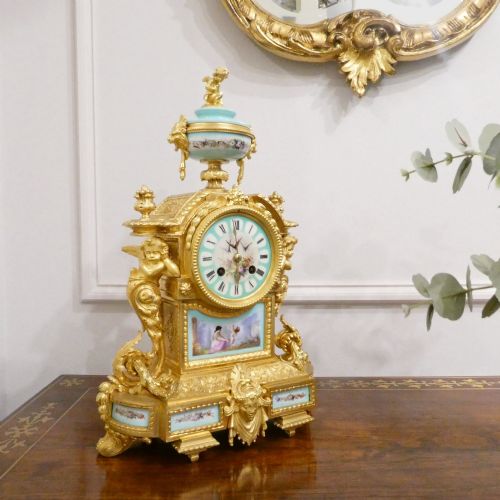
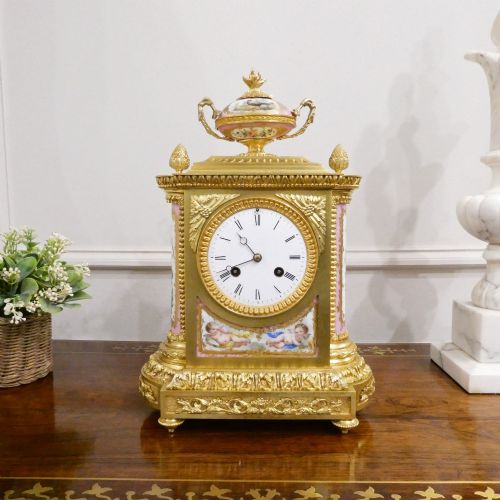
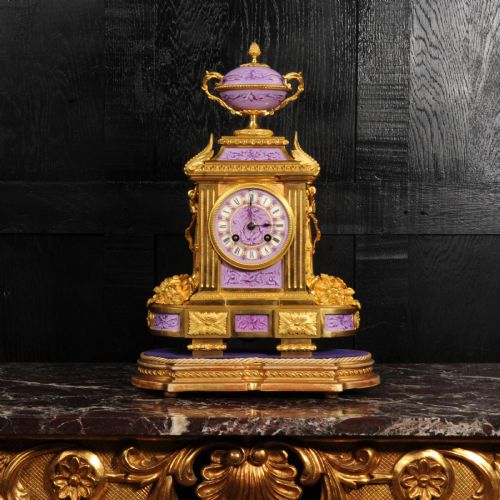
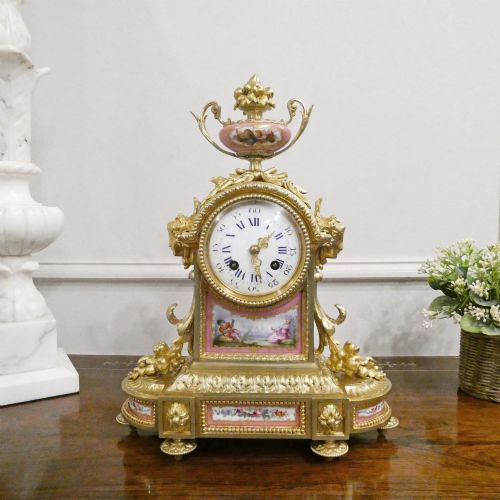
The version most commonly encountered on this page is the mantel clock styled in the French Louis XVI revival manner, cast in gilt bronze and frequently mounted with porcelain plaques.
Makers such as Japy Freres and Jean-Baptiste Delettrez appear frequently among these listings, alongside white marble and rouge marble bodies dating from the eighteen-fifties to nineteen-hundred.
Materials and construction
Founders shaped these cases using cast bronze, applying mercury or electro-plated gilding to create the characteristic ormolu finish seen across the revival periods.
The metallic frames are combined with contrasting white marble, rouge marble, and hand-painted porcelain panels depicting floral or figural scenes.
Clockmakers housed mechanical movements within these heavy bronze housings, integrating enamel chapter rings and visible pendulum assemblies.
Listings feature mantel clocks, wall-mounted cartel clocks, and complete garniture sets spanning the nineteenth century.
Assessing the range
The distinction between standard production and the finest work lies in the crispness of the bronze chasing and the depth of the fire-gilding. Superior examples display sharp foliage, defined drapery, and heavy gauge mounts that fit the marble or wooden chassis without gaps.
Signed movements by known makers like Achille Brocot, Henry Dasson, or Japy Freres elevate a piece above unmarked workshop output. The integration of matched garniture sets and undamaged porcelain adds further distinction to the surviving ensemble.
Japy Freres·Jean-Baptiste Delettrez·Achille Brocot·Henry Marc·Vincenti·Henry Dasson·Le Roy·Louis Goret·Hausburg·Raingo Fres·Henri Picard·Marshall
The Louis XVI Bronze Clock Glossary
- Ormolu
- Gilded bronze produced by applying a mercury-gold amalgam to a cast bronze base, creating a durable golden surface. This technique defines the metallic brilliance of nineteenth-century French clocks.
- Garniture
- A set of matching decorative objects, typically a central clock accompanied by a pair of side candelabras or urns. These ensembles were designed to sit symmetrically on a mantelpiece.
- Cartel clock
- A wall-mounted clock featuring an ornamental bronze or ormolu case, designed to hang securely from a single bracket. They dispense with the traditional wooden body of a longcase clock.
- Chasing
- The manual finishing of a cast bronze object using small punches and hammers to sharpen details and textures. High-quality chasing separates mass production from bespoke foundry work.
- Enamel dial
- A metallic clock face coated with fused powdered glass, fired at high temperatures to create a smooth, glossy white surface. Roman or Arabic numerals are then painted onto this durable base.
Louis XVI Bronze Clock: Frequently Asked Questions
How do I maintain a vintage French clock movement?
These mechanical movements require professional cleaning and lubrication every few years to keep the gear trains functioning properly. Avoid altering the suspension spring or adjusting the hands backward.
Ensure the clock rests on a level surface so the pendulum swings evenly. Winding should be done gently using the correct key for the arbors.
Where should I place a heavy marble and bronze clock?
Position the piece on a sturdy, level mantelpiece or sideboard that can support substantial weight. Keep the clock away from direct sunlight, heating vents, and damp walls to protect the delicate enamel dial and mercury gilding.
Wall-mounted cartel clocks require secure anchoring into masonry or solid studs due to the heavy bronze case construction.
How do I distinguish nineteenth-century revival from original eighteenth-century pieces?
Nineteenth-century revival pieces usually feature machine-tooled screws, thicker gauge castings, and specific movement stamps from industrial makers like Japy Freres. The mercury gilding or modern electro-gilding techniques also differ from earlier eighteenth-century finishes.
Stylistic proportions and dial signatures often point directly to the Victorian manufacturing era rather than the original reign of Louis XVI.
What is a clock garniture set?
A clock garniture set consists of a central mantel clock accompanied by matching side pieces such as urns, candelabras, or vases. These items were manufactured together using identical bronze mounts and marble bases to create visual symmetry.
Displaying them together on a large mantelpiece maintains the intended decorative balance of the interior.