

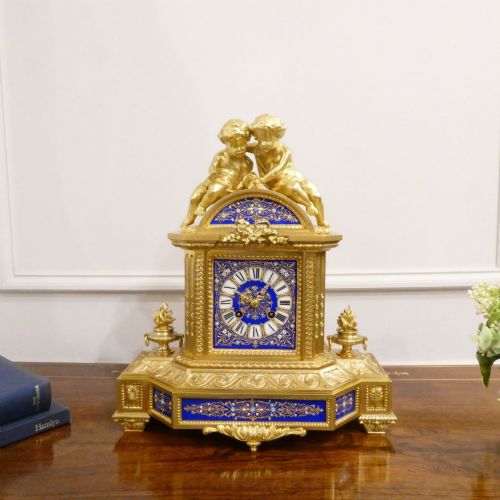
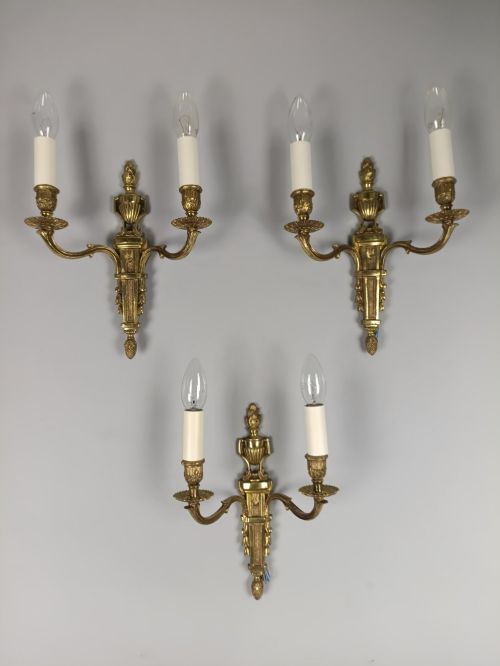
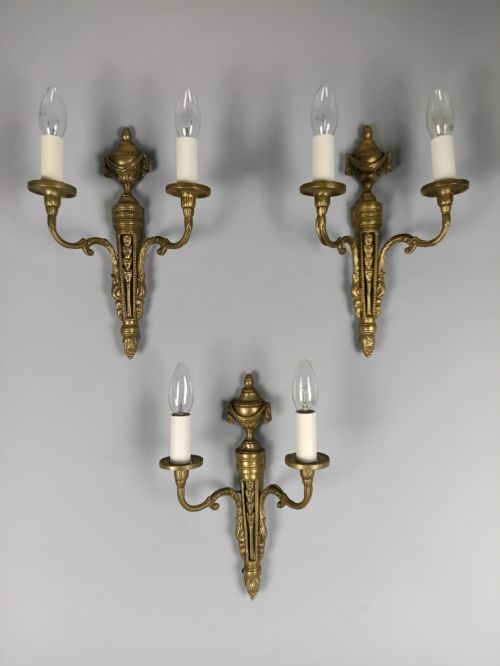
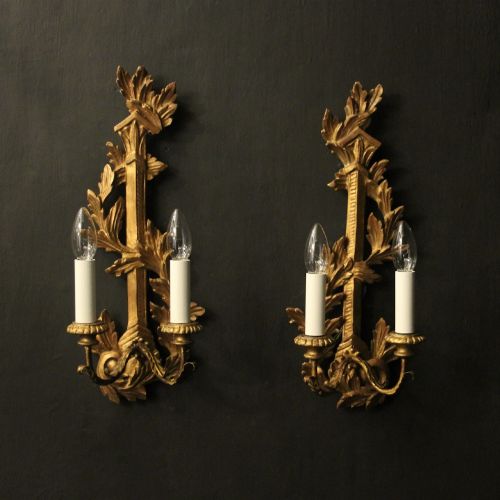
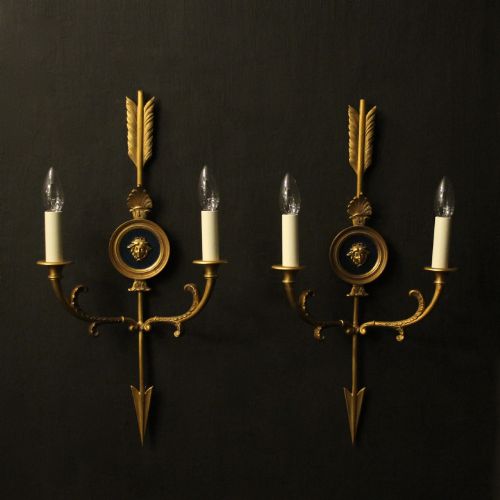
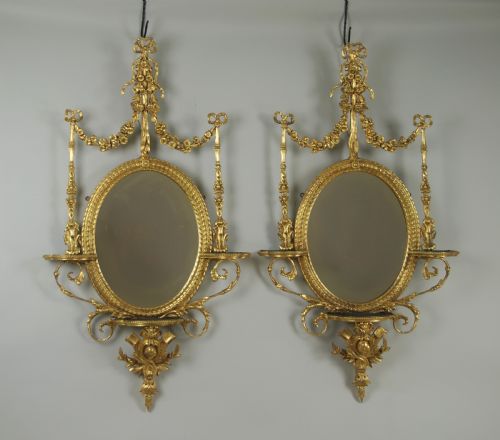
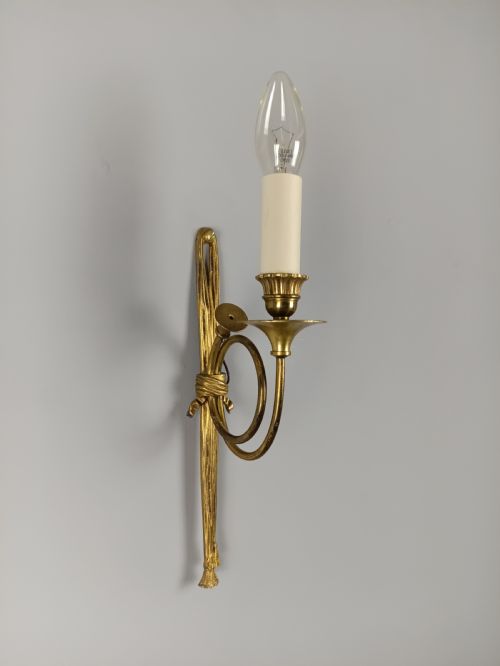
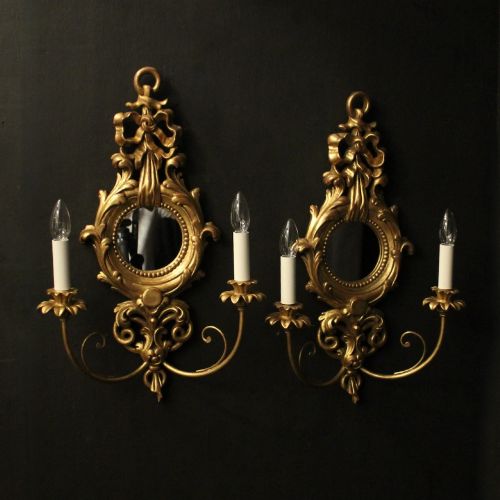

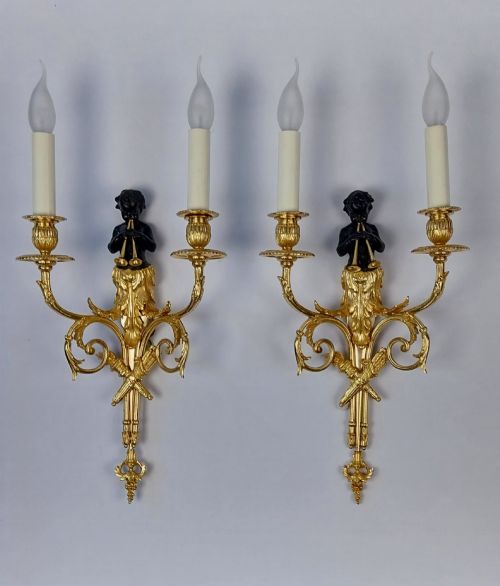


Louis XVI Bracket
A louis xvi bracket brings classical French proportion and gilded decoration to any interior wall.
Louis XVI Bracket
When searching for a louis xvi bracket, buyers encounter architectural shelf supports, mirrored display ledges, and coordinating wall lights originating primarily from nineteenth and early twentieth century revivals. These pieces draw directly on eighteenth century French neoclassical design principles, featuring symmetrical forms, straight lines, and classical motifs.
The selection here encompasses functional wall brackets alongside related sconces, girandoles, and mantel clocks sharing the same decorative vocabulary. Most examples date from the nineteenth century through the early twentieth century, reflecting sustained demand for French chateau interiors.
Materials and construction
Gilt bronze, ormolu, and gilded brass form the primary metallic elements across these pieces, providing a bright surface finish that catches interior light. Workshops shaped these metals through casting and chasing before applying gold leaf or chemical gilding.
Wood elements rely on giltwood, gesso, and occasional white paint over carved timber bases. Artisans built structural support brackets to bear weight while presenting refined surface ornament including bead-and-reel carvings and floral swags.
Louis XVI Bracket Retail Price Guide 2026
Typical asking prices for louis xvi bracket among the pieces listed under this phrase on Sellingantiques today, from the lower quarter to the upper quarter. They describe what is for sale here now, not the wider market.
Listings for louis xvi bracket span periods from the eighteenth century through nineteen thirty, incorporating materials such as gilt bronze, gesso, and white marble.
Evaluating quality and execution
Quality separates in the crispness of the cast bronze ornament and the depth of the hand-carved wood mouldings. Finer pieces display sharply defined acanthus leaves, crisp beadwork, and carefully burnished highlights against matte ground areas.
The integrity of the gilding indicates overall manufacturing standard, with genuine gold leaf and heavy fire gilding retaining warmth and durability over base metal plating. Structural joinery in wooden brackets must remain robust enough to support objects displayed upon the shelf.
The Louis XVI Bracket Glossary
- Ormolu
- Gilded bronze used widely for decorative mounts on furniture and clock cases. The technique involves applying an amalgam of mercury and gold to copper alloy.
- Giltwood
- Timber, usually soft or hardwood, coated with gesso and gold leaf or metal leaf. This surface treatment creates the characteristic golden appearance of classical French mirrors and brackets.
- Girandole
- A branched wall light featuring a reflective backplate, such as a mirror or giltwood plaque. The reflective surface amplifies the candle or electric illumination.
- Neoclassical
- An artistic movement reviving classical Greek and Roman forms, symmetry, and architectural motifs. This aesthetic dominates Louis XVI style decorative arts.
- Gesso
- A plaster mixture spread over wood to prepare the surface for gilding or painting. It provides a smooth base that allows artisans to carve fine details before applying leaf.
Louis XVI Bracket: Frequently Asked Questions
How do I hang a wall bracket securely?
Wall brackets require solid anchorage into wall studs or appropriate masonry fixings given the weight of gilded wood and bronze elements.
Ensure the mounting plates and internal screw points are checked before placing any decorative objects on the display shelf.
What rooms suit a louis xvi bracket?
These decorative supports and sconces suit formal reception rooms, hallways, and living spaces where classical proportions create architectural focus.
Pairs of wall lights or matching brackets frame mirrors and doorways effectively.
How do I clean gilded bronze and giltwood?
Dust surfaces gently with a soft, dry brush to prevent accumulation without disturbing delicate gold leaf or patinated bronze.
Avoid liquid cleaners, chemical solvents, or abrasive cloths which strip the thin metallic layers.
How do I identify Louis XVI style pieces?
Look for straight tapered legs, symmetrical arrangements, urn motifs, and crisp linear framing rather than the asymmetric curves of earlier Rococo design.
Nineteenth-century revival pieces replicate these eighteenth-century architectural rules faithfully.