


Louis XV Style Dressers
Louis xv style dressers bring fluid lines and serpentine fronts to domestic interiors, offering practical storage disguised as sculpture.
Louis XV Style Dressers
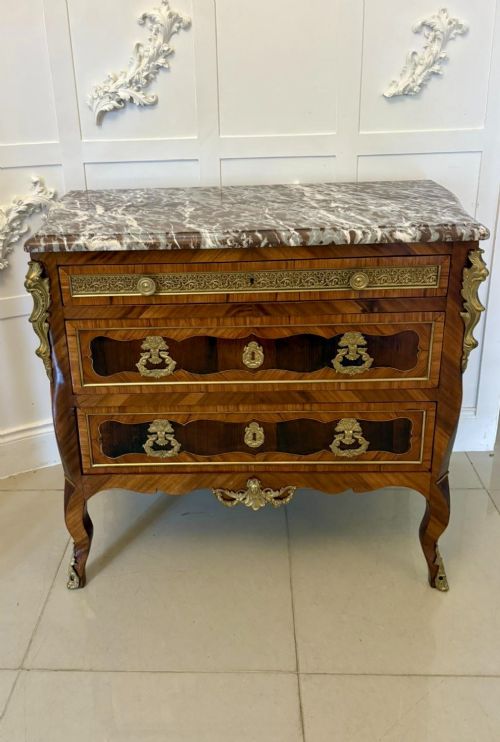
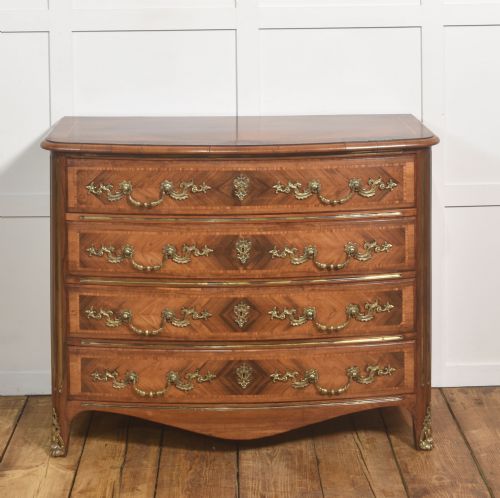
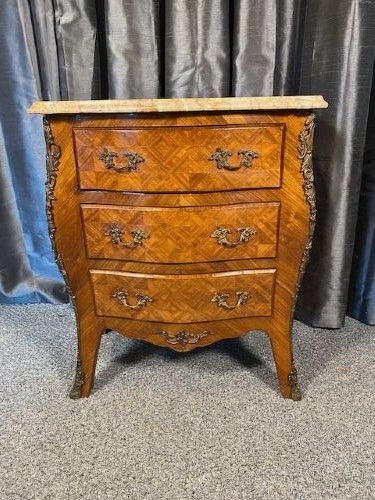
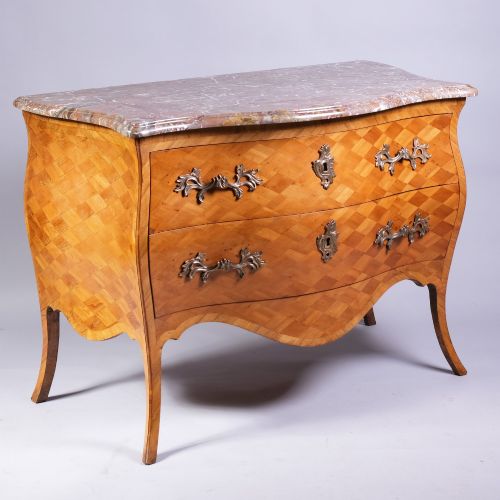
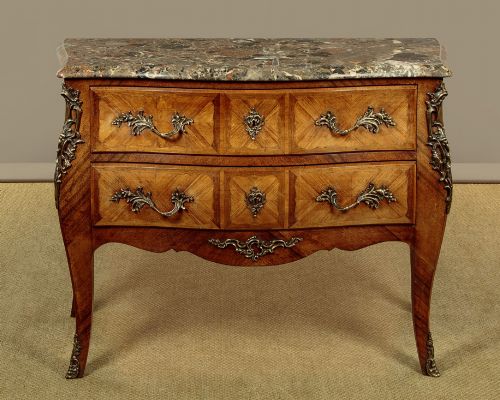
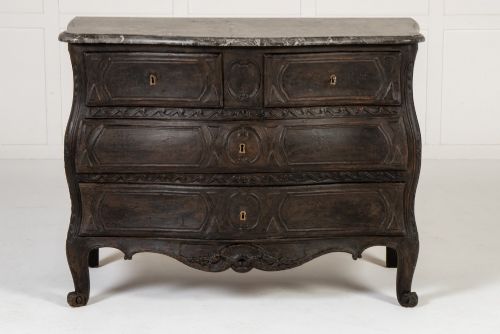
Louis xv style dressers encompass commodes, chests of drawers, and buffet pieces originating from French design traditions spanning the eighteenth to the twentieth centuries. These forms present sweeping serpentine or bombe profiles, often topped with shaped marble slabs that mirror the contours of the timber below.
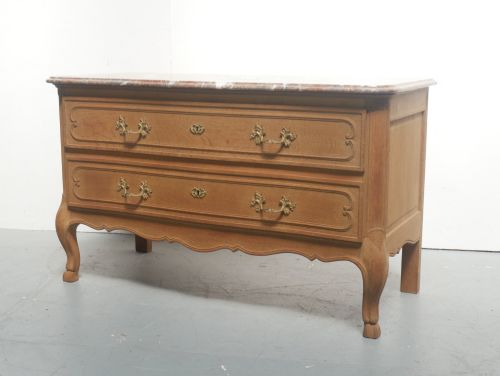
Buyers meet provincial oak and cherrywood examples alongside high-status pieces veneered in kingwood, walnut, and marquetry. The selection ranges from regional eighteenth century commodes to later nineteenth and twentieth century revivals bearing classical mounts.
Materials and construction methods
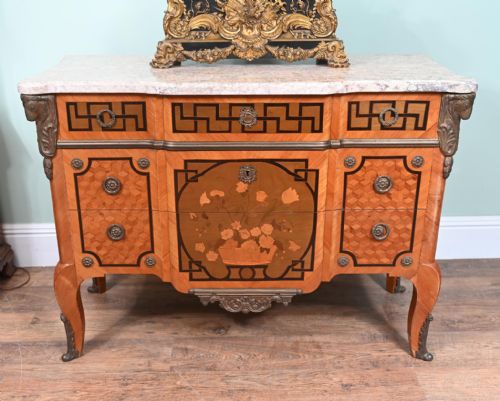
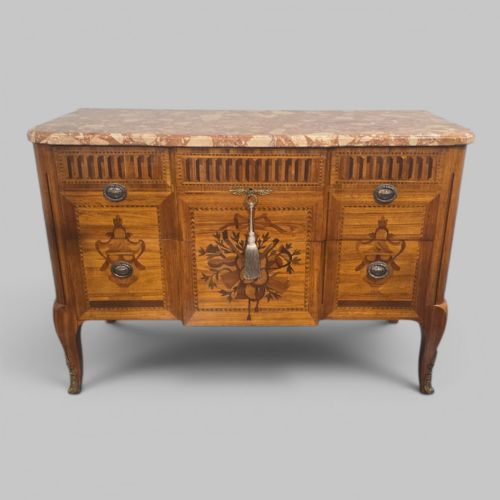
Carpenters built these carcasses using native and exotic timbers such as oak, walnut, kingwood, and burr elm, frequently applying intricate marquetry and floral inlay across the drawer fronts. Selected pieces incorporate heavy cast or chased ormolu mounts and bronze handles that trace the organic curves of the woodwork.
Slabs of natural marble, shaped to follow the serpentine or bow front, rest directly on the timber framework of the commodes and cabinets. Surface finishes vary from natural wax polish and bleached oak treatments to traditional ebonising and painted decoration.
Current listings feature pieces spanning the eighteenth, nineteenth, and twentieth centuries, constructed from oak, walnut, marble, and ormolu.
Distinguishing quality in construction
Quality rests on the fluidity of the serpentine carving and the precision of the timber joints within the primary carcass. Superior examples demonstrate seamless integration between the bronze or ormolu mounts and the surrounding veneer, with marble tops that fit the contour precisely without excess overhang.
The sophistication of the marquetry inlay and the choice of dense hardwoods like kingwood or rosewood separate standard regional workshop pieces from ambitious metropolitan commissions. Original hardware and untouched surface patination elevate the standing of any piece across the period range.
Charles Cressant
The Louis XV Style Dressers Glossary
- Serpentine
- A curved furniture front characterised by a central convex section flanked by two concave curves. This contour defines the visual rhythm of many commodes.
- Bombe
- A swollen, outward-curving profile found on the sides and front of specific chests. It requires advanced woodworking skill to shape timber successfully.
- Ormolu
- Gilded bronze applied as decorative mounts and handle plates on fine furniture. It accentuates the structural lines of the cabinetwork.
- Marquetry
- Decorative patterns formed by fitting contrasting veneers into a wooden surface. Craftsmen utilise this technique to depict floral and geometric designs.
- Buffet deux corps
- A traditional tall cabinet featuring a lower cupboard section surmounted by a smaller upper unit. These architectural pieces provide substantial storage capacity.
Louis XV Style Dressers: Frequently Asked Questions
What is a louis xv style dresser?
These pieces primarily take the form of commodes and chests of drawers featuring characteristic serpentine fronts and cabriole lines. They function as ornamental storage units for domestic rooms.
Cabinetmakers shaped them from woods like walnut, oak, and kingwood, frequently finishing the tops with thick slabs of shaped marble.
How do I date a commode?
Dating relies on examining the construction methods of the internal drawer frames, timber species, and secondary woods. Eighteenth century pieces show hand-cut joinery and period specific mount styles.
Revival pieces from the nineteenth and twentieth centuries often employ machine-sawn elements while closely copying earlier proportional systems and decorative motifs.
Where were these pieces used?
Original examples served elite domestic functions in French chateaux and provincial townhouses as sophisticated storage for clothing and household goods. Their finished backs and sides allowed placement in prominent drawing rooms.
Today they occupy similar focal points in modern interiors, functioning as hallway consoles or bedroom storage.
Are marble tops original?
Many commodes retain their heavy fitted marble slabs, which were quarried to match the exact serpentine profile of the timber base. These stone surfaces protected the wood and added weight to the furniture.
Replacements do occur due to accidental breakage over centuries of domestic use, making the edge profile and stone type key areas of inspection.