

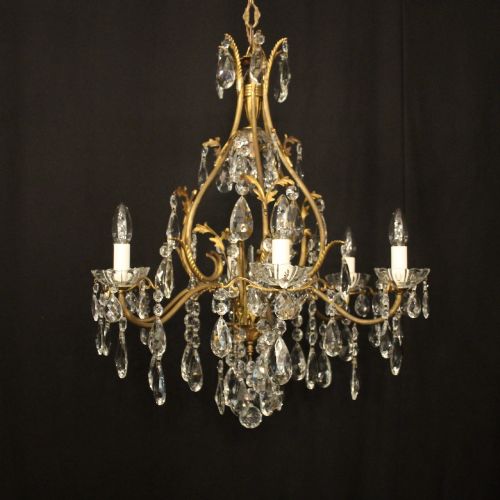
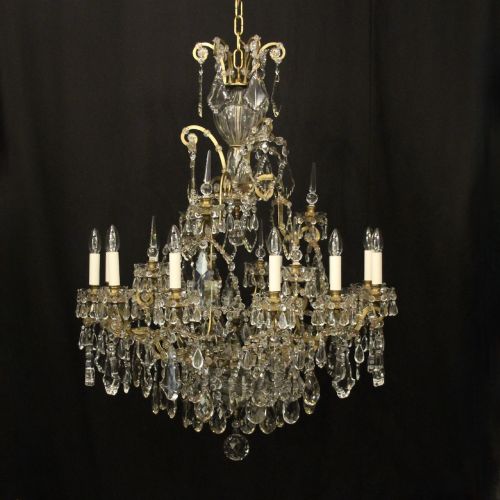
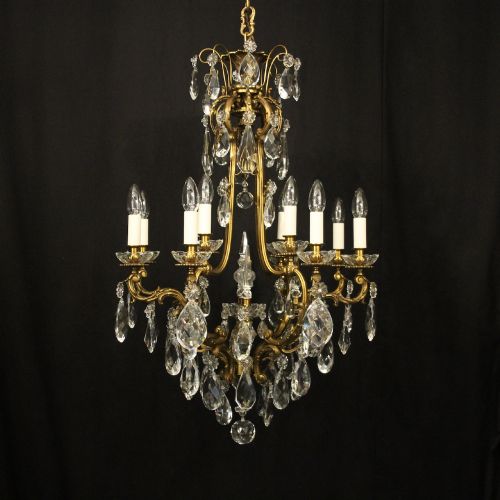

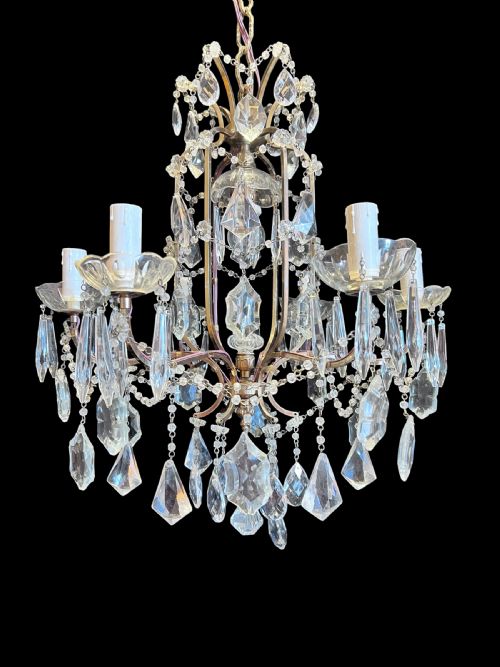





Louis XV Cage Chandelier
A louis xv cage chandelier brings unmistakable French Rococo grandeur to a room through cascading crystal drops and intricate metalwork.
Louis XV Cage Chandelier
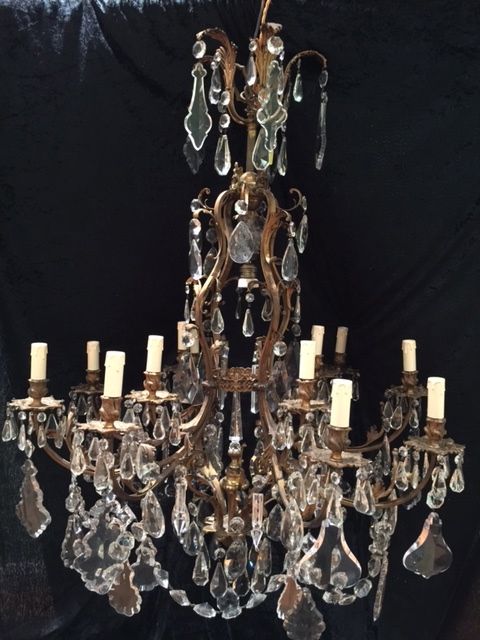
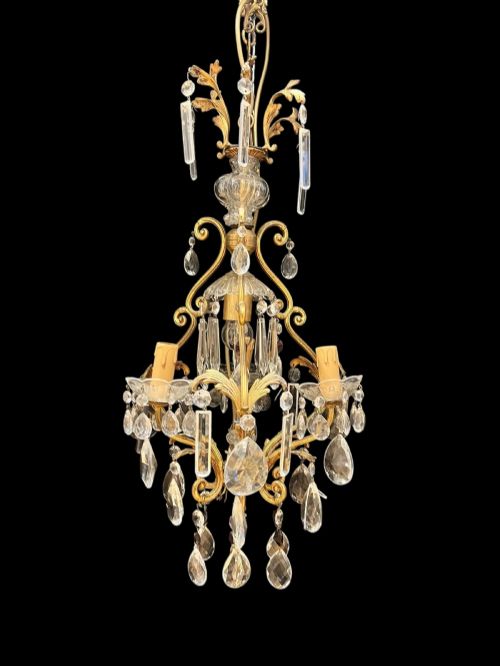
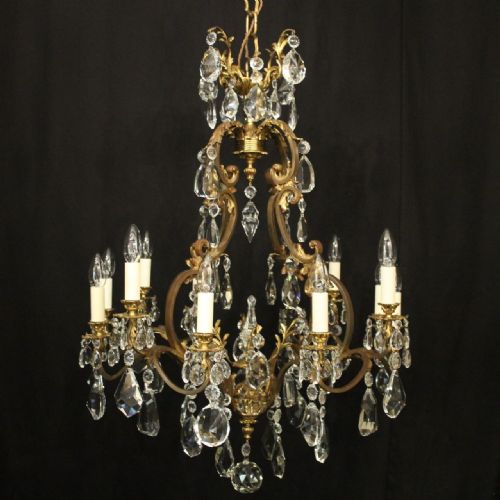
A louis xv cage chandelier forms a distinct lighting type defined by a skeletal metal armature draped in glass and crystal. These pieces belong to the French Chateau and French Classical traditions, reflecting the ornate tastes of earlier periods while often dating from the late nineteenth and early twentieth centuries.
Most examples found here present multiple lights, ranging from intimate triple light configurations up to grand twelve light fixtures. They take the form of chandeliers and pendant lights, designed to suspend centrally from a ceiling and throw refracted light across a space.
Construction and materials
Makers constructed the framework using cast and chased metals, specifically brass, bronze, gilt bronze, and gilded brass. These structural frames support numerous glass and crystal drops that catch and multiply the illumination from the internal lights.
The integration of metal armature with cut glass elements requires precise balancing. Gilt finishes applied to bronze or brass provide a warm backdrop for the transparent crystal pendants.
Louis XV Cage Chandelier Retail Price Guide 2026
Typical asking prices for louis xv cage chandelier among the pieces listed under this phrase on Sellingantiques today, from the lower quarter to the upper quarter. They describe what is for sale here now, not the wider market.
Periods represented span from eighteen eighty through the nineteenth century and into the nineteen thirties.
Assessing quality
Quality rests in the crispness of the bronze chasing and the clarity of the cut glass drops. Heavier metal castings and deeply faceted crystals produce a more brilliant play of light than lighter, simpler stamped metal alternatives.
The complexity of the armature design, from basic circular bands to elaborate birdcage frameworks, separates standard production from finer decorative pieces. Original gilding depth and the completeness of the crystal dressing further distinguish superior examples.
The Louis XV Cage Chandelier Glossary
- Cage chandelier
- A lighting fixture featuring a skeletal metal frame enclosed or draped entirely in crystal drops and beads. This structural style creates a voluminous silhouette resembling an open birdcage.
- Gilded bronze
- Bronze metal coated with a thin layer of gold or gold leaf to provide a lustrous, durable finish. This technique enhances decorative metalwork on period fixtures.
- Cut glass
- Glass shaped and patterned by grinding and polishing facets into the surface. These sharp facets increase the refraction of light from the chandelier bulbs.
- French Rococo
- An artistic style characterised by asymmetry, curves, and ornate natural motifs. This aesthetic heavily influences the scrollwork and decorative mounts found on these chandeliers.
Louis XV Cage Chandelier: Frequently Asked Questions
What period do these chandeliers typically date from?
The pieces available predominantly date from the late nineteenth and early twentieth centuries, spanning from eighteen eighty to nineteen thirty. They interpret earlier French decorative styles from the nineteenth century and earlier.
Stylistic elements follow French Chateau and Rococo traditions regardless of the specific decade of manufacture. Dating relies on the construction techniques and metal casting characteristics.
How should I clean the crystal drops?
Maintenance involves gentle cleaning using a mild solution of warm water and specialist glass cleaner applied with a soft cloth. Individual crystals can be wiped in place without dismantling the entire metal armature.
Harsh chemical abrasives damage gilt bronze finishes on the frame. Regular dusting prevents grime buildup on the intricate glass facets.
Where do these lighting fixtures originate?
The designs trace their heritage directly to French decorative arts and lighting traditions. Workshops in France produced the vast majority of these bronze and crystal fixtures.
Their aesthetic aligns with grand interior schemes found in period townhouses and chateaux. Regional French metalworking techniques influenced the various brass and bronze frames.