




Louis Style Etagere
These pieces of louis style etagere bring tiered French display and serving surfaces into a room.
Louis Style Etagere
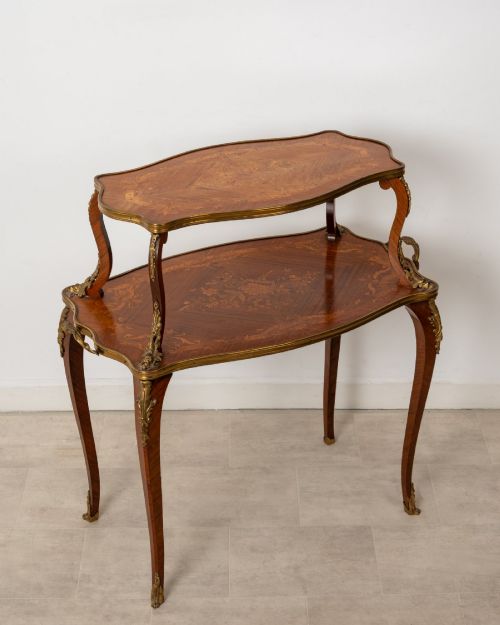
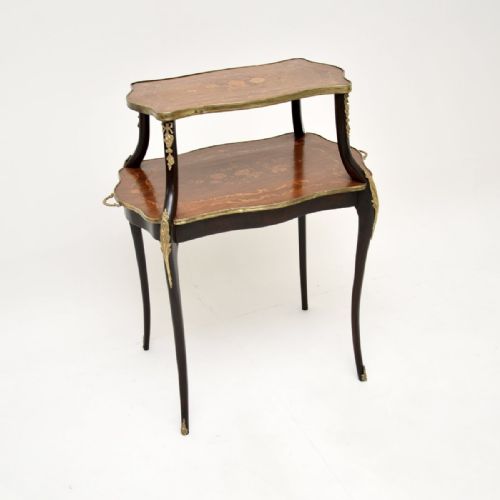
A louis style etagere is an open tiered shelving or occasional table designed for display and small surfaces in a reception room. You will most frequently meet two-tier and three-tier examples reflecting French Louis XV and Louis XVI revivals from the nineteenth century. These pieces offer multiple platforms for ornaments, tea service or books while taking up minimal floor space.
The form spans various configurations including side tables, occasional tables, console tables and floor-standing shelves. Many incorporate galleried edges or glass trays on brass or ormolu mounts to secure small objects. Dating predominantly from the nineteenth century into the Edwardian period, they frequently display revival aesthetics originating from French chateaux.
How they were made
Metal mounts in brass, ormolu, gilt bronze and gilt metal accent the corners, edges and legs. Some examples integrate marble tops or glass trays fitted securely within wooden or metal galleries. Painted finishes and parcel gilt details also appear on specific occasional pieces.
Louis Style Etagere Retail Price Guide 2026
Typical asking prices for louis style etagere among the pieces listed under this phrase on Sellingantiques today, from the lower quarter to the upper quarter. They describe what is for sale here now, not the wider market.
Some miniature etageres were built solely to display tiny porcelain tea cups.
What varies in quality
The distinction between tiers of quality rests primarily on the execution of the marquetry and the crispness of the bronze or ormolu mounts. Finer examples display meticulous veneer selection and hand-chased metalwork that integrates seamlessly with the wooden structure. Lesser pieces rely on simpler timber grains and cast metal mounts with softer detail.
Structural harmony also dictates quality, as the proportion between the supporting columns and the tiered shelves must remain balanced. The precision of the joinery around the galleries and the weight of the marble or glass inserts signal the standard of manufacture.
Donald Ross
The Louis Style Etagere Glossary
- Étagère
- A piece of furniture consisting of a set of open shelves for displaying small objects or ornaments. These tiers provide vertical surface space in a compact footprint.
- Ormolu
- Gilded bronze used as a decorative mount on furniture. This technique creates a rich metallic accent along the edges and legs.
- Marquetry
- Decorative inlay work using strips of wood veneer to form intricate patterns and pictures. Craftsmen apply these veneers across the tabletop and shelves.
- Galleries
- Raised decorative borders around the edge of a shelf or tabletop. These miniature railings prevent items from sliding off the tiers.
- Napoleon III
- A French design style spanning the mid to late nineteenth century incorporating eclectic revivals. Pieces from this era often feature rich veneers and elaborate metal mounts.
Louis Style Etagere: Frequently Asked Questions
What is a louis style etagere used for?
These tiered tables were traditionally used for displaying decorative objects, serving tea or holding small porcelain pieces in a drawing room. The multiple shelves allowed owners to exhibit collections without cluttering the main room surfaces.
Today, they function well beside seating areas or against walls as lamp tables and display stands. Their open structure keeps rooms feeling light while providing practical surface area.
How do I identify a nineteenth century piece?
Nineteenth-century examples frequently exhibit French revival styles such as Louis XV and Napoleon III with hand-cut marquetry inlay. Look for traditional construction methods in the timber framework and authentic patination on the brass and ormolu mounts.
Later Edwardian and twentieth-century interpretations often simplify these decorative flourishes while retaining the tiered silhouette. Examining the veneer types and mount casting helps clarify the period of manufacture.
Are marble tops original to these tables?
Many occasional tables and etageres incorporate fitted marble slabs to provide a durable and heat-resistant surface. These tops are typically rebated directly into the wooden frame.
When assessing a piece with marble, check that the stone sits flush within the surrounding wood or brass gallery. Different coloured marbles appear depending on the specific nineteenth-century workshop aesthetic.
How do I care for marquetry surfaces?
Marquetry veneer requires gentle cleaning with a soft, dry cloth to remove dust without disturbing the delicate grain. Avoid placing items that trap moisture directly onto the antique polished wood.
Keep these tables away from direct heat sources and strong sunlight to prevent the veneers from drying out or lifting. Occasional application of appropriate furniture wax maintains the finish.