




Louis Revival Lights
Louis revival lights bring the grand, gilded ornamentation of the French royal courts into a room through elaborate ormolu, cut crystal, and bronze.
Louis Revival Lights
When you search for louis revival lights, you are looking at domestic illumination modelled on the decorative excess of the seventeenth and eighteenth-century French monarchies. The versions most commonly met on this page are multi-branch wall sconces and grand crystal chandeliers dating from the nineteenth and early twentieth centuries.
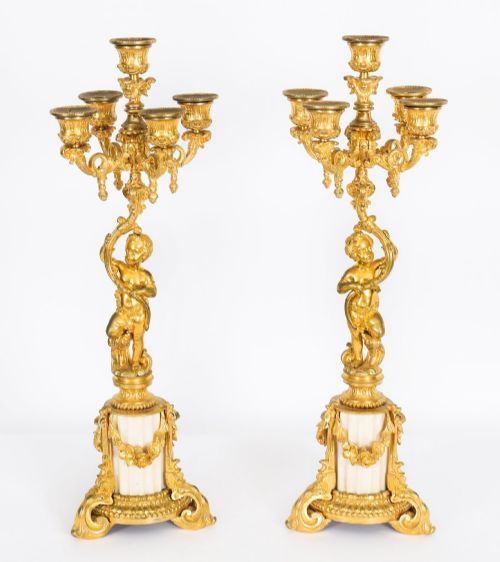
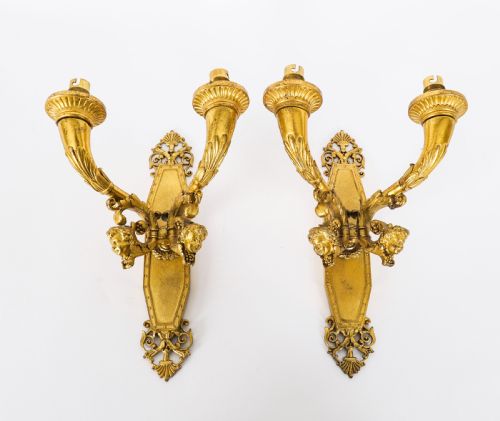
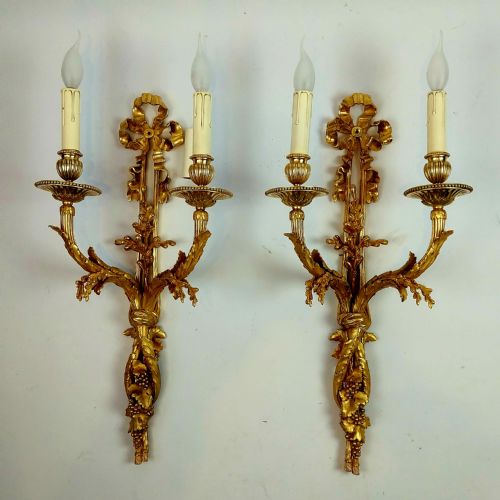
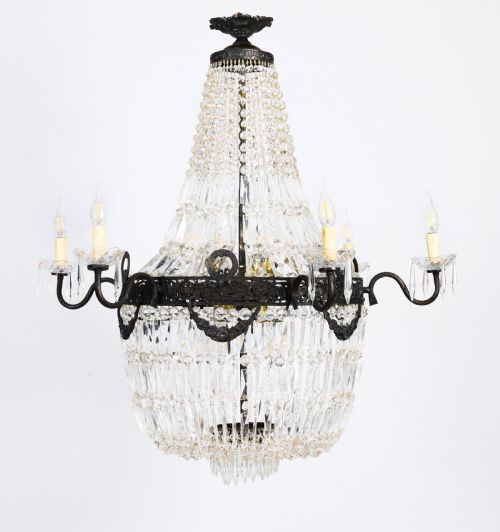
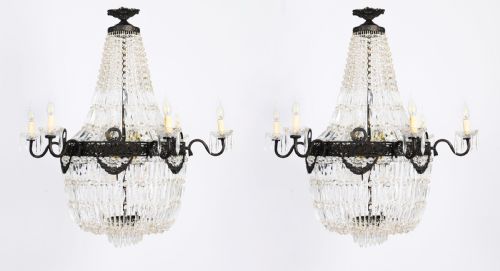
The selection ranges from intimate two-branch ormolu wall lights and marble table lamps to fourteen-light ballroom chandeliers hung with cut crystal. These pieces draw primarily on Louis XIV, Louis XV, and Louis XVI design vocabularies, spanning French Rococo curves and strict neoclassical symmetry.
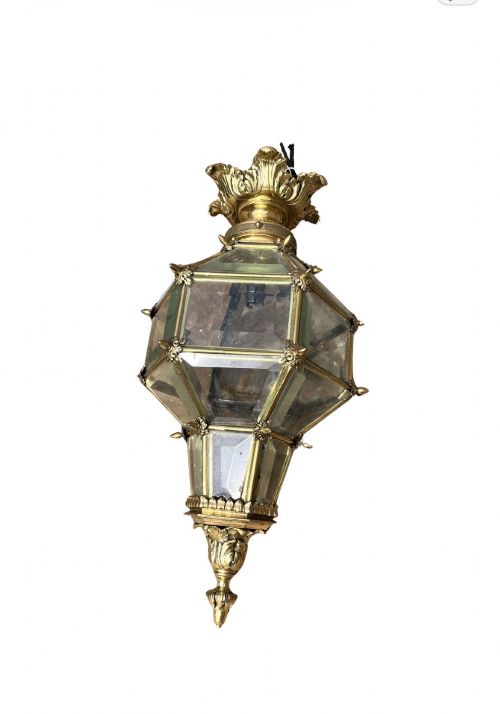
Objects appear in various forms, including candelabras, plafoniers, and brass lanterns reflecting a French chateau aesthetic. Most items originate from the nineteenth century, though later twentieth-century iterations also emerge.
How they were made
Metalwork forms the structural backbone of these fixtures, utilising cast bronze, brass, and ormolu, which is gilded bronze. Makers employed skilled metal-casting and fire-gilding techniques to achieve deep, lasting metallic sheens.
Glass and crystal components are heavily represented, featuring cut crystal drops, tent structures, and inset glass panels. These translucent elements were shaped and polished to refract light from multiple candle or bulb branches.
Secondary materials include marble bases on table lamps and candelabras, alongside carved and gilded wooden elements or fabric components on specific lamp designs.
Louis Revival Lights Retail Price Guide 2026
Typical asking prices for louis revival lights among the pieces listed under this phrase on Sellingantiques today, from the lower quarter to the upper quarter. They describe what is for sale here now, not the wider market.
Materials recorded across the inventory include ormolu, gilt bronze, brass, marble, cut crystal, glass, general metal, and fabric.
What varies in quality
The distinction between ordinary and exceptional pieces lies in the crispness of the metal casting and the depth of the gilding. Finer examples display sharp, hand-chased details in the ormolu foliage and scrollwork, whereas lesser pieces exhibit softer, shallower surface definition from worn or hurried moulds.
Crystal components also separate the tiers of quality, with top-tier pieces utilising heavy, hand-cut glass that retains sharp facets and high optical clarity. The structural joinery, such as the mounting of arms and branches to the central backplate or stem, dictates the overall solidity of the fixture.
The Louis Revival Lights Glossary
- Ormolu
- A golden-coloured alloy of copper, zinc, and sometimes nickel, used to simulate gold on decorative metalwork. It provides a rich surface finish when applied over cast bronze.
- Tent chandelier
- A large hanging light fixture featuring strings of cut crystals gathered into a tent-like canopy above the main body. This design maximises light reflection across large spaces.
- Wall sconce
- A decorative lighting fixture fixed directly to a wall, designed to hold candles or electric bulbs on projecting arms. These items often feature mirrored backs to amplify illumination.
- Candelabra
- A branched candlestick used for holding multiple candles simultaneously. In revival pieces, these are frequently mounted on marble bases with ormolu ornamentation.
- Plafonier
- A ceiling-mounted light fixture that sits flush or very close to the ceiling surface. It typically combines metal mounts with cut glass or crystal bowls.
Louis Revival Lights: Frequently Asked Questions
Are these lights wired for electricity?
Most of these antique fixtures have been adapted for modern electrical use at some point in their history. Buyers should expect to have wiring checked or updated by a qualified professional upon acquisition.
Original candelabras and candlesticks may remain un-wired, intended purely for decorative display or use with traditional wax candles.
How do I date a louis revival light?
Dating relies on examining the construction methods, screw threads, and the composition of the metal alloys. Nineteenth-century pieces often show hand-cut threading and heavier bronze castings compared to later twentieth-century reproductions.
Stylistic cues also help narrow the period, as Louis XIV revival pieces emphasise symmetry and heavy classical motifs, while Louis XV pieces favour asymmetrical rococo curves.
How do I clean ormolu and crystal?
Ormolu requires gentle cleaning with a soft, dry cloth to avoid stripping the delicate gold surface layer. Moisture and harsh chemical cleaners can permanently damage the metallic finish.
Crystal drops can be carefully washed in warm, soapy water while attached to the fixture, then rinsed and dried thoroughly to restore their sparkle.
Can heavy chandeliers hang safely?
Large multi-branch chandeliers require substantial ceiling support capable of holding significant weight, particularly those featuring dense bronze frames and heavy cut crystal. Professional installation into ceiling joists is essential for secure placement.
Wall sconces similarly demand sturdy fixings into masonry or wall studs to bear the weight of solid metal branches.