
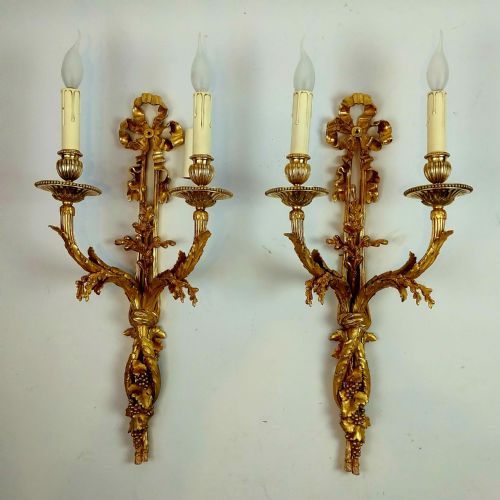


Louis Revival Lighting
Louis revival lighting delivers grand French style into interiors through ornate fixtures cast in ormolu, gilt bronze, and brass.
Louis Revival Lighting
When searching for louis revival lighting, buyers encounter an array of ornate fixtures spanning wall lights, chandeliers, table lamps, and candelabras. These pieces draw directly from seventeenth and eighteenth-century French royal aesthetics, interpreted primarily across the nineteenth and early twentieth centuries.
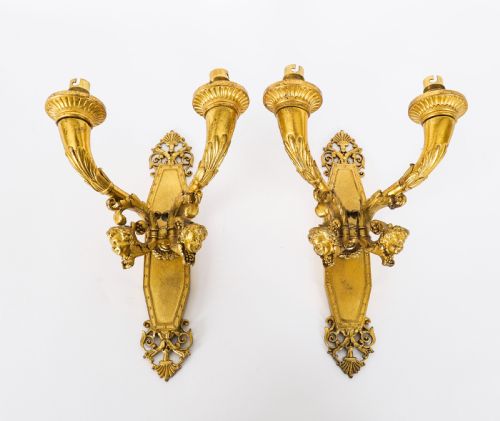
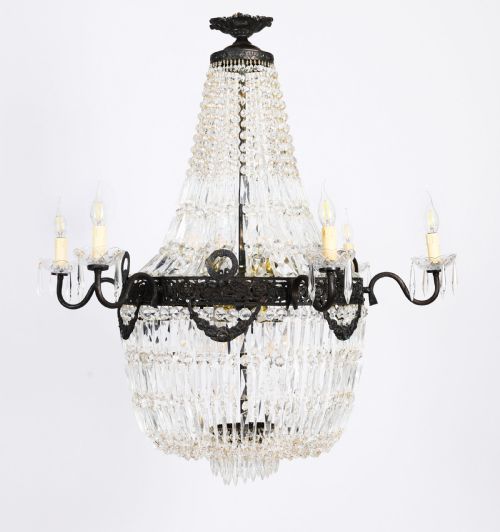
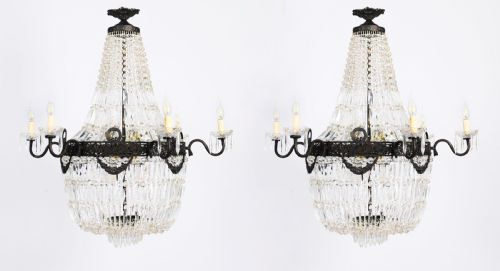
Wall lights and sconces dominate the selection, frequently appearing in matched pairs with multiple branches. Large ballroom chandeliers featuring cut crystal tent configurations also surface alongside smaller table lamps mounted on marble bases.
The materials reflect historical opulence, utilising heavy metal castings paired with glass and fabric elements. Pieces span from the mid-nineteenth century up to the 1940s, offering varied scales suitable for different domestic spaces.
Materials and Manufacture
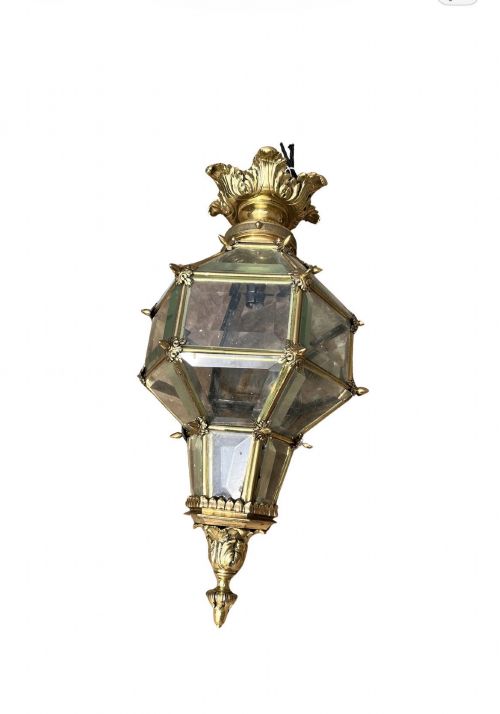
Makers utilised metal casting techniques to produce intricate frames in ormolu, gilt bronze, brass, and silver plating. These metal components formed the structural bodies and decorative armatures of wall lights, chandeliers, and candelabras.
Cut crystal and glass elements were integrated into larger hanging fixtures, creating prismatic light reflection across tent and plaffonier designs. Marble components frequently appeared on table lamps and candelabra bases, adding substantial weight and classical contrast to the gilt metal.
Listings feature items spanning the 1800s to the 1940s, utilising ormolu, gilt bronze, brass, marble, and cut crystal across Louis XIV, XV, and XVI revival styles.
Assessing Quality
The refinement of the metal casting dictates the upper tier of these pieces, where crisp chasing defines foliage, scrolls, and figural details. Lower quality examples often display softer contours and shallower relief work where the original artisan tool marks have been lost in reproduction.
Integration of materials also separates standard production from superior items, particularly in the weight of the bronze or ormolu and the clarity of the cut crystal drops. Original gilding retains a warmer, deeper lustre compared to later or lesser applied surface treatments.
The Louis Revival Lighting Glossary
- Ormolu
- Gilt bronze produced by applying a finely ground high-carat gold mercury amalgam to a bronze object, which was then heated. This historical technique created a durable and rich golden surface finish.
- Chandelier
- A branched ornamental light fixture suspended from the ceiling. These large pieces often incorporate numerous arms and hanging crystal prisms.
- Candelabra
- A branched candlestick holder used for multiple candles. Many examples combine gilt metal with marble or ceramic elements.
- Plaffonier
- A bowl-shaped ceiling light fixture mounted flush or close to the ceiling surface. They frequently combine gilt metal mounts with cut or moulded glass panels.
Louis Revival Lighting: Frequently Asked Questions
How do I install antique wall lights?
These wall lights require professional electrical installation to ensure the vintage metal brackets mount securely to wall studs and wire safely into domestic circuits. Many fixtures have been adapted over time from candles or early gas to electricity.
Consult a qualified electrician regarding modern backplates and earth connections. The original mounting holes should be utilised where possible to preserve the antique metalwork.
Are these fixtures wired for modern use?
Most antique lighting pieces require inspection and potential rewiring to meet current safety standards before daily use in a home. The internal channels accommodate modern flex while retaining the exterior antique appearance.
Check the lamp holders and internal wiring with a professional technician. This ensures safe operation while preserving the original structural components.
How do I clean ormolu and gilt bronze?
Dust these metal surfaces gently with a soft, dry brush to prevent accumulation in the intricate cast crevices. Avoid abrasive polishes that strip away historical gilding.
Harsh chemical cleaners will permanently damage the delicate ormolu surface. Warm water and mild soap applied sparingly on a cloth is sufficient for light maintenance.
What rooms suit a large crystal chandelier?
Large crystal tent chandeliers require high ceilings and substantial floor space to support their visual weight and scale. Dining rooms and entrance halls provide traditional settings for multi-arm hanging fixtures.
Ensure the ceiling structure can bear the considerable weight of cast metal and crystal components. Professional installation is essential for hanging heavy fixtures securely.