

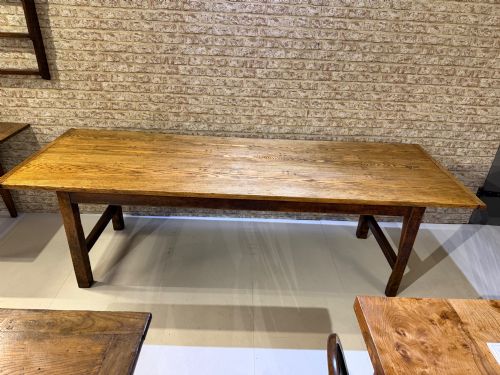
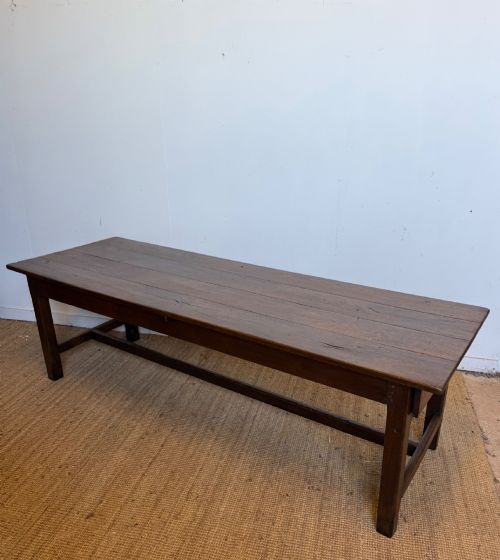
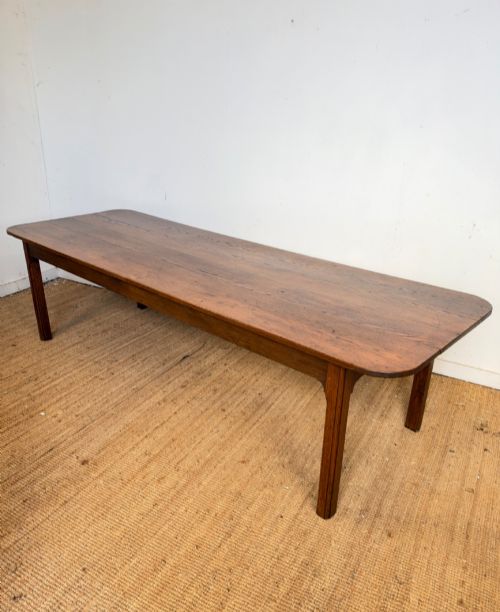
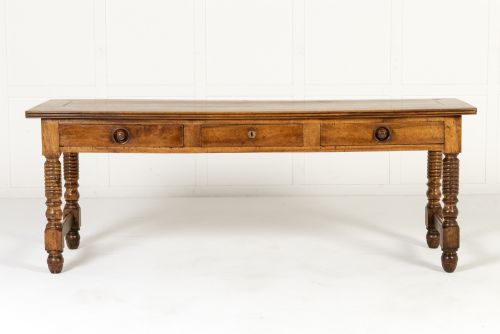
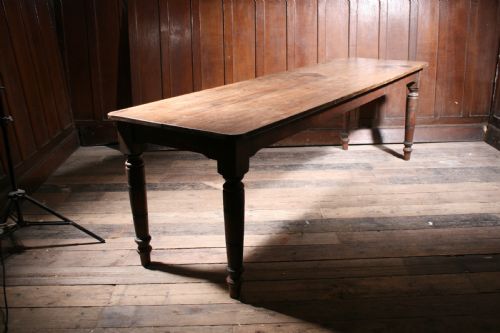
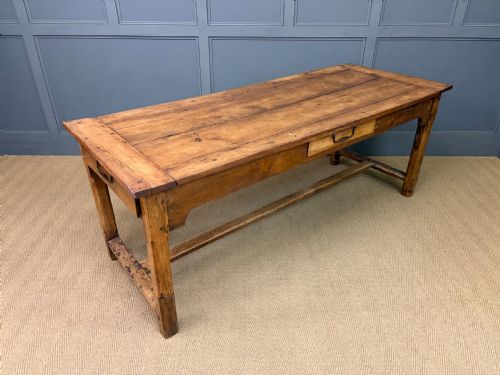
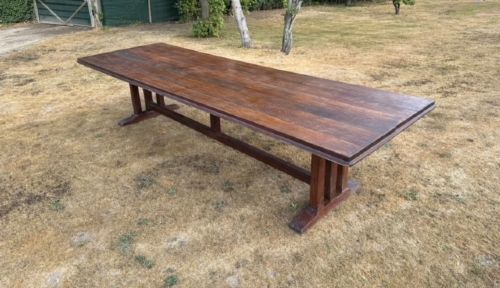
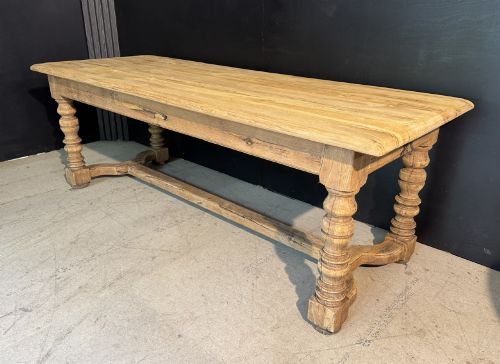

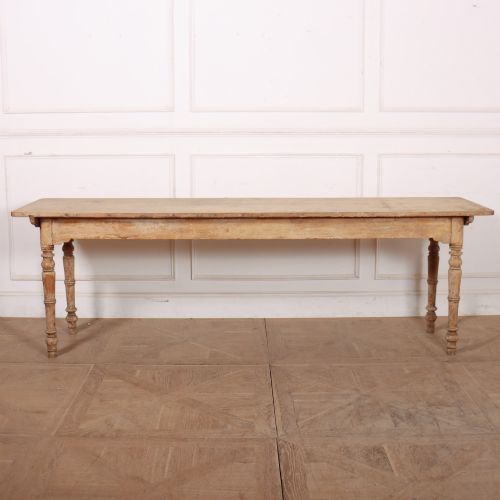
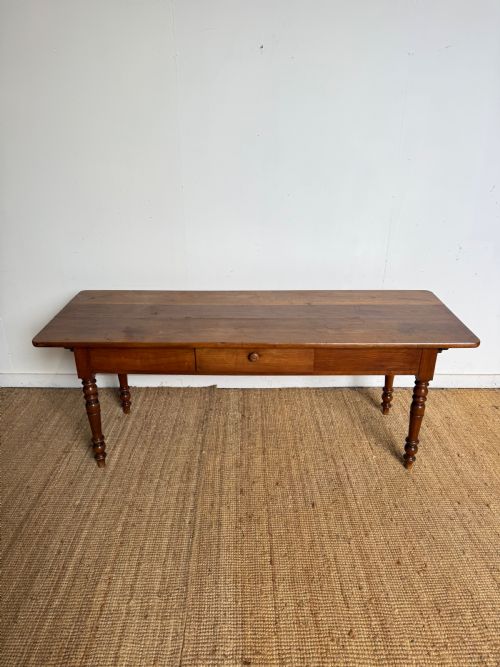

Long Timber Table
A long timber table anchors a room with scale and utility, built for communal dining, preparation, and trade across centuries.
Long Timber Table
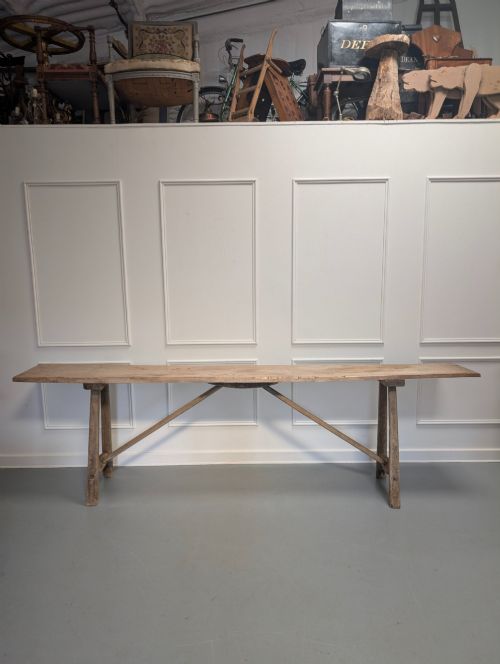
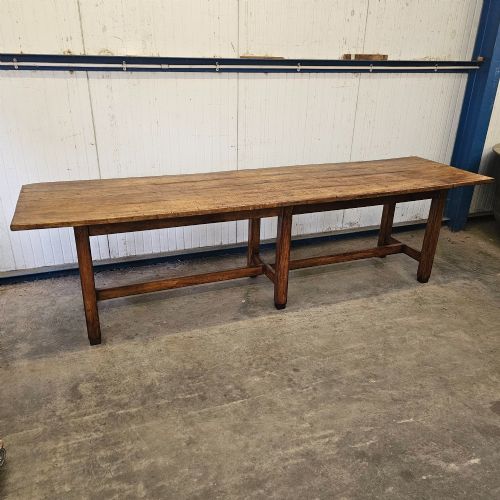
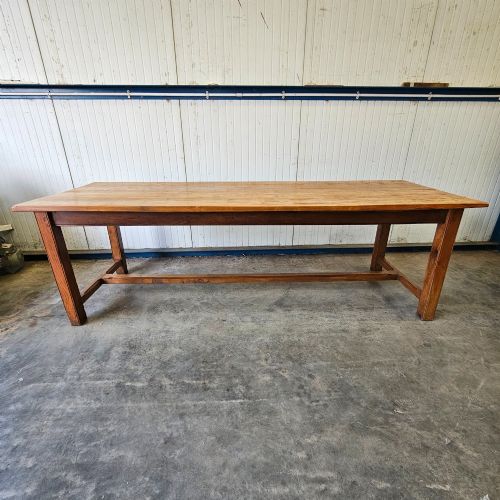
A long timber table encompasses diverse formats designed for domestic and commercial labour, appearing primarily as dining tables, refectory pieces, and drapers tables. Buyers searching for a long timber table encounter examples originating from French, English, Italian, and Swedish traditions, spanning the nineteenth and early twentieth centuries.
Utility shapes these objects, leading to forms such as console tables, serving tables, trestle tables, and dresser bases. French and English country houses supply many of the surviving specimens, alongside workshop benches and boardroom tables constructed for heavy use.
Dimensions range significantly, with lengths stretching from standard dining proportions to over nine feet, often utilising twin planks or solid boards. These surfaces reflect centuries of daily service, bearing the marks of preparation, trade, and gathering.
Materials and Construction
Carpenters utilised regional hardwoods and softwoods depending on availability and purpose, employing pine, oak, walnut, beech, elm, cherry wood, fruitwood, poplar, and mahogany. Structural support frequently incorporated brass, iron, and paint alongside primary timber frames.
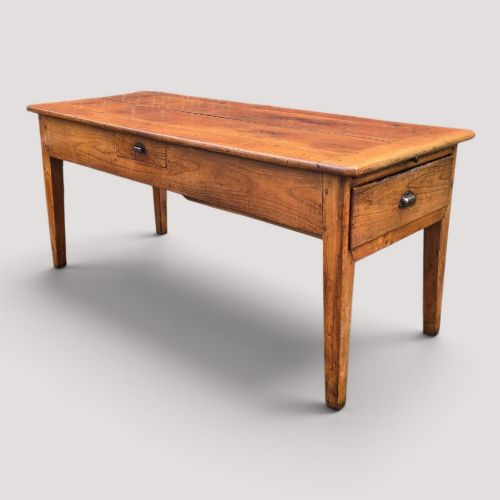
Construction methods prioritised durability, using thick plank tops secured to sturdy trestles, refectory bases, or drawer-fitted aprons. Surfaces often show the scrubbed grain of poplar or the rich patina of waxed fruitwood and oak, shaped by hand tools and prolonged use.
Long Timber Table Retail Price Guide 2026
Typical asking prices for long timber table among the pieces listed under this phrase on Sellingantiques today, from the lower quarter to the upper quarter. They describe what is for sale here now, not the wider market.
Several kitchen preparation boards retain flour dust settled firmly into the grain from rural workspaces of the nineteenth century.
Quality and Character
The distinction between standard utility furniture and superior examples lies in the selection of primary timbers and the integrity of the original structure. Untouched surfaces bearing genuine patination from decades of service command greater appreciation than heavily restored or altered boards.
Proportion and scale dictate the visual weight of the piece, where balanced timber thickness and well-proportioned legs or trestles elevate the design. Original mounts, integrated drawers, and unplaned twin planks further distinguish exceptional specimens from routine workshop pieces.
The Long Timber Table Glossary
- Refectory table
- A long dining table historically used in monasteries and large halls, characterised by substantial length and stretcher-supported legs. These forms prioritise stability and communal seating.
- Drapers table
- A long, narrow table traditionally utilised in fabric shops for measuring and displaying cloth, often featuring multiple drawers. Their shallow depth suits modern hallways and serving functions.
- Potboard
- A lower open shelf fitted beneath a serving table or dresser base, historically designed to hold pots and heavy kitchen utensils. This shelf provides structural bracing and secondary display space.
- Trestle table
- A table comprising two or more support frames connected by a horizontal beam or stretcher, holding a loose or fixed top. This design allows maximum legroom along the length of the surface.
- Twin plank
- A tabletop constructed from two wide boards joined side by side, frequently seen in large farmhouse and preparation tables. This method utilises mature timber widths uncommon in modern forestry.
Long Timber Table: Frequently Asked Questions
How do I choose the right length?
Consider the primary function of the room and allow adequate clearance around the perimeter for chairs or benches to be pulled out comfortably. Measuring the available floor space ensures the scale of the piece complements the proportions of the interior.
Take into account whether the piece will serve for daily dining, hallway placement, or workspace use. Trestle and refectory designs offer flexible legroom along the entire span, which helps when seating multiple guests.
Can these tables be used for daily dining?
Most surviving examples were built specifically for heavy domestic or commercial labour, making them exceptionally well suited for modern dining and family use. Their durable construction withstands daily gatherings and active household environments.
Routine maintenance involves using appropriate waxes or oils to nourish historic timber surfaces without damaging existing patination. Protective mats help guard against heat and moisture while preserving the character of antique boards.
What is the difference between a refectory and a farmhouse table?
Refectory tables traditionally feature long, linear stretcher systems connecting substantial legs, originating from large communal dining halls. They tend to exhibit formal architectural lines and generous lengths.
Farmhouse tables often incorporate simpler framing, integrated drawers for utensils, and thick plank tops designed for kitchen preparation and everyday domestic work. Both styles share robust timber construction suited to heavy utility.
How do I identify the wood type?
Examining the grain pattern, colouration, and weight of the timber helps determine whether the piece utilises oak, pine, walnut, elm, or fruitwood. Regional traditions often dictated the choice of local woods, such as beech and cherry in French workshops or oak and mahogany in English furniture.
Patina and surface wear accumulate differently across species, with softwoods like pine showing deeper indentations and hardwoods developing a smooth, dark lustre over centuries of handling.