

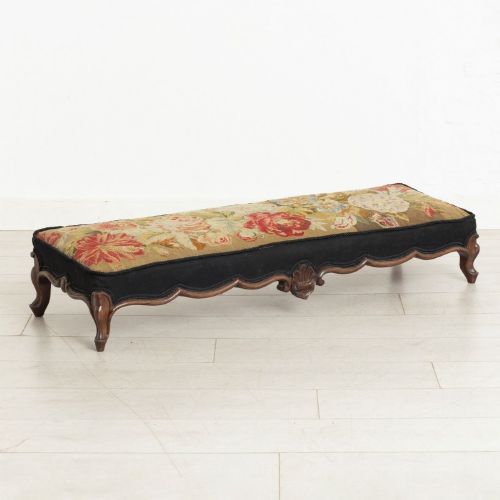


Long Ottoman Stool
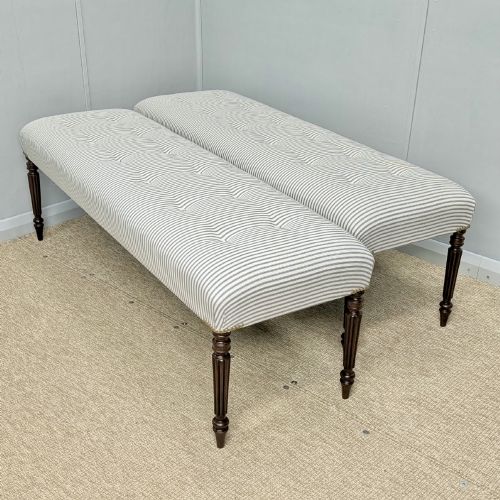
A long ottoman stool provides generous proportions for the end of a bed or hearth, combining supportive seating with substantial period presence.
Long Ottoman Stool
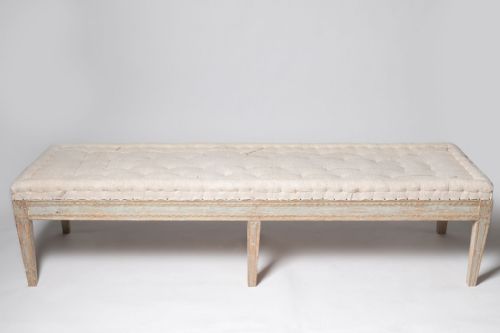
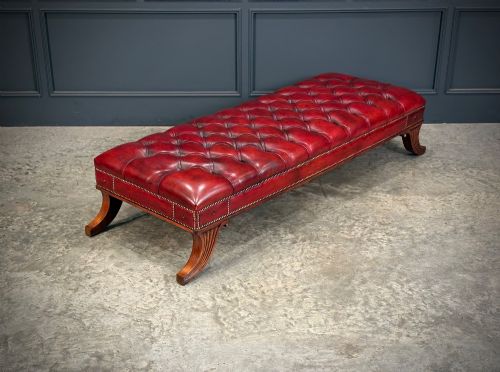
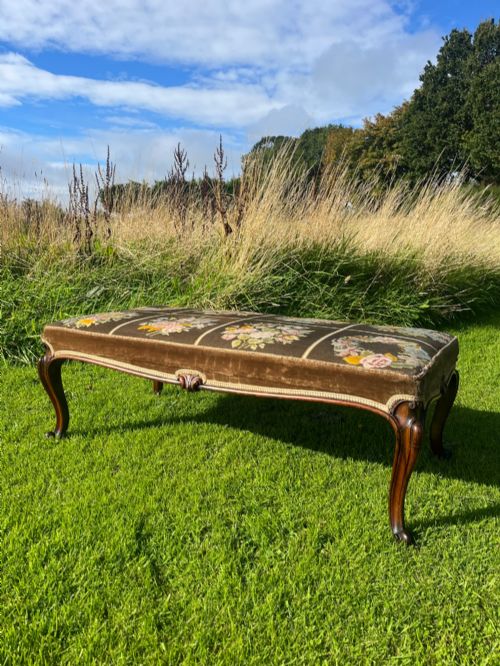
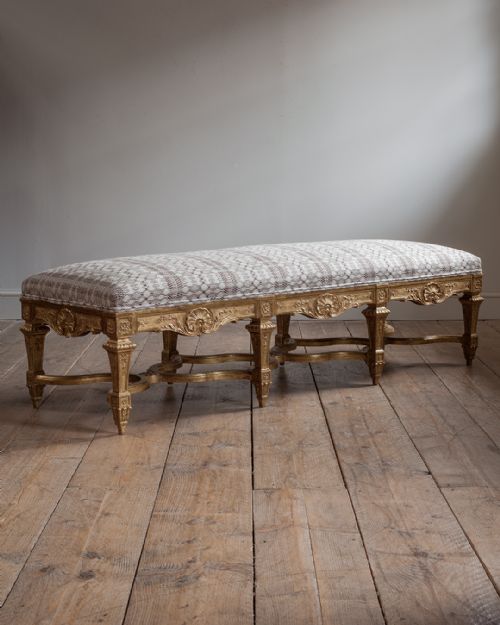
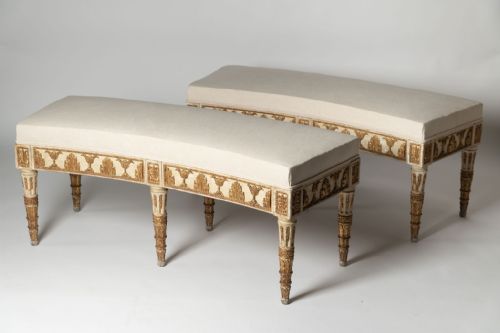
A long ottoman stool functions as an elongated seat, footrest or window bench, appearing across the nineteenth and early twentieth centuries in various regional interpretations. You encounter forms ranging from low walnut footstools and fender stools to carved giltwood centre stools and oak day beds.
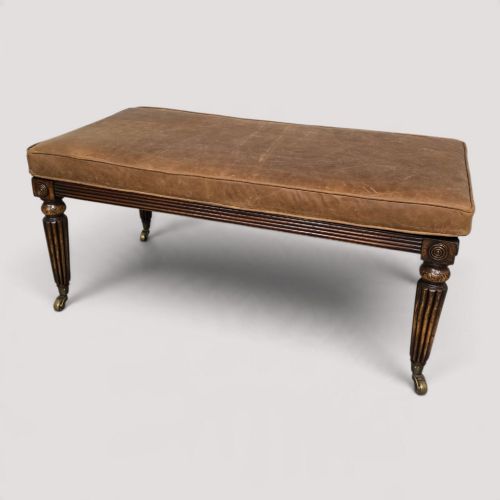
The materials span mahogany, walnut, rosewood and oak frames paired with leather, linen, fabric, kilim or cane upholstery. These pieces serve practical functions in hallways, bedrooms and reception rooms while displaying distinct stylistic revivals from the Victorian era onward.
Materials and construction
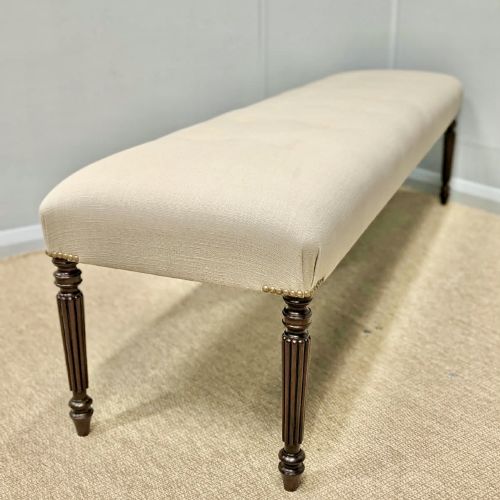
Frames rely on hardwoods such as mahogany, walnut, oak and rosewood, shaped with cabriole, fluted or carved legs alongside occasional giltwood or ebonised finishes. Upholstery methods incorporate buttoning, brass-studded leather, woven cane panels and textiles including linen and kilim.
Joinery and carving techniques reflect the specific period style, from Gothic revival oak work to French-influenced hand-carved gilding and traditional walnut framing.
Long Ottoman Stool Retail Price Guide 2026
Typical asking prices for long ottoman stool among the pieces listed under this phrase on Sellingantiques today, from the lower quarter to the upper quarter. They describe what is for sale here now, not the wider market.
Some nineteenth-century makers evidently believed nobody should ever have cold ankles while stoking the fire.
Assessing quality and craftsmanship
Quality rests in the crispness of the timber carving, the structural integrity of the frame joints and the authenticity of period elements like cabriole legs or ball and claw details. Pieces retaining original upholstery materials or well-executed traditional recovery show a higher degree of preserved character.
The refinement of proportion and timber selection, such as figured walnut or dense mahogany, separates standard utility seating from decorative centre pieces designed for formal interiors.
Morris & Co.
The Long Ottoman Stool Glossary
- Cabriole leg
- A furniture leg curving outward at the knee and inward at the ankle, ending in a decorative foot. This form draws inspiration from animal limbs and appears frequently on eighteenth- and nineteenth-century seating.
- Fender stool
- A low, elongated stool designed to sit directly in front of a fireplace fender. These pieces allow warming of the feet while seated close to the hearth.
- Kilim
- A flatwoven textile originating from the Near East and Central Asia. Such fabrics are sometimes utilised to recover period stools for a textured finish.
- Day bed
- A long seating unit combining the functions of a chair and a bed. Examples often incorporate cane panels or upholstered long frames.
Long Ottoman Stool: Frequently Asked Questions
Where should I place a long ottoman stool?
These pieces fit naturally at the foot of a bed, beneath a window as a seat, or along a hallway wall. Their elongated shape also suits placement in front of a sofa or hearth.
Consider the clearance needed for walking routes in smaller rooms, as length varies considerably across the available periods.
How do I distinguish between a footstool and a window seat?
Window seats generally stand higher and often feature supportive ends or backs designed for sitting upright by a window. Footstools remain lower to the floor for resting feet or legs.
Some larger examples bridge both categories, functioning interchangeably as low benches or deep footstools depending on the room layout.
What periods do these long stools come from?
The listings encompass nineteenth-century items alongside early twentieth-century examples up to the 1930s. Styles span Victorian designs, Edwardian pieces, and revival aesthetics including Louis XIV, Louis XV, and Gothic forms.
Construction details and timber choices help indicate the specific era of manufacture.
Are original fabrics common on these stools?
Original fabrics appear on select pieces, though many long stools undergo reupholstery over time in materials like linen, leather, or kilim. Retaining early upholstery adds historical value for collectors.
When a piece has been recovered, traditional methods and appropriate period fabrics maintain the visual integrity of the frame.