
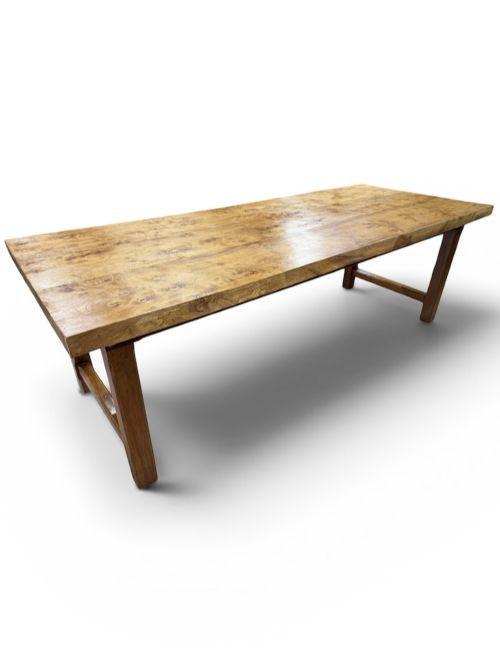
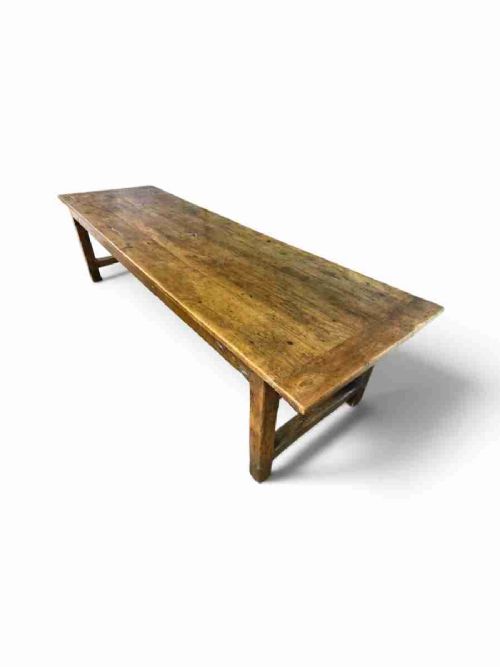
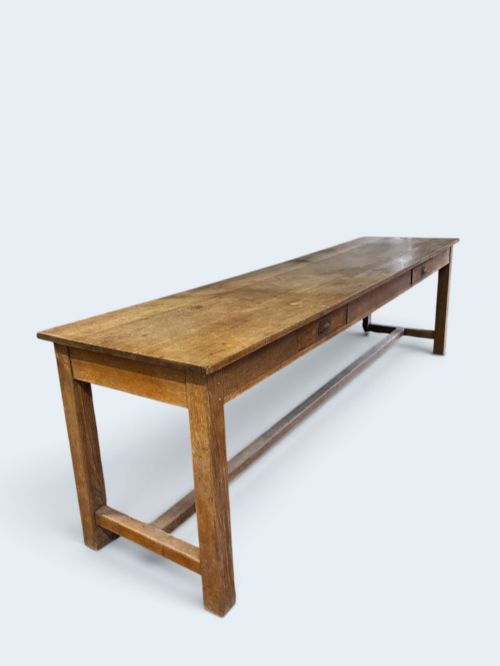
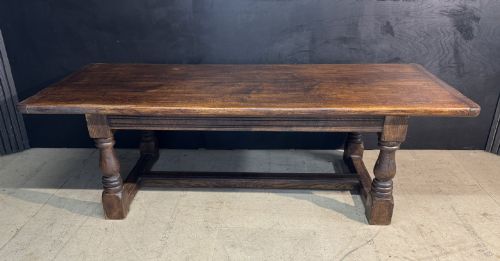


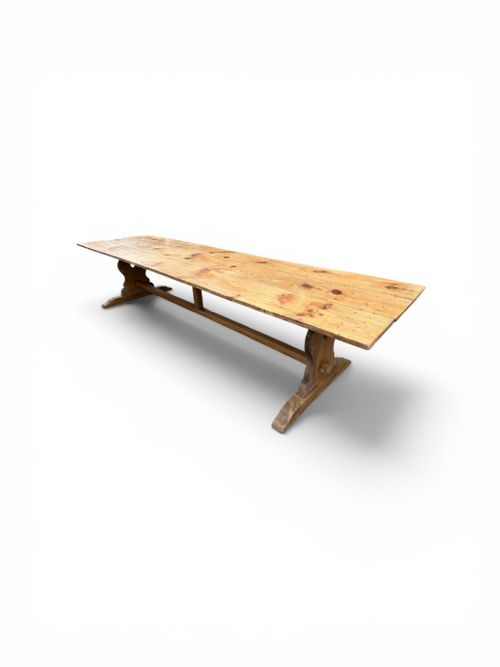

Long Oak Farmhouse Table
A long oak farmhouse table anchors a large kitchen or dining room with robust timber and centuries of utilitarian history.
Long Oak Farmhouse Table
A long oak farmhouse table is a substantial dining or work surface designed for heavy domestic or communal use. These pieces span centuries of rural design, featuring heavily in English and French country traditions.
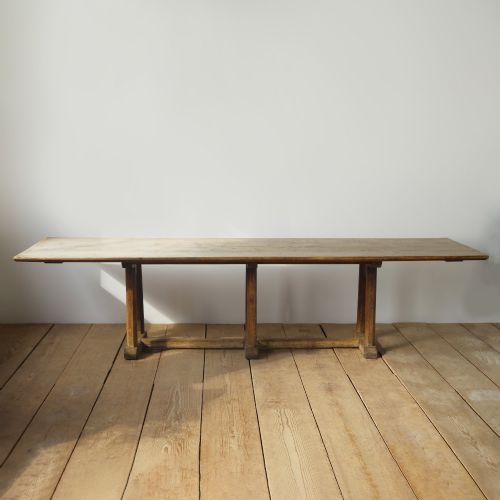
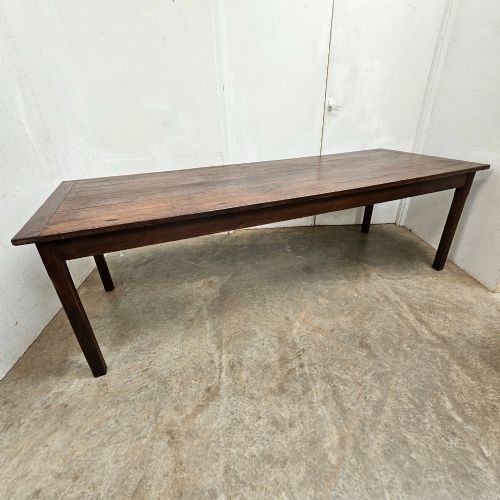
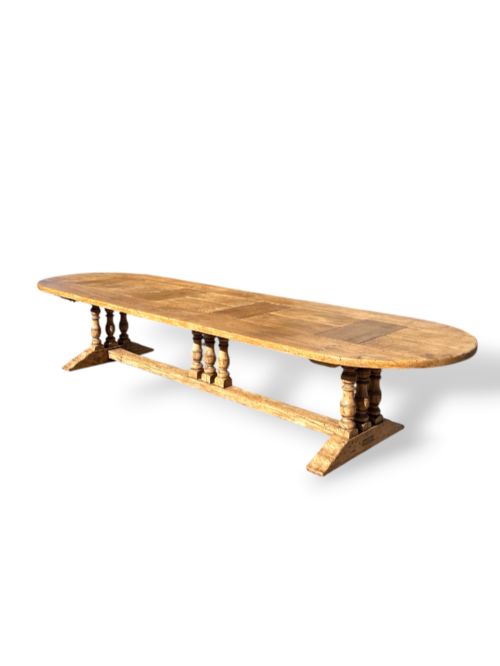
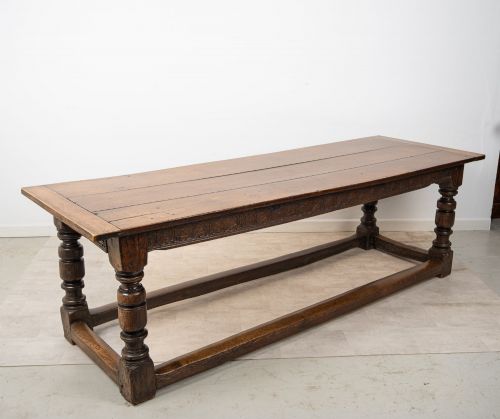
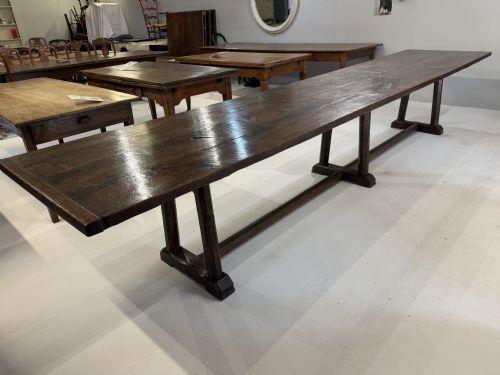
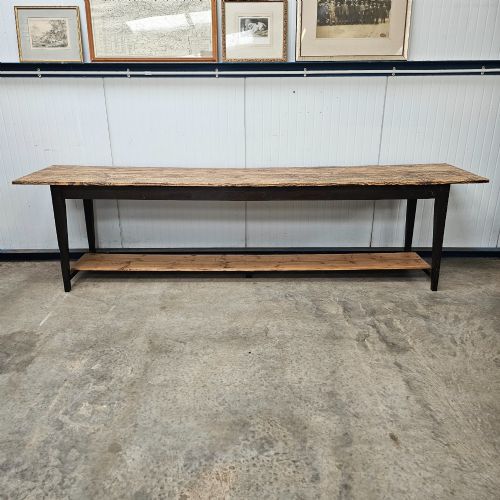
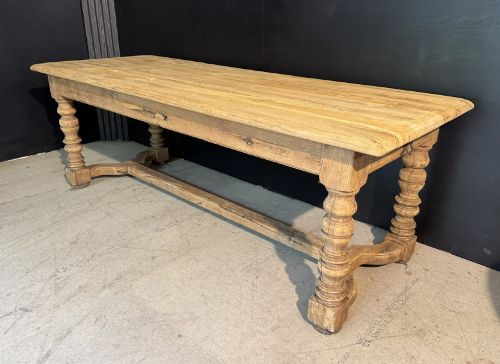
The version most frequently met on this page is the nineteenth-century refectory or harvest table, often measuring well over two metres in length. These examples typically utilise plank tops supported by trestles, stretchers, or simple four-leg underframes.
Originating in farmhouses, rectories, and taverns, the form prioritises length and stability above all else. They serve today as primary gathering spaces in spacious family kitchens and dining halls.
How They Were Made
Cabinet makers and local joiners constructed these tables primarily from solid timber, using oak for the main surfaces and structural frames. Secondary woods such as beech, elm, poplar, and pine frequently appear in stretchers, drawers, and underframes.
Tops were formed from wide planks joined together, sometimes secured with cleated ends to manage natural wood movement over time. Frame construction relied on traditional joinery methods, including pegged mortise and tenon joints, alongside sturdy H-stretchers or trestle bases.
Listings feature examples spanning from the seventeenth century through to the early twentieth century, constructed in oak, pine, elm, poplar, and beech.
What Varies in Quality
The distinction between ordinary utility tables and finer examples lies in the selection of the timber and the integrity of the original construction. Tables retaining their early plank tops with minimal board replacement command greater interest from collectors.
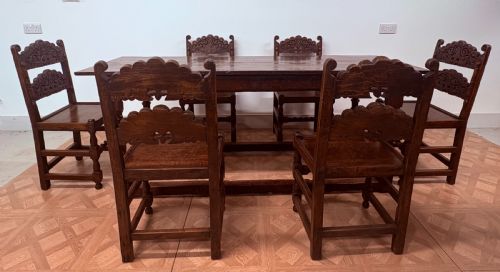
Proportion and scale also dictate quality, particularly in longer formats where maintaining rigidity without excessive sagging requires expert framing. Evidence of regional craftsmanship, such as carved rails or specific stretcher arrangements, elevates individual pieces above standard vernacular workshops.
The Long Oak Farmhouse Table Glossary
- Refectory table
- A long narrow table originally built for monastic dining halls and later adopted in domestic farmhouses. These pieces are characterised by their elongated proportions and supportive underframe stretchers.
- Plank top
- A table surface constructed from individual boards joined edge to edge rather than a single sheet of wood. Earlier examples often feature two or three exceptionally wide boards.
- H-stretcher
- A horizontal timber brace connecting the legs of a table in the shape of the letter H. This component provides vital lateral stability for heavy oak frames.
- Trestle table
- A style where the top rests on two or more vertical supports connected by a longitudinal beam. This design maximises legroom along the length of the table.
- Cleat
- A transverse piece of wood fixed to the ends of a tabletop to keep the main planks flat and stable. Traditional joiners used these to counteract natural warping.
Long Oak Farmhouse Table: Frequently Asked Questions
How do I clean a vintage oak table?
Maintain the surface using a soft, dry cloth to remove dust and daily debris. Avoid harsh chemical cleaners that strip the historic wax or oil finish from the timber.
For stubborn marks, apply a mild soap solution sparingly and dry the area immediately. Regular applications of natural beeswax help nourish the old oak grain and protect against moisture.
Can these tables seat twelve people?
Many extended examples easily accommodate large gatherings due to their generous length, which often exceeds three metres. Tables built with trestle bases or recessed legs offer additional space along the sides without obstruction.
Buyers should measure both the overall length and the distance between the underframe legs to ensure chairs fit comfortably underneath.
What is the difference between English and French tables?
English country tables often display darker oak tones with straightforward structural framing, reflecting utilitarian domestic or tavern use. They tend to feature robust H-stretchers and simpler leg profiles.
French provincial and refectory versions frequently utilise lighter oak or poplar, occasionally incorporating subtle carving, drawers, or distinct trestle configurations. Both traditions prioritise heavy timber construction suited to daily rural life.
How do I tell an 18th century table from a later one?
Earlier pieces from the eighteenth century or before display distinct hand-tool marks, pegged joinery, and natural patination developed over generations of use. The grain patterns on older plank tops often show wider growth rings and deeper surface wear.
Nineteenth and twentieth-century interpretations may utilise similar vernacular forms but frequently exhibit more uniform machine sawing and cleaner timber preparation underneath.