

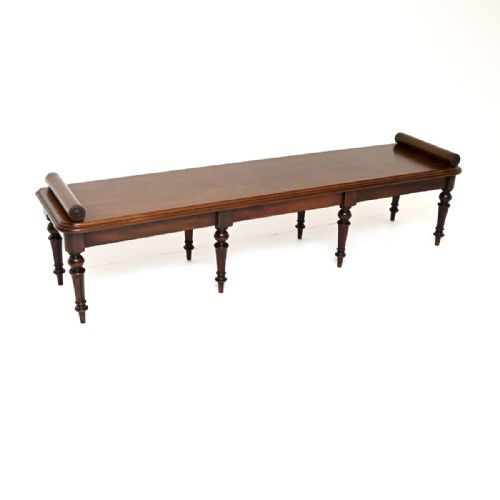
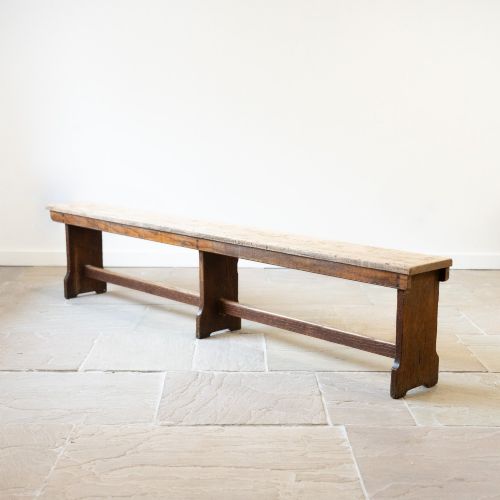
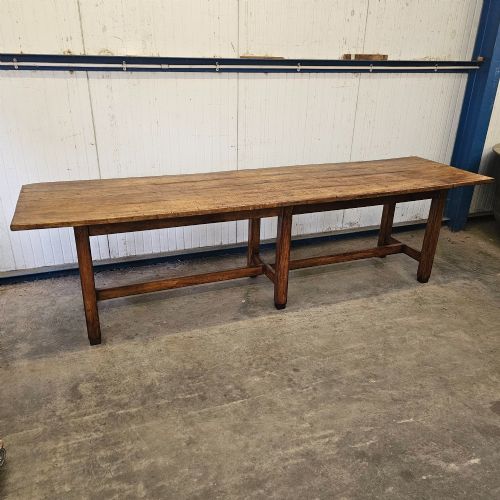
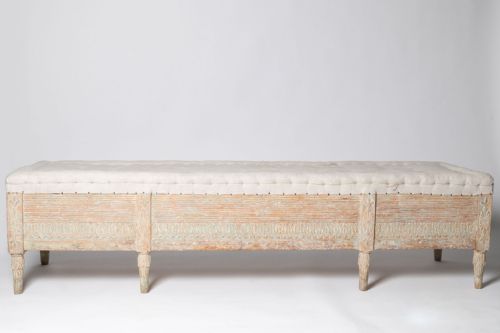
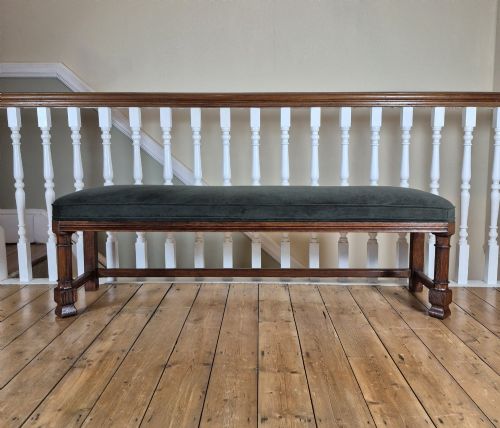
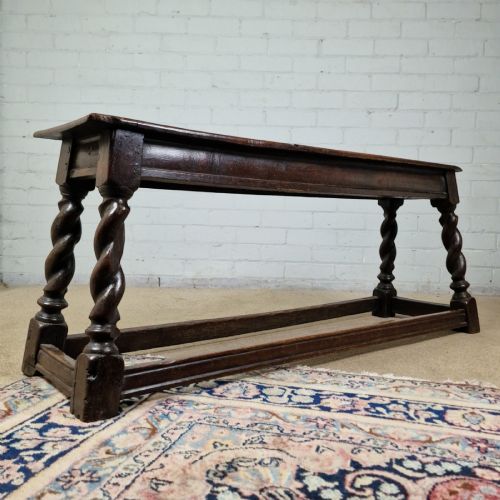
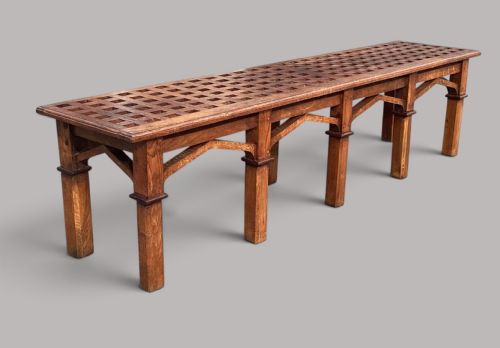
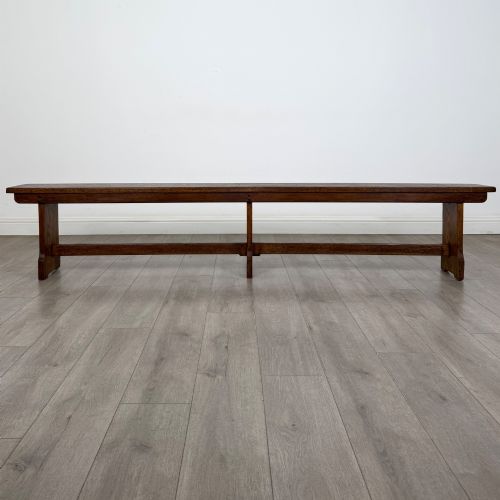
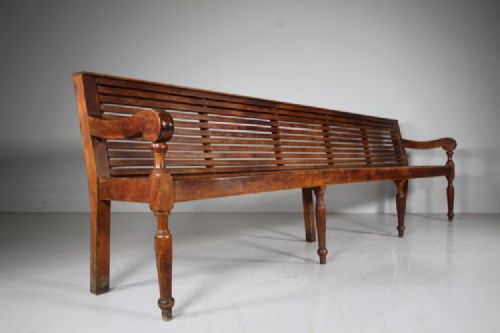
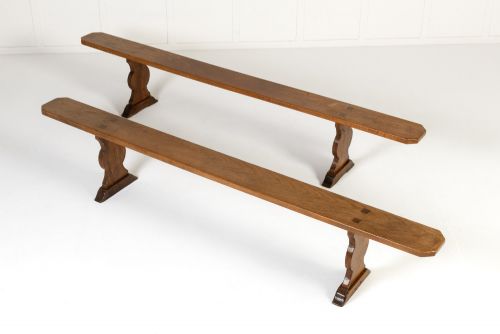
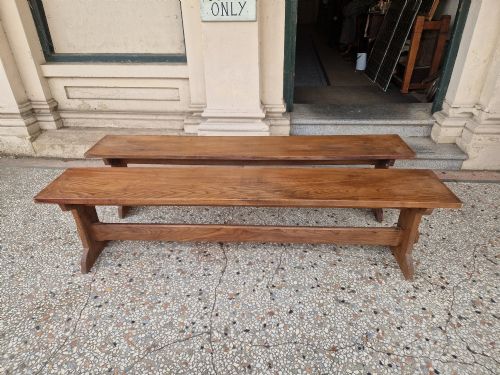
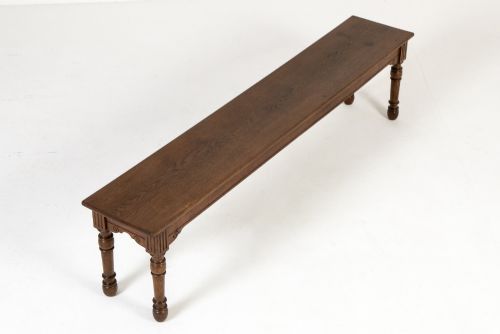


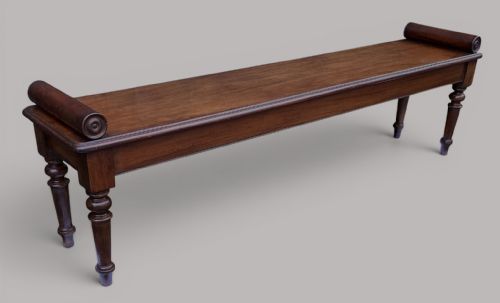
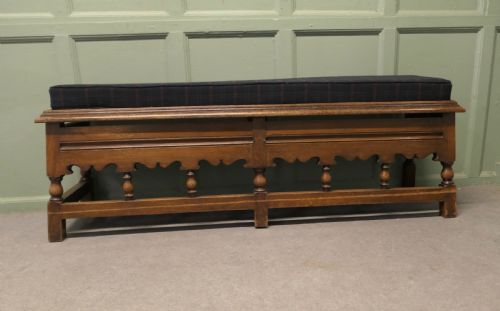
Long Hall Bench
A long hall bench anchors a grand entrance passage with generous seating and presence, built to handle daily comings and goings in heavy timber.
Long Hall Bench
The selections span multiple eras, showing examples from the eighteenth, nineteenth, and early twentieth centuries. These seating forms appear in styles ranging from Gothic Revival and Regency to rustic farmhouse and Arts and Crafts.
Makers utilised robust hardwoods and softer timbers to construct these architectural seats. Common structural woods include oak, mahogany, walnut, pine, elm, and cherrywood, sometimes paired with leather, velvet, or linen upholstery.
Materials and construction methods
Cabinet makers and joiners relied heavily on solid oak, mahogany, walnut, and pine for frame construction. These timbers were selected for their structural integrity and ability to support continuous weight over extended spans.
Joinery techniques involved traditional framing, pegged mortise and tenon joints, and turned or fluted legs. Upholstered variants integrated supportive webbing and padding beneath finishes of leather, velvet, or linen.
Long Hall Bench Retail Price Guide 2026
Typical asking prices for long hall bench among the pieces listed under this phrase on Sellingantiques today, from the lower quarter to the upper quarter. They describe what is for sale here now, not the wider market.
Listings feature long hall benches constructed from oak, mahogany, walnut, pine, elm, and cherrywood across several centuries.
Assessing quality in construction
Quality separates pieces through the selection of timber and the complexity of the joinery. Dense hardwoods like oak and mahogany with tight grain patterns indicate superior structural longevity compared to softer utility pine.
Proportion and detailing distinguish finer examples, such as hand-carved ornamentation, crisp fluted legs, and authentic period upholstery methods. Finer pieces maintain original structural timbers without excessive modern reinforcement.
The Long Hall Bench Glossary
- Gothic Revival
- An architectural and decorative style popular during the nineteenth century drawing inspiration from medieval forms. Pieces often feature pointed arches, tracery, and heavy structural oak.
- Regency
- A style spanning the early nineteenth century defined by classical restraint and elegance. Mahogany frames frequently incorporate reeded or fluted legs reminiscent of ancient Greek designs.
- Arts and Crafts
- A movement prioritising traditional craftsmanship and simple forms over mass production. Items from this tradition display visible joinery and honest use of solid timber.
- Carolean Style
- A seventeenth-century revival aesthetic characterised by rich carving and stately proportions. Walnut low hall seats often display these ornate decorative motifs.
- Window Seat
- A form of long narrow bench designed to fit within a window recess. These pieces share similar proportions to corridor seating and frequently feature upholstered pads.
Long Hall Bench: Frequently Asked Questions
Where should a long hall bench go?
These benches suit grand entrance halls, wide corridors, and large boot rooms where linear seating is required. Their extended proportions anchor empty wall spaces effectively.
They also function well at the foot of a bed or beneath a wide window recess as secondary seating.
How do I identify the period?
Dating relies on examining the timber species, joinery methods, and stylistic cues present in the frame. Eighteenth-century examples often show hand-sawn board construction and pegged joints.
Nineteenth-century pieces frequently adopt Gothic Revival, Regency, or Arts and Crafts characteristics with machine-assisted secondary components.
Were these made for hallways?
Many were built specifically for grand country houses, civic buildings, and palaces to accommodate waiting visitors and family members. Some incorporated storage for boots and tweeds.
Others originated as tavern benches, school seating, or long dining forms repurposed for entranceways over time.
How do I care for the timber?
Maintain finished wood surfaces by applying appropriate beeswax or natural polishes to nourish the grain. Avoid placing antique timber in direct sunlight or near heat sources.
Upholstered sections require gentle vacuuming and professional cleaning when dealing with vintage velvet, leather, or linen textiles.