

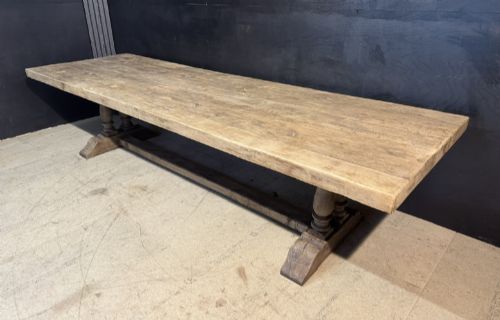
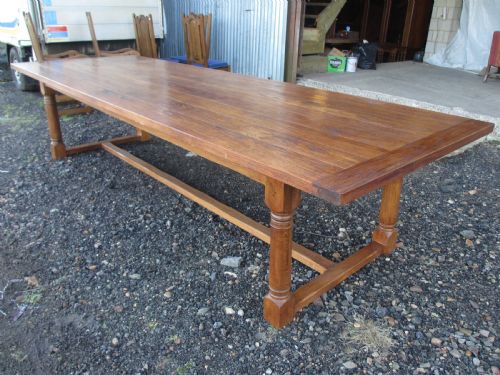
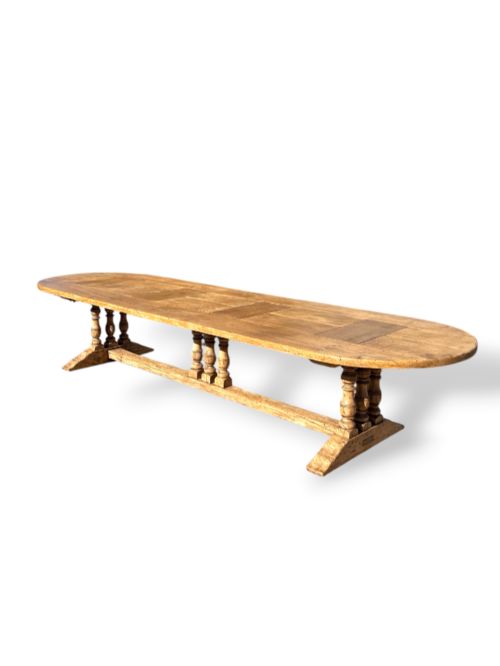
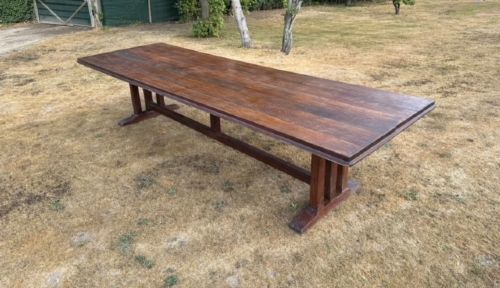





Long Banquet Table
A long banquet table provides substantial timber surface and enduring presence for large dining rooms.
Long Banquet Table
When you search for a long banquet table, you are looking at substantial dining furniture designed to seat large numbers of people comfortably for meals and gatherings. These pieces anchor large rooms with their considerable length and presence.
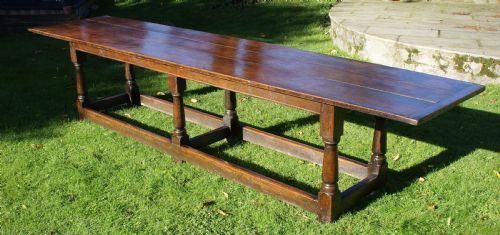
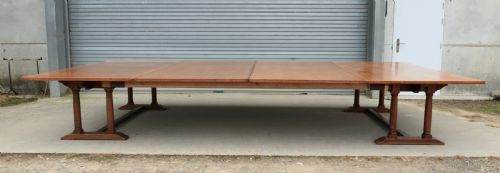
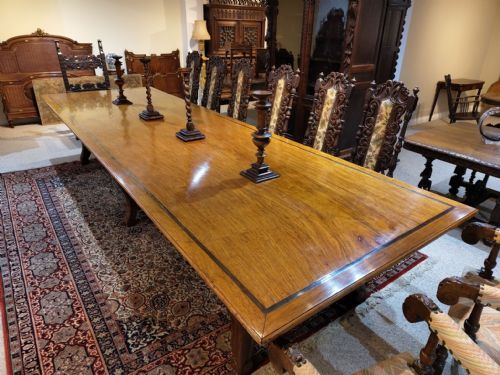
The versions you are most likely to meet on this page span several centuries and styles, ranging from early oak pieces to later Edwardian and Victorian examples. Many listings take the form of refectory or boardroom tables.
Makers built these tables to serve functional needs in large houses, institutions, and country properties. Oak appears as the dominant material across multiple periods, accompanied by walnut and pine in specific examples.
How they were made
Carpenters constructed these tables primarily from solid oak and walnut timber, selecting durable woods capable of withstanding heavy daily use. Joinery techniques varied by period, employing traditional framing methods to maintain stability across extended lengths.
Specific examples incorporate utilitarian additions, such as bronze feet found on particular Victorian pieces. Timber surfaces received finishes suited to daily dining, preserving the natural grain and colour of the wood.
Long Banquet Table Retail Price Guide 2026
Typical asking prices for long banquet table among the pieces listed under this phrase on Sellingantiques today, from the lower quarter to the upper quarter. They describe what is for sale here now, not the wider market.
What varies in quality
Quality in these tables rests primarily on the selection of timber and the integrity of the original construction. Pieces retain greater distinction when they preserve their original proportions and historical materials without excessive later alteration.
The sophistication of the joinery and the treatment of the timber separate standard examples from finer pieces. Tables that maintain their structural stability across significant lengths demonstrate superior craftsmanship.
The Long Banquet Table Glossary
- Refectory table
- A long narrow dining table originally used in monasteries and large houses. This form provides the structural basis for many examples seen here.
- Trestle table
- A table consisting of two or more supports carrying a horizontal top. This construction allows for flexible seating arrangements along the length.
- Jacobean style
- A heavy, formal style of English furniture dating from the early seventeenth century. Pieces from this tradition often feature dark oak and robust turnings.
- Gothic Revival
- A nineteenth-century style drawing inspiration from medieval architecture and design. Tables in this style often incorporate pointed arches and heavy timber framing.
Long Banquet Table: Frequently Asked Questions
How many people can sit at a long banquet table?
Seating capacity depends directly on the overall length of the timber top and the placement of the supporting legs. Certain examples accommodate up to thirty people comfortably for large gatherings.
Buyers should measure their dining space carefully to ensure adequate clearance around the table for chairs and movement.
What rooms suit a long banquet table?
These large tables suit spacious dining rooms, open-plan country houses, and large boardrooms. Their considerable length requires ample surrounding floor space to maintain correct proportions.
Placing such a piece in a smaller room restricts movement and overwhelms the interior scheme.
How do I care for an antique oak dining table?
Oak surfaces require regular dusting with a dry cloth and occasional treatment with appropriate beeswaxes to nourish the timber. Avoiding direct sunlight and excessive heat prevents the wood from drying out.
Using placemats and coasters protects the historical finish from moisture and heat damage during daily use.
How do I identify a refectory table?
A refectory table is characterised by its long, narrow rectangular proportions and sturdy undercarriage. Stretcher rails running low between the legs provide additional stability.
This functional form evolved to serve communal dining halls and remains a popular choice for modern entertaining.