




London Aneroid Barometer
These london aneroid barometer pieces measure atmospheric pressure through mechanical expansion, offering both scientific utility and classic interior decoration.
London Aneroid Barometer
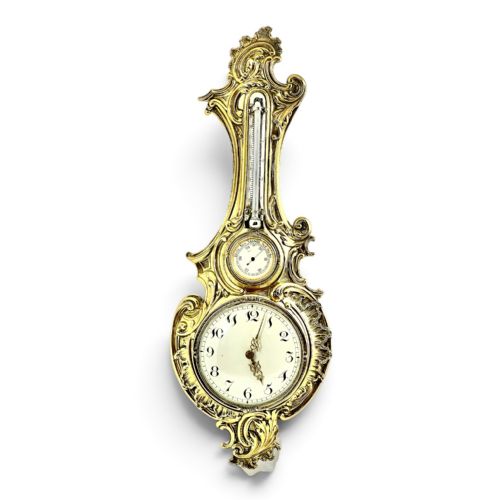
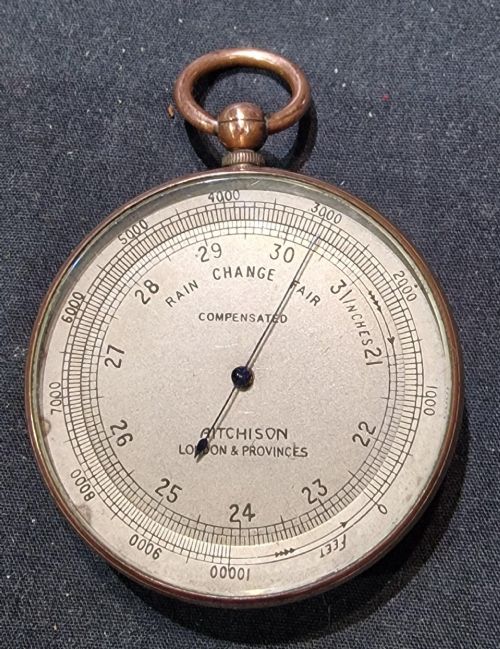
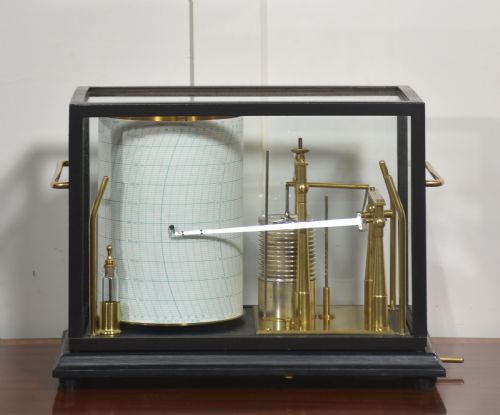
A london aneroid barometer uses a flexible metal capsule inside to indicate weather changes without employing liquid mercury, representing a significant shift in domestic meteorology. Buyers searching for a london aneroid barometer encounter wall-mounted instruments, portable pocket devices, and complex recording barographs originating from workshops across the capital.
The objects span from the mid-nineteenth century into the early twentieth century, encompassing Victorian and Edwardian domestic items alongside scientific apparatus. Wall variants utilise carved oak, mahogany, or ebonised wood frames, while portable examples incorporate fitted leather or brass cases suited for field surveying.
How they were made
Maker workshops constructed these instruments using brass mechanisms linked to silvered metal dials, protected behind clear glass faces and mounted within dense timber surrounds. Mahogany, oak, and ebonised wood provide the structural housing for wall barometers and barographs, frequently housing supplementary thermometers or clock stations.
Engraved calibrations upon silvered metal dials record barometric pressure, while precision steel and brass levers translate the movement of the internal vacuum capsule. Artisans utilised hand-carved ornamentation for heavier oak and mahogany frames, alongside specialised enamel painting for indicator faces and dial markings.
London Aneroid Barometer Retail Price Guide 2026
Typical asking prices for london aneroid barometer among the pieces listed under this phrase on Sellingantiques today, from the lower quarter to the upper quarter. They describe what is for sale here now, not the wider market.
Some pocket barometers were carried by surveyors climbing mountains to measure altitude by air pressure drop.
What varies in quality
Cabinetry execution defines the exterior standard, where deeply carved timber cases and clean silvered dials contrast with plain or heavily restored surrounds. Signed markers on the dial face or movement indicate the standing of the original maker, separating workshop-standard pieces from retail-supplied items.
Short & Mason·Elliott Brothers·Negretti & Zambra·Antoine Redier·Blake & Son·Dollond of London·M Pillischer·James Pitkin·Dobbie son and Hutton
The London Aneroid Barometer Glossary
- Aneroid barometer
- An instrument that measures atmospheric pressure by the action of the air on the elastic lid of an empty metal box, without liquid. This design allows for compact forms and portable surveying instruments.
- Barograph
- A recording aneroid barometer that plots atmospheric pressure over time onto a revolving drum using an inked arm. These instruments are typically housed within glass and mahogany cases.
- Silvered metal
- A brass or copper base treated to produce a matte silver finish, commonly utilised for instrument dials. Engraved calibrations are filled with dark pigment to ensure legibility.
- Compensated barometer
- An aneroid instrument fitted with a bimetallic device to counteract the effects of temperature changes on the reading. This addition ensures accurate pressure measurement regardless of room warmth.
- Ebonised wood
- Timber treated with a dark stain or finish to imitate ebony, frequently utilised for nineteenth-century wall barometer frames. This treatment provides a uniform black surface that highlights the metallic dial.
London Aneroid Barometer: Frequently Asked Questions
How do aneroid barometers work?
An aneroid barometer contains a sealed corrugated metal box that expands or contracts as atmospheric pressure fluctuates outside. A system of delicate levers and springs translates this movement into the rotation of the pointer across the dial face.
Because no liquid mercury is involved, these instruments are safe to move and hang in various orientations around a room. The inclusion of a thermometer or hygrometer in the same case provides a complete atmospheric reading.
What is a barograph?
A barograph is a recording barometer that continuously charts air pressure onto a paper chart fixed to a clockwork drum. The mechanical arm holds an ink nib that traces the daily meteorological trends.
Housed in glass and mahogany cases, these mechanical devices require regular winding of the internal clockwork cylinder to maintain their continuous recording function.
How do I date an instrument?
Dating relies on the stylistic cues of the timber case, the typography upon the silvered dial, and the mechanical signature of the maker. Victorian examples often display heavy oak carving or ebonised surrounds, while Edwardian pieces lean toward cleaner mahogany housing.
Makers frequently changed their trading addresses or partnership names over decades, allowing researchers to narrow the production window based on the text engraved on the instrument face.
Where should I hang a wall barometer?
A wall barometer requires a stable interior partition away from direct heat sources, strong drafts, and excessive moisture to protect the timber case and internal brass mechanism. Secure wall fixings are essential given the substantial weight of models cased in carved oak or multi-glass mahogany.
Placement at eye level ensures clear reading of the silvered dial and allows easy access for periodic setting against known weather conditions using the adjustment screw.