


Locking Spirit Decanter
A locking spirit decanter keeps your best whiskey secure under lock and key while on display.
Locking Spirit Decanter
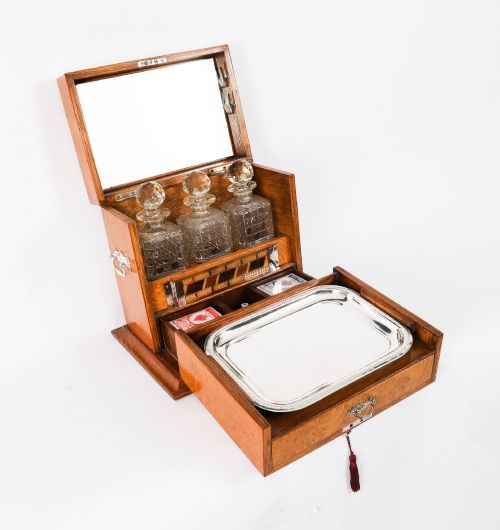
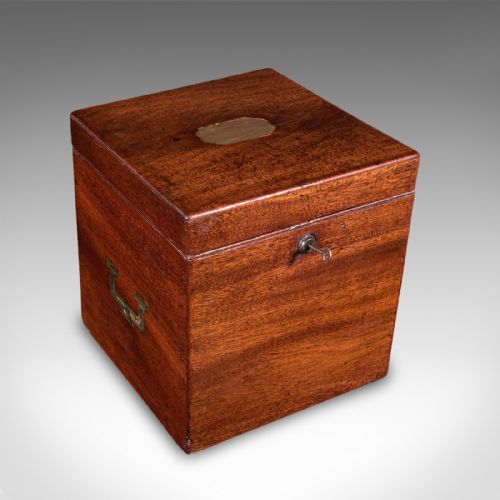
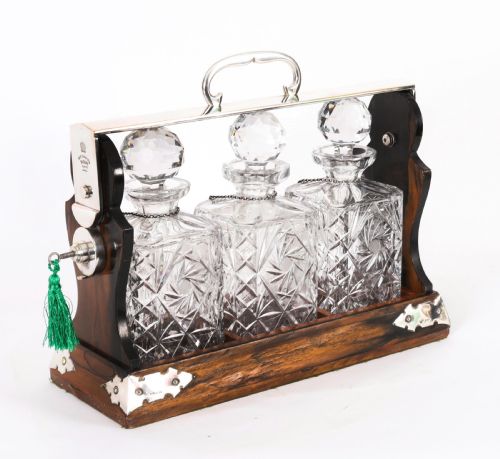
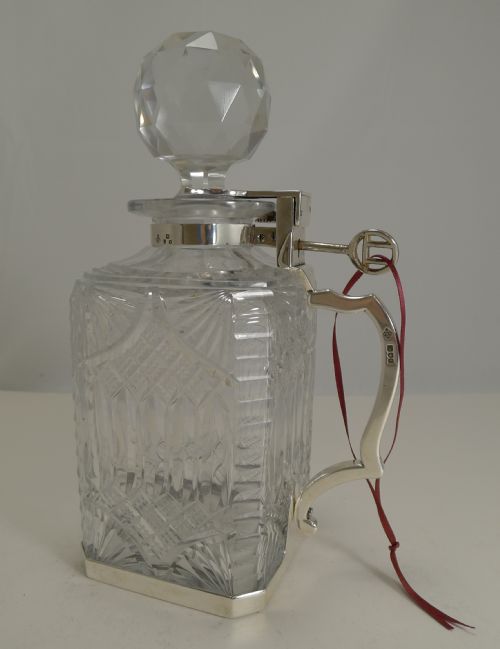
A locking spirit decanter appears in forms such as tantalus sets, bottle cases, and single crystal vessels secured with metal mechanisms. These pieces emerge predominantly from Victorian, Edwardian, and Art Deco periods, created in England to safeguard expensive liquor from servants or unauthorized guests.
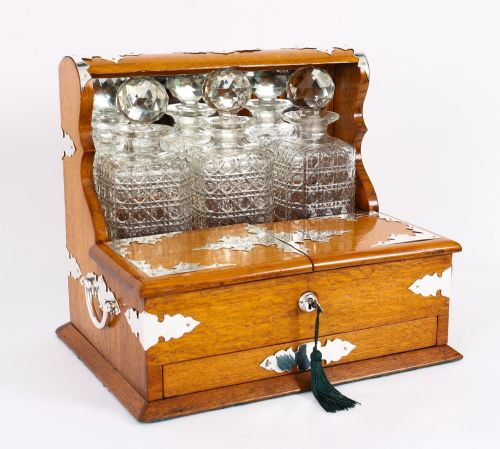
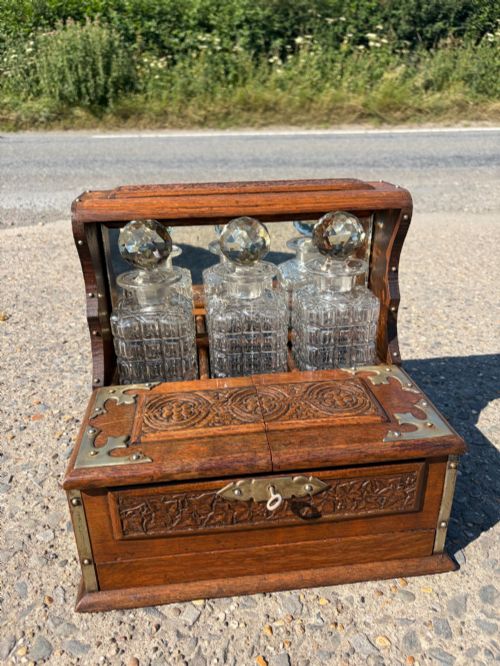
The most common versions on this page are oak and coromandel tantalus units holding two or three cut glass or crystal decanters. You also encounter freestanding single decanters fitted with locking collars and storage boxes containing multiple bottles.
Materials and Construction
Carpenters constructed the housings using solid or figured hardwoods like oak, walnut, and coromandel wood, often mounting them with brass corners and handles. Interior storage spaces frequently combine mirror glass panels and velvet linings to cushion the glassware.
The locking mechanisms rely on brass hardware, silver plate, or sterling silver mounts, paired with cut crystal or glass bottles. Maker-marked locks and specialised Bramah mechanisms provide the security that gives these pieces their defining feature.
Listings feature oak, walnut, and coromandel woods paired with cut crystal decanters across Victorian, Edwardian, and Art Deco periods.
Distinctions in Craftsmanship
Quality reveals itself in the weight and cut of the crystal decanters and the precision of the woodwork. Examples featuring figured coromandel or elaborate games compendium integrations stand apart from plain oak utility pieces.
The sophistication of the locking mechanism separates standard production from superior workshop output. Signed hardware and functional original keys elevate the overall integrity of the piece.
Betjemann’s·Hukin and Heath
The Locking Spirit Decanter Glossary
- Bramah lock
- A high-security cylindrical lock patented by Joseph Bramah in the eighteenth century. Collectors prize these clever mechanisms for their pick-resistant circular key design.
- Silver plate
- A thin layer of silver fused to a base metal like copper or nickel. Makers utilised this technique to achieve the look of solid silver on mountings and handles.
- Games compendium
- A fitted storage box containing equipment for multiple parlor games such as cards, chess, or dominoes. These boxes frequently share cabinet space with locking spirit decanters.
Locking Spirit Decanter: Frequently Asked Questions
How do you open a tantalus without a key?
Most antique locking mechanisms require a professional locksmith experienced with vintage lever or tubular locks to pick or impression a replacement key without damaging the surrounding wood.
Forcing the security bar usually fractures the wooden frame or shatters the crystal decanter neck secured inside the carriage.
Why are they called tantalus decanters?
The term refers to the ingenious locking frame that holds the decanters in place, tantalizing guests by showing the liquor while physically preventing anyone from pouring a drink.
This clever domestic security measure kept expensive spirits safe from household staff in Victorian and Edwardian homes.
Are the decanters safe for modern whiskey?
Victorian and Edwardian crystal decanters often contain lead oxide, which can leach into high-proof alcohol if left stored for long periods.
Many collectors use these pieces for display and brief serving rather than long-term spirit storage.
How do I date an oak tantalus?
Dating relies on stylistic clues, hardware patents, wood choices like coromandel or figured oak, and occasionally maker hallmarks on the silver mounts.
Late Victorian and Edwardian examples dominate the market, typically showing machine-dovetailed joints and brass fittings.