


Locking Spirit Decanter Set
A locking spirit decanter set keeps favourite bottles safe under lock and key, combining secure hospitality with handsome joinery.
Locking Spirit Decanter Set
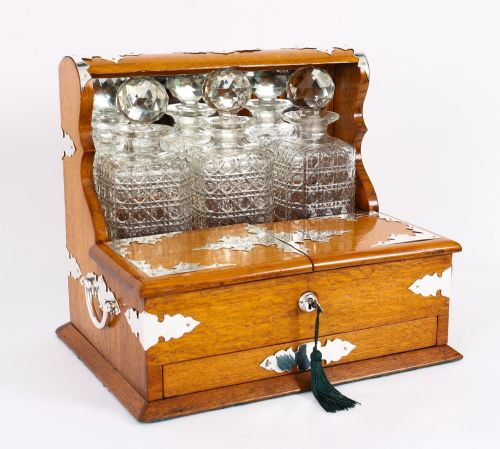
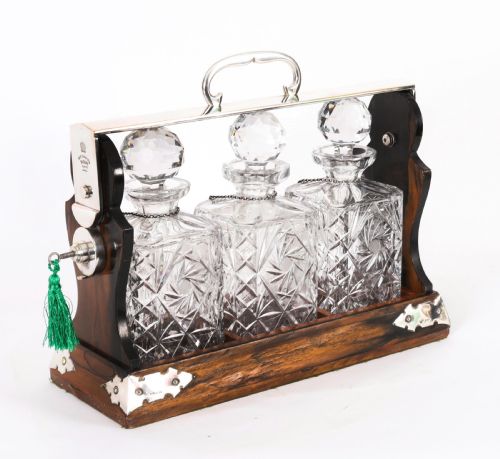
A locking spirit decanter set, often known as a tantalus, presents cut crystal decanters secured by a metal bar and a functional lock to prevent unauthorised pouring. These pieces combine barware with secure storage, keeping expensive spirits out of reach of household staff or children.
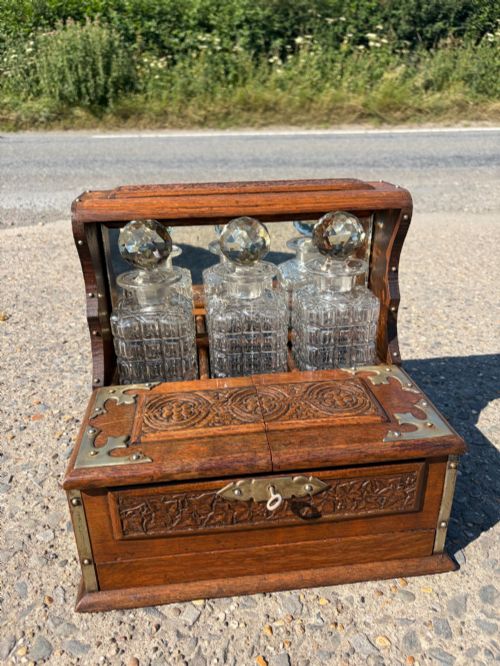
The versions most commonly met on this page date from the Victorian and Edwardian periods, stretching into the 1920s and 1930s. They appear primarily in oak and coromandel wood, frequently housing two or three cut glass decanters alongside games compendiums.
Makers housed these locking mechanisms within substantial wooden frameworks mounted in brass and silver plate. The form ranges from single bottle cases to elaborate three bottle setups with integrated after dinner compartments.
How they were made
Carpenters constructed the housing from dense hardwoods such as oak, walnut, and coromandel wood, sometimes incorporating inlay and mirror glass panels. These cabinets relied on precise joinery to withstand the heavy weight of full glass decanters.
Metalworkers fitted robust brass mountings, silver plate, and locking bars that engaged with the key mechanism to trap the glass stoppers. The cut glass decanters themselves feature heavy lead crystal bases and intricate facets designed to catch the light of a dining room.
Victorian hosts locked up the gin not from thieves, but to stop the housemaid sampling the sherry while dusting.
What varies in quality
The distinction between standard production and the finest work lies in the selection of timbers, such as figured coromandel against plain oak, and the complexity of the internal mechanism. Integrated games compendiums and fully functional silver hallmarks elevate the scope of a piece.
Subtleties in the quality of the cut glass decanters and the weight of the brass or silver plated mountings separate everyday items from exceptional examples. The smoothness of the locking action and the soundness of the wood framing govern the enduring utility of the set.
Betjemann’s·Hukin and Heath
The Locking Spirit Decanter Set Glossary
- Tantalus
- A locking drink cabinet that holds decanters in place so they remain visible yet unreachable without a key. This clever piece of Victorian engineering derives its name from the mythological figure of Tantalus.
- Cut glass
- Glassware shaped and patterned by grinding wheels to create sparkling facets. These heavy decanters sit securely within the wooden frame.
- Silver plate
- A layer of silver fused to a base metal, commonly utilised for the locking bars, handles, and mounts. This technique provided the gleam of solid silver at a lower cost.
- Games compendium
- A multi-game box incorporated into the base or sides of a tantalus set. These compartments housed items for cards, chess, or board games.
Locking Spirit Decanter Set: Frequently Asked Questions
How does a tantalus lock work?
A metal sliding bar engages over the necks of the glass decanters, preventing them from being lifted out of their wooden base. Turning a key in the integral lock secures this bar in place.
When unlocked, the bar drops or slides clear so the bottles can be removed for pouring drinks after dinner.
What is the difference between a tantalus and a decanter set?
A standard decanter set simply displays glass bottles on a tray or inside an open caddy without any security mechanism. A tantalus specifically incorporates a locking metal bar that prevents access to the spirits.
Most locking sets include cut crystal bottles fitted snugly into a dedicated wooden frame lined with mirror glass or felt.
How do I date an oak tantalus?
Victorian examples from the 1870s and 1880s frequently employ heavy carved oak and coromandel with substantial brass mountings. Pieces from around 1900 often bear maker marks or silver hallmarks and lean towards cleaner Edwardian lines.
Later sets from the 1920s and 1930s tend toward simpler woodwork and reduced ornamentation, reflecting changing interior tastes.
Were these sets used for games as well?
Many grander nineteenth century examples combine a spirit cabinet with a games compendium in the base drawer or cabinet doors. These multifunctional pieces stored playing cards, dice, or counter sets alongside the liquor.
This design suited the Victorian after dinner ritual, keeping entertainment and refreshment gathered in one place.