





Linen Embroidery Sampler
These historic linen embroidery sampler pieces record childhood alphabets, maps, and moral verses stitched in coloured threads.
Linen Embroidery Sampler
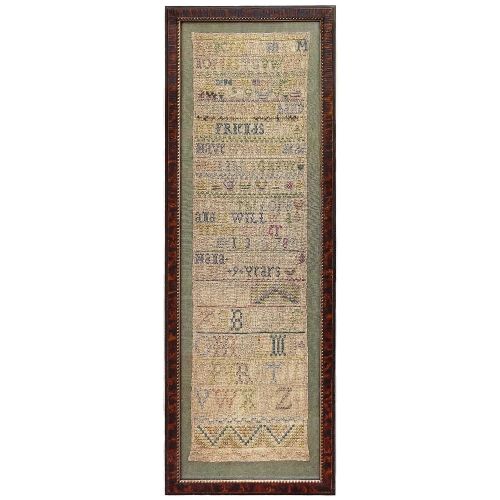
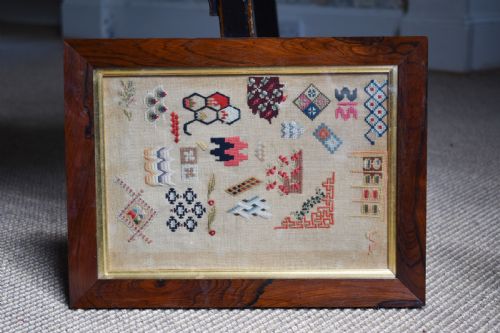
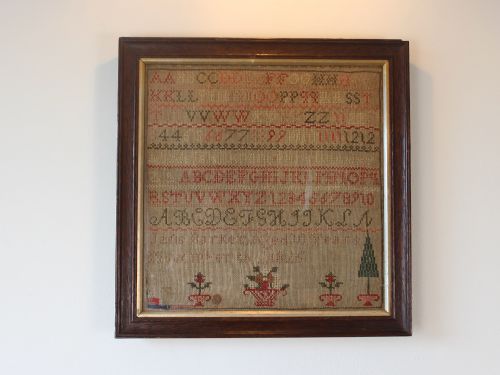
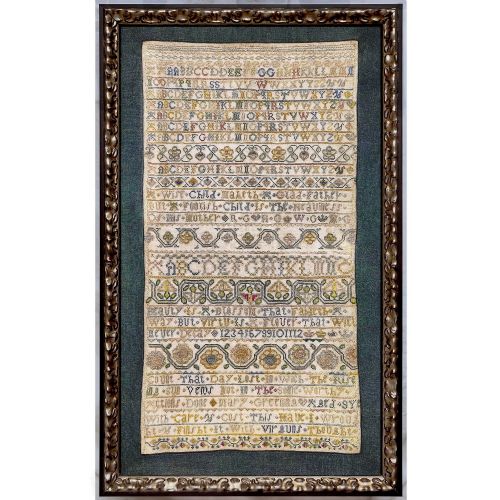
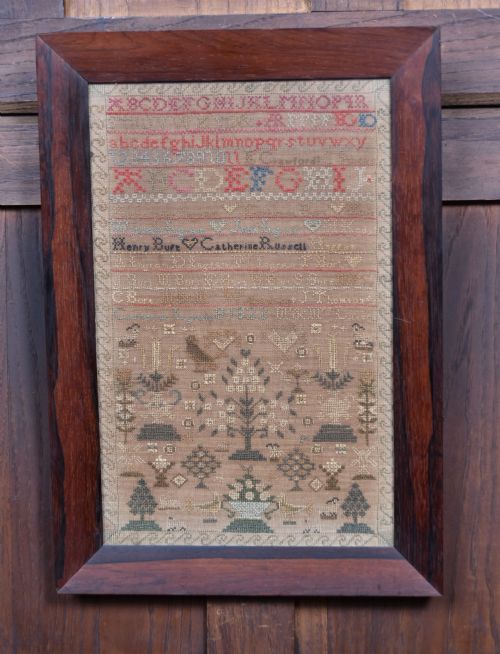
A linen embroidery sampler represents a needlework exercise produced by young girls to demonstrate proficiency in various stitches, alphabets, and numerals. The pieces on this page span from the 18th century through the Victorian era, alongside Georgian and Regency examples.
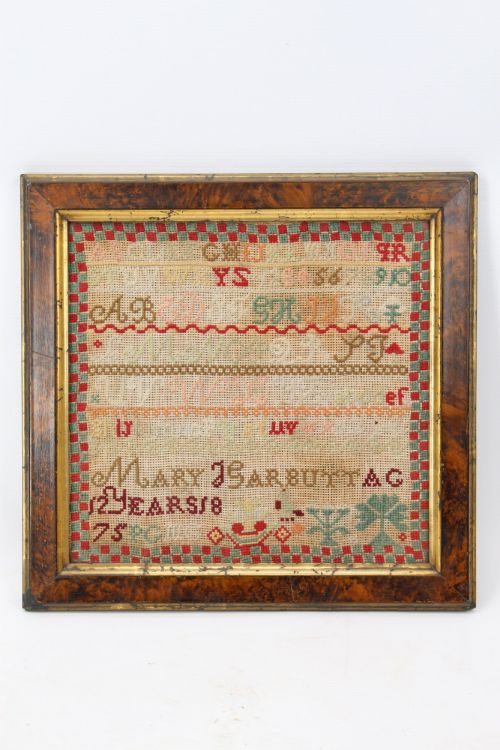
Most items take the form of framed wall art, often preserving the maker's name, age, and date of completion. Map samplers and verse compositions appear alongside traditional band samplers and alphabet rows.
How they were made
Workers stitched directly onto plain woven linen grounds using wool, silk, and silk floss threads. The makers employed foundational techniques such as cross stitch, satin stitch, and eyelet holes to render lettering, borders, and pictorial motifs.
Many surviving examples retain their original wooden frames, sometimes protected beneath early glass, which preserves the delicate fibres of the thread and the natural tone of the aged fabric.
Linen Embroidery Sampler Retail Price Guide 2026
Typical asking prices for linen embroidery sampler among the pieces listed under this phrase on Sellingantiques today, from the lower quarter to the upper quarter. They describe what is for sale here now, not the wider market.
Several makers recorded their precise age down to the month, ensuring posterity knows exactly how impatient a twelve-year-old was to finish her alphabet.
What varies in quality
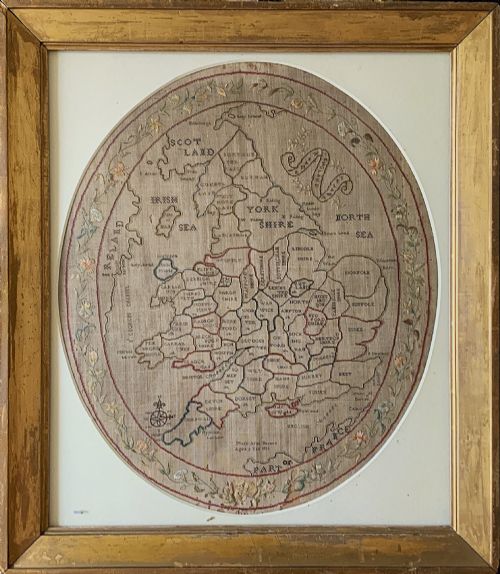
The distinction between pieces rests on the complexity of the design, the precision of the stitching, and the legibility of the lettering. Elaborate pictorial subjects, such as detailed maps of England and Wales or intricate script, reflect greater youthful skill than basic alphabet rows.
Condition remains paramount, where stable linen grounds and vibrant, unfaded silk or wool threads elevate a piece. The presence of documented makers' names and specific dates adds historical context and desirability.
The Linen Embroidery Sampler Glossary
- Band sampler
- A long, narrow piece featuring horizontal rows of distinct decorative patterns and stitches. These early formats served as reference templates for the embroiderer.
- Alphabet sampler
- A textile composition focused primarily on rows of upper and lower case letters and numbers. Such pieces demonstrated the maker's command of lettering layout.
- Map sampler
- A geographical embroidery depicting counties or countries, frequently produced during the Georgian and Regency periods. They combined needlework skill with instruction in geography.
- Cross stitch
- A form of counted thread embroidery made up of diagonal stitches crossing in an X shape. This technique forms the foundation of most traditional lettering and motifs.
- Silk floss
- An untwisted or loosely twisted silk thread used for embroidery. It provides a smooth, glossy finish to stitched pictorial elements.
Linen Embroidery Sampler: Frequently Asked Questions
How old is my sampler?
Many pieces bear embroidered dates, maker names, and the age of the child at completion. Comparing the lettering styles, framing materials, and fabric types against dated examples helps narrow down the period.
Earlier works from the 17th and 18th centuries tend to feature narrower linen bands and simpler motifs, whereas Victorian pieces often display more elaborate floral borders and varied typography.
How do I hang a sampler safely?
Protect the fragile linen and historic threads by keeping the piece away from direct sunlight, which fades natural silk and wool colours. Hang them on stable interior walls with steady ambient temperatures and low humidity.
Ensure the frame is secure and that the textile does not touch the glass directly, allowing the fabric to breathe safely behind the glazing.
Why do some pieces include maps?
Cartographic needlework served as an educational tool for young girls in polite academies during the Georgian and Regency eras. Stitching a map of England and Wales tested both geographical knowledge and technical dexterity.
These pictorial compositions often include topographical details, counties, and decorative cartouches alongside the maker's signature.
What is a stitch error?
Young makers occasionally made miscalculations in counting threads, resulting in corrected letters, omitted words, or asymmetrical borders. These human touches reflect the genuine childhood origin of the needlework.
Collectors often view minor irregularities as proof of authenticity rather than faults, marking the progression of the maker's learning process.